
Does Baby Oil Ruin Bed Sheets? How to Protect Your Linens
This post contains affiliate links. As an Amazon Associate we earn from qualifying purchases.
Baby oil can permanently ruin bed sheets if the stain is not treated correctly and promptly. The oil soaks into fibers, oxidizes over time, and leaves a stiff, yellowed patch. However, with immediate action using the right method, cornstarch and dish soap, you can completely remove fresh stains from cotton, polyester, and bamboo blends. The fabric’s type and construction determine its survival; tightly woven filament polyester and lyocell resist staining far better than fluffy cotton.
That resistance isn’t magic. It’s a matter of physics and fiber surface area. A staple cotton fiber is short, fuzzy, and presents a tangled web that traps oil droplets. A filament polyester fiber is one long, smooth strand that lets oil slide off more easily. The difference decides whether a stain becomes a permanent inclusion or a temporary smudge.
What follows is the fabric science, the proven removal steps, and the specific care warnings that keep your sheets, from budget cotton to premium organic bamboo, looking and feeling new after a spill.
Key Takeaways
- Act within an hour. Fresh baby oil stains lift cleanly; after 24 hours, the oil begins to oxidize and bond with fibers, creating a permanent, stiff patch.
- Fabric construction matters more than material. Tightly woven filament polyester or lyocell sheets resist deep staining. Fluffy, high-thread-count cotton and staple polyester blends are the most vulnerable.
- Cornstarch and dish soap are the only home remedy you need. The cornstarch absorbs bulk oil; the dish soap’s emulsifiers break the oil’s bond with the fiber. Hot water rinses it away.
- Heat sets the stain. Never put an oil-stained sheet in the dryer. The heat bakes the oil into the fibers, making removal impossible.
- Check your sheet’s care label. Some manufacturers, like Fabtex, explicitly warn that heat can permanently distort polyester and cotton fabrics, independent of any stain.
The Fabric Science of Oil Stains
The question isn’t just if oil stains, but how it stains, and why some sheets recover while others are ruined. The answer lives in the microscopic landscape of the fabric.
A 1968 textile study found that filament polyester, a continuous, smooth fiber, takes up only about 20% as much oil as staple polyester, which is made of short, fuzzy fibers. On staple fabric, electron microscopy showed fat deposits held in the criss-cross gaps between fibers. On filament fabric, the oil mainly sat on the fiber surface, where washing could easily remove it.
This is the core principle. Baby oil, a mineral oil and glycerin blend, is a non-polar liquid. It’s repelled by water and attracted to the hydrophobic surfaces of synthetic fibers like polyester. That sounds bad, but a smooth surface allows the oil to pool and be lifted. A fuzzy, textured surface, like that of premium cotton or a staple blend, traps the oil in a labyrinth of tiny fibers. The oil wicks deep by capillary action, and standard washing just spreads it.
Lyocell (often sold as Tencel) offers a different advantage. A study on spa oil removal found that lyocell fabric not only stained less visibly than cotton but also recovered better after washing, with a 15% higher average recovery value. The fiber’s smooth, dense structure and high moisture-wicking ability seem to prevent the oil from spreading as widely.
So, will baby oil ruin your sheets? For a bamboo crib sheet (bamboo viscose is processed similarly to lyocell), the risk is lower. For an organic cotton crib sheet with a fluffy nap, the risk is high. The best crib sheets for messy situations are often those made from these smoother, tighter crib sheet materials.
The 4-Step Cornstarch & Dish Soap Method (That Actually Works)
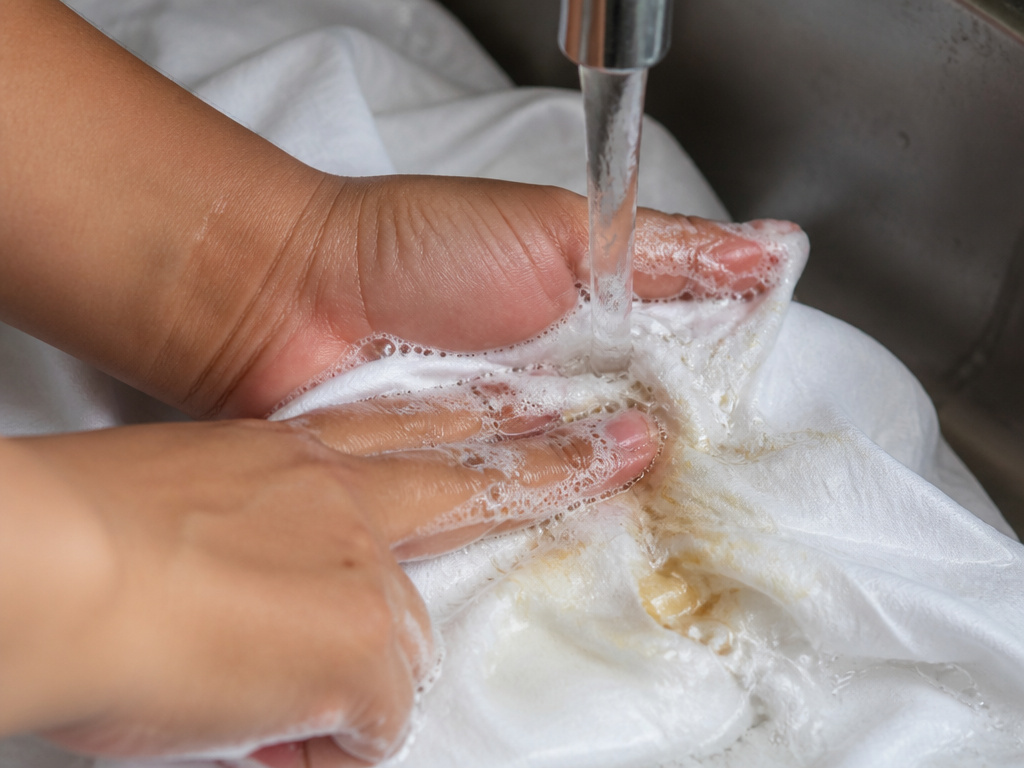
Forget baking soda, salt, or commercial sprays. The only home remedy that tackles the chemistry of a baby oil stain is a two-part attack: absorption followed by emulsification.
Common mistake: Rushing to wash a stain with laundry detergent. Detergent is designed for water-soluble dirt in a full load of water. It will not break the oil-to-fiber bond on a concentrated stain and may set it.
You need a degreaser. Dish soap (like Dawn or Palmolive) contains surfactants specifically formulated to emulsify oils, breaking them into tiny droplets that can be rinsed away with water. Cornstarch acts first to soak up the excess so the soap can work on what’s left in the fiber.
Here is the exact sequence, timed and sensory-tested.
- Blot and Cover. Use a clean, dry cloth to blot up any pooled oil. Do not rub. Then, liberally cover the entire stain with plain cornstarch. Pat it down gently. Let it sit for 20 minutes. The powder will turn clumpy and dark as it absorbs the oil.
- Brush and Enscounce. Shake off the excess cornstarch. Take a dry, old toothbrush and gently brush the remaining powder deeper into the fabric weave. You want it “ensconced,” as one detailed guide puts it, to contact every oil-soaked fiber.
- Apply Dish Soap. Move to a sink. Wet the stained area with the hottest water your fabric can safely handle. Apply a generous dab of clear dish soap directly onto the stain. Using your fingers, work it into a lather, rubbing the fabric against itself for a full minute.
- Rinse and Feel. Hold the stain under a stream of hot water, continuing to rub the fabric. This is the critical moment. You will feel the slick, slimy oil releasing from the fibers. It’s a distinct, almost weird sensation. Rinse until the water runs clear and the fabric no longer feels slippery.
Let the sheet air-dry completely. Inspect it. If any shadow or slickness remains, repeat the entire process. Do not, under any circumstance, put it in the dryer until the stain is 100% gone. Dryer heat will polymerize any residual oil, locking it in forever.
Why “Wash as Normal” is a Trap
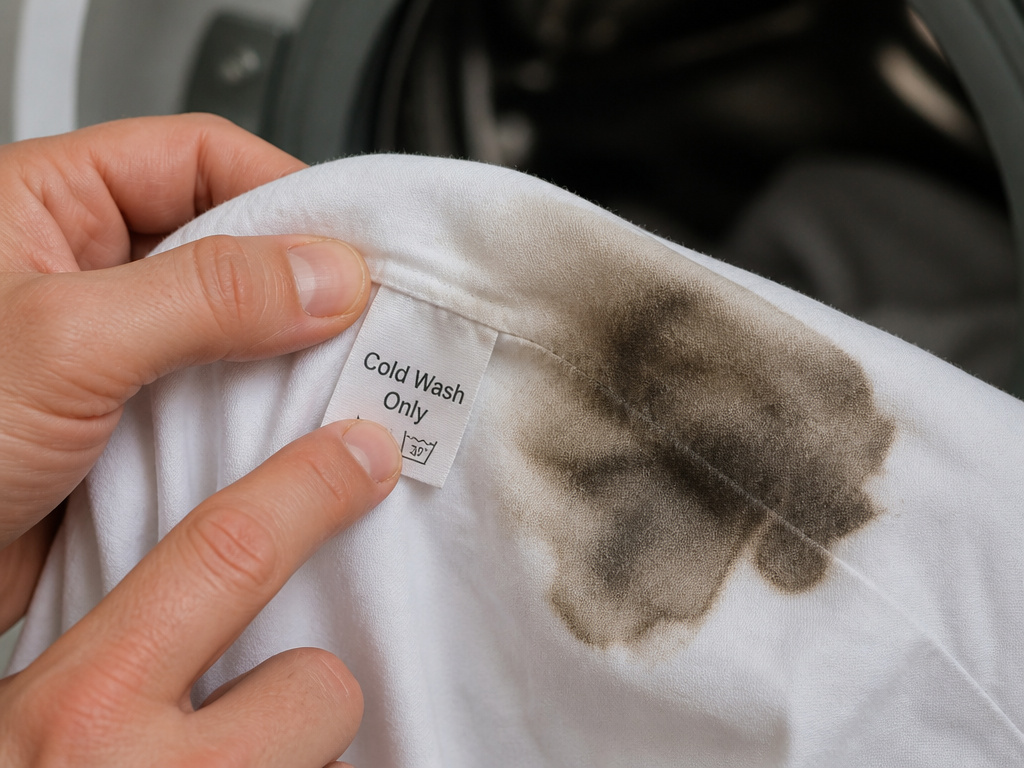
Throwing an oil-stained sheet into the washing machine with your regular load is a guarantee of disappointment. You might even make things worse.
Modern laundry detergents and cold-water cycles are not engineered for localized, hydrophobic stains. The detergent concentration in a full drum is too dilute to attack the concentrated oil-to-fiber bond. The oil may simply redistribute, leaving a larger, fainter stain or a lingering odor. Furthermore, the tumbling action can force the oil deeper into the fabric’s core.
Where this goes sideways: Washing a stain with fabric softener. Softeners coat fibers in a waxy film to make them feel smooth. This coating will seal any residual oil into the fiber, making subsequent removal attempts futile.
The conflict deepens when you read care labels. Manufacturer instructions often directly oppose stain-removal logic. For instance, Fabtex, a supplier of commercial bed coverings, mandates cold washing and cold drying only for their polyester-filled products, stating “heat flattens the polyester fill and may shrink it.” They warn that even one hot wash can permanently change a fabric’s size, cotton narrows, polyester widens.
So you have a stain that needs hot water and dish soap to break the oil, but a care label that forbids heat. What wins? For a fresh stain on a durable crib sheet fabric like cotton or polyester, the immediate stain removal takes priority. Use hot water from the tap for the hand-treatment, then follow the label’s cold wash and dry instructions for the final clean. The risk of slight distortion from one hot rinse is lower than the certainty of a ruined, stained sheet.
Fabric Showdown: Which Sheets Survive Baby Oil?
Not all sheets are created equal when faced with an oil spill. Your choice of material is your first line of defense. This isn’t about price; it’s about physics.
| Sheet Material | Oil Resistance | Ease of Cleaning | Biggest Risk |
|---|---|---|---|
| Filament Polyester | High | Very High | Heat damage during drying can melt or distort fibers. |
| Lyocell / Tencel | High | High | Requires gentle washing; abrasion can cause pilling. |
| Bamboo Viscose | Medium-High | High | Similar to lyocell; generally stains less than cotton. |
| Percale Cotton | Medium | Medium | Tight weave helps, but oil can wick along yarns. |
| Flannel / Brushed Cotton | Low | Low | Fuzzy nap acts like a sponge, trapping oil deep inside. |
| Staple Polyester/Cotton Blend | Low | Low | Combines the oil-attraction of polyester with the trapping texture of cotton. |
The filament polyester advantage is stark. That smooth fiber offers little for the oil to grip. A spill often beads up on the surface, giving you precious time to blot. This makes affordable, durable polyester a practical, if not luxurious, choice for a toddler’s bed.
On the other end, that cozy flannel sheet or that buttery-soft brushed cotton is a stain magnet. The very quality that makes it comfortable, its raised, fuzzy surface, is its downfall. Here, prevention is everything. Consider a high-quality mattress protector as a mandatory barrier if you use baby oil for massages or skin care.
For the best balance of comfort and resilience, many parents choose bamboo crib sheets or organic cotton in a tight percale weave. They feel great against skin and offer a fighting chance against accidents when you act fast.
Before You Go
Baby oil doesn’t have to be a death sentence for your sheets. The ruin happens through inaction, letting the oil oxidize, or baking it in with heat. The solution is a counterintuitive but mechanical process: absorb, emulsify, rinse. Remember that the best baby sheets are often the ones you can maintain, not just the softest ones in the package.
Keep cornstarch and clear dish soap in your laundry cupboard. Read the care label on your fitted sheets before you panic about water temperature. And know that while no sheet is bulletproof, the right fabric and the right response will save you from having to constantly replace your baby bedding.
Frequently Asked Questions
Can dried baby oil stains be removed?
It is very difficult. After 24-48 hours, baby oil begins to oxidize and polymerize, forming a chemical bond with the fiber. You can try the cornstarch and dish soap method, but may need multiple attempts. For old, set stains on white cotton, a paste of OxiClean and hot water left for several hours can sometimes help, but may fade dyes.
Does baby oil stain polyester sheets?
It can, but it’s less likely than with cotton. Filament polyester stains the least; staple polyester or poly-cotton blends stain more easily. The oil can leave a visible spot and a slick feel if not washed properly, but it rarely causes the permanent yellowing seen on natural fibers.
Is baby oil safe for skin if it can ruin fabric?
Yes, according to its official FDA-regulated product labeling, baby oil (a glycerin and mineral oil solution) is considered safe and effective for skin. Its fabric-damaging potential is purely a physical and chemical interaction with fibers, not a reflection of skin safety.
Will washing sheets multiple times remove baby oil?
Not by itself. Standard washing without pre-treatment will likely just spread the oil and leave a lingering odor or faint stain. The oil needs to be emulsified first with a degreaser like dish soap to break its bond with the fiber before it can be rinsed away in the wash.
What should I do immediately after spilling baby oil on sheets?
Blot, do not rub, with a dry cloth. Then immediately cover the stain with cornstarch to start absorbing the oil. This buys you time to gather your supplies for the full removal process and prevents the oil from spreading deeper into the sheet fabrics.
