
Should I Let My Child Sleep With a Fever? Expert Advice
This post contains affiliate links. As an Amazon Associate we earn from qualifying purchases.
Let your child sleep. Never wake a sleeping child solely to administer fever-reducing medication like paracetamol or ibuprofen. Sleep is a restorative process that aids healing, and a child who is sleeping comfortably is not in distress, which is the only valid reason to treat a fever. The official stance from bodies like NICE and the Irish College of General Practitioners is clear: medication is for relieving a child’s discomfort, not for chasing a normal temperature.
That distinction between treating a number and treating a child changes everything. It shifts your focus from the thermometer to your kid’s actual state. A sleeping child has found comfort; interrupting that rest offers no medical benefit and can disrupt the recovery process your child’s body has already started.
What follows is a breakdown of why sleep is medicine, the specific temperature that defines a fever (38°C), the two medications you can use, and the exact warning signs that mean you should call a doctor instead of waiting for morning.
Key Takeaways
- Never wake a sleeping child to give fever medicine. Sleep is healing. A child who is asleep is not in distress, which is the only reason to treat.
- Treat the child, not the number. Use paracetamol or ibuprofen only if your child is upset, irritable, or in pain, not simply because the thermometer reads 38.5°C.
- Know the fever threshold. A temperature of 38°C (100.4°F) or higher is clinically considered a fever.
- Watch for dehydration, not just temperature. Dry mouth, no tears, and sunken eyes are more urgent concerns than a high fever in an otherwise comfortable child.
- Medication does not prevent febrile seizures. Research is clear: giving paracetamol or ibuprofen will not stop a fever-related seizure from occurring.
The Rule That Never Changes: Let Them Sleep
Sleep is not a passive state. It’s when the body directs energy toward immune function and repair. Waking a child breaks that cycle for no proven gain.
Common mistake: Waking a child to give medicine. You trade an hour of restless, interrupted sleep for a drug whose purpose, to relieve distress, is irrelevant to a peacefully sleeping kid.
The guidance is unanimous. The Irish College of General Practitioners sheet states “Check the child during the night,” not “Wake the child.” The older NICE guideline from 2007 explicitly advised against waking children for antipyretics. A sleeping child has achieved comfort. Your job is to monitor, not interfere.
How do you monitor a sleeping child with a fever?
You check quietly. Feel their forehead for excessive heat, listen to their breathing, and look for signs of restlessness or pain. If they are sleeping soundly, leave them be. This is where having a reliable monitor or a good toddler bed setup helps you observe without disturbance.
Treat Distress, Not the Thermometer
Fever is a symptom, not the disease. It’s the body’s evolved defense mechanism, making the internal environment less hospitable to invading viruses and bacteria. The goal of management is comfort, not normothermia.
Fever is defined as a body temperature ≥38°C (100.4°F). This is the clinical threshold used by NICE and the South African Medical Journal guideline.
The pivotal question isn’t “What’s the temperature?” It’s “How is my child acting?” Are they crying, clingy, and refusing fluids? Or are they drowsy but settled, perhaps watching a movie quietly? The first scenario warrants medication; the second may not.
| Child’s State | Action to Take | Reason |
|---|---|---|
| Distressed, crying, in pain | Offer paracetamol or ibuprofen. | Medication’s purpose is to relieve discomfort and improve well-being. |
| Quiet, resting, but awake | Offer fluids, light clothing. Monitor. | The child is not in distress; fever is serving its physiological purpose. |
| Sleeping peacefully | Do not wake. Monitor breathing and comfort. | Sleep is restorative. A sleeping child is not experiencing medication-worthy distress. |
This approach is directly supported by the PLOS One systematic review of fever management, which found that most guidelines recommend against treating fever itself, regardless of the number on the thermometer.
Why does this matter so much? Fever phobia, the unfounded fear that fever will cause brain damage, drives overtreatment. That phobia leads to waking kids, overdosing medication, and unnecessary stress. The evidence says fever from infection rarely exceeds 41°C and does not cause brain damage. Your focus belongs on the child’s comfort and hydration.
The Two Medications: Paracetamol vs. Ibuprofen
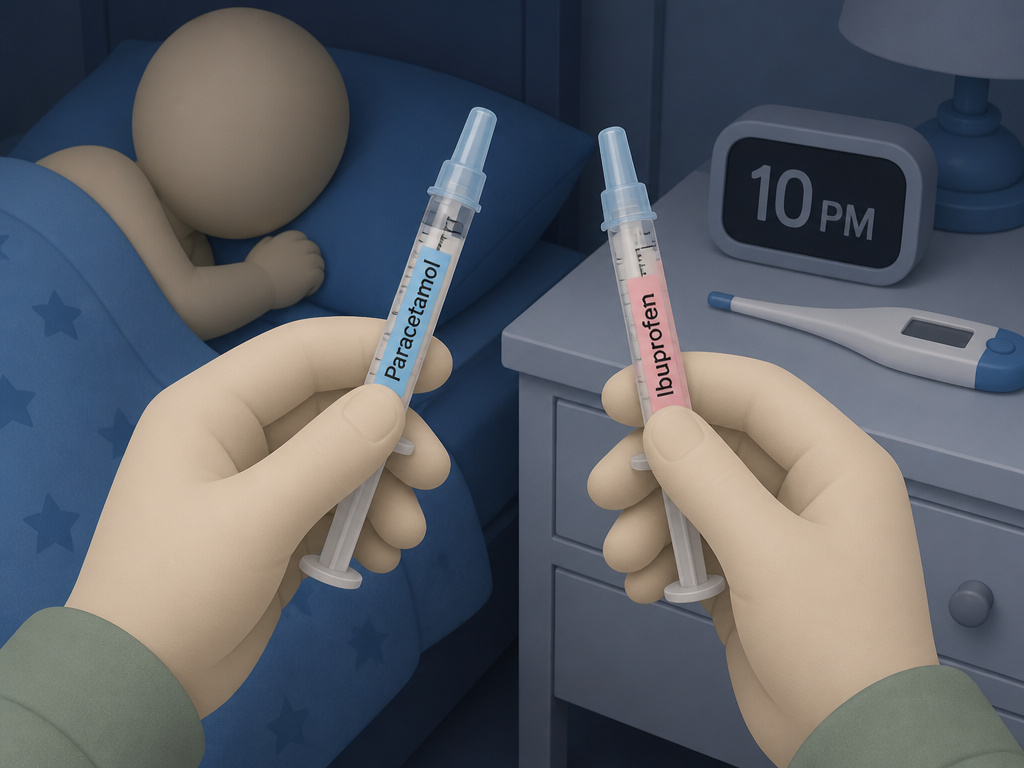
You have two safe, effective options for short-term use: paracetamol (acetaminophen) and ibuprofen. The choice isn’t about which lowers temperature more, but which fits your child’s situation.
Paracetamol has been around longer. It can be used in children of any age, but you must consult a doctor for babies under three months. Its effects last about 4 hours.
Ibuprofen is an anti-inflammatory. It’s only for children over six months. It typically works faster and lasts longer, 6 to 8 hours. This longer duration can mean better overnight symptom control if you dose it at bedtime.
Where this goes sideways: Alternating or combining both medicines routinely. Major guidelines like the South African Medical Journal state this practice has “limited value and is not recommended.” It increases the risk of dosing errors and overdose. Stick to one agent at a time.
Dosing is critical. Always dose by weight, not age. Use the syringe that comes with the medicine, not a kitchen spoon. The NCBI Bookshelf fever guide emphasizes that accurate dosing prevents liver or kidney damage, which is a risk with prolonged or incorrect use.
If you give paracetamol and your child remains distressed after an hour, you can consider a switch to ibuprofen. But that’s a change, not a combination. You don’t give both at the same time.
Hydration Is Your Primary Job
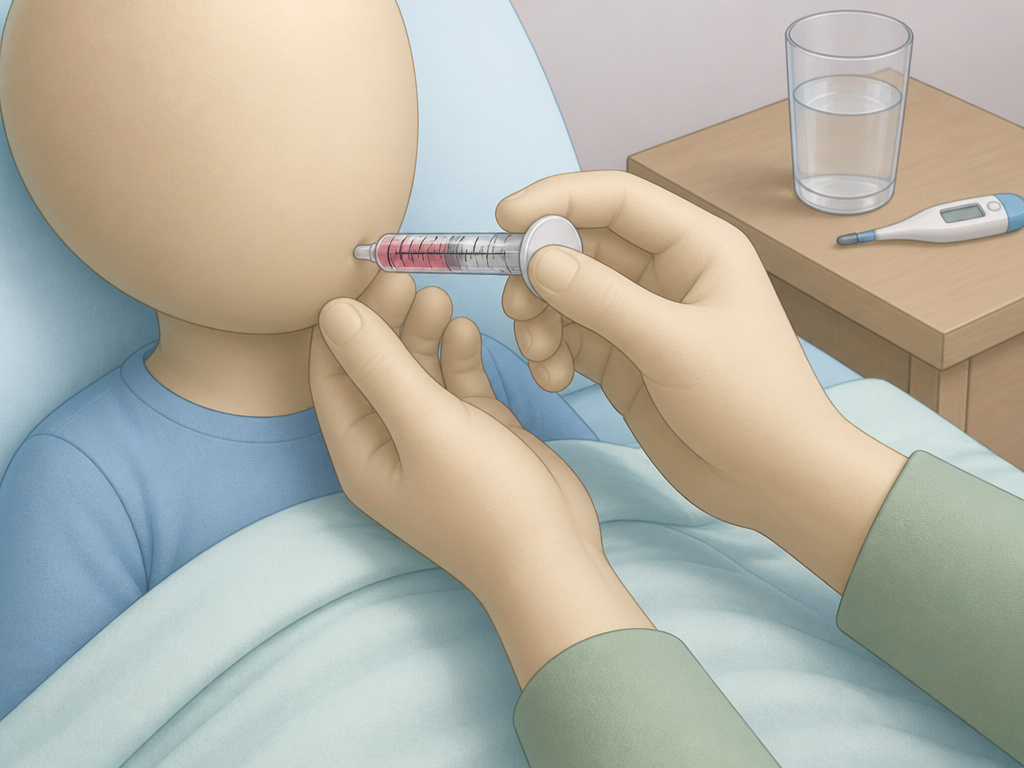
A fever increases fluid loss. Dehydration, not the fever itself, is the most common complication you can actively prevent.
Signs of dehydration to watch for:
- Dry mouth and lips.
- No tears when crying.
- Sunken eyes.
- In babies, a sunken soft spot (fontanelle) on the head.
- Significantly fewer wet diapers or not urinating for 8+ hours.
Your role is to encourage small, frequent sips of water, clear broth, or an oral rehydration solution. If they refuse a cup, try a syringe. Even a few milliliters every 15 minutes adds up. This is more important than whether they eat solid food.
A dehydrated child is also at higher risk for complications from ibuprofen, which can affect kidney function. The PMC low-risk fever approach notes that caution is needed with ibuprofen in volume-depleted children. If you suspect dehydration, paracetamol is the safer first choice.
What About Febrile Seizures?
This is the fear that keeps parents up at night. The truth is both reassuring and firm.
Febrile seizures do not cause brain damage or epilepsy. They are frightening to witness but are generally harmless. They affect 2-4% of children, usually between 12 and 18 months old, and are linked to the initial rapid rise in temperature, not the fever’s peak.
Medication does not prevent febrile seizures. This is a key point from multiple sources, including the South African Medical Journal guideline: “Antipyretics do not prevent febrile convulsions and should not be used specifically for this purpose.”
You cannot medicate a seizure away. Knowing this should relieve the pressure to “keep the fever down.” Your vigilance is better spent on hydration and comfort.
Red Flags: When to Call the Doctor or Seek Emergency Care
Fever is rarely an emergency. But it can be a sign of one. These symptoms override the “let them sleep” rule and require immediate medical attention.
For a child of any age:
- A stiff neck, headache, and aversion to light.
- A rash that does not fade when you press a glass against it (a “non-blanching” rash).
- Difficulty breathing, sucking stomach in under ribs.
- Seizure lasting more than 5 minutes.
- Child is confused, unusually drowsy, or “not themselves.”
- Signs of severe dehydration (listed above).
Age-specific rules:
- Under 3 months: Any fever of 38°C or higher is an automatic call to the doctor. Their immune systems are immature, and infections can progress quickly.
- 3 months to 3 years: Fever lasting more than 48 hours without an obvious cause (like a cold) warrants a check-up.
- Any age: Fever persisting for 5 full days needs a doctor’s evaluation.
Trust your gut. The Irish College of General Practitioners advice sheet includes a clear line: “if the parent or carer is more worried than when they previously sought advice.” Your instinct as a parent is a valid clinical tool.
Creating a Comfortable Sleep Environment
While you manage the illness, the right sleep setup can provide passive comfort. This isn’t about treating fever, but about supporting rest.
Keep bedding light. Over-wrapping traps heat and can raise temperature further. Use a light sheet or a breathable toddler sleep blanket instead of a heavy duvet. Dress them in light, cotton pajamas.
Ensure the room is cool and well-ventilated. A fan circulating air in the room (not pointed directly at the child) can help.
Have the essentials nearby. Keep a thermometer, water bottle, and medicine (if needed) on the nightstand. A dim nightlight lets you check on them without fully turning on the lights. For a child in a crib to toddler bed transition, make sure safety toddler bed rails are securely in place, a restless, feverish child is more likely to move around.
The right toddler bedding made from natural fibers can make this uncomfortable time a little easier by not irritating sensitive skin.
Frequently Asked Questions
My child has a fever of 39°C but is sleeping. Should I wake them?
No. Do not wake them. A high temperature in a sleeping, comfortable child is not dangerous. Monitor them, but let them sleep. The need for sleep outweighs the need to administer medication.
Can I give my child a lukewarm bath to reduce the fever?
Most current guidelines do not recommend tepid sponging or baths. The 2007 NICE guidance explicitly advises against it. It can cause shivering, which actually raises core temperature, and it’s distressing for the child. Focus on comfort measures like light clothing and hydration instead.
How long should I let a fever last before worrying?
For a child over 3 months, a fever lasting 48 hours without other obvious symptoms warrants a call to the doctor. Any fever lasting 5 days requires a medical evaluation to identify the underlying cause.
Is it safe to use both paracetamol and ibuprofen together?
Routine combination or alternation is not recommended by major guidelines due to increased risk of dosing errors and lack of clear benefit. Use one medication at a time. If one doesn’t alleviate distress after an hour, you can switch to the other, but do not give both simultaneously.
Will reducing the fever help my child get better faster?
No. Reducing fever does not fight the underlying infection. It only makes the child more comfortable. The immune system works just as effectively with a fever. Your goal is comfort, not a faster cure.
Before You Go
Letting your child sleep with a fever is not neglect, it’s following the evidence. Medicine is for the distressed, awake child. Sleep is for healing. Your most powerful tools are observation, hydration, and knowing the real warning signs.
Ditch the fever phobia. Watch your child, not the thermometer. Offer cuddles and fluids freely, and medication sparingly. When in doubt, your pediatrician is a phone call away. But tonight, if they’re sleeping, let them be. You’re doing it right.
