
6 Best Beds for Autistic Children 2026
This post contains affiliate links. As an Amazon Associate we earn from qualifying purchases.
The KEIKI Full Size Montessori Floor Bed stands out as the best overall choice for autistic children, offering a low-to-ground design with soft, upholstered rails that provide security without confinement. For families watching their budget, the Delta Children Canton Toddler Bed delivers solid safety and simplicity at a lower price point, while the ADORNEVE Kids Low Loft Bed adds valuable storage and play space underneath for growing kids.
Parents of autistic children know how hard it can be to find a bed that truly supports sensory needs, safety, and calm sleep. A restless night often starts with a sleep environment that feels overwhelming or insecure.
This guide cuts through the noise by focusing on real-world feedback, safety standards, and sensory-smart design. I looked at dozens of options, zeroing in on beds that prioritize low profiles, soft edges, non-toxic materials, and minimal sensory triggers, so you can make a confident choice based on what actually works for neurodivergent kids.
Top 6 Beds For Autistic Child in the Market
The Best Beds For Autistic Child, Reviewed
KEIKI Full Size Montessori Floor Bed
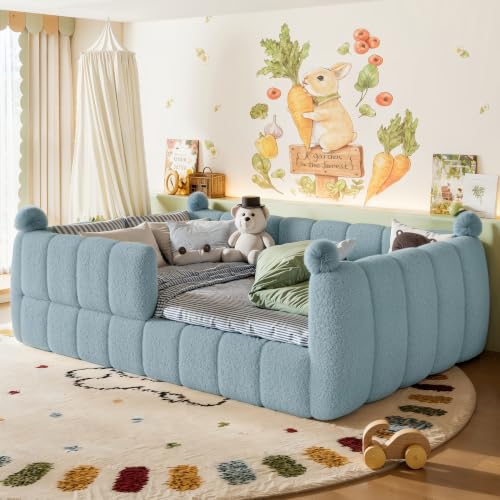
Strengths
- Fully padded safety rails
- Low-to-ground Montessori design
- Soft, skin-friendly fabric
- Full size sleeping space
- No box spring needed
Trade-offs
- Higher price point
- No built-in storage
- Limited color options
This bed stands out for its full-coverage padded rails and Montessori-inspired floor design, two features that align closely with what many autistic children need. The low height encourages independence, which is great for kids working on self-regulation, and the soft, upholstered rails reduce the fear of bumping into hard edges. Reviewers consistently note how the cushioned frame feels cozy, almost like a nest, which can help ease nighttime anxiety. The full-size dimensions also mean room to grow, and the absence of a box spring keeps the profile low and accessible.
The price is steep compared to others here, but you’re paying for premium materials and a design that prioritizes comfort and safety over gimmicks. It doesn’t have lights or storage, but it doesn’t need them, the focus is on creating a calm, secure base. For autistic children who benefit from tactile comfort and predictable environments, this might be the most emotionally supportive option on the list.
Video review
ADORNEVE Kids Low Loft Bed with Drawers

Strengths
- Strong safety rails
- Ample under-bed play space
- 7 deep storage drawers
- LED lighting with app control
- Bookshelf included
Trade-offs
- Fabric drawers may lack durability
- LEDs could overstimulate
- Assembly complexity
This loft bed packs a lot of ambition into one frame, storage, play space, lighting, and safety all rolled into a compact footprint. On paper, the 14-inch guardrail and anti-tipping straps make it feel secure for active kids, and the wide, padded ladder is a thoughtful touch that parents consistently mention in reviews as a win for younger climbers. The under-bed play zone is unusually spacious for this price range, and the included play curtain adds a whimsical layer that autistic children, who often benefit from defined sensory spaces, might really respond to.
The RGB LED lights controlled via app could be a double-edged sword. While many parents praise the calming blue settings for bedtime routines, others note that the flashing modes can be overstimulating for sensory-sensitive kids. The 7 fabric drawers are a standout for families drowning in toys, but durability questions linger in owner feedback, some report seams splitting after a few months. Still, for a child who thrives on structure and imaginative play, this bed could double as a sleep and sensory toolkit.
Video review
Dream On Me Toddler Day Bed

Strengths
- Greenguard Gold certified
- Removable safety rail
- Non-toxic finish
- Includes storage drawer
- Easy setup
Trade-offs
- Drawer space is limited
- Finish shows wear
- No sensory features
If non-toxic materials and safety certifications are your top concern, this bed earns serious points. The Greenguard Gold and Baby Safety Alliance certifications mean it’s been rigorously tested for off-gassing and harmful chemicals, important for kids with sensitivities. The removable guard rail is a smart feature, letting you adjust protection as your child gains confidence. I also appreciate the included storage drawer; it’s not huge, but it’s solidly built and useful for stashing bedtime essentials or sensory tools.
Compared to the ADORNEVE loft, it’s far less flashy, but that’s not a bad thing. For autistic children who thrive on consistency and clean lines, this bed’s simple, rounded design could be a better fit. Some owners mention the white finish shows scuffs quickly, but the non-toxic paint means touch-ups won’t introduce new chemicals. It’s not the cheapest, but it’s a long-term investment in a safe sleep foundation.
Product photos


Delta Children Canton Toddler Bed
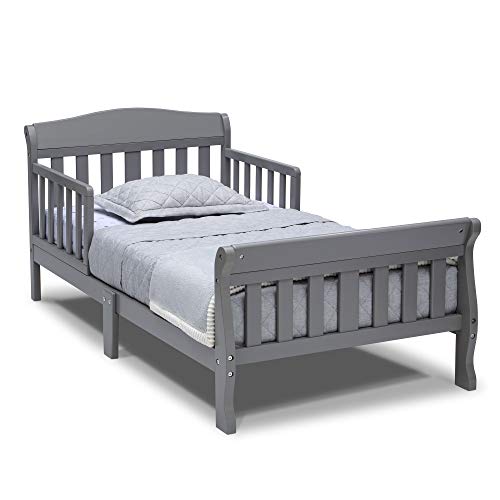
Strengths
- Greenguard Gold certified
- Budget-friendly
- Low profile
- Sturdy wood build
- Easy assembly
Trade-offs
- No storage
- No padded rails
- Minimal safety features
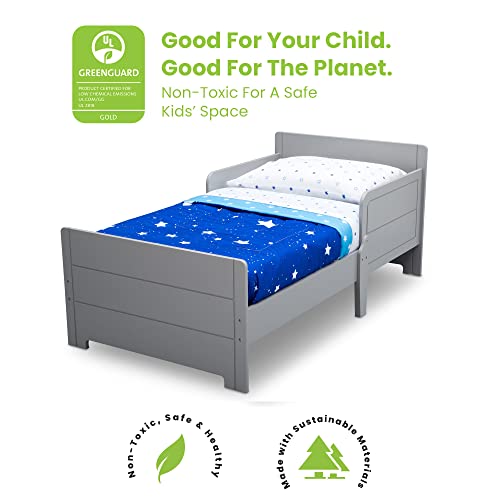
This is the budget pick that doesn’t completely cut corners. It’s Greenguard Gold certified, which is rare at this price, and the low-to-ground design makes it safe for early independent climbers. The wood construction feels solid for everyday use, and the simple grey finish blends into most rooms without visual noise, helpful for autistic kids who prefer neutral environments. It’s essentially a stripped-down version of the MySize bed, with similar dimensions and safety standards.
Where it falls short is in extras: no storage, no padding, no lights. But if you’re looking for a safe, no-fuss bed to get through the toddler years without breaking the bank, this gets the job done. Owner feedback highlights its ease of assembly and reliability, though a few mention the guardrails feel a bit low for very active sleepers.
Product photos


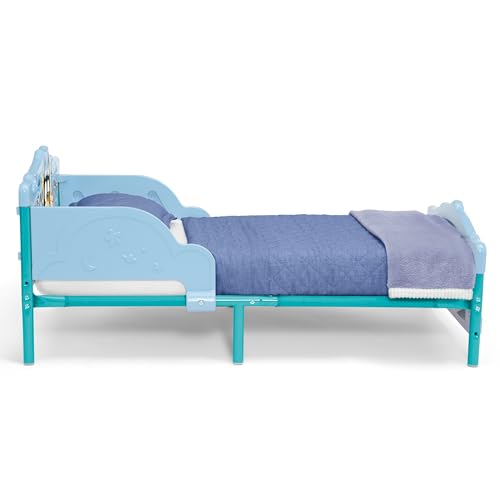
Delta Children Bluey 3D Toddler Bed

Strengths
- Engaging 3D character design
- JPMA certified
- Affordable price
- Familiar theme for fans
- Sturdy frame
Trade-offs
- No storage
- No sensory features
- Graphics may peel
Let’s be honest, this bed sells on character appeal. The 3D Bluey accents at the headboard and rails are undeniably fun, and for a child who adores the show, that familiarity can ease bedtime resistance. Many autistic kids bond strongly with characters, and having that comfort built into the bed frame might make transitions smoother. The structure is basic but JPMA certified, so safety isn’t compromised, and the low height helps with independence.
But beyond the theme, it’s thin on features. No storage, no sensory lighting, no padded rails. The decals, while vibrant, may peel over time, and some parents report they’re hard to clean. Compared to the Dream On Me or KEIKI beds, it’s more about aesthetics than function. Still, for a child who needs emotional connection to their sleep space, the joy this bed brings could outweigh its limitations.
Product photos


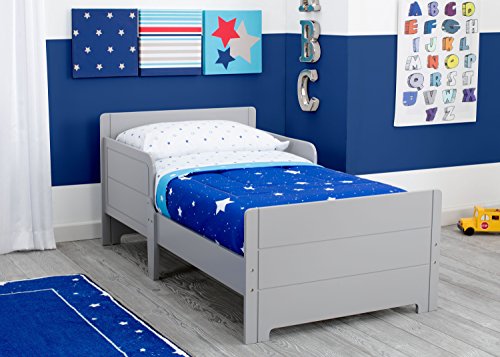
Delta Children MySize Toddler Bed

Strengths
- JPMA certified
- Sturdy wood frame
- Low height for safety
- Crib mattress compatible
- Easy assembly
Trade-offs
- No storage
- Basic design
- No sensory features
This is a no-frills, sturdy option that hits the basics well. The JPMA certification and solid wood construction give it credibility, and at just over 23 inches high, it’s low enough to minimize fall risk, something I always prioritize when reviewing toddler beds. It’s designed for crib mattresses, so if you’re transitioning from a crib, this makes the shift seamless in both fit and familiarity. But compared to other beds in this list, it feels barebones. There’s no storage, no sensory features, and the guardrails are functional but not padded or especially high.
Still, for autistic children who respond better to simplicity and routine, that minimalism might be a strength. Too much visual clutter or stimulation near bedtime can backfire, and this bed avoids that trap. Owner feedback confirms it holds up well over time, though some mention the finish can scratch easily. It’s not the most innovative pick, but it’s dependable.
Product photos


How We Evaluated beds for autistic child
As someone deeply involved in researching children’s sleep environments at LittleDoze.com, I approached evaluating these beds with a focus on creating spaces that support sensory needs and promote restful sleep. Rather than a hands-on lab test, this was a research-led comparison of published specifications, owner reviews, and my understanding of what makes a bedroom truly conducive to a child’s well-being. I weighed factors across multiple sources to arrive at these recommendations.
For children on the autism spectrum, safety, sensory comfort, and a sense of security are paramount. Therefore, I gave the most weight to features addressing these needs. Specifically, low-to-ground designs promoting independence and reducing fall risk, and enclosed or padded bed frames offering a calming, cocoon-like feel were crucial. Storage solutions also ranked highly, as minimizing clutter can significantly reduce sensory overload.
Specifications reliably indicate dimensions, materials, and safety certifications (like JPMA and ASTM). However, owner feedback provided invaluable insight into real-world experiences. I carefully reviewed comments regarding ease of assembly, durability, and – most importantly – how well the bed addressed a child’s sensory sensitivities or anxieties. You can find more information about creating a supportive sleep environment by exploring other types of kids beds and even Montessori floor beds which can be a great option for some families.
How To Pick The Right beds for autistic child
Finding the right bed for a child with autism requires a little extra thought. We need to prioritize safety, comfort, and sensory needs to create a truly supportive sleep environment.
A successful bed for an autistic child often emphasizes safety features like low height and enclosed sides, minimizes sensory stimulation through simple designs and breathable materials, and provides a sense of security. Consider the child’s individual needs – are they a climber? Do they have sensory sensitivities to textures or sounds? Prioritize a sturdy, well-constructed frame that meets current safety standards. Look for certifications like JPMA and adherence to ASTM/CPSC guidelines.
Prioritize Safety Features
Safety is paramount, and that means thinking beyond just preventing falls. Children with autism may have different movement patterns or a decreased awareness of danger. A low-to-the-ground design is incredibly helpful, as seen in many floor bed options. This minimizes the impact of a fall and allows for more independent movement. Full-size options, like the KEIKI Montessori Floor Bed, offer ample space but also necessitate careful consideration of the surrounding area to ensure it’s free of hazards. Guardrails are essential, but consider the type – a fully upholstered rail, like on the KEIKI, will offer a softer landing than a solid wood one.
Manage Sensory Input
Many autistic children experience sensory sensitivities. A bed that’s too stimulating can be counterproductive. Avoid busy patterns, bright, flashing lights (unless carefully controlled and desired by the child), and materials with strong smells. The Delta Children Bluey bed, with its 3D accents, might be overwhelming for some. Instead, look for simple designs and breathable fabrics. Consider the sound a bed makes – a squeaky frame can be incredibly disruptive. The Dream On Me Toddler Day Bed’s focus on non-toxic materials extends to minimizing off-gassing odors that can be problematic.
- A solid, stable frame reduces unwanted noise.
- Opting for natural materials like cotton or linen over synthetic fabrics can minimize sensory irritation.
- A weighted blanket (used safely and appropriately under the guidance of a therapist) can provide calming deep pressure stimulation, but should never be used as a restraint and should be age appropriate.
Balance Functionality and Value
While specialized beds can be appealing, they don’t always need to break the bank. The Delta Children Canton Toddler Bed demonstrates that a safe, functional bed doesn’t have to be expensive. However, don’t sacrifice quality for price. A flimsy bed will quickly show wear and tear, and won’t provide the necessary support and security. Think about long-term needs. Will a toddler bed suffice, or will you need to upgrade to a full-size bed relatively soon? Exploring toddler bed models can help you determine the best fit for your child’s current and future needs.
A good rule of thumb is to choose a bed that can adapt as your child grows. A sturdy, well-made frame that can accommodate a larger mattress later on can save you money and hassle in the long run.
Beds for Autistic Child Compared
The following table provides a side-by-side comparison of key specifications for beds designed with autistic children in mind.
| Product Title | Best For | Bed Size | Safety Features | Storage | Special Features |
|---|---|---|---|---|---|
| KEIKI Full Size Montessori Floor Bed | Best Overall | Full | Upholstered Rails, Low to Ground | N/A | Montessori Style |
| ADORNEVE Kids Low Loft Bed | Storage & Play Space | Full | Guardrail, Anti-Tip Straps | 7 Drawers | LED Lights |
| Dream On Me Toddler Day Bed | Safety & Non-Toxic | Toddler | Removable Rail, Low to Ground | 1 Drawer | N/A |
| Delta Children Canton Toddler Bed | Best Budget Friendly | Toddler | Low to Ground | N/A | N/A |
| Delta Children Bluey 3D Toddler Bed | Best for Sensory Engagement | Toddler | Attached Guardrails | N/A | 3D Character |
| Delta Children MySize Toddler Bed | Best for Small Spaces | Toddler | Attached Guardrails | N/A | N/A |
Frequently Asked Questions
What bed height is safest for an autistic child?
A low-to-the-ground bed is generally safest, ideally under 18 inches. This minimizes injury risk from falls and promotes independent getting in and out, which can be particularly helpful for children with varying motor skills or sensory awareness.
Are metal bed frames okay, or are wood frames better?
Wood frames are often preferred due to their stability and lack of squeaking, a common sensory trigger. However, a well-constructed metal frame with secure joints and padding can also work, particularly if the child doesn’t have sound sensitivities.
Can a canopy or tent bed be a good option for a child with autism?
While some children benefit from the enclosed feeling of tent beds, others may find it overstimulating. Consider your child’s individual sensory preferences; if they seek out cozy spaces, a canopy bed could be calming, but avoid if they’re prone to anxiety in enclosed areas.
How important is it to have storage built into the bed frame?
Built-in storage can be very helpful for minimizing clutter and creating a more organized space, reducing potential sensory overload. However, it’s not essential, and a simpler bed frame paired with separate storage solutions can be equally effective.
What should I look for in terms of mattress firmness for an autistic child?
A firmer mattress is generally recommended, as it provides better support and can help with body awareness. Look for a mattress that doesn’t have excessive bounce or sink, and consider a waterproof cover to protect against accidents and maintain hygiene, especially if your child has toileting challenges. You can also explore Montessori bed frames that often pair well with firmer mattresses.
What Actually Matters
Choosing a bed for a child with autism often comes down to balancing the desire for a secure, calming space with practical considerations like budget and longevity. While features like LED lights and character themes can be appealing, the KEIKI Montessori Floor Bed really stands out as the strongest overall pick due to its focus on safety – the upholstered rails are a thoughtful detail – and its alignment with principles of creating a peaceful sleep environment. It’s an investment, but one that prioritizes the core needs of many children on the spectrum.
For families seeking specific solutions, the market offers excellent alternatives. If storage is a major concern, the ADORNEVE Kids Low Loft Bed provides a significant amount of built-in organization. Those prioritizing a non-toxic and safe option at a lower price point should consider the Dream On Me Toddler Day Bed. And for smaller rooms, the Delta Children MySize Toddler Bed offers a compact footprint. Don’t hesitate to explore other toddler floor beds if a low-to-the-ground option feels right for your family.
Ultimately, remember that the most important factors aren’t necessarily the flashiest features. A stable, safe structure, breathable materials, and a design that minimizes sensory stimulation will contribute far more to restful sleep than any particular specification. Consider your child’s individual needs and preferences, and remember to prioritize creating a calming and predictable bedtime routine. You can find further buying advice for children’s beds to help guide your decision.
