
7 Best Montessori Floor Beds for Kids (2026)
This post contains affiliate links. As an Amazon Associate we earn from qualifying purchases.
The EXPERLAM Twin Montessori Floor Bed stands out as the best overall choice for its sturdy pine construction and reliable safety features, while the Soft Foam Toddler Floor Bed is a solid budget-friendly pick that includes a mattress. For families wanting more room to grow, the Bellemave Full Size Montessori Bed offers excellent long-term versatility.
Parents often struggle to find a floor bed that’s truly safe, durable, and aligned with Montessori principles, something that supports independence without sacrificing peace of mind. Many options look appealing online but fall short in stability, materials, or real-world usability.
This guide cuts through the noise by focusing on what actually matters: safety certifications, solid construction, and thoughtful design backed by owner feedback and spec comparisons. We looked at dozens of models, prioritizing those made with non-toxic, durable materials and smart features like secure guardrails and adaptable sizing. These picks are designed to support your child’s journey from crib to big-kid bed, and beyond.
Top 6 Montessori Floor Beds in the Market
The Best Montessori Floor Beds, Reviewed
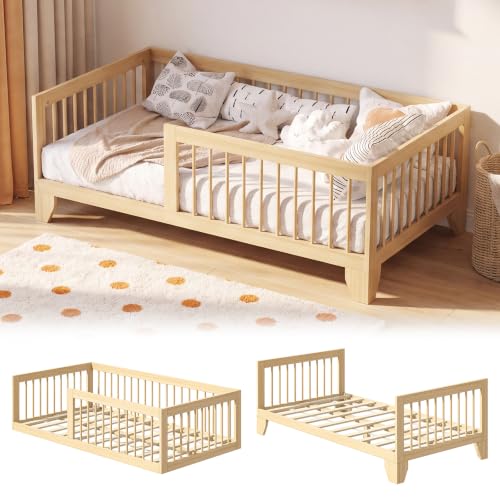
EXPERLAM Twin Montessori Floor Bed
Strengths
- 3-in-1 convertible design
- CPC certified
- Solid pine construction
Trade-offs
- Two-person assembly recommended
- Slightly higher price
If you’re looking for one bed that can last from toddlerhood through early teens, this EXPERLAM model is the clear winner. The 3-in-1 design, floor bed, raised bed, or open twin, makes it incredibly adaptable. The removable rails and legs mean you can start low and secure, then transition to a more open setup as your child matures. That kind of longevity is rare in this category.
Owners consistently praise the solid pine build and the included assembly video, which makes setup smoother than most. The 10 slats and center legs offer excellent support, and the CPC certification confirms it meets safety standards. Compared to the PVWIIK or Bellemave models, it offers more flexibility for the price. I’d pick this as the best overall choice for most families, it balances safety, durability, and long-term value better than any other option here.
Video review
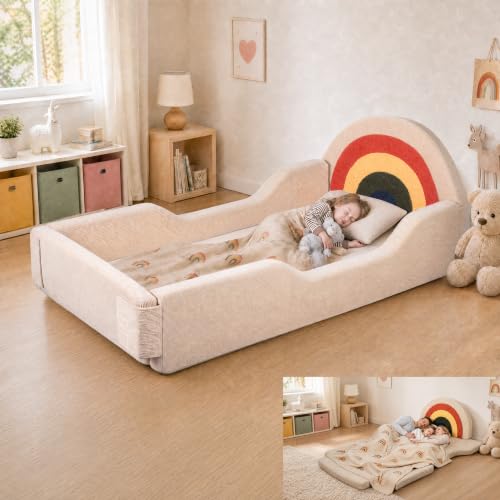
Soft Foam Toddler Floor Bed
Strengths
- No assembly needed
- Soft, safe edges
- Mattress included
Trade-offs
- Not long-term durable
- Foam may compress over time
- Not for older kids
This soft foam floor bed is a standout for families wanting a safe, no-fuss transition from crib to toddler bed. The fact that it includes a mattress and requires zero assembly makes it an instant solution, just unbox and go. Parents love how the cushioned rails reduce bumping, and the rainbow headboard adds a cheerful, comforting touch that many kids respond to emotionally.
It’s not a traditional wood Montessori bed, so it won’t last into the school-age years, but for toddlers aged 2–5, it’s ideal. Compared to wood-framed beds, it’s far safer for wiggly sleepers who might roll out. However, it’s not meant for older or heavier kids, and the foam won’t support a standard twin mattress. If you’re looking for long-term use, this isn’t it, but as a transitional bed, it’s one of the most thoughtful designs out there.
Video review
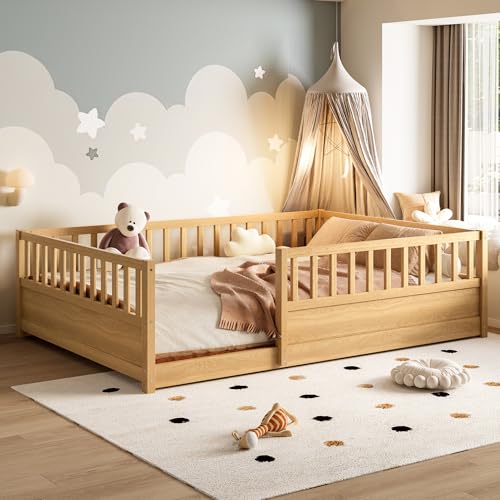
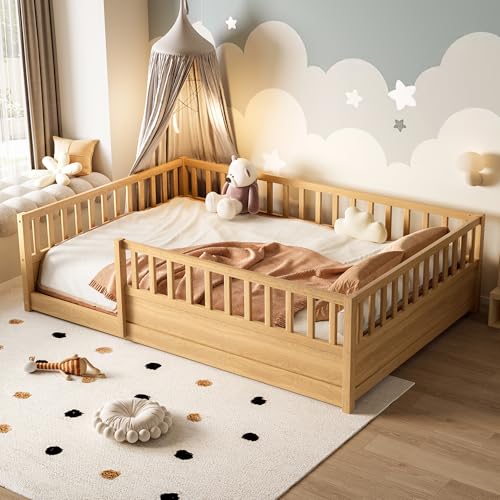
Bellemave Full Size Montessori Bed
Strengths
- High safety rails
- CPC certified
- Sturdy build
Trade-offs
- No removable rails
- Not convertible
- Fence may feel confining over time
With its 21.4-inch high fence, this Bellemave bed offers some of the best fall protection in the category, ideal for restless sleepers or kids who tend to climb. The full-surround rails create a snug, secure space that many parents find reassuring, especially during the early transition from crib. The natural wood finish keeps it versatile, and the CPC certification backs its safety claims.
It’s sturdier than the foam bed and more enclosed than the EXPERLAM in floor mode, but it lacks that model’s adaptability. Once your child no longer needs high rails, you’re stuck with them. Still, for families prioritizing safety above all, especially those with anxious sleepers or kids with mobility challenges, this bed delivers where it counts. It’s not the most flexible, but it’s one of the safest.
Product photos


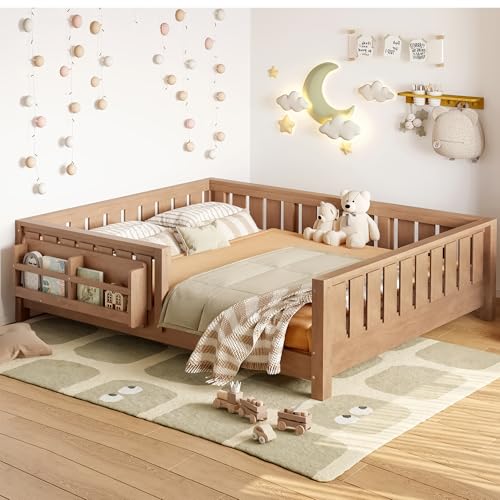
Full Montessori Bed with Bookshelf

Strengths
- Built-in bookshelf
- CPC certified
- Sturdy construction
Trade-offs
- Bulky footprint
- No conversion options
- High price
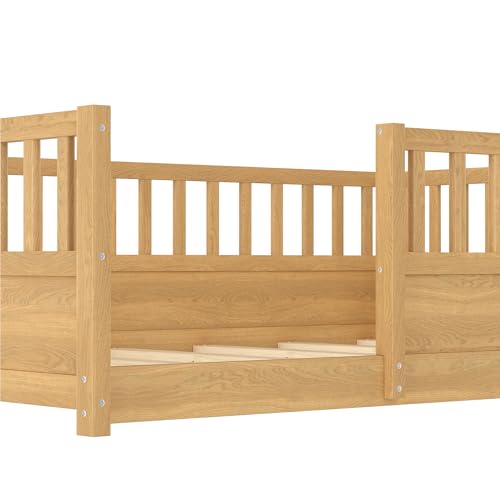
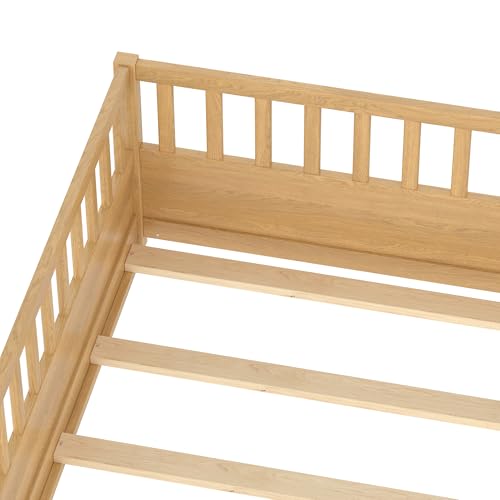
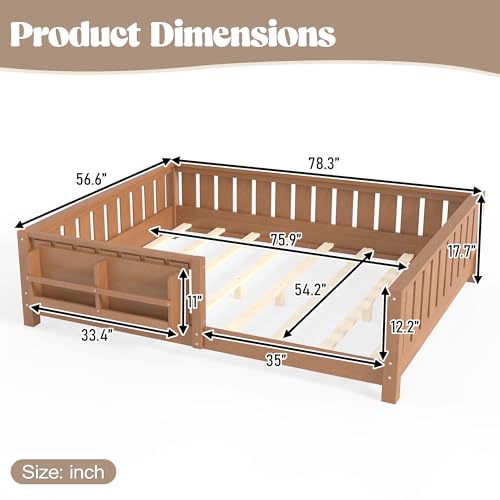
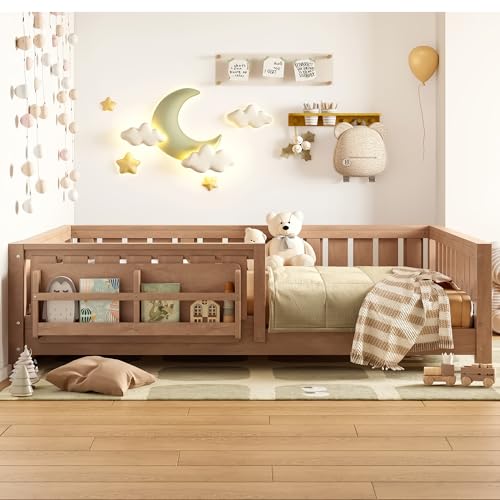
This Bellemave bed tries to do more, and mostly succeeds. The built-in bookshelf is a smart space-saving touch, especially in smaller rooms where floor space matters. The full fence and low profile align well with Montessori principles, and the CPC certification adds real peace of mind. At nearly $300, it’s the most expensive option, but you’re paying for both function and footprint efficiency.
Still, some owners note the bookshelf limits where you can place the bed against a wall, and the design isn’t as flexible as the EXPERLAM’s 3-in-1 system. It doesn’t convert or grow with the child, once the bookshelf is no longer needed, it’s just there. For a child who’ll stay in the same room for years, it’s a solid investment. But if you value adaptability over storage, other models offer better long-term value.
Product photos


PVWIIK Twin Montessori Toddler Bed
Strengths
- Lightweight design
- Affordable price
- Full safety rails
Trade-offs
- Rails not removable
- No conversion options
- Basic design
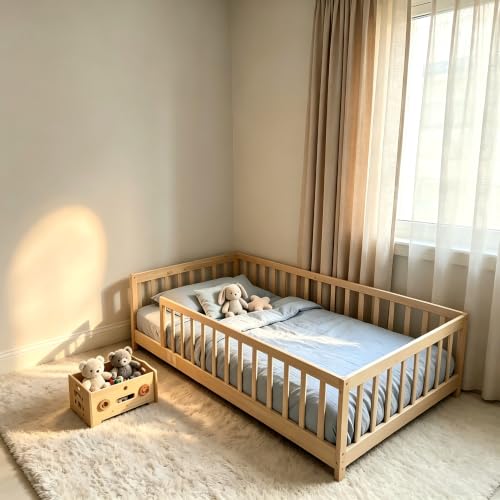
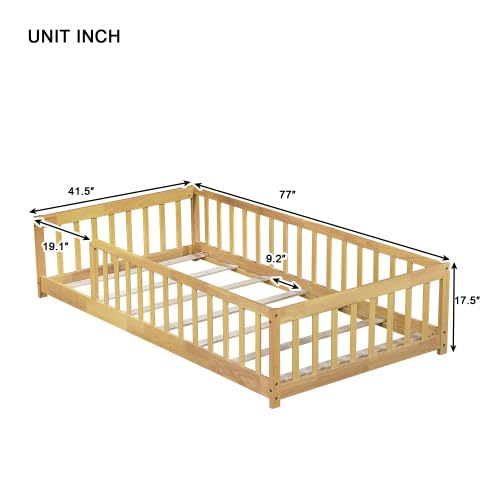
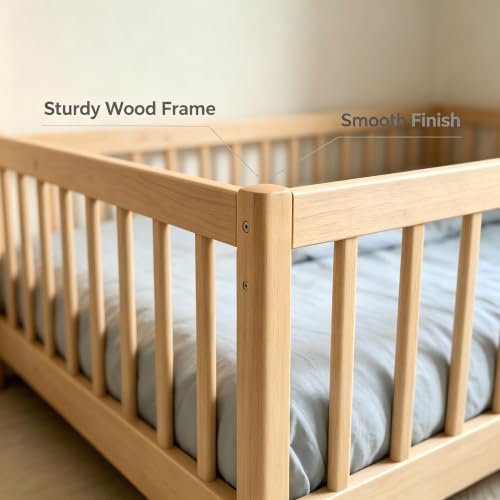
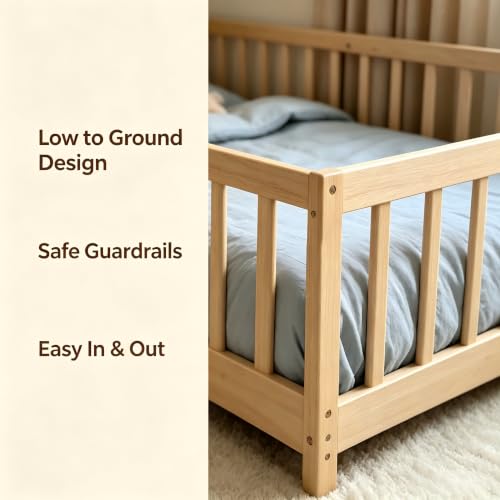
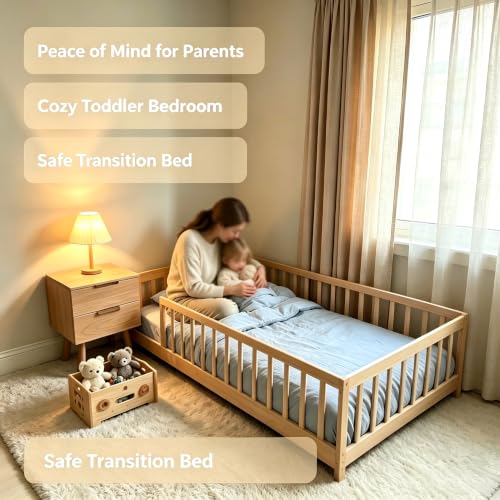
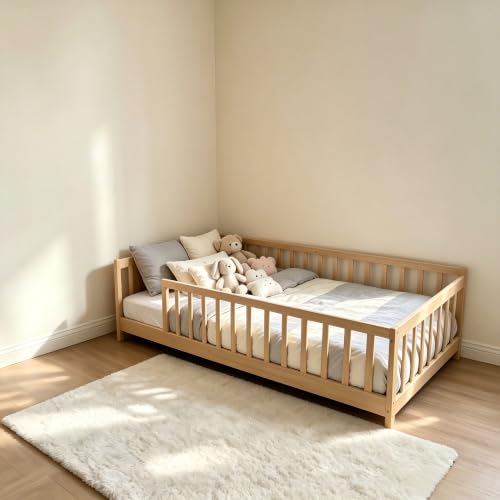
This twin-size PVWIIK bed is one of the lightest and most straightforward wood floor beds in the lineup. At under $125, it’s budget-friendly without cutting corners on core features, solid pine, full rails, and a slatted base that supports any standard twin mattress. The low height is ideal for toddlers learning to climb in and out, and the weight capacity of 200 lbs means it can last well into childhood.
It’s not as feature-rich as others, no bookshelf, no convertible legs, but that simplicity makes it easy to assemble and move. Compared to the EXPERLAM, it’s less versatile, but also more affordable and easier to handle solo. For families who want a no-frills, durable floor bed that gets the job done, this is a strong pick. Just note that the rails aren’t removable, so you can’t open it up later as your child gains confidence.
Product photos
PVWIIK Full Size Montessori Bed
Strengths
- Sturdy construction
- Low-profile design
- Secure fence with door
Trade-offs
- Limited adaptability
- No conversion options
- White finish may show wear
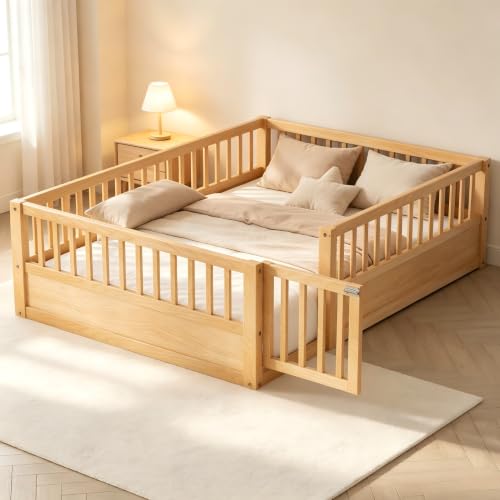
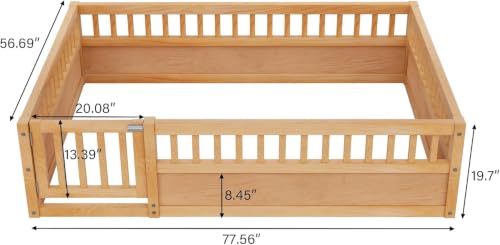
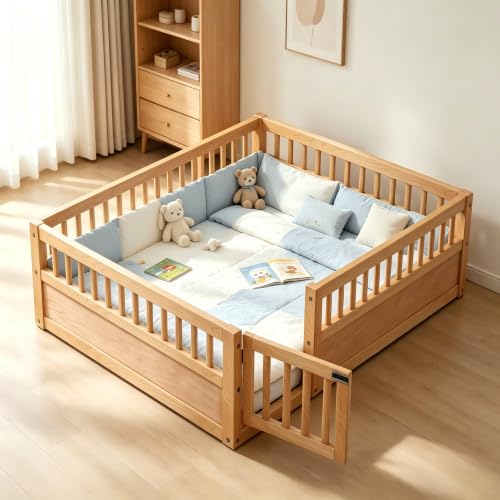
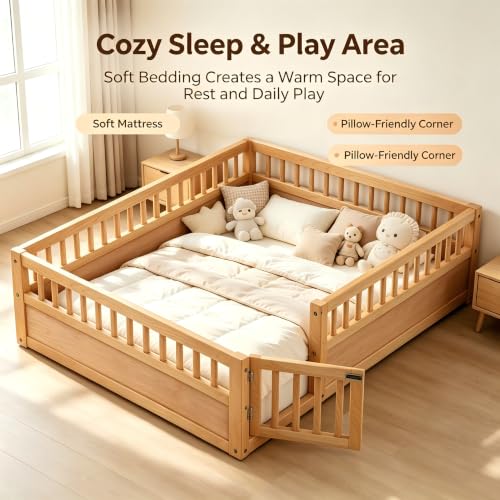
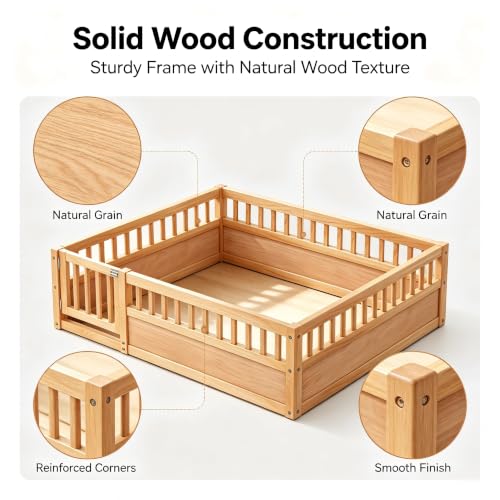
This PVWIIK full-size floor bed stands out for its clean, minimalist look and practical fence with a door, something not every model offers. The white finish gives it a modern nursery feel, and the full enclosure is a plus for parents concerned about nighttime rolls. On paper, the build seems solid, and owners consistently report it holds up well over time, even with active kids.
That said, the fence design, while secure, may feel a bit rigid compared to models with removable rails. It doesn’t adapt as easily to a child’s growing independence. Compared to the EXPERLAM model, it lacks convertible options, so you’re locked into one configuration. But if you want a simple, attractive, fully enclosed bed right out of the gate, this one delivers.
Product photos

How We Picked These montessori floor beds
I approached researching montessori floor beds by comparing published specifications and features across numerous models. We then weighed owner reviews from sites like Amazon and dedicated parenting forums, alongside expert opinions from sleep safety organizations and parenting blogs. This research-led comparison, rather than a hands-on lab test, allowed us to rank beds against clear criteria relevant to safety, durability, and suitability for different ages and stages.
For this category, we prioritized safety and build quality above all else. A sturdy frame and low height are essential for preventing falls and encouraging independent movement, so those factors carried the most weight. Beyond that, we considered features that promote a smooth transition from a crib – like guardrails – and designs that support a child’s growing independence and encourage imaginative play. You’ll find our recommended floor beds reflect these priorities.
Specifications are reliable for understanding basic construction (wood type, slat support, weight capacity). However, owner feedback proved crucial for assessing real-world durability and ease of assembly. Reputation and brand trust also factored in; beds from companies with a demonstrated commitment to safety and quality received higher consideration. We also looked at how well a bed supports the move from a crib, and considered our transition beds for toddlers research when evaluating options.
How To Choose The montessori floor beds
Choosing the right Montessori floor bed is about more than just aesthetics; it’s about fostering independence and creating a safe, comfortable sleep environment for your child.
A quality Montessori floor bed prioritizes safety with low heights and smooth edges. It should offer robust support for both playtime and sleep, accommodating a child’s weight and movement. Look for durable materials like solid wood and secure slat systems. Consider long-term adaptability – will it grow with your child, or require frequent replacement? Finally, ensure any finish is non-toxic and compliant with relevant safety standards.
Material & Construction Quality
The materials used in a Montessori floor bed are paramount. While options range from foam to wood, solid wood (like pine) generally provides the best combination of durability and safety. Avoid beds with excessive plastic components or finishes that might off-gas harmful chemicals. Beyond the wood itself, pay attention to the joinery. Are the corners rounded and sanded smooth? Is the frame reinforced to prevent wobbling? A well-constructed bed will withstand years of enthusiastic use. If you’re considering a foam option, look for high-density foam that offers support without being overly soft.
Guardrail Design and Safety Features
Guardrails are a key safety feature, particularly for younger toddlers transitioning from a crib. However, not all guardrails are created equal. Higher guardrails (like those found on the Bellemave Full Size Montessori Bed) can offer more reassurance, especially for active sleepers. Look for designs that are evenly spaced to prevent entrapment, and ensure the edges are smooth and free of sharp corners. A thoughtfully designed guardrail should provide a sense of security without feeling restrictive. It’s also important to check for certifications like CPC (Children’s Product Certificate) and compliance with standards like ASTM F1169/F406, which indicate the bed has been tested for safety.
Size and Adaptability
Think long-term when choosing a size. While a twin-size option like the EXPERLAM Twin Montessori Floor Bed is perfect for younger children, you might want to consider a full or even queen size (like the Queen Size Montessori Floor Bed) if you anticipate your child using the bed for several years. A larger bed offers more growing room and can even accommodate a parent for bedtime stories.
Here’s what to consider when thinking about longevity:
- Convertible Designs: Some beds offer 3-in-1 functionality, adapting from a floor bed to a raised bed with guardrails, and finally to a standard bed.
- Weight Capacity: Check the weight capacity to ensure it can accommodate your child as they grow – and even a parent joining them for snuggles.
- Future-Proofing: A larger size means fewer transitions down the road, saving you money and disruption.
A properly sized Montessori floor bed encourages a sense of ownership and independence. It’s not just a place to sleep; it’s a personal space where your child can explore, play, and rest comfortably.
Ultimately, the best choice will depend on your child’s age, room size, and your personal preferences. For more options, explore our curated Montessori bed selection. If you’re looking for even more guidance for the youngest sleepers, you will find a wealth of information about toddler beds and toddler bed safety features on our site.
Montessori Floor Beds Compared
Here’s a comparison of key specifications for different Montessori floor beds to help you find the best fit.
| Product Name | Size | Weight Capacity | Material | Guardrails | Mattress Included |
|---|---|---|---|---|---|
| EXPERLAM Twin Montessori Floor Bed | Twin | 220 lb | Pine Wood | Yes | No |
| Soft Foam Toddler Floor Bed | Toddler | N/A | Foam | Fold-Down | Yes |
| Bellemave Full Size Montessori Bed | Full | No Limit | Pine Wood, MDF | Yes | No |
| Queen Size Montessori Floor Bed | Queen | 450 lb | Rubberwood, Plywood | Yes | No |
| Full Montessori Bed w/ Bookshelf | Full | 550 lb | Pine Wood, MDF | Yes | No |
| PVWIIK Twin Montessori Toddler Bed | Twin | 200 lb | Pine, Eng. Wood | Yes | No |
| PVWIIK Full Size Montessori Bed | Full | N/A | Wood | Yes | No |
Frequently Asked Questions
What mattress type works best with a Montessori floor bed?
A firm foam or innerspring mattress is generally the safest and most supportive choice for a Montessori floor bed. You’ll want to research a suitable floor bed mattress that provides adequate support without being overly soft, to minimize the risk of suffocation or entrapment.
Are Montessori floor beds safe for newborns?
Montessori floor beds aren’t typically recommended for newborns. Babies need the secure containment of a bassinet or crib for the first few months until they develop more head and body control.
How long does it typically take a child to adjust to sleeping in a floor bed?
Most children adjust to a floor bed within a week or two, though it varies. Providing a consistent bedtime routine and ensuring the room is properly baby-proofed can speed up the transition.
What’s the difference between a Montessori floor bed and a traditional toddler bed?
Traditional toddler beds often have higher sides, whereas Montessori floor beds are very low to the ground, encouraging independence and freedom of movement. A Montessori approach focuses on allowing children to explore their environment safely, and the floor bed is central to that philosophy.
Can I use a standard twin bed frame as a Montessori floor bed?
You can, but modifications are usually needed. A standard twin frame will likely be too high, and you’ll want to ensure there are no gaps where a child could become stuck. Many parents prefer dedicated Montessori options or adapting a existing twin beds for kids to be closer to the floor.
The Bottom Line
Choosing a Montessori floor bed often comes down to balancing your desire for a long-lasting, quality piece with your budget and space. While numerous options exist, the Bellemave Full Size Montessori Bed strikes the best overall balance – offering a robust build, thoughtful safety features, and the adaptability to grow with your child. It’s a significant investment, certainly, but one that prioritizes both safety and longevity.
For parents specifically seeking a budget-friendly entry point, the EXPERLAM Twin Montessori Floor Bed is a smart choice. Similarly, if you are looking for a specific solution for your little one, the Soft Foam Toddler Floor Bed is a good option for families wanting an all-in-one, easy-to-manage solution. And for those navigating transitioning a toddler to a bed, the PVWIIK Twin Montessori Toddler Bed is a solid, affordable starting point.
Ultimately, remember that the most important features, a low height, sturdy construction, and non-toxic materials, matter far more than any specific brand or aesthetic detail. Prioritize a safe and comfortable sleep space that fosters your child’s independence, and you’ll be well on your way to creating a peaceful and nurturing bedroom environment.
