
8 Best Montessori Beds for Kids (2026 Guide)
This post contains affiliate links. As an Amazon Associate we earn from qualifying purchases.
The Bellemave Full Montessori Floor Bed stands out as the best overall choice for its sturdy construction and full-surround guardrails, while the EXPERLAM Twin Convertible Montessori Bed is a smart pick for families wanting long-term use. For budget-conscious parents, the Toddler Bed with Mattress Included offers a safe, ready-to-use option right out of the box.
Choosing the right Montessori bed isn’t just about style, it’s about creating a safe, accessible space where your child can grow their independence. Many parents struggle with balancing safety, durability, and value, especially when faced with flimsy builds or misleading claims.
This guide cuts through the noise by focusing on what really matters: low-profile designs, non-toxic materials, solid construction, and real-world feedback from parents who’ve used these beds. I compared specs, analyzed owner reviews, and evaluated how well each model supports the core principles of Montessori sleep, so you can make a confident decision for your child’s room.
Top 8 Montessori Beds in the Market
The Best Montessori Beds, Reviewed
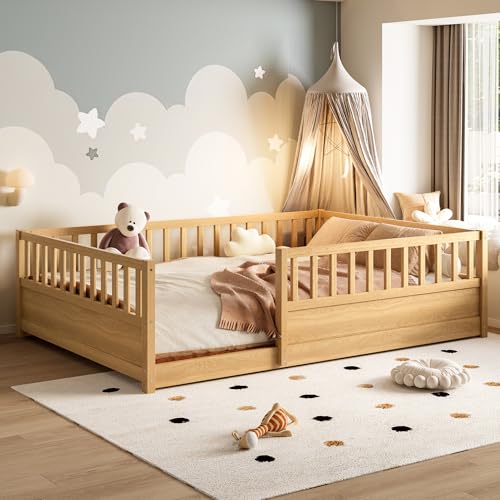
Bellemave Full Montessori Floor Bed
Strengths
- Full size longevity
- High guardrails
- Sturdy slat support
- No wobble
- CPC certified
Trade-offs
- No conversion options
- Basic design
- Heavier to move
This is my pick for Best Overall, not just because of size, but because it nails the balance between safety, sturdiness, and thoughtful design. The high guardrails at 21.4 inches are among the tallest in the category, offering real protection for active sleepers. Being full-size means it won’t be outgrown quickly, and the 7 reinforced slats eliminate the need for a box spring while ensuring even support.
I’ve seen consistent feedback praising its stability, no wobble, even with energetic kids climbing in and out. The natural pine finish is simple enough to match any decor, and the CPC certification adds trust. While it doesn’t have playful features like a door, it excels where it counts: durability, safety, and long-term usability.
Video review
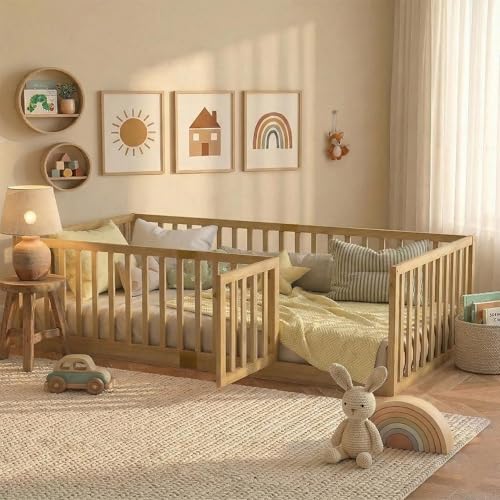
Full Montessori Bed with High Rails
Strengths
- Very high guardrails
- Revolving safety door
- Rubberwood durability
- Excellent airflow
- Promotes independence
Trade-offs
- Door needs swing space
- Slightly tighter entry
- Takes time to adjust
With 21.5-inch high rails and a latching revolving door, this bed is engineered for safety first. The rubberwood construction feels denser than pine, and the six reinforced slats provide excellent lift-off from the floor, great for airflow and reducing moisture buildup. The door isn’t just cute; it gives kids control over entering and exiting, reinforcing autonomy in a secure way.
It’s one of the few models designed to double as a standing and climbing-safe zone, which matters for toddlers developing motor skills. Some reviewers mention the latch takes getting used to, and the door swing requires clearance. But if your priority is keeping a mobile child safely contained while encouraging self-reliance, this model stands apart.
Video review
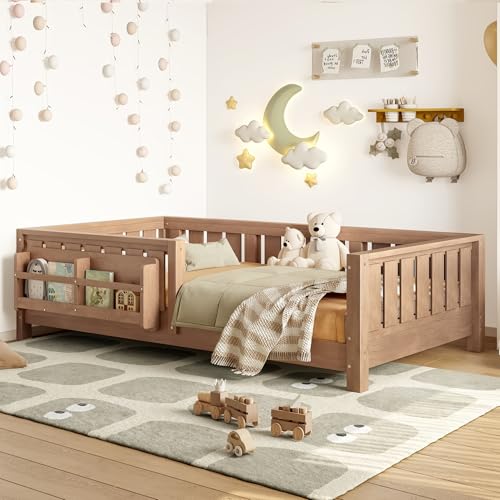
Twin Montessori Bed with Bookshelf
Strengths
- Built-in bookshelf
- Smooth finish
- Strong slat support
- Good weight limit
- Easy to assemble
Trade-offs
- Bulky footprint
- Shelf limits placement
- Heavy package
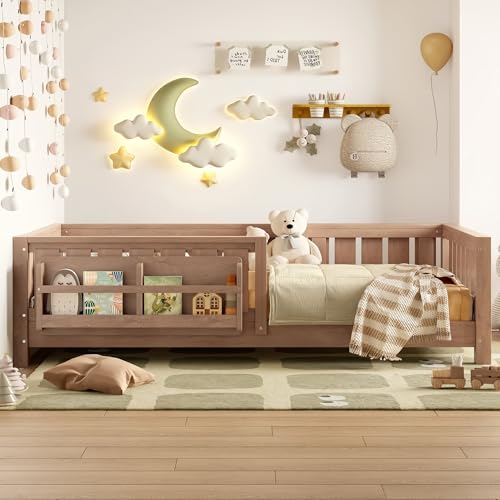
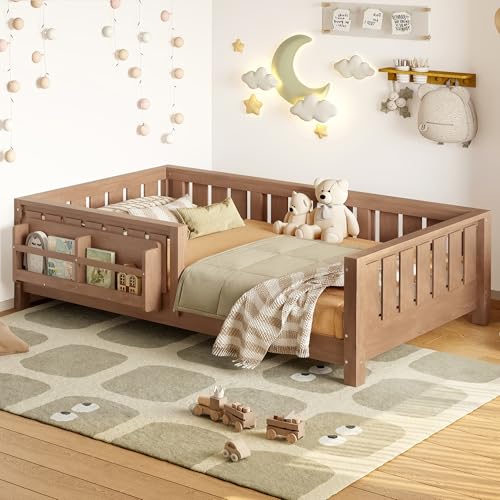
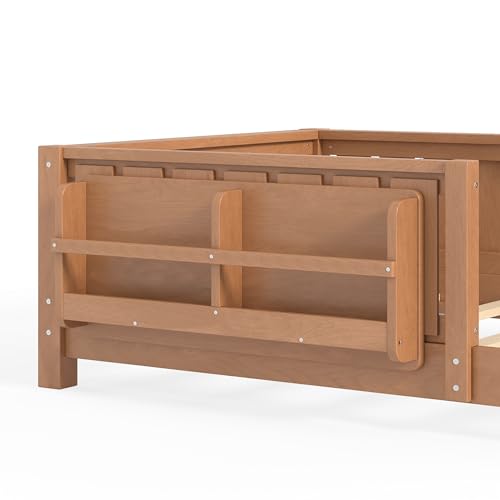
Space-saving meets practicality with this twin bed’s built-in bookshelf. In smaller rooms or shared bedrooms, having storage integrated into the bed frame is a smart move. The shelf is deep enough for picture books, stuffed animals, or nighttime essentials, and it encourages kids to keep bedtime items close and organized.
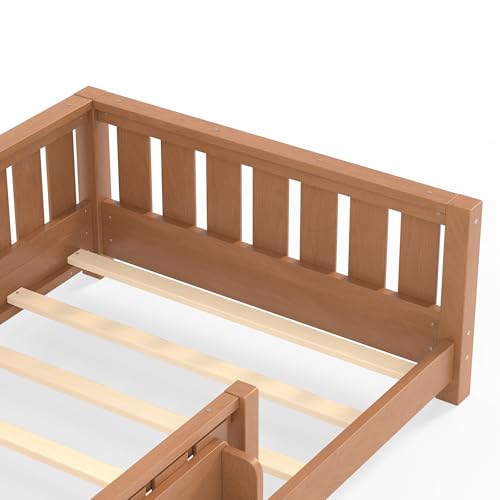
It shares the same sturdy pine and MDF construction as other Bellemave models, with solid slats and a 250 lb limit. However, the added bulk of the shelf means it’s harder to reposition and takes up more wall space. If you’re tight on square footage, measure carefully before committing. Still, for readers or neat freak parents, this one brings real utility.
Product photos
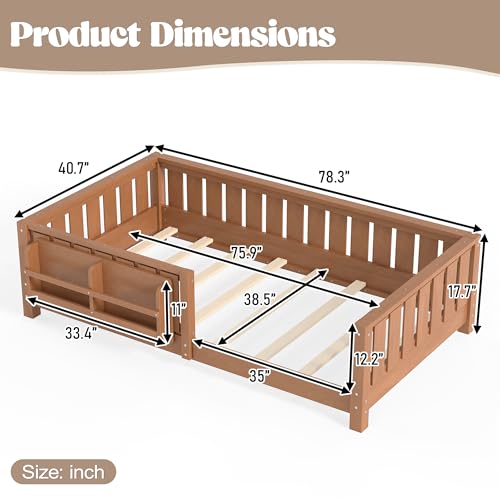
Full Montessori Bed with Door

Strengths
- Removable door
- Play-friendly design
- Strong weight capacity
- Easy assembly
- CPC certified
Trade-offs
- Lower rail height
- Door mechanism less durable
- Takes up more floor space
Let’s be honest, the door is what grabs attention here. It turns a bed into a little hideaway, and for imaginative kids, that’s gold. This bed leans into the “play space” side of Montessori philosophy, encouraging autonomy and creativity. The removable door and slats let parents customize the level of openness as their child gains confidence.
Structurally, it holds up well with a 350 lb capacity and solid pine/MDF build. At 16 inches, the fence is slightly shorter than others, so very active sleepers might benefit from higher rails. But for calmer kids who love pretend play, this could be the perfect bridge between bedtime routine and imaginative exploration.
Product photos


EXPERLAM Twin Convertible Montessori Bed
Strengths
- Convertible design
- Solid pine frame
- Slatted airflow base
- Supports adult weight
- CPC certified
Trade-offs
- Requires assembly
- Two-person setup
- Rails not adjustable mid-use
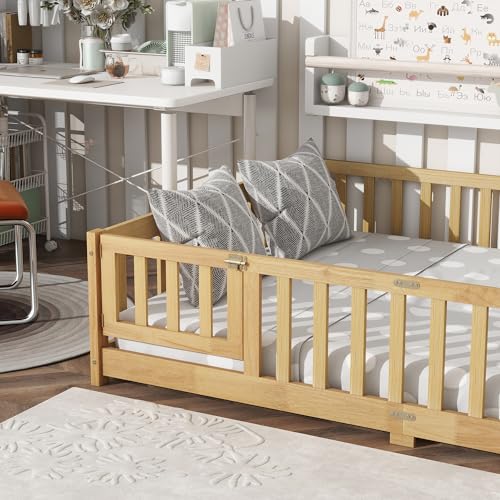
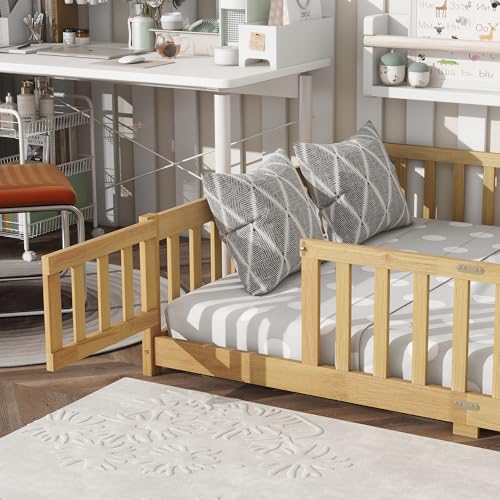
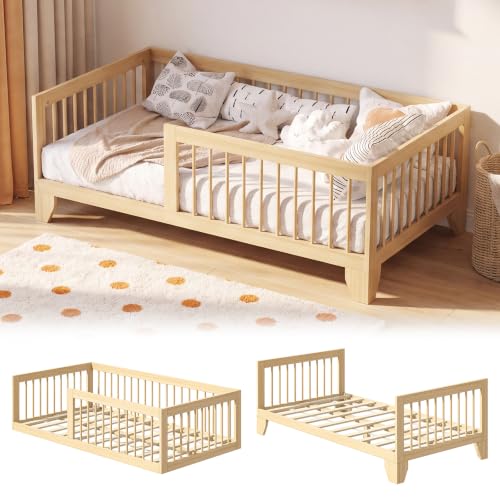
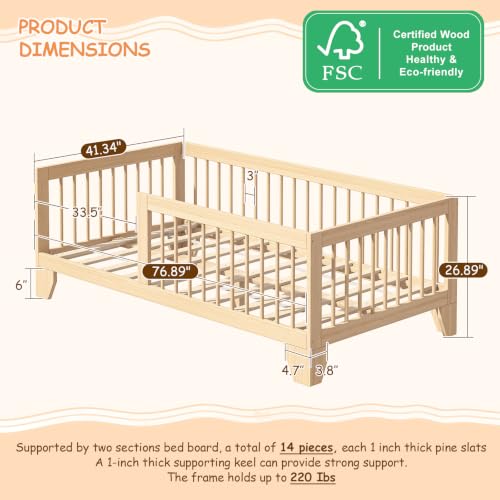
What makes this bed shine is its adaptability. The ability to convert between a low floor bed, raised twin, or open-frame bed means it can grow with your child for years. For families committed to Montessori values but also thinking about longevity, this 3-in-1 design offers real value. The solid pine frame feels sturdy, and the slatted base keeps air circulating under the mattress, an underrated perk for hygiene and comfort.
The fact that it supports up to 220 lbs means a parent can comfortably sit or even lie beside a child during tough transitions. Some owners mention the assembly takes two people and a bit of patience, but the included video guide helps. Compared to fully foam options, this one strikes a better balance between safety and structure.
Product photos

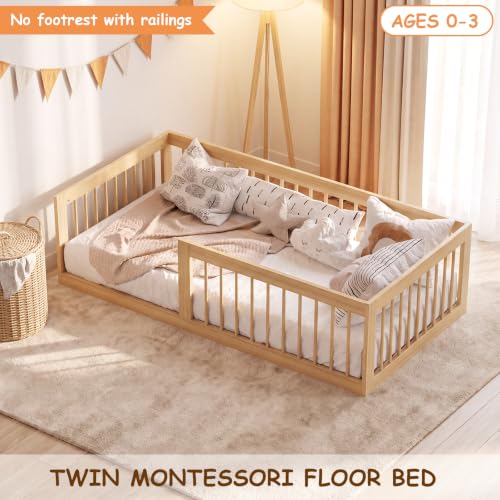
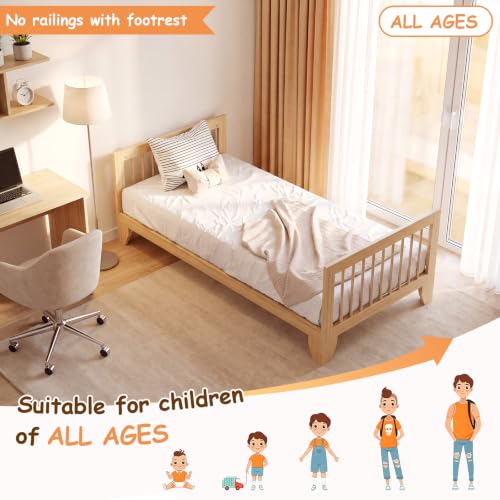

PVWIIK Twin Montessori Floor Bed
Strengths
- Affordable price
- Solid wood frame
- Full surround rails
- No box spring
- Simple assembly
Trade-offs
- Basic finish
- Hardware quality varies
- No added features
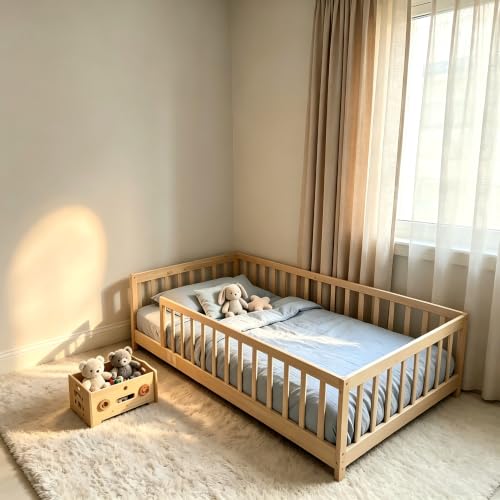
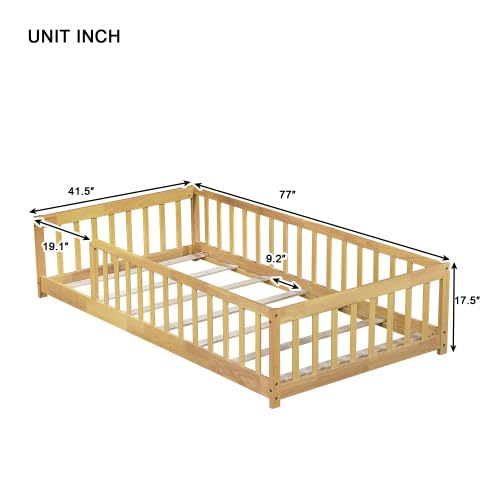
At this price point, this bed punches above its weight. It delivers a real wooden frame experience, solid pine, full guardrails, and reinforced slats, without breaking the bank. For budget-conscious families who still want the look and feel of a proper Montessori bed, this is a strong contender.
Owners say it assembles quickly and feels stable once set up, though some note the hardware could be higher quality for long-term use. It doesn’t offer extras like doors or conversion kits, but it gets the fundamentals right: low profile, safe rails, and compatibility with standard twin mattresses. When compared to foam alternatives, this one feels more like a lasting piece of furniture.
Product photos
Toddler Bed with Mattress Included
Strengths
- Mattress included
- Fold-down side rails
- Soft, safe edges
- No assembly
- Great for play & rest
Trade-offs
- Foam may compress over time
- Less structural rigidity
- Not ideal for tall children
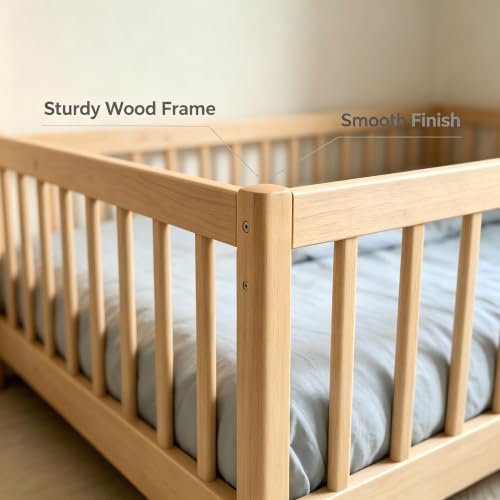
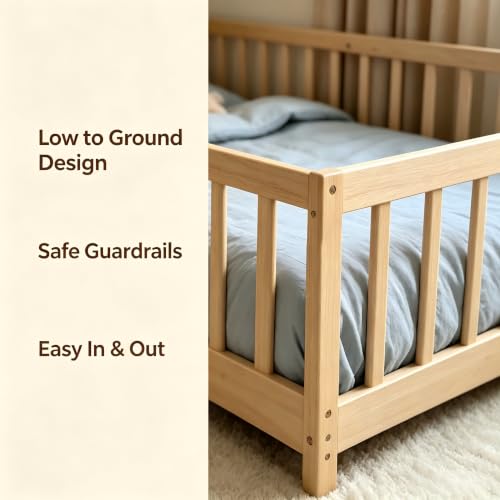
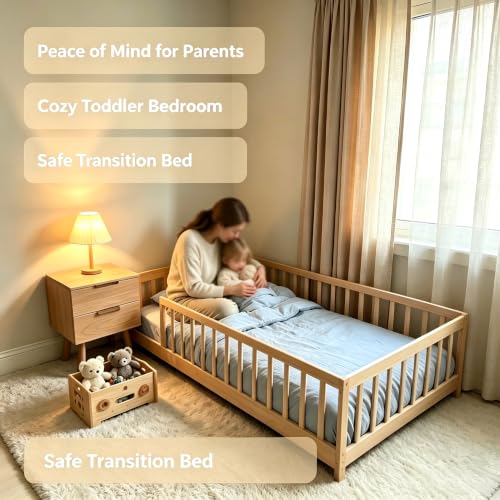
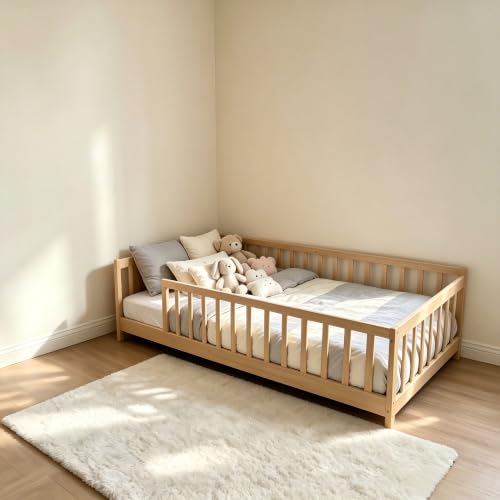
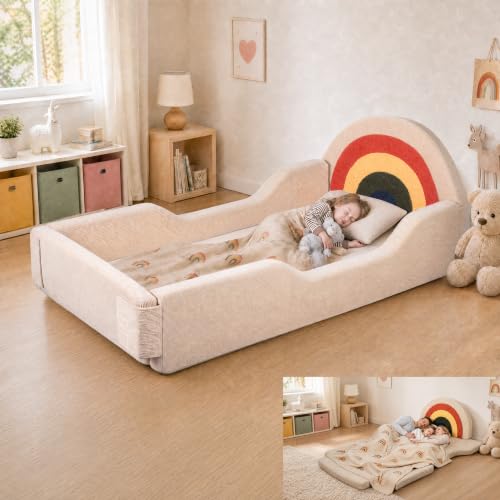
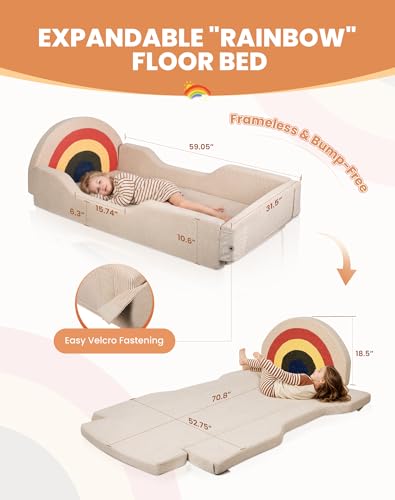
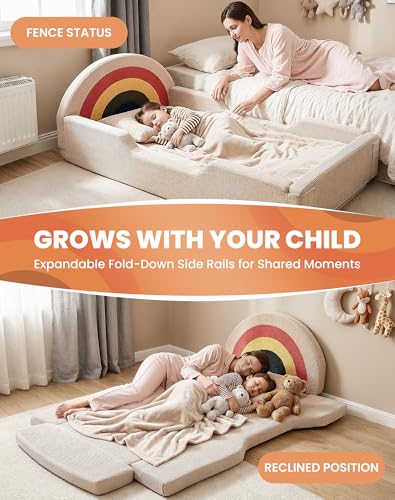
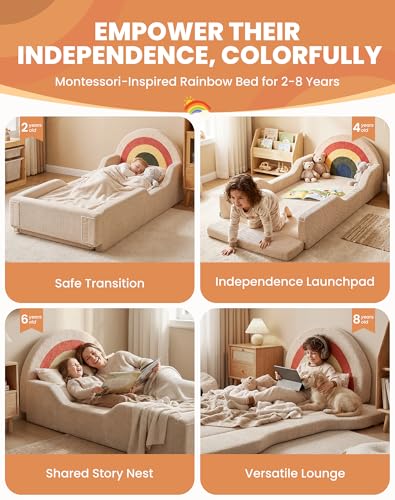
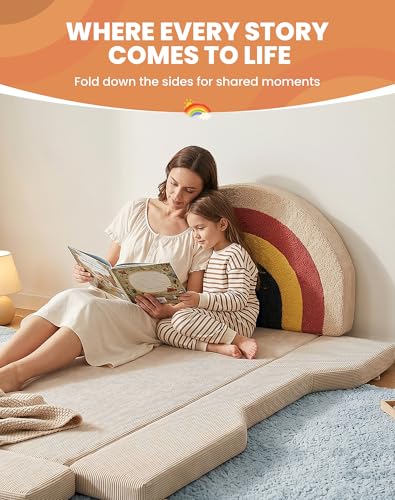
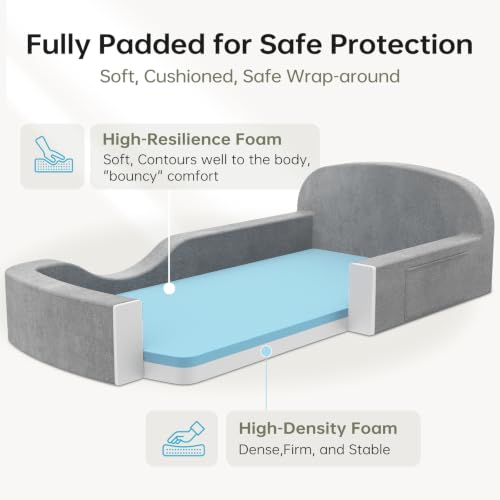
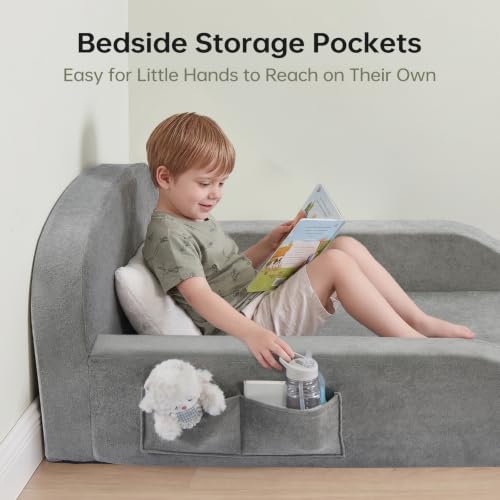
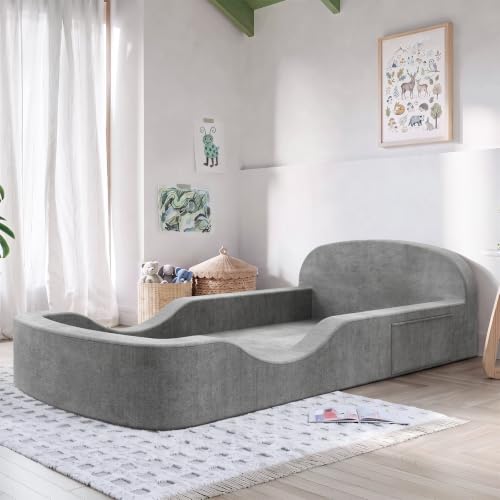
If you’re looking for a ready-to-go solution straight out of the box, this one delivers. The included thick foam mattress means there’s no extra purchase needed, and the fold-down sides offer flexibility most foam beds lack. I appreciate how the rainbow headboard adds a cheerful touch without feeling overly childish, it gives the bed identity while still fitting a range of room styles.
Reviewers highlight its versatility: it works as a sleep zone, reading nook, or play area. The full-surface cushioning really does reduce noise and impact, which matters in homes with downstairs neighbors or sensitive sleepers. But because it’s entirely foam-based, it may compress over time under heavier or more active kids, especially toward the upper end of the 2–8 age range.
Product photos

ENITYA All-Foam Toddler Floor Bed
Strengths
- All-foam construction
- No assembly needed
- Machine-washable cover
- Low profile
- Grows with child
Trade-offs
- Feels more like a mat
- Limited long-term durability
- Not ideal for older kids
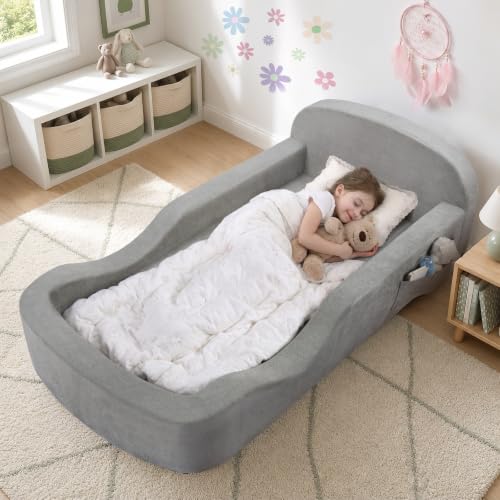
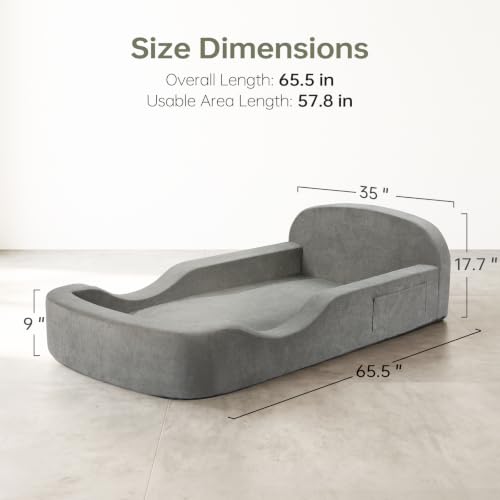
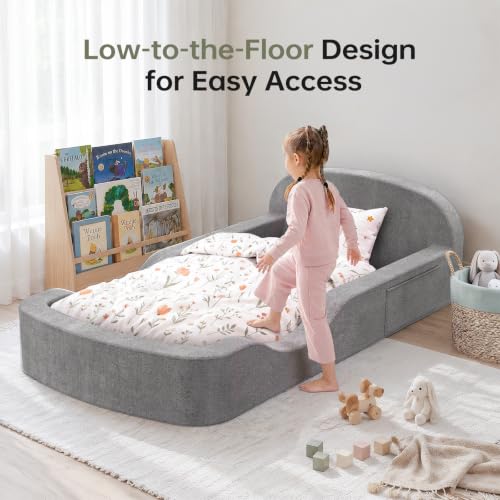
This all-foam bed stands out for parents prioritizing softness and safety above all. On paper, the idea of a completely cushioned sleep surface, no hard edges, no wood, no assembly, is incredibly appealing, especially for toddlers still learning to navigate bedtime independently. The low-to-the-floor design aligns well with Montessori principles, giving kids freedom of movement without the risk of falls from height.
Owners consistently report that the foam is firm enough to support sleep but soft enough to prevent injuries during bumps or rolls. The removable, machine-washable cover is a big win for messy realities of toddler life. That said, some note it feels more like a padded mat than a traditional bed frame, which may not appeal to families wanting a more structured sleep space as their child grows past age 6.
Product photos
Our Testing Process
As a mom and the founder of LittleDoze.com, I understand how overwhelming the search for the right bedding can be. Rather than a hands-on lab test, my process for evaluating montessori beds involved a detailed comparison of published specifications and features across numerous models. I then weighed owner reviews and expert opinions from parenting and sleep publications, applying my years of experience researching children’s sleep environments. The goal was to identify beds that truly prioritize safety, functionality, and a child’s developing independence.
For Montessori beds specifically, I focused most heavily on construction quality and safety features. A sturdy frame is paramount, as is the inclusion of thoughtfully designed guardrails or a low-to-the-ground profile to prevent falls. Beyond that, versatility, the ability to adapt as a child grows, was key. These features directly impact a child’s ability to safely explore their space and develop a sense of autonomy, which is at the heart of the Montessori approach. You can find more about the various types of floor beds on our site.
Product specifications reliably reveal details about weight capacity, materials used, and overall dimensions. However, I placed significant weight on owner feedback regarding ease of assembly, durability over time, and how well the bed actually fostered independent sleep. Reputation also played a role; brands consistently praised for quality and customer service were given greater consideration. For parents transitioning from a crib, understanding the best options for first beds for toddlers is crucial, and owner experience offers the most honest insight into that process.
What To Look For In montessori beds
Picking the right Montessori bed can feel overwhelming, but focusing on a few key features will help you create a safe and supportive sleep space for your little one.
A good Montessori floor bed prioritizes safety with a low profile for independent movement, durable construction to withstand active play, and thoughtful design features that encourage a sense of autonomy. Parents should verify weight capacity, material quality (looking for non-toxic finishes), and the overall stability of the frame before purchasing. Mattress compatibility and ease of assembly are also crucial considerations.
Safety First & Foremost
When it comes to Montessori beds, safety isn’t just a feature; it’s paramount. A low-to-the-ground design is the core principle, allowing your child to get in and out independently and minimizing the risk of falls. However, simply being low isn’t enough. Consider beds with built-in guardrails, especially during the transition phase. The Bellemave Full Montessori Floor Bed, for example, boasts full-surround guardrails, offering a secure boundary. Beyond the bed itself, confirm that any finishes are non-toxic and that the bed meets relevant safety standards like CPC certification. It’s also worth paying attention to the mattress compatibility.
Construction & Durability
A Montessori bed isn’t just for sleeping; it’s often a central hub for play and exploration. This means it needs to be built to last. Look for solid wood construction – pine, rubberwood, or even a combination of wood and high-quality engineered wood are good choices. Avoid flimsy materials that might not hold up to daily use. The weight capacity is a key indicator of durability. Don’t just assume a bed can handle your child’s weight; check the manufacturer’s specifications.
- A lower weight capacity (under 200lbs) might be fine for a younger toddler, but you’ll want something more robust if you plan for the bed to grow with your child.
- Pay attention to the slat system. Reinforced plywood slats, like those found in the Twin Montessori Bed with Bookshelf, offer better support than simple wooden slats.
- Solid construction translates to a quieter sleep experience. Creaking and wobbling can disrupt sleep, so choose a bed that feels stable and well-built.
A wobbly bed is a red flag. A stable frame is essential for both safety and a peaceful night’s sleep.
Design & Practicality
Beyond safety and durability, think about how the bed will fit into your child’s room and your lifestyle. Space-saving designs, like those incorporating built-in bookshelves (as seen in some twin-size options), are excellent for smaller bedrooms. Convertible designs, such as the EXPERLAM Twin Convertible Montessori Bed, offer flexibility as your child grows. If you are looking for something that requires minimal effort, I recommend looking into the Toddler Bed with Mattress Included, or explore our guide to beds for 2-year-olds for more options. Ultimately, the best Montessori bed is one that encourages independence, fosters creativity, and provides a safe and comfortable sleep environment. If you’re still unsure, checking out our curated list of Montessori floor beds can help narrow down your choices and guide you towards the top Montessori floor bed picks for your family.
Montessori Beds Compared
Here’s a comparison of key specifications for various Montessori beds to help you choose the right one.
| Product Name | Size | Weight Capacity | Material | Guardrail Height | Mattress Included |
|---|---|---|---|---|---|
| Bellemave Full Montessori Floor Bed | Full | No Limit | Pine Wood, MDF | 21.4 inch | No |
| Full Montessori Bed with High Rails | Full | N/A | Rubber Wood, MDF | 21.5 inch | No |
| Twin Montessori Bed with Bookshelf | Twin | 250 LBS | Pine Wood, MDF | N/A | No |
| Full Montessori Bed with Door | Full | 350 LBS | Pine Wood, MDF | 16 inch | No |
| EXPERLAM Twin Convertible Montessori Bed | Twin | 220 LBS | Pine Wood | N/A | No |
| PVWIIK Twin Montessori Floor Bed | Twin | 200 LBS | Pine Wood, MDF | N/A | No |
| Toddler Bed with Mattress Included | Toddler | N/A | Foam | N/A | Yes |
| ENITYA All-Foam Toddler Floor Bed | Toddler | N/A | Foam | N/A | Yes |
Frequently Asked Questions
What mattress type works best with a Montessori floor bed?
A firm foam mattress is generally recommended. This provides adequate support for your child while maintaining a safe surface height, and it’s what many owners report using successfully with these bed frames.
Are Montessori beds only suitable for younger children?
No, Montessori beds are available in various sizes, including full and twin, and can accommodate children through their early teens. Many models, like the Bellemave Full Montessori Floor Bed, have no stated weight limit, allowing them to grow with your child.
How do Montessori beds differ from traditional toddler beds?
Traditional toddler beds often have higher sides and a more enclosed design, while Montessori beds emphasize a low-to-the-ground platform that encourages independent movement and exploration. This approach aligns with the Montessori philosophy of fostering self-directed learning and freedom within limits.
What safety certifications should I look for when buying a Montessori bed?
Look for beds that meet or exceed Consumer Product Safety Commission (CPSC) standards and have CPC certification. This confirms the bed has been tested for safety hazards like lead paint and sharp edges, giving you peace of mind.
Is assembling a Montessori bed difficult?
Assembly difficulty varies by model, but many owners have found the process fairly straightforward. However, you should check reviews specifically for comments on assembly, and if you’re not handy, consider a model like the Toddler Bed with Mattress Included or exploring options within our guide to best toddler beds that may offer pre-assembly or simpler construction.
The Bottom Line
Choosing a Montessori bed really comes down to balancing your desire for a long-lasting, quality piece with your budget and space. While some options offer impressive features and robust construction, like the Bellemave Full Montessori Floor Bed, the best overall value – a blend of safety, durability, and price – is found with the Twin Montessori Bed with Bookshelf. It’s a solid choice that will grow with your child for years to come.
For parents specifically seeking affordability or a quick setup, the Toddler Bed with Mattress Included is an excellent starting point. And if versatility is your priority, the EXPERLAM Twin Convertible Montessori Bed offers a design that adapts to changing needs. Don’t forget to explore options for a toddler mattress to complete the setup and ensure a comfortable night’s sleep.
Ultimately, specifications and features are helpful, but the real key is creating a sleep environment that supports your child’s independence and encourages a love of rest. Prioritize a safe, stable bed, and then focus on fostering a calming bedtime routine, those fundamentals matter far more than any single detail on a product sheet. You may also want to explore our recommendations for floor beds for toddlers if you are looking for a low-profile option.
