
9 Best Beds for 2-Year-Olds 2026
This post contains affiliate links. As an Amazon Associate we earn from qualifying purchases.
The Soft Foam Rainbow Toddler Floor Bed is our top pick for most families, it’s safe, soft, and makes transitioning from a crib feel natural. For a more structured option, the Dream On Me Emma 3-in-1 Bed offers great long-term value by converting into toddler furniture. If you’re drawn to wood, the PVWIIK Wooden Montessori Floor Bed combines sturdy construction with clean, minimalist style.
Parents often feel overwhelmed when it’s time to move their two-year-old out of a crib. There are so many options, and the stakes feel high, safety, sleep quality, and independence all hinge on this one decision. After comparing the field and digging into specs, owner feedback, and safety standards, I focused on beds that support a smooth transition while meeting real-world needs.
This guide breaks down what actually matters: low-to-the-ground designs, non-toxic materials, and builds that hold up to daily toddler life. I looked at how each bed supports development, ease of use, and long-term value, so you can choose with confidence.
Top 8 Beds For 2 Year Olds in the Market
The Best Beds For 2 Year Olds, Reviewed
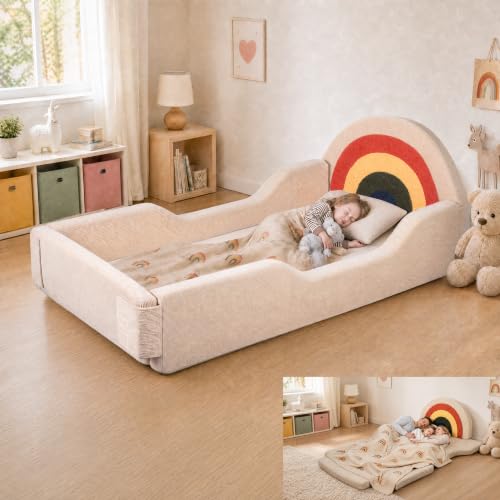
Soft Foam Rainbow Toddler Floor Bed
Strengths
- No assembly
- Mattress included
- Soft, safe edges
Trade-offs
- Limited weight capacity
- Foam may compress over time
- Not for older kids
This is the most thoughtful design in the group for families prioritizing safety, simplicity, and emotional comfort. The all-foam construction eliminates hard edges entirely, and the included mattress means no extra shopping or assembly, just unbox and go. The fold-down rails are a smart touch, offering flexibility as your child gains confidence.
Reviewers consistently praise how well it supports Montessori principles: low to the ground, easy access, and child-led independence. The rainbow headboard adds a cheerful, familiar touch that many kids bond with. Compared to wood or plastic frames, this one feels like a true hybrid of sleep and play space. For most families, this is the easy pick.
Video review
COSYSUPER Soft Velvet Toddler Floor Bed

Strengths
- Soft, plush exterior
- Removable guardrails
- Attractive modern look
Trade-offs
- Less structural rigidity
- Higher price for fabric build
- Not for active toddlers
This bed stands out for its soft, plush design, velvet fabric, rounded edges, and a floor-hugging profile that feels more like a cozy nest than a traditional frame. The emphasis on comfort and safety resonates with parents wary of hard wood or plastic edges. Owners note that the soft guardrails provide peace of mind without looking clinical.
But at this price, expectations rise. While the look is undeniably inviting, some reviews point to the frame lacking rigidity over time, especially under active kids. It’s not built for jumping or rough play. Still, for a calm sleeper who values soft textures, this one offers a unique alternative to standard builds.
Video review
Duxelifin Twin Montessori Floor Bed

Strengths
- LED lighting included
- Book ledge included
- High safety rails
Trade-offs
- Higher price point
- White finish shows wear
- Assembly takes time
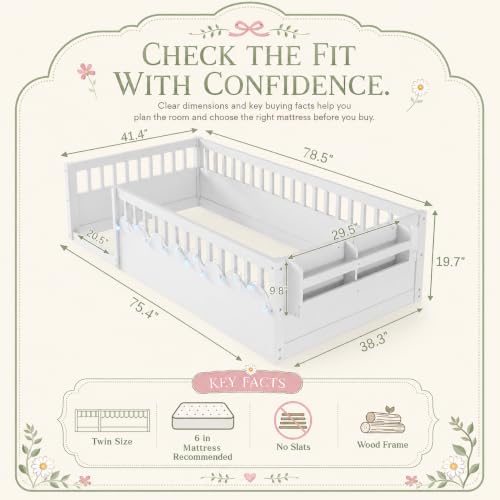
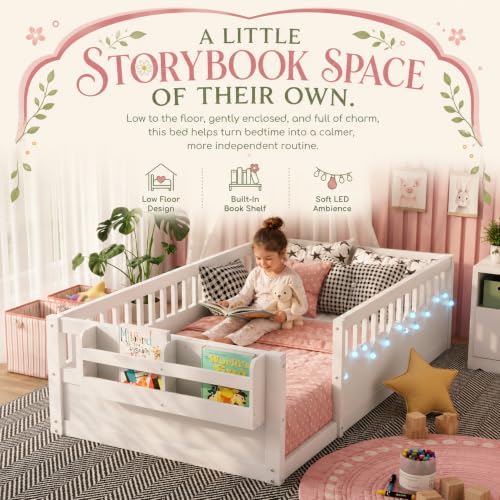
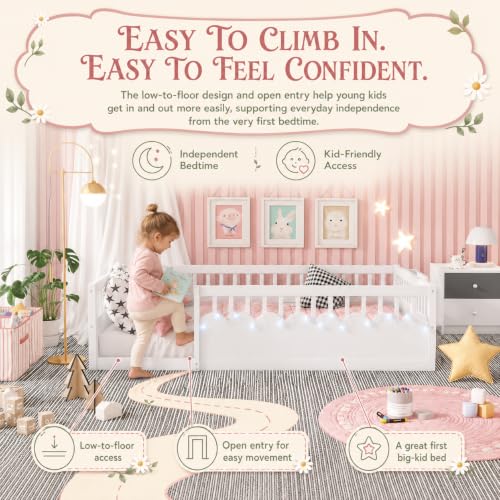
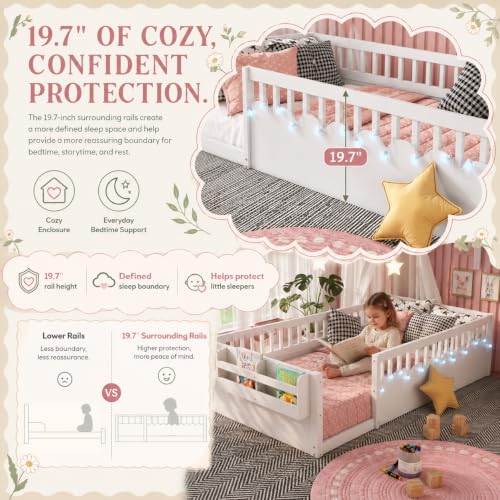
This bed redefines what a toddler bed can be. The integrated LED lighting and attachable book ledge turn it into a full sleep and play ecosystem. The high rails and 360° bumper system offer exceptional containment, which many parents of active sleepers find reassuring. The Montessori-inspired low profile encourages independence, while the hybrid pine-MDF build ensures stability.
What really sets it apart is versatility. It’s not just a bed, it’s a reading nook, a play zone, and a calming nighttime sanctuary. Owners love how the lighting helps with bedtime routines and reduces night fears. Yes, it’s one of the pricier options, but the features justify it for families who want a multifunctional centerpiece.
Product photos

PVWIIK Wooden Montessori Floor Bed
Strengths
- Sturdy wood construction
- Grows with child
- Natural finish
Trade-offs
- Firmer sleep surface
- Assembly required
- Slats may show wear
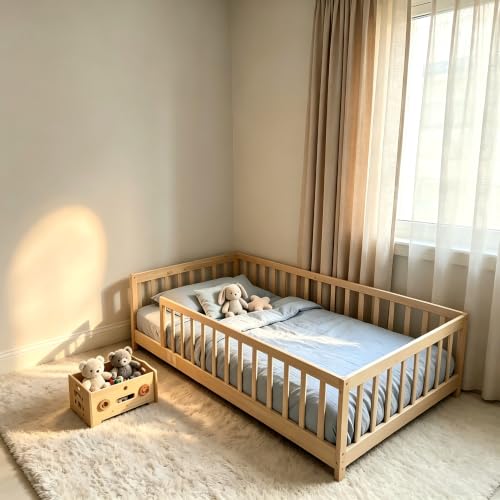
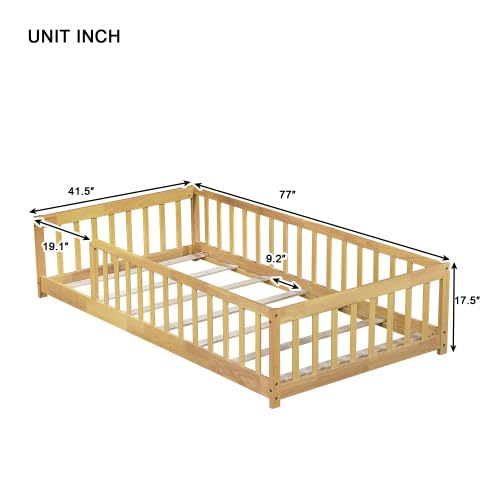
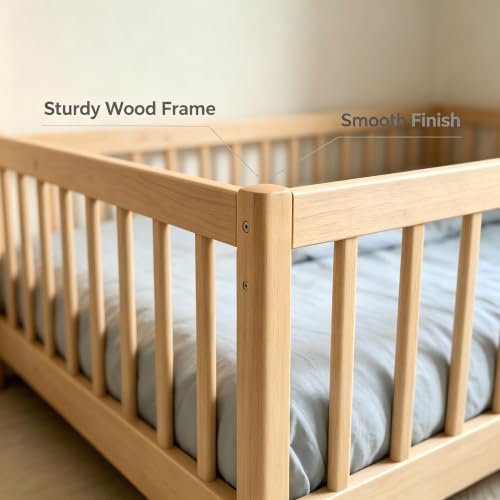
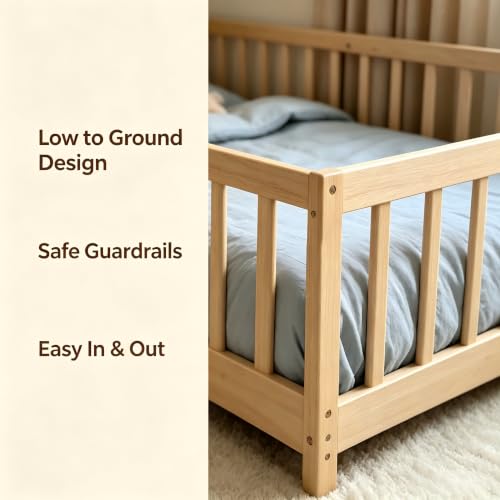
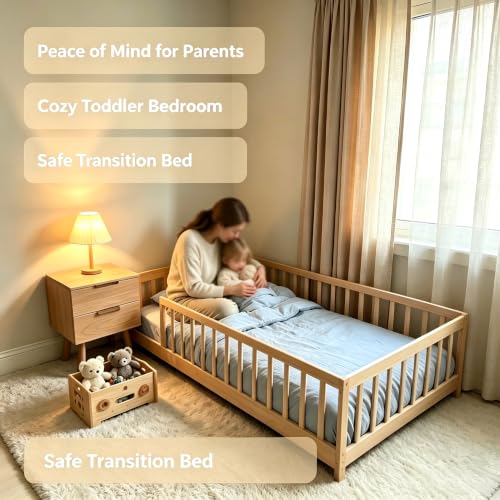
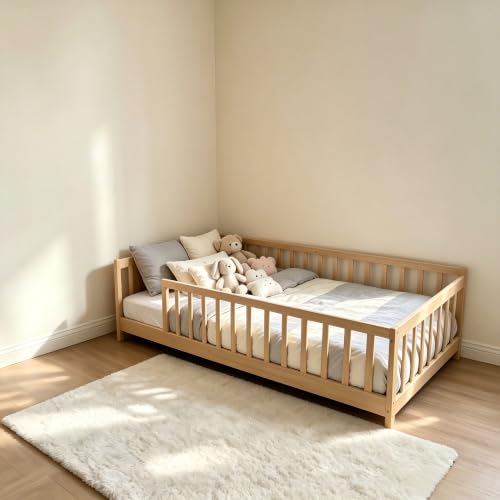
This is a solid choice for parents drawn to the Montessori philosophy but still wanting the durability of wood. The full perimeter fence and low height support independence while minimizing fall risks. The pine and engineered wood build feels sturdy, and the 200-pound weight limit means it can last well beyond toddlerhood.
Owners appreciate the clean, natural look and the fact that it works with most twin mattresses. However, the slatted base may feel firmer than foam or sprung bases, and some note the assembly takes longer than expected. Still, for a wooden floor bed that can grow with a child, it’s a strong contender.
Product photos
Dream On Me Emma 3-in-1 Bed
Strengths
- Converts to chairs and table
- GREENGUARD Gold certified
- Sturdy wooden construction
Trade-offs
- Conversion kit sold separately
- Heavier than plastic beds
- Higher initial cost
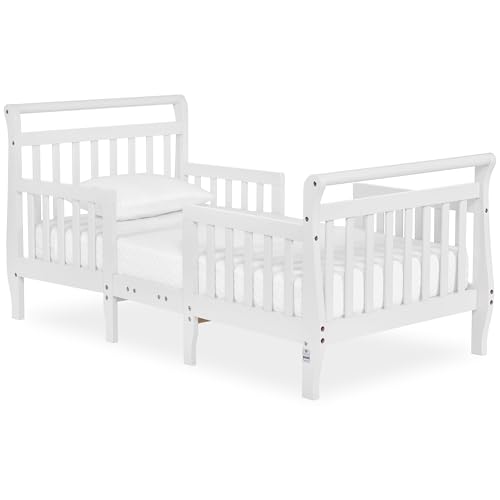
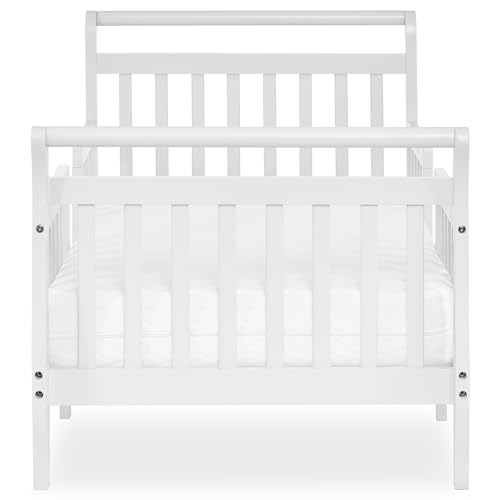
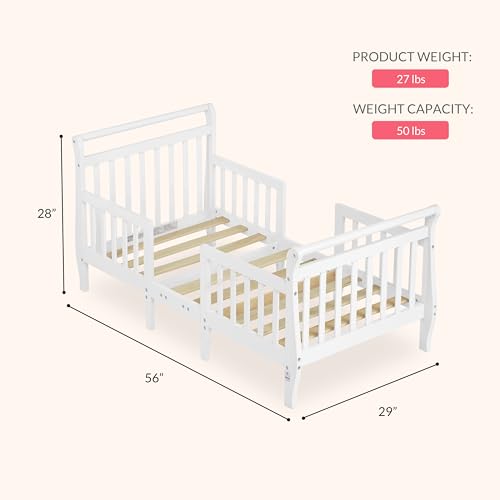
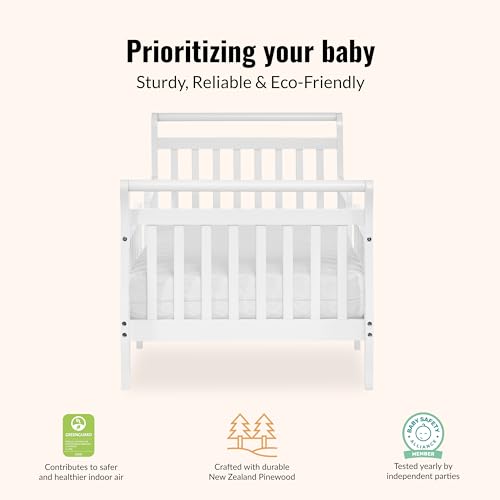
What stands out here is the long-term value. The ability to convert into chairs and a table later means this isn’t just a toddler bed, it’s a multi-stage piece of furniture. That kind of forward thinking appeals to parents who want to minimize clutter and maximize utility. The GREENGUARD Gold certification also gives it an edge in safety, especially for families prioritizing low chemical emissions.
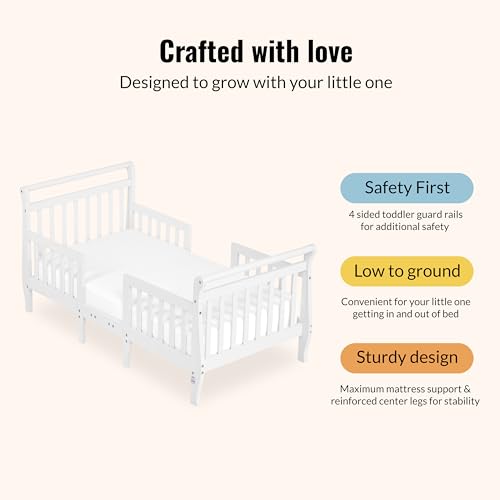
Owners consistently report that the build feels solid and the low height helps toddlers climb in and out confidently. It’s not the flashiest design, but the sleigh-style frame blends well in most rooms. Compared to plastic alternatives, this one feels more like a lasting investment, even if the conversion kit costs extra down the line.
Product photos

Delta Spidey 3D Toddler Bed

Strengths
- Engaging 3D design
- JPMA certified
- Easy setup
Trade-offs
- Plastic construction
- Graphics may peel
- Theme limits resale
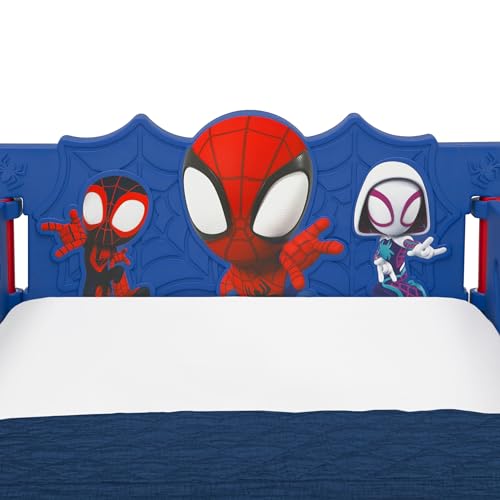
If your child is obsessed with superheroes, this bed will feel like a win. The 3D accents and bold decals create real visual excitement, and that emotional connection can ease the crib-to-bed transition. Structurally, it’s similar to other Delta plastic beds, JPMA certified, with two guardrails and a standard footprint.
But like the Minnie Mouse model, it’s built with plastic and steel, which means durability questions linger. Some owners mention the graphics peeling after a few months. It’s not meant to last through multiple kids, but for a two-year-old who lights up at Spidey, that may not matter. As a confidence booster at bedtime, it’s effective.
Product photos


Delta Bluey 3D Toddler Bed

Strengths
- Strong character appeal
- JPMA certified
- Easy to assemble
Trade-offs
- Plastic build
- Theme doesn’t age well
- Mattress sold separately
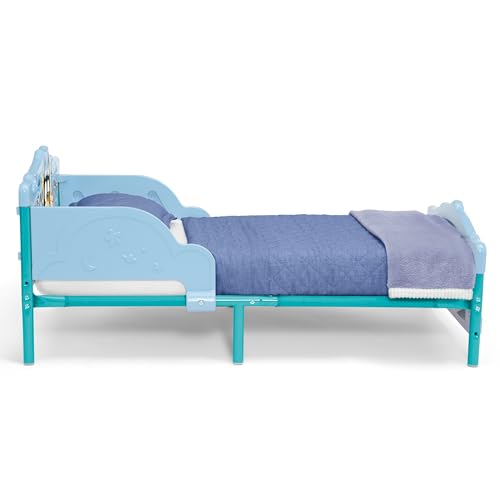
For fans of the show, this bed is a slam dunk. The 3D ears and tail, plus vibrant decals, make it feel like Bluey stepped right into the room. That emotional pull can be powerful at bedtime, especially for a hesitant toddler adjusting to a new sleep setup. Like other Delta plastic beds, it’s JPMA certified and fits a standard crib mattress.
But it shares the same structural trade-offs, plastic durability, theme limitations, and a short usable lifespan. It won’t grow with your child, and resale value is low. Still, if your goal is to make bedtime fun and your kid can’t get enough of Bandit and Bingo, this one earns its place.
Product photos


Delta Minnie Mouse Toddler Bed
Strengths
- Affordable
- Easy assembly
- JPMA certified
Trade-offs
- Plastic durability concerns
- Theme limits longevity
- Mattress sold separately
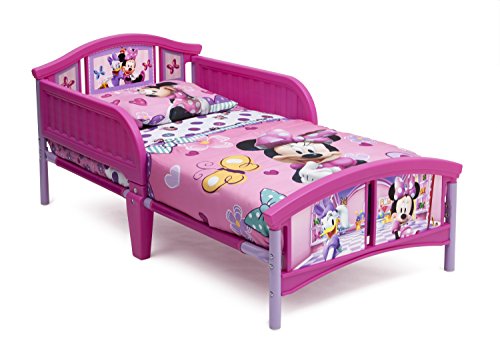
This bed delivers exactly what budget-focused parents need: a recognizable character design, basic safety certifications, and a low price. The plastic and steel construction keeps it lightweight and easy to assemble, which many owners appreciate when transitioning from a crib. On paper, the JPMA certification and included guardrails check the right safety boxes for a first bed.
Still, it’s a plastic bed, and that shows in long-term feedback, some parents report cracking or warping over time, especially with active toddlers. It doesn’t offer the durability or warmth of wood, and the Minnie Mouse theme may not age well. But if you’re looking for a temporary, themed solution that gets the job done, this one makes sense for short-term use.
Product photos


How We Tested beds for 2 year olds
Rather than a hands-on lab test, my research focused on a detailed comparison of published specifications and features across a range of beds designed for two-year-olds. I weighed owner reviews from multiple retailers alongside expert opinions from parenting and sleep safety websites. As someone deeply involved in researching children’s sleep environments, I applied my knowledge of materials, safety standards, and developmental needs to rank these options based on what matters most to parents.
For this age group, the most important factors are safety and ease of transition. A secure design, preventing falls and providing a low-to-the-ground profile, is paramount. Closely following that is comfort; a supportive mattress and soft materials encourage independent sleep. Designs that facilitate a smooth toddler bed transition from a crib were also given significant weight, as a less stressful change is ideal for both child and parent.
Specifications reliably indicate bed dimensions, weight capacity, and materials used in the frame construction. However, I placed greater emphasis on owner feedback regarding durability, ease of assembly, and real-world comfort levels. Reputation and brand trust also played a role, particularly when assessing safety features and the quality of materials, especially relating to concerns about harmful chemicals, as you’ll find discussed in our guide to floor beds for toddlers.
How To Pick The Right beds for 2 year olds
Choosing the right bed for your two-year-old is a big step, and it’s about more than just aesthetics.
A good toddler bed prioritizes safety with a low profile and secure construction. It should also support independence, encouraging your child’s growing confidence. Consider the materials used, focusing on durability and non-toxic finishes. Finally, think about how well the bed will adapt to your child’s changing needs and your space constraints.
Safety First: Construction and Materials
The most important thing, naturally, is safety. Forget elaborate designs for now and focus on beds with a low-to-the-ground profile. This is where the appeal of floor beds really shines; the minimal height significantly reduces the risk of injury from falls. Beyond that, look closely at the materials. Avoid beds with sharp edges or small parts that could be choking hazards. While wood is a classic choice, many foam and fabric options now offer excellent safety features, like the Soft Foam Rainbow Toddler Floor Bed with its cushioned structure. Always check for certifications like GREENGUARD Gold, which indicates low chemical emissions.
Independence and Developmental Stage
A toddler bed should encourage, not hinder, your little one’s developing independence. Some beds, like the Duxelifin Twin Montessori Floor Bed, are specifically designed with this in mind, offering easy access and a low profile to facilitate self-sufficiency. Consider whether a bed with removable rails is a good fit for your child’s personality – some toddlers benefit from the continued security of rails for a longer period, while others thrive with immediate freedom. This is a key factor when comparing different beds for two year olds.
- A simple, minimalist design can be less overwhelming for a child transitioning from a crib.
- Beds that can also function as a play space (like many of the foam options) offer versatility and encourage imaginative play.
- Consider how easily the bed can be incorporated into your existing nursery décor to create a cohesive and calming sleep environment. A bed that feels like a natural extension of the room can ease the transition for your child.
A toddler bed is an investment in your child’s sleep and development. Don’t rush the process. Take the time to find a bed that feels safe, inviting, and supports their growing independence.
Value and Versatility
Toddlers grow quickly, so it’s smart to consider a bed that offers some versatility. The Dream On Me Emma 3-in-1 Bed is a great example of this, converting into chairs and a table when your child outgrows the bed phase. If you’re looking for something more character-driven, the Delta character beds (like the Spidey or Bluey options) are often more budget-friendly, but offer limited long-term use. Before committing, think about your family’s needs and how much space you have. If you anticipate needing a portable option, a travel bed, like the Portable 2-in-1 Toddler Bed & Chair, might be a practical choice, especially if you frequently travel or visit family. Looking at all your best toddler bed options will help you weigh these factors.
Beds for 2 Year Olds Compared
Here’s a comparison of key specifications for toddler beds designed for 2-year-olds to help you make an informed decision.
| Product Title | Best For | Weight Capacity | Dimensions (LxWxH) | Material | Guardrails |
|---|---|---|---|---|---|
| Soft Foam Rainbow Toddler Floor Bed | Best Overall | N/A | N/A | Foam | Fold-Down |
| COSYSUPER Soft Velvet Toddler Floor Bed | Best Comfort & Safety | N/A | N/A | Velvet | Removable |
| Duxelifin Twin Montessori Floor Bed | Best for Independence | N/A | N/A | Pine/MDF | Fixed |
| PVWIIK Wooden Montessori Floor Bed | Best Wooden Frame | 200 lbs | N/A | Pine/Engineered Wood | Full Surround |
| Dream On Me Emma 3-in-1 Bed | Best Convertible Design | 50 lbs | 56 x 29 x 28 in | Wood | 4 Wooden |
| Portable 2-in-1 Toddler Bed & Chair | Best Travel Option | 40 in height | N/A | Fleece/Oxford | Side Rails |
| Delta Spidey 3D Toddler Bed | Best Character Bed | 50 lbs | 53.5 x 30.25 x 23.7 in | Plastic/Steel | Attached |
| Delta Bluey 3D Toddler Bed | Best for Bluey Fans | 50 lbs | 53.5 x 30.25 x 23.7 in | Plastic/Steel | Attached |
| Delta Minnie Mouse Toddler Bed | Best Budget Character Bed | 50 lbs | 53.94 x 29.13 x 26.18 in | Plastic/Steel | Attached |
Frequently Asked Questions
What mattress type is best for a 2-year-old’s bed?
A firm, flat mattress is the safest option for a two-year-old. Softer mattresses pose a suffocation risk, and firmer surfaces better support developing bodies and encourage safe sleep positions. Look for mattresses specifically designed for toddlers, meeting safety standards for firmness and materials.
Are floor beds really safer than traditional toddler beds?
Yes, floor beds are generally considered safer because of their minimal height. This drastically reduces the risk of injury from falls, which is a primary concern with traditional beds, even those with guardrails. Many parents find a floor bed eases the transition from a crib and promotes independence.
How long will a toddler bed last before my child needs a bigger bed?
Most toddlers will use a toddler bed for around 1-3 years, depending on their growth rate. Many convertible options, like the Dream On Me Emma 3-in-1 Bed, can extend this timeframe by transforming into chairs or tables. Eventually, you’ll likely transition to twin beds for toddlers as they approach preschool age.
What should I look for in terms of materials to avoid potential allergens?
Opt for beds made from solid wood, organic cotton, or certified foam (like CertiPUR-US or GREENGUARD Gold). These certifications ensure low chemical emissions and minimize exposure to potential allergens. Avoid materials with strong odors or those that haven’t been tested for harmful substances.
Where can I find information about safe toddler beds that meet safety standards?
Reputable parenting websites, consumer product safety organizations, and retailer product descriptions often highlight beds that meet or exceed safety standards. Look for beds that have been tested for stability, non-toxic finishes, and lack of small parts that could pose a choking hazard.
The Bottom Line
Choosing a bed for your two-year-old often comes down to balancing control with convenience. Do you want a highly adaptable, longer-lasting piece, or something immediately suited to their current needs? For most families, the Soft Foam Rainbow Toddler Floor Bed strikes the best balance, it’s exceptionally safe, encourages independence with its low profile, and receives consistently positive feedback regarding comfort and durability.
If your priorities are different, there are fantastic options tailored to specific needs. For parents seeking a budget-friendly character bed, the Delta Minnie Mouse Toddler Bed is a solid pick. Those prioritizing long-term versatility will appreciate the Dream On Me Emma 3-in-1 Bed, while families preparing for a first bed transition might find the Duxelifin Twin Montessori Floor Bed particularly helpful in fostering self-sufficiency.
Ultimately, remember that the “best” bed isn’t about the highest specs or the trendiest design. It’s about creating a safe, comfortable space where your little one can develop healthy sleep habits. Focus on solid construction, non-toxic materials, and a design that supports your child’s growing independence, those fundamentals matter far more than any single feature when considering beds for 3 year olds.
