
Why Does My Newborn Cry in His Sleep? Understanding Peaks
This post contains affiliate links. As an Amazon Associate we earn from qualifying purchases.
Newborns cry in their sleep primarily due to normal sleep-cycle transitions and immature nervous systems, not necessarily distress. This peaks around 6 to 8 weeks of age, when infants average 2 to 3 hours of crying per day. Short, fussy cries during active sleep are often just brain activity; longer, intense cries that wake the baby signal a need for feeding, a diaper change, or soothing.
That 6 to 8 week mark isn’t a vague estimate. It’s the data point from a clinical review, and it reframes the entire experience. You aren’t doing anything wrong. Their little systems are simply hitting a developmental crescendo before learning to self-regulate.
What follows: a breakdown of the sleep science, a clear line between normal fussing and true distress, and the specific, research-backed methods, like the “Five S’s”, that work because they mimic the womb. We’ll also cover when a cry is a red flag and how to prioritize safe sleep above all else.
Key Takeaways
- The peak crying period of 6 to 8 weeks is a documented developmental phase, not a reflection on your care.
- Short, fussy cries during active sleep (REM) are usually normal brain activity; let your baby work through them.
- The “Five S’s” (swaddle, side/stomach, shush, swing, suck) work by triggering a calming reflex wired from the womb.
- Swaddling can increase quiet sleep but carries a SUDI risk if done incorrectly or past the rolling stage.
- Consistent, intense crying that won’t soothe may indicate pain, reflux, or illness and warrants a pediatrician visit.
The Science Behind the Cry: Normal Development vs. Distress
You hear a whimper from the bassinet and your heart jumps. Is he awake? Hungry? In pain? The first step to managing that panic is understanding the two main engines behind newborn sleep noises: immature sleep architecture and basic communication.
Newborns spend about 50% of their sleep in active sleep, a phase similar to adult REM. This is when dreaming occurs, and their brains are firing intensely. You’ll see fluttering eyelids, irregular breathing, and small movements. It’s also when most sleep crying happens. These brief, fussy cries are often just vocalizations from a busy brain, the sound of a system booting up, not a call for help. Jumping in at the first peep can actually disrupt their sleep cycle. Wait a moment. Listen. Often, they’ll settle back down on their own.
The other half is quiet sleep. Here, breathing is deep and regular, and there’s little movement. Crying during this phase is less common and more likely to mean something is wrong, they’re truly awake and need you.
Common mistake: Rushing to pick up your baby at every sleep whimper. This interrupts their natural sleep cycles and can teach them to fully wake for comfort they didn’t yet need.
Research pinpoints a clear crying timeline. A scoping review in Translational Pediatrics confirms that infant crying tends to increase and peak at 6 to 8 weeks of age, with significant improvement by 3 or 4 months. On average, babies cry 2 to 3 hours per day at that peak. This isn’t a flaw in your technique; it’s a hardwired developmental stage.
However, a cry is also their only tool for communication. A narrative review in Frontiers in Pediatrics notes that cries can differ based on physical and mental states, and that cries from infants with pathological conditions, like neurological damage, can sound distinct. Your job is to learn the difference between a “I’m cycling sleep” cry and a “I need you now” cry.
| Cry Characteristic | Likely Cause | What to Do |
|---|---|---|
| Short, fussy, eyes closed | Active sleep transition | Pause and observe for 1-2 minutes. |
| Long, rhythmic, “neh” sound | Hunger | Offer a feeding. |
| Intense, sharp, sudden | Pain (gas, pinch) | Check diaper, clothing, for hair tourniquets. |
| Whiny, continuous, builds | Overtiredness | Swaddle and help them to sleep. |
| High-pitched, shrieking | Illness or severe discomfort | Take temperature, call pediatrician. |
How to Soothe a Crying Newborn (The Methods That Actually Work)
When the cry is a real call for help, you need a plan that works with your baby’s biology, not against it. The most effective methods aren’t random tricks, they’re based on triggering a innate calming reflex. Dr. Harvey Karp popularized this as the “Five S’s,” and the science backs it up.
The logic is simple. For nine months, your baby lived in a tight, noisy, constantly moving environment. The sudden stillness and openness of the outside world is startling. The Five S’s recreate the sensations of the womb to switch on a calming reflex.
- Swaddle. A snug swaddle mimics the secure feeling of the uterus. It prevents the startle reflex from waking them. A systematic review in Frontiers in Pediatrics found swaddling can increase quiet sleep duration. The key is snug around the arms, loose at the hips. Use a dedicated swaddle blanket or a wearable blanket designed for safe swaddling.
- Side or Stomach Position. This is for holding only, never for unsupervised sleep. Holding a crying baby on their side or stomach in your arms can be instantly calming. The back is the only safe sleep position in a crib or bassinet.
- Shush. Loud, white noise is the sound of the womb, it was louder than a vacuum cleaner in there. Your gentle “shhh” right near their ear or a white noise machine can drown out startling external sounds.
- Swing. Rhythmic, jiggly motion (with the head always supported) reminds them of your movements all day and night. A slow rock is often less effective than a small, rapid jiggle.
- Suck. This is the final calming tool. Offering a breast, finger, or pacifier provides strong rhythmic stimulation.
A peer-reviewed study in PLOS One tested these principles directly, comparing parental soothing to mechanical soothing using a device that provided swaddling, sound, and movement. Both methods “promptly induced a calming response.” The takeaway? These stimuli work because they’re fundamental.
The part nobody mentions: You have to do the S’s vigorously enough. A loose swaddle is a blanket. A quiet shush is a whisper. The womb was intense, so your soothing needs to match that intensity to trigger the reflex. Then, you can gradually dial it back.
Safety First: Soothing Without Risk
Soothing a crying baby is the goal, but never at the expense of safe sleep. The guidelines from the American Academy of Pediatrics are non-negotiable, and some popular soothing methods require careful adaptation.
The biggest conflict is with swaddling. While it’s a powerful tool, it becomes dangerous if used incorrectly or for too long. The same Frontiers systematic review cautions that swaddling “may increase SUDI risk among infants who have not previously been swaddled” if it creates conditions unfavorable to arousal. More plainly: a too-tight swaddle or use beyond the appropriate age can be risky.
Safe Swaddling Rules:
- Stop swaddling as soon as your baby shows any signs of attempting to roll, which can happen as early as 8 weeks.
- Transition to a safe wearable blanket or sleep sack that leaves the arms free.
- The swaddle must be snug around the arms to prevent startles, but loose around the hips and legs to allow healthy hip movement.
- Always place a swaddled baby on their back in a bare crib with a firm mattress and a fitted sheet, no loose blankets, pillows, or stuffed animals.
The “Side/Stomach” S is for your arms only. The moment you place your baby down to sleep, it must be on their back. This single rule has been the most significant factor in reducing SIDS rates.
If you’re using a pacifier for the “Suck” S, offer it at nap and bedtime, but don’t reinsert it if it falls out after they’re asleep. If you’re breastfeeding, wait until nursing is well-established (around 3-4 weeks) before introducing one to avoid nipple confusion.
When to Be Concerned: Cries That Need a Doctor
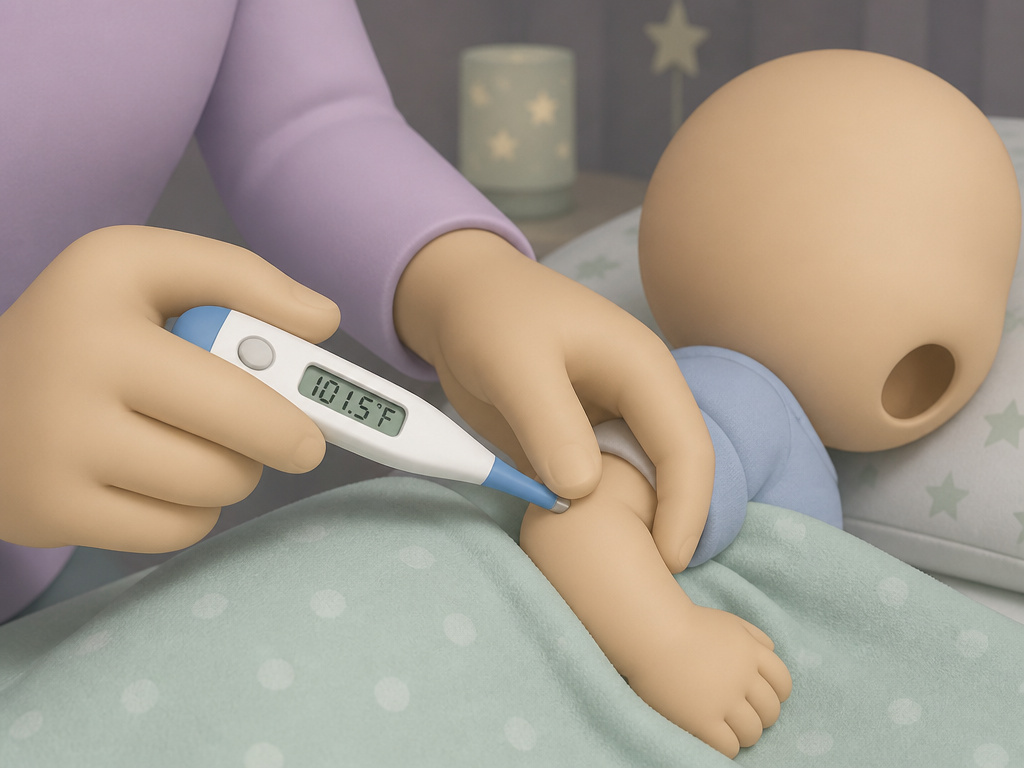
Most sleep crying is normal, but certain patterns are red flags. Trust your instinct, you know your baby’s normal cry better than anyone.
Consult your pediatrician if the crying is accompanied by: * Fever (100.4°F or higher in a newborn under 3 months). * Lethargy or difficulty waking. * Poor feeding or refusal to eat. * Vomiting (not just typical spit-up), especially if it’s green or projectile. * A change in stool, like diarrhea or blood. * A cry that is high-pitched, weak, or continuous for more than 2 hours despite your best soothing efforts.
These could signal issues like infections, acid reflux (GERD), milk protein intolerance, or, in rare cases, more serious conditions. The NIH clinical review on infant crying frames excessive crying within the context of parental exhaustion and infant health, underscoring that while usually normal, persistent crying warrants medical evaluation to rule out underlying causes.
It’s also worth noting that about 20-30% of infants and toddlers experience frequent night wakings, as noted in the American Academy of Sleep Medicine parameters. If your newborn’s crying is severely disrupting family sleep consistently, your pediatrician can help rule out medical issues and may refer you to a sleep consultant.
Creating a Calm Sleep Environment
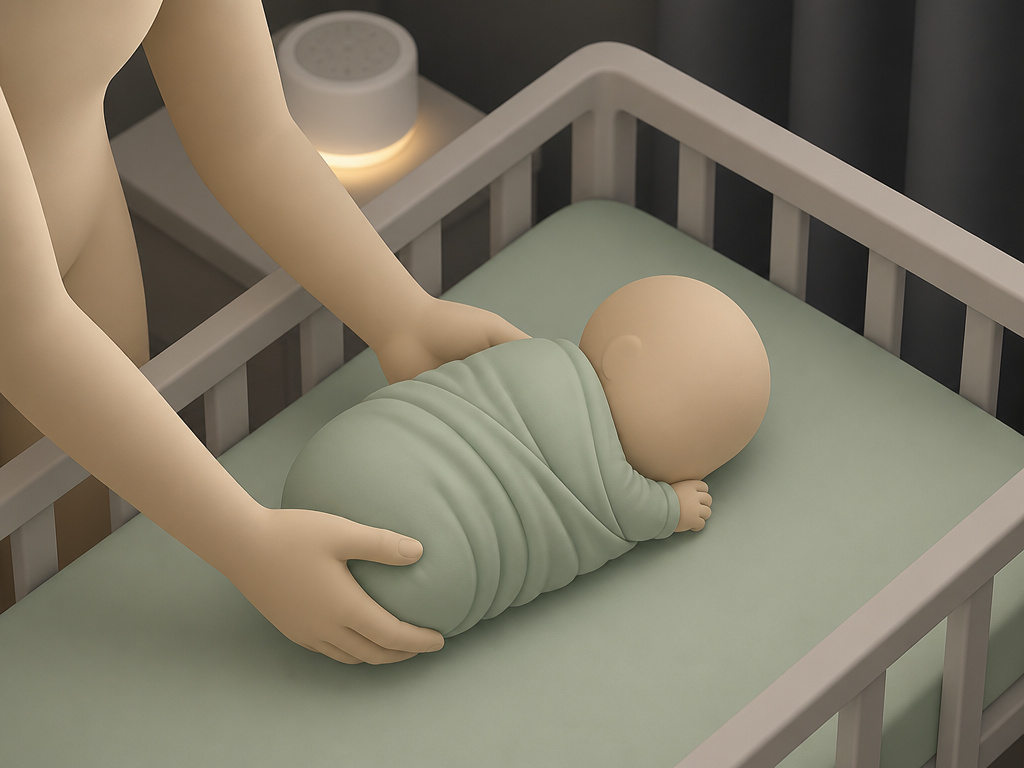
Your baby’s sleep space can either amplify or dampen their startles and cries. The goal is a boring, consistent, and comfortable environment that signals “sleep time.”
Start with the basics. A firm mattress in a safety-approved crib or bassinet is essential. Outfit it with a fitted sheet and nothing else. This means moving all those cute baby blankets and stuffed animals to the rocking chair. For warmth, use a wearable blanket appropriate for the room’s temperature.
Sound and light are your next tools. Continuous white noise helps mask household sounds that could trigger a partial awakening. Keep the room dark for naps and nighttime. Use blackout curtains and a small, dim nightlight if you need one for feedings.
Finally, consider the fabric against their skin. Newborns have sensitive skin, and scratchy tags or rough fabrics can cause micro-discomforts that pull them from sleep. Soft, breathable fabrics like cotton are best. For an extra layer of assurance, many parents choose organic baby blankets or crib sheets to minimize exposure to chemical residues.
The routine matters more than the products. A simple, repeatable sequence, like feed, burp, swaddle, rock with white noise, done consistently helps your baby’s brain predict what comes next: sleep.
Frequently Asked Questions
Is it okay to let my newborn “cry it out”?
No. Cry-it-out or extinction sleep training is not appropriate for newborns. Their nervous systems are too immature to self-soothe effectively, and crying is their only way to communicate a need. For young infants, always respond to their cries. The goal is to help them learn sleep associations, not to ignore their needs.
Why does my newborn only cry when put down?
This is often due to the Moro (startle) reflex or a preference for the warmth and movement of being held. A tight swaddle can inhibit the startle reflex. Warming the crib sheet with a heating pad (removed before placing baby down) and using a gradual “put down” method (feet, bottom, then head) can also help. Some babies have a stronger need for contact, using a safe baby carrier during the day can help fill that need.
Are some babies just “cry babies”?
While temperament varies, true “colic” is defined by the rule of threes: crying for more than three hours a day, more than three days a week, for more than three weeks. This affects about 1 in 5 babies. It’s not your fault, and it usually resolves by 3-4 months. Before labeling it colic, work with your pediatrician to rule out medical causes like reflux or allergies.
Can my newborn’s diet affect sleep crying?
Yes. In breastfed babies, something in the mother’s diet (like dairy or caffeine) can sometimes cause gas or discomfort. In formula-fed babies, a particular formula might not agree with them. Talk to your pediatrician before making any dietary changes. Also, ensure they are getting full feedings; a hungry baby won’t sleep well.
Before You Go
Newborn sleep crying is a universal, exhausting phase grounded in developmental science. The 6 to 8 week peak is real, and short fusses during active sleep are usually just noise. Your toolkit is the Five S’s, applied with confidence. Safety is the non-negotiable frame: back to sleep, stop swaddling at rolling, and keep the crib bare.
When the cries are intense and won’t stop, trust your gut and call your pediatrician. For the everyday fusses, take a breath. You’re not missing a secret. You’re guiding a tiny human through the profound disorientation of being new in the world. Their cry is the work. Your calm, consistent response is the foundation.
