
Choosing Baby Blanket Material: Safety & Flammability Specs
This post contains affiliate links. As an Amazon Associate we earn from qualifying purchases.
The safest material for a baby blanket is 100% cotton in a tight, breathable weave like muslin or a fine knit. It must pass specific flammability standards, with a flame spread time greater than 7 seconds for bedding as defined by the CAN/CGSB 4.2 No. 27.5 test. Breathability to prevent overheating and durability through hot washes are non-negotiable, which is why synthetics like polyester fail on safety and natural blends can burn faster than pure fibers.
That 7-second rule is the line between a fabric that smolders out and one that carries a flame across a surface, and it’s been the benchmark in the United States since the voluntary standard was adopted in 1972. Most guides talk about softness or warmth.They miss the regulatory floor that every blanket sold legally has to meet before it even gets to feel soft.
What follows is the spec sheet the label won’t give you: the test methods, the fiber physics, and the two fabric constructions that actually pass. You’ll learn why a cotton-polyester blend is more dangerous than pure cotton, how to read a weave for breathability, and which blanket types are ruled out for unsupervised sleep before a baby turns one.
Key Takeaways
- The CAN/CGSB 4.2 No. 27.5 test requires a flame spread time greater than 7 seconds for bedding. A blanket that ignites and spreads flame in less time fails.
- Fabric construction beats fiber type. A lightweight, tightly woven cotton muslin is safer and more breathable than a thick, loose-knit wool blanket.
- Cotton-polyester blends can burn faster than 100% cotton. The charred cotton fibers act as a scaffold, holding molten polyester and accelerating flame spread.
- Breathability is a safety feature, not a comfort perk. Overheating is a known risk factor; a blanket must allow heat and moisture to escape.
- No loose blankets in the crib for babies under 12 months. For safe sleep, use a wearable blanket or sleep sack instead.
The Flammability Standard That’s Been in Place Since 1972
The ASTM D4151 flammability test standard is the baseline. This test method, first used by the blanket industry in 1972, is designed to identify fabrics that ignite easily and propagate flame across the surface. It’s not a measure of fire hazard under real conditions, but a pass/fail gate for commercial sale.
The stricter rule for bedding comes from north of the border. The Canadian General Standards Board method CAN/CGSB 4.2 No. 27.5 is the one that sets the 7-second floor. In this test, a 2-inch by 6-inch fabric sample is mounted at a 45-degree angle. A controlled flame touches it for one second. Technicians time how long it takes for the flame to travel 5 inches up the fabric.
Where this goes sideways: Assuming a thicker blanket is safer. A lightweight, tightly woven cotton may be difficult to ignite. A lightweight, loosely woven or knitted fabric of the same material can fail the same test because oxygen flows freely through the open structure.
The test has specific pass criteria: * Flat fibre surface: Flame spread time must be greater than 3.5 seconds. * Raised fibre surface: Greater than 4 seconds. * Bedding (including blankets): Greater than 7 seconds.
If some samples don’t ignite at all, the product passes. This is why testing multiple samples is critical, a single lucky test doesn’t prove safety.
| Test Standard | Purpose | Key Requirement for Bedding | Why It Matters |
|---|---|---|---|
| ASTM D4151 | Acceptance testing for commercial blanket shipments. | Identifies fabrics that ignite easily and propagate flame. | The U.S. Industry baseline since 1972. |
| CAN/CGSB 4.2 No. 27.5 | Regulatory safety test for textile flammability in Canada. | Flame spread time must exceed 7 seconds. | The specific numeric safety floor for blankets. |
Natural Fibers: Cotton, Bamboo, and Wool
Natural fibers have inherent advantages for breathability and skin feel. Their performance hinges on how they’re spun and woven.
Cotton is the default for a reason. It’s hydrophilic, meaning it pulls moisture away from the skin. A 1944 NIST study of 156 household blankets found the thermal insulation of blankets was independent of fiber kind, but closely tied to thickness and weave. A tightly woven cotton muslin provides excellent breathability with minimal weight. Our deep dive on swaddle blanket fabric explains why muslin is the go-to for newborns.
Bamboo (usually rayon made from bamboo pulp) is often marketed as a wonder fiber. It is exceptionally soft and has natural antibacterial properties. However, its flammability profile is similar to other cellulosic fibers like cotton. The real test is how tightly it’s woven. A loose bamboo knit fails the safety check.
Wool has a unique property: it’s naturally flame-resistant. It will char and smolder but is difficult to ignite. However, wool can be itchy and requires careful washing. For a baby blanket, a merino wool blend might be considered for a supervised, outer-layer blanket in very cold climates, but it’s rarely the first choice for direct skin contact.
Common mistake: Choosing a fabric solely for its “warmth” rating. A fabric that helps regulate temperature, releasing heat when the baby warms up, is safer than one that simply traps heat. Breathability prevents overheating.
| Natural Fiber | Best For | Flammability Note | Care & Caveat |
|---|---|---|---|
| Cotton (Muslin) | Everyday use, swaddling, warm climates. | Good when tightly woven. Chars and self-extinguishes. | Machine wash hot. Shrinks predictably. |
| Cotton (Knit) | Stretch for swaddles, cooler climates. | Varies with knit tightness. Loose knits are riskier. | Can stretch out. Lay flat to dry. |
| Bamboo Rayon | Sensitive skin, softness priority. | Similar to cotton. Depends on fabric construction. | Often requires cold wash, low dry. |
| Wool (e.g., Merino) | Supervised outer layer in cold, dry climates. | Naturally flame-resistant. Hard to ignite. | Hand wash or dry clean only. Can felt. |
Synthetic and Blended Fabrics: The Risk That Accelerates
This is where the safety math changes. Synthetic fibers like polyester and acrylic, and blends that mix them with cotton, introduce different risks.
Polyester is a thermoplastic. It doesn’t burn like cotton; it melts. This melting can cause severe burns as the hot, sticky polymer adheres to skin. While a dense, tightly woven polyester might pass a lab flammability test, it fails on breathability. It traps heat and moisture against the skin, which is the opposite of what you want for a sleeping baby.
The real danger is in blends. A 50/50 cotton-polyester blend can be more flammable than 100% cotton. The NIST household blanket properties study from 1944 didn’t test modern synthetics, but later research explains the mechanism: the cotton fibers char first, creating a scaffolding that holds the melting polyester in place, feeding the flame and increasing heat release. The blend burns faster and hotter than either fiber alone.
A loosely constructed blend is the worst-case scenario. It offers abundant oxygen, a fuel source that melts and drips, and the cotton scaffold to keep the fire going. Avoid it for anything that will be near a sleeping child.
The international aid standard gives a clue for durable use. The IFRC/ICRC Synthetic Blanket specification calls for 100% virgin polyester or acrylic, knitted or woven and raised on both sides, with a minimum thermal resistance. These are for disaster relief, durable, packable, and warm. They are not designed for infant sleep safety due to their synthetic content and heat retention.
Fabric Construction: Weave, Weight, and Why It Trumps Fiber
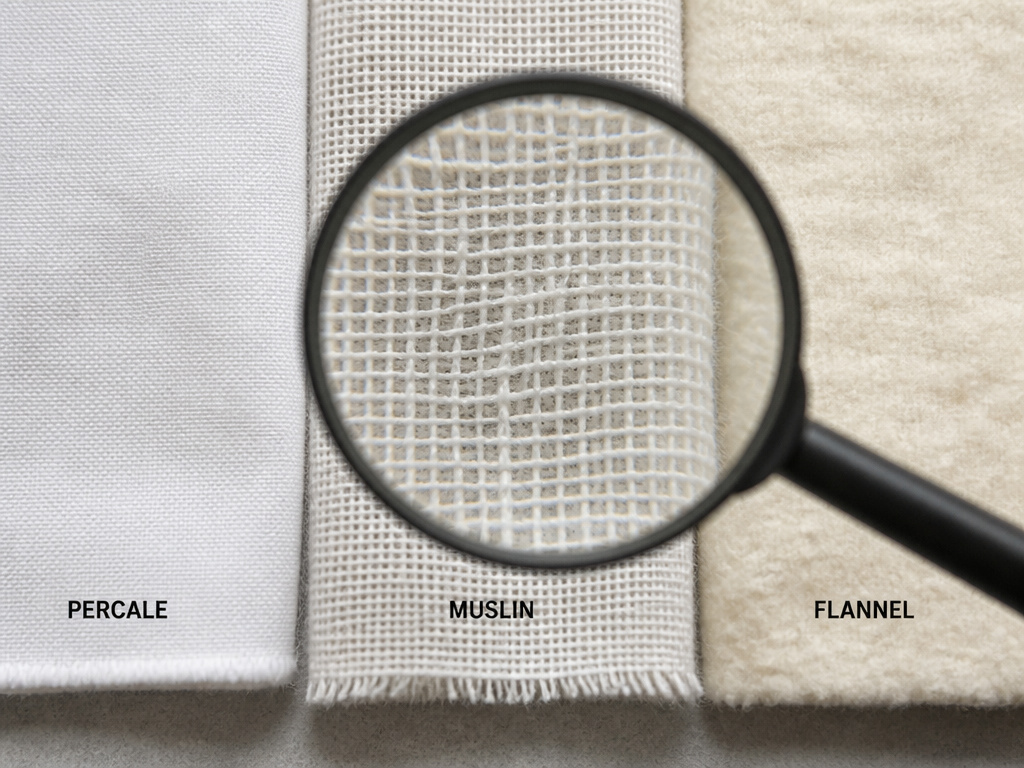
You can have the right fiber and still make a dangerous blanket. The construction, how the fibers are turned into fabric, is the deciding factor.
Weave Density is everything for flammability and breathability. A tight plain weave (like percale or muslin) limits oxygen flow to a flame and still allows air and moisture vapor to pass through. A loose, open weave or a chunky knit does the opposite. It’s a chimney for flames and a heat trap for the baby.
Weight and Thickness are often confused. Weight is ounces per square yard. Thickness is measured under specific pressure (like the 0.1 psi standard in the 1946 hospital blanket spec). A lightweight but thick fabric (like a lofty knit) traps insulating air. That’s warm, but it can also be less breathable. The 1944 NIST study found a direct linear relationship between thickness and thermal insulation.
Surface Finish matters. A “raised” or “brushed” surface (like flannel) creates more surface area for a flame to catch. The Canadian test differentiates between flat and raised surfaces for this reason, requiring a longer burn time for the latter.
For a visual on how different weaves suit different needs, our review of the best muslin swaddle blankets shows the classic open muslin weave that defines the category.
The Safety Rules That Override Material Choice
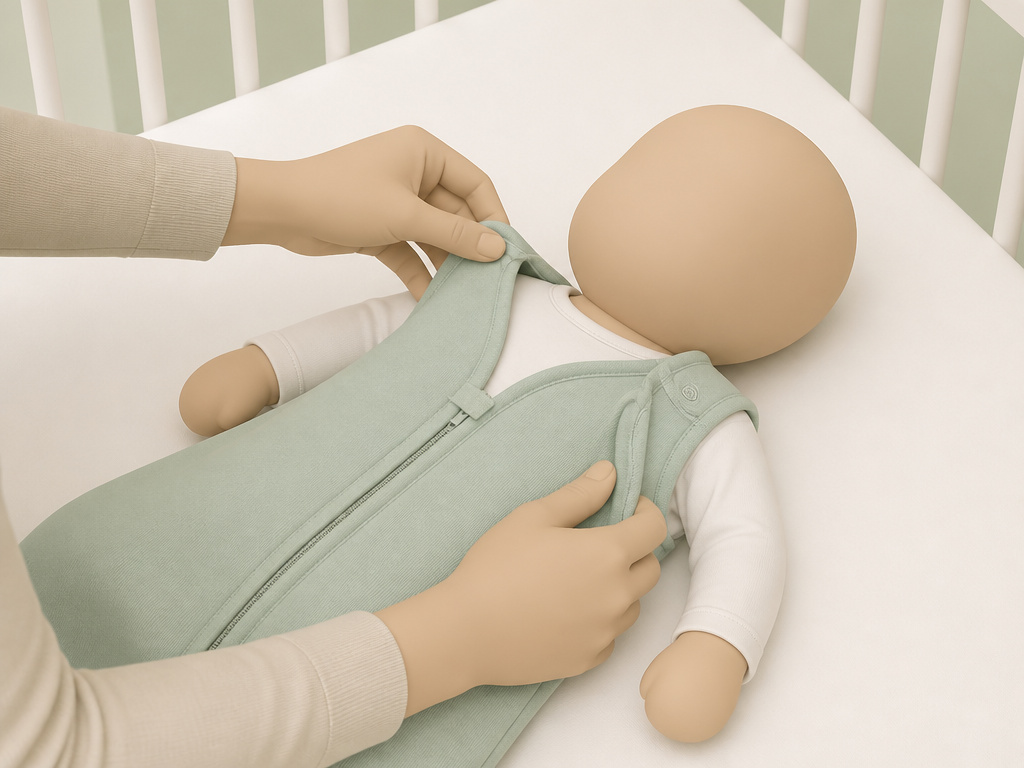
All the material science in the world is secondary to safe sleep practices. The fabric is the vehicle; the use is the driver.
No Loose Bedding Under 12 Months. This is the non-negotiable rule from the American Academy of Pediatrics and organizations like Red Nose Australia. A blanket can cover a face. For the crib or bassinet, a wearable blanket (sleep sack) is the only safe option. It provides warmth without the risk of covering the head or becoming entangled.
Breathability as a Non-Negotiable. Overheating is a known risk factor for SIDS. A blanket must allow excess heat and moisture to escape. This is why a thin, breathable layer is always safer than a thick, impermeable one, even if the room is cool.
Supervised Use Only for Certain Blankets. That beautiful, chunky-knit luxury baby blanket made of cashmere? It’s for tummy time on the floor or a photo, not for the crib. The same goes for any blanket with loose threads, ribbons, or embellishments.
Durability Through Washing. A baby blanket will be washed. A lot. It must withstand hot water and detergent without falling apart, shrinking unpredictably, or losing its flame-retardant finish (if it has one). Cotton generally survives this best. Always check care labels before buying.
How to Choose: A Decision Framework
Don’t get lost in the marketing. Ask these questions in order.
- What is the use case? Crib (wearable blanket only), stroller, swaddling, play mat, or keepsake? This eliminates whole categories.
- Does the fabric construction pass the safety test? Look for a tight weave or knit. Avoid loose, open, or mesh-like fabrics.
- Is the fiber appropriate? For direct skin contact and frequent washing, 100% cotton is the most reliable. Bamboo is fine if well-constructed. Be wary of synthetics and blends.
- Can I verify its safety? Look for mention of compliance with CPSC infant blanket safety alert updates or ASTM standards. While a tag won’t list the 7-second test, reputable brands design to these standards.
- How does it feel and wash? Crush it in your hand. Does it bounce back? Read the wash instructions. If it’s high-maintenance, it’s probably not for daily baby use.
For a curated list that has already been vetted for these criteria, our guide to the best baby blankets separates the safe, practical options from the merely pretty ones.
Frequently Asked Questions
What is the absolute safest baby blanket material?
For any situation where the blanket might be near a sleeping baby unsupervised, the safest “material” is a wearable blanket or sleep sack made of 100% cotton or a cotton blend. This removes the risk of loose fabric entirely. For supervised use or swaddling, a tightly woven 100% cotton muslin is the benchmark.
Are polyester baby blankets safe?
Polyester blankets are less breathable than natural fibers, increasing overheating risk, and are not recommended for sleep. In a fire, polyester melts and can cause severe burns.They may be acceptable for a quick stroller cover in cool weather under direct supervision, but they should not be in a crib.
How can I tell if a blanket is breathable?
Hold the fabric layer up to your mouth and try to blow through it. If you can feel your breath passing through easily, it’s breathable. If it feels like you’re blowing against a solid wall, it’s not. The benefits of muslin for swaddles come from this exact open, breathable weave.
Why are some baby blankets so expensive?
Price reflects fiber quality (like long-staple organic cotton), construction complexity (like specialized jacquard weaves), and certifications (GOTS organic, Oeko-Tex). A more expensive blanket isn’t inherently safer, but it may be softer, more durable, and made under stricter ethical and environmental controls. See our organic baby blankets guide for vetted options.
Can I use a regular blanket for a newborn?
No. Newborns have poor head and neck control and cannot move blankets away from their faces. The only safe bedding for a newborn in a crib is a fitted sheet and a wearable blanket. For swaddling, use a purpose-made swaddle blanket designed to be secure and breathable.
What size baby blanket is most practical?
30″ x 30″ square is a versatile starter size for swaddling. A 40″ x 40″ or larger blanket grows with the child, useful for tummy time, stroller cover, and eventually a lovey. Our size guide within the best receiving blankets article breaks down the ideal dimensions for each stage.
Before You Go
The right material involves matching a verified-safe fabric to a specific, supervised use, rather than simply finding the softest or warmest blanket. Start with the rule: no loose blankets in the sleep space for the first year.From there, let cotton be your default for anything that touches skin. Judge every blanket by its weave first, tight beats loose, every time. Ignore claims about blends; they complicate safety without real benefit. Your final check is always breathability and washability. A blanket that passes those tests, and is used correctly, becomes a comfort, not a concern.
