
Mattress Protector for Newborn: CPSC Safety Data & Guidelines
This post contains affiliate links. As an Amazon Associate we earn from qualifying purchases.
Yes, you can use a mattress protector for a newborn, but it must be specifically designed for infant sleep, fitted tightly to the mattress with no gaps, and free of any padding, quilting, or soft materials. A protector that bunches, slips, or adds cushioning creates a suffocation hazard documented in over 100 CPSC-reported fatalities.
The gap between a safe protector and a dangerous one is measured in inches—specifically, the ½-inch maximum gap rule cited in bassinet manuals and the CPSC’s data on ill-fitting mattresses. This isn’t about keeping the mattress clean. It’s about preventing the airway obstruction that accounts for 69% of accidental infant suffocations linked to soft bedding.
What follows: the three non-negotiable rules drawn from federal safety standards, the critical difference between a protector, a pad, and a cover that most product listings blur, and how to layer them in the exact order manufacturers require to maintain breathability and safety.
Key Takeaways
- A safe newborn mattress protector must be snug-fitting and non-padded. Any looseness or added cushioning can lead to entrapment or airway obstruction.
- The AAP guidelines explicitly warn against soft bedding and mattress toppers, linking them to a fivefold increase in SIDS risk. A thick, padded “protector” qualifies as hazardous bedding.
- Always use only the mattress and any accessories provided or approved by the crib or bassinet manufacturer. Adding an incompatible protector voids warranties and creates safety gaps.
- For breathable mattresses like the Newton Baby, the protector goes between the mattress core and the fitted sheet—never underneath the waterproof encasement, which would trap moisture and defeat the design.
- Storage matters. Storing items on top of a crib mattress, as noted in the Tempur-Pedic warranty, can permanently damage its firmness and integrity, compromising safety.
The CPSC Data That Framed This Answer
Between 2010 and 2021, the U.S. Consumer Product Safety Commission (CPSC) compiled 494 reports linked to crib mattresses. Those reports included 139 fatalities. A portion of those deaths were directly tied to mattress fit and softness issues.
The CPSC’s final safety rule (87 FR 8640) notes 11 reported fatalities involving crib mattress fit issues and 19 reports of nonfatal incidents involving mattresses considered too soft.
This is the regulatory backdrop. When parents ask about adding a mattress protector, they’re often thinking about spills and messes. Regulators are thinking about the ½-inch gap that can trap an infant’s head, or the soft padding that can form a pocket around a baby’s nose and mouth. The Federal Register crib mattress standard exists because infant sleep products are not like adult bedding. A one-size-fits-all approach fails here.
Your goal is to add a protective layer without introducing any of the hazards the data tracks. That means the protector itself becomes a piece of safety equipment, not just a convenience item.
The Three Non-Negotiable Rules for Newborn Protectors
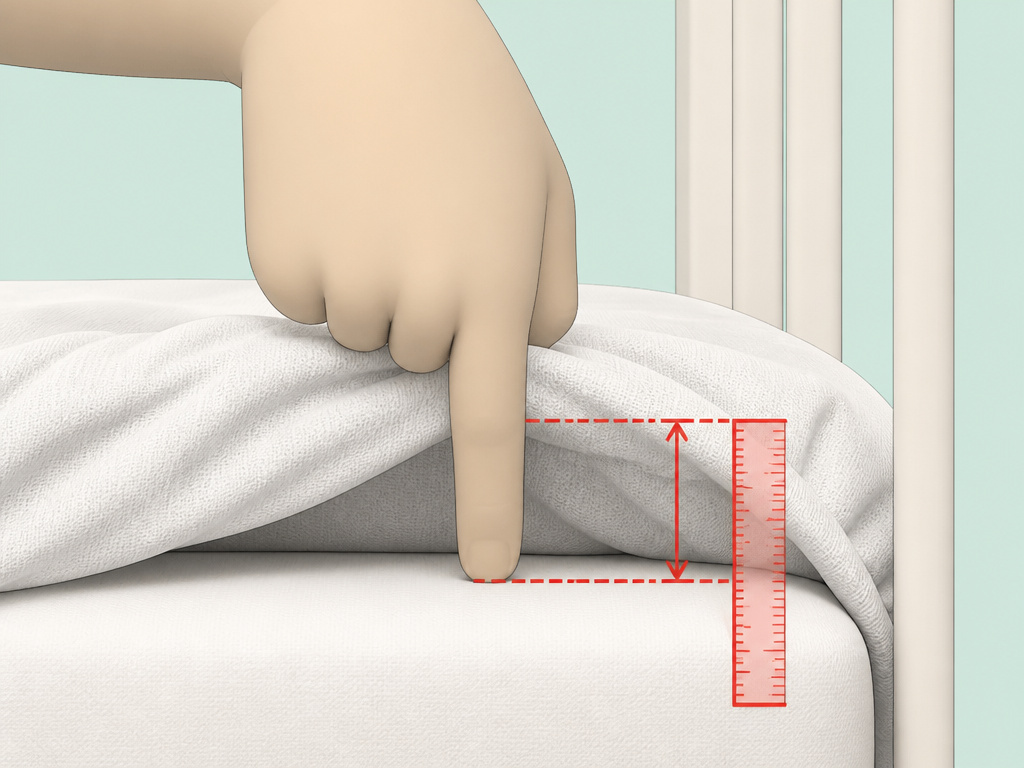
Not every product sold as a “mattress protector” is safe for an infant. You must filter for three specific attributes. Missing one turns a protector into a hazard.
1. It Must Be Fitted and Tight, With No Gaps.
The Sealy Baby bassinet manual states it plainly: there must be no more than a ½-inch gap between the sleep surface and the product’s sides. A loose, ill-fitting protector can wrinkle or pull away from the edges, creating pockets and gaps. These spaces are where entrapment happens. The protector should fit like a second skin—think of a fitted crib sheet, but made of a protective material. If you can easily slip a finger under the edge or see visible sagging, it’s too loose.
2. It Must Be Thin and Firm, Without Padding.
This is where many well-intentioned parents go wrong. The AAP safe sleep technical report is unambiguous: “Keep soft objects, such as pillows, pillow-like toys, quilts, comforters, mattress toppers, fur-like materials, and loose bedding… Away from the infant’s sleep area.” A quilted, padded, or “plush” mattress protector is a mattress topper. It softens the sleep surface. A soft surface increases the risk of suffocation and rebreathing (inhaling exhaled carbon dioxide) if an infant rolls prone. The safe surface is firm and flat.
3. It Must Be Specifically Designed for Infant Cribs/Bassinets.
Adult mattress protectors are the wrong size and shape. A crib mattress has specific dimensions (like the 27 ¼ by 51 ⅝ inches required by ASTM F2933-21 for full-size cribs). An ill-fitting protector is a tripping hazard for compliance. Furthermore, products designed for infant use are tested for flammability and chemical safety to children’s standards. Always check that the product is marketed for cribs, bassinets, or playards.
Where this goes sideways: Using a padded, queen-sized bed protector folded under a crib mattress. The padding violates rule two, the folding creates uneven lumps, and the overhang can bunch up into dangerous soft bedding around the crib’s edges within a single night.
Protector vs. Pad vs. Cover: A Critical Distinction
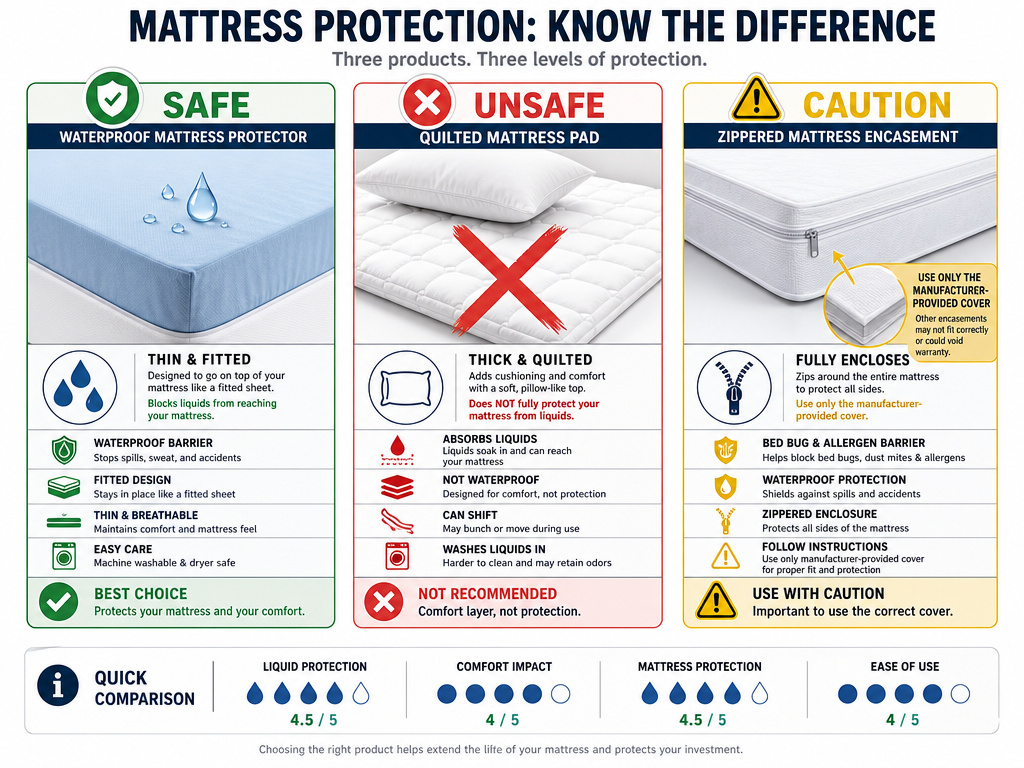
Manufacturers use these terms, but the safety implications are different. Confusing them can lead to using the wrong product in the wrong way.
| Product Type | Primary Purpose | Typical Thickness & Build | Safe for Newborn Sleep Surface? |
|---|---|---|---|
| Mattress Protector | Barrier against fluids, allergens, dust mites. | Very thin (often <1mm), stretchy, waterproof or water-resistant membrane. Fitted style. | Yes, if fitted and non-padded. Goes directly over the mattress, under the sheet. |
| Mattress Pad | Adds comfort, cushioning, and sometimes waterproofing. | Quilted, padded, often ½-inch thick or more. May be fitted or flat. | No. Its padding qualifies as a “mattress topper” or soft bedding, which is prohibited by AAP guidelines. |
| Mattress Cover (Encasement) | Fully encases the mattress, often for allergen blockage or bed bug protection. | Zippered, fully enclosing, can be padded or thin. | Maybe. Only if it is the specific, non-padded cover provided by the crib mattress manufacturer (e.g., the Newton Baby zip-on cover). Never add an after-market encasement. |
The Sealy Baby Bassinet & Bedside Sleeper Instruction Manual provides a real-world example of this rule in action: “Use ONLY mattress provided by manufacturer. NEVER add a pillow, comforter, or another mattress for padding.” An after-market crib mattress pad would be considered “another mattress for padding” and is explicitly forbidden.
For a standard crib, your safest bet is a dedicated, thin, waterproof crib protector. For a bassinet or bedside sleeper, you must use only the pad it came with. Adding any layer not approved by the maker creates an unapproved gap.
How to Layer Bedding Safely: The Newton Baby Example
Some modern crib mattresses, like those from Newton Baby, have unique, breathable designs. Adding a protector incorrectly can compromise their safety features. Their official guidance creates a clear model for safe layering.
According to their support site, components should be added in this exact order: 1. Wovenaire core (the breathable mattress) 2. Viscose encasement (fire retardant layer) 3. Zip-on, quilted outer cover (provided by Newton) 4. Waterproof mattress pad (an optional, purchased accessory) 5. Sheet
The part nobody mentions: In this sequence, the waterproof pad is a thin, fitted protector that goes over the manufacturer’s cover but under the sheet. It is not a thick pad. Placing a protector under the zip-on cover would trap moisture against the breathable core and void the warranty. This order preserves breathability while adding protection.
This principle applies broadly: the protector should be the last layer before the fitted sheet. It should not interfere with the mattress’s core structure or the manufacturer’s intended use. Always check the manual for your specific best crib mattress or bassinet.
What About Breathability and Overheating?
A common concern is that a waterproof protector will make the sleep surface hot and less breathable. This is a valid consideration, but it’s manageable with product choice.
Why-layer: Traditional vinyl or plastic protectors can indeed create a non-breathable barrier, trapping heat and moisture. This contributes to overheating, a known risk factor for SIDS. The solution is to select a protector made from a breathable waterproof membrane (often polyurethane or a similar fabric) that allows air vapor to pass through while blocking liquids. Many modern crib mattress protectors use this technology.
Look for terms like “breathable,” “airflow,” or “moisture-wicking” in the product description. A good protective crib mattress cover will protect against accidents without turning the sleep surface into a sauna. Pair it with a fitted crib sheet made of natural, breathable fibers like cotton or bamboo to complete a safe, comfortable system.
Warnings from Manufacturer Warranties and Manuals
Ignoring manufacturer instructions doesn’t just risk your baby’s safety—it can also void the product’s warranty, leaving you without recourse if the mattress fails.
The Tempur-Pedic Baby Warranty includes specific conditions for proper use and storage. Two clauses are directly relevant: 1. “The crib mattress should only be used inside standard size cribs and toddler bed frames that conform to current Federal or ASTM standards.” Using a non-standard or ill-fitting protector could be construed as interfering with proper use. 2. “Crib mattresses should be stored flat in a protected and dry environment… Items should not be stored on top of or pressed against a crib mattress to avoid permanently damaging it.” This means don’t stack things on the mattress in the nursery closet. Pressure can deform the core, affecting its firmness over time.
These aren’t just corporate cover-your-ass statements. They’re based on the same engineering principles that inform safety standards. A deformed mattress may not fit the crib snugly anymore, recreating the gap hazard the CPSC tracks.
The Verdict on Specific Protector Types
With the rules established, where do common protector categories land?
Waterproof Protectors: Yes, if thin and fitted. A highly rated waterproof crib protector is often the best choice for newborns due to inevitable spills and leaks. Just ensure it’s the breathable type.
Organic Protectors: Yes, if they meet the fit and firmness rules. An organic crib protector made from GOTS-certified cotton with a thin waterproof lining is a safe choice for parents prioritizing natural materials, provided it fits tightly.
Padded or Quilted Protectors: No. These are mattress pads, not safe protectors for infants. They add the soft, compressible layer that the AAP evidence warns against.
Fleece or Plush Topper-Style Protectors: Absolutely not. These are extremely hazardous. They are soft bedding masquerading as a functional product.
In short: The safest path is a minimalist one. A basic, top-rated crib mattress protector that is essentially a fitted, stretchy, waterproof sheet is the tool for the job. It adds the needed protection without adding risk.
Frequently Asked Questions
Can I use a regular mattress protector on a crib mattress?
No. Adult mattress protectors are the wrong size and shape, leading to dangerous gaps, bunching, and loose fabric. They are also not held to the same flammability and chemical safety standards required for children’s sleep products. Always use a protector specifically designed for cribs.
Does a mattress protector increase SIDS risk?
Safe mattress protector (fitted, thin, firm) does not increase risk and can help maintain a clean, allergen-free sleep surface. A hazardous protector (loose, padded, soft) absolutely increases risk. The AAP safe sleep policy evidence* links soft bedding in the sleep environment to a fivefold increase in SIDS risk independent of sleep position.
Where does the mattress protector go?
The protector goes directly on top of the mattress, under the fitted sheet. If your mattress has a removable waterproof cover (like many modern crib mattress covers), the protector goes over that cover but under the sheet. Never place a protector between the mattress core and its intended, non-removable encasement.
How do I know if a protector fits safely?
Perform the “gap and grab” test. Once the protector and sheet are on, run your hand around all edges. You should not be able to pinch or grab more than a ½-inch of loose material. The surface should be drum-tight. Also, place your baby on the surface and look for any indentation or pocket forming around their face.
Are mattress protectors necessary for a newborn?
They are not strictly necessary for safety, but they are highly recommended for practicality. Newborns have spit-ups, diaper leaks, and sweat. A protector preserves the longevity and hygiene of your often-significant investment in a safe newborn mattress. Choosing a safe one lets you address cleanliness without compromising sleep safety.
Before You Go
You can use a mattress protector for your newborn. The correct choice is a specific, tightly-fitted, non-padded product designed for a crib or bassinet. It serves a practical purpose without adding the soft bedding hazards documented in hundreds of incident reports.
Skip anything quilted, plush, or loose. The safety margin is in the fit, not the features. Your baseline is a best crib mattress protector that disappears under a snug sheet, leaving a firm, flat surface. That’s the setup that protects both your baby and your peace of mind.
