
The Safest Kind of Blanket for Toddler: 3 Critical Standards
This post contains affiliate links. As an Amazon Associate we earn from qualifying purchases.
The safest blanket for a toddler is a lightweight, breathable, and non-weighted option like an organic cotton or muslin blanket that meets a recognized safety standard such as ASTM F3735 or carries a GOTS/OEKO-TEX certification. It must fit the sleep space without loose fabric that could entangle and should never be used with a child under 12 months due to suffocation risks.
That answer hinges on three things: the blanket’s physical properties, the child’s developmental stage, and the certifications on its label. A blanket is a piece of your child’s sleep environment, with rules written by pediatricians and federal regulators.
What follows breaks down those rules. You’ll get the specific material specs that matter, the certifications that are more than marketing, and the clear line between a safe toddler blanket and a dangerous one.
Key Takeaways
- Toddlers over 12 months can use a light blanket, but the AAP advises against any weighted blankets or wearable sleep sacks with weight due to unproven safety in unsupervised sleep.
- The fabric must breathe. Prioritize natural, open-weave materials like organic cotton or muslin over synthetic, non-breathable fabrics like fleece or acrylic to prevent overheating.
- Certifications are your proof. Look for GOTS (Global Organic Textile Standard) for organic materials and OEKO-TEX Standard 100 for harmful substance testing. ASTM F3735 is the gold standard for wearable sleep product safety.
- Size and fit are safety features. A blanket should be large enough to tuck securely under the mattress but not so large it creates bulky, loose fabric that can wrap around a child.
- Skip the “transitional” gimmicks. Products marketed as wearable blankets or sleep sacks for toddlers must comply with the same consumer safety specification F3735 as infant products if they are intended for sleep.
The 3 Non-Negotiable Safety Rules for Toddler Blankets
Forget softness for a second. The first filter is safety, and the rules come from organizations that track injury data. The American Academy of Pediatrics (AAP), the Consumer Product Safety Commission (CPSC), and ASTM International don’t debate coziness. They document failure modes.
Rule 1: No Weighted Blankets Before School Age.
The AAP’s 2022 safe sleep policy is unambiguous. It recommends against weighted blankets, weighted sleepers, or “other weights on or near sleeping infants” due to inadequate safety data. The only existing study was a small, observed trial with 1-pound blankets on newborns with medical conditions, not healthy, unsupervised toddlers. The risk is mechanical: a weighted blanket can restrict chest movement needed for breathing, a danger a sleeping child cannot push away. This is a gap in the evidence. Until long-term studies in home settings exist, a standard weighted blanket for toddlers is a no-go.
Where this goes sideways: Using a weighted blanket hoping it improves sleep. The potential for restricted breathing outweighs any unproven benefit, and the child won’t wake up to tell you it’s happening.
Rule 2: The Blanket Must Be a “Wearable Sleep Product” or Properly Secured.
This is where the regulatory language gets specific. A loose blanket in a crib is a hazard for infants. For toddlers in beds, a loose blanket is acceptable only if the child is developmentally able to move it on and off freely. The safer alternative is a wearable product. According to the ASTM standard for wearable blankets (F3735), a “wearable sleep product” is intended as a bedding substitute. If you choose a wearable sack, it must comply with this standard, which tests for neck opening size, fastener strength, and flammability. If you choose a traditional blanket, the official CPSC business guidance on sleep products still applies: it must not create an entrapment or entanglement hazard.
Rule 3: Breathability Isn’t Optional; It’s a Physical Requirement.
Overheating is a known risk factor in sleep-related incidents. A breathable fabric allows heat and moisture to dissipate. A non-breathable fabric traps them. This is why fleece, despite being soft, is a poor choice for a primary sleep blanket. Your child’s body can’t regulate temperature as efficiently as an adult’s. A blanket that feels “nice and warm” to your hand might be overwhelming to a sleeping toddler. The Australian government’s 2025 infant sleep product legislation explicitly states that fabric sides must be “breathable” and firm enough not to conform to a child’s nose or mouth. The principle is the same for a blanket.
| Safety Rule | The “Why” (Mechanism) | How to Check |
|---|---|---|
| No Weight | Restricts chest wall expansion, impeding diaphragmatic movement needed for inhalation. | Check product descriptions; avoid any blanket marketed as “weighted” or “calming.” |
| Secure or Wearable | Prevents loose fabric from covering the face or entangling limbs during movement. | For wearables, look for an ASTM F3735 compliance label. For loose blankets, ensure proper tucking. |
| Breathable Fabric | Allows dissipation of body heat and moisture, preventing dangerous overheating. | Opt for natural fibers like cotton, bamboo, or muslin; avoid solid polyester fleece or vinyl. |
Material Guide: What Your Toddler’s Blanket Is Actually Made Of
The tag tells you the composition. The feel tells you the hand. But the weave and fiber tell you how the blanket will perform at 2 a.m. When the room temperature dips and your child is buried under it.
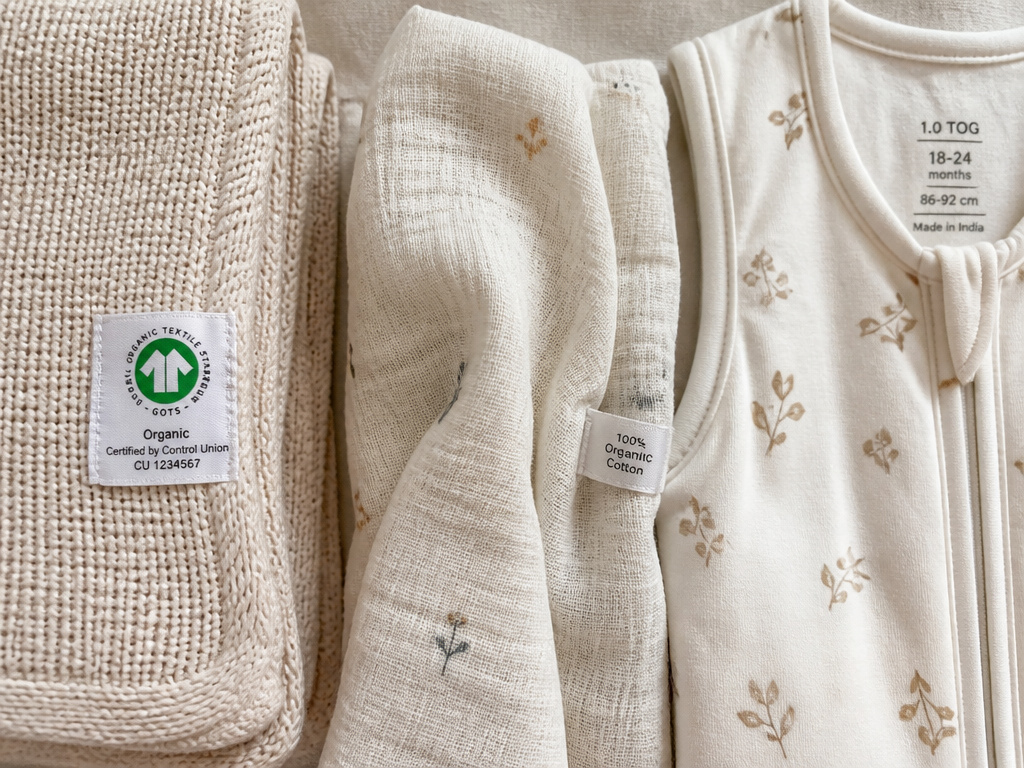
Organic Cotton is the default recommendation for a reason. It’s not a trendy label. Cotton fibers are hollow, which gives them natural thermoregulating properties. The organic certification (GOTS) verifies the cotton was grown without synthetic pesticides, which matters for a product that will be chewed on and washed constantly. A GOTS-certified organic cotton blanket is breathable, durable, and gets softer with washes. It’s the workhorse choice for a toddler’s first blanket that will see daily use.
Muslin is cotton, but with a different structure. Muslin is a plain-weave cotton fabric that is loosely woven. This open weave is its superpower, it’s incredibly breathable and lightweight. It’s perfect for warmer climates, nap time, or layered for adjustable warmth. The downside is that its loose weave can be less durable than a tighter cotton knit, and it may snag more easily. It’s an excellent choice for a blanket for bedtime in the summer or for a child who tends to sleep hot.
Fleece and Acrylic are where you trade breathability for warmth. These synthetic fabrics are soft and warm for their weight because they trap air. That’s the problem. They trap your child’s body heat and moisture too. If you use a fleece blanket, it should be over a breathable layer (like cotton pajamas) and never as the only cover for a sleeping toddler. Consider them for supervised couch cuddles or stroller walks, not unsupervised sleep.
The part nobody mentions: A “hypoallergenic” label on acrylic refers to the fiber itself not causing allergies. It says nothing about breathability or overheating risk. A child can overheat under a hypoallergenic blanket.
Wool is a high-maintenance, high-performance option. Wool is a natural temperature regulator and can wick moisture. However, it often requires special care (hand-washing, lay flat to dry), and some children find it itchy. A merino wool blend can mitigate the itch, but the care instructions remain a practical hurdle for most families.
Certifications Decoded: GOTS, OEKO-TEX, and ASTM
A certification is a verified claim. In a market full of greenwashing and vague “eco-friendly” labels, these stamps are your shortcut to trust.
GOTS (Global Organic Textile Standard) is the benchmark for organic fibers. It’s a full-process certification. It doesn’t just mean the cotton was grown without pesticides. It also regulates the entire chain, spinning, weaving, dyeing, and sewing, ensuring environmental and social criteria are met. A blanket with a GOTS label guarantees at least 70% certified organic natural fibers. For a toddler who puts everything in their mouth, this traceability matters.
OEKO-TEX Standard 100 tests for harmful substances. This certification focuses on the final product’s human-ecological safety. Independent labs test for a list of over 100 regulated and unregulated chemicals, including pesticides, heavy metals, and formaldehyde. A blanket with OEKO-TEX certification is proven safe from harmful residues, regardless of its material. It’s a strong complement to GOTS, or a reliable stand-alone for non-organic fabrics.
ASTM F3735 is the safety standard for wearable sleep products. This is the technical specification that defines what makes a wearable blanket or sleep sack safe. It’s not a brand logo you’ll see prominently marketed. Compliance is a legal requirement for products sold in the US. Its tests include: * Neck Opening Size: Ensures the opening cannot slip over a child’s head. * Fastener Strength: Tests snaps, zippers, and Velcro to ensure they don’t fail or detach. * Flammability: Ensures the fabric meets federal flammability standards.
When you’re evaluating a wearable sleep product standard, you’re looking for a manufacturer’s claim of ASTM F3735 compliance, usually in the product manual or on their website.
TL;DR: GOTS tells you it’s organic and ethical. OEKO-TEX tells you it’s free of bad chemicals. ASTM F3735 tells you it won’t strangle or smother your child. They are not interchangeable.
Choosing the Right Size and Weight
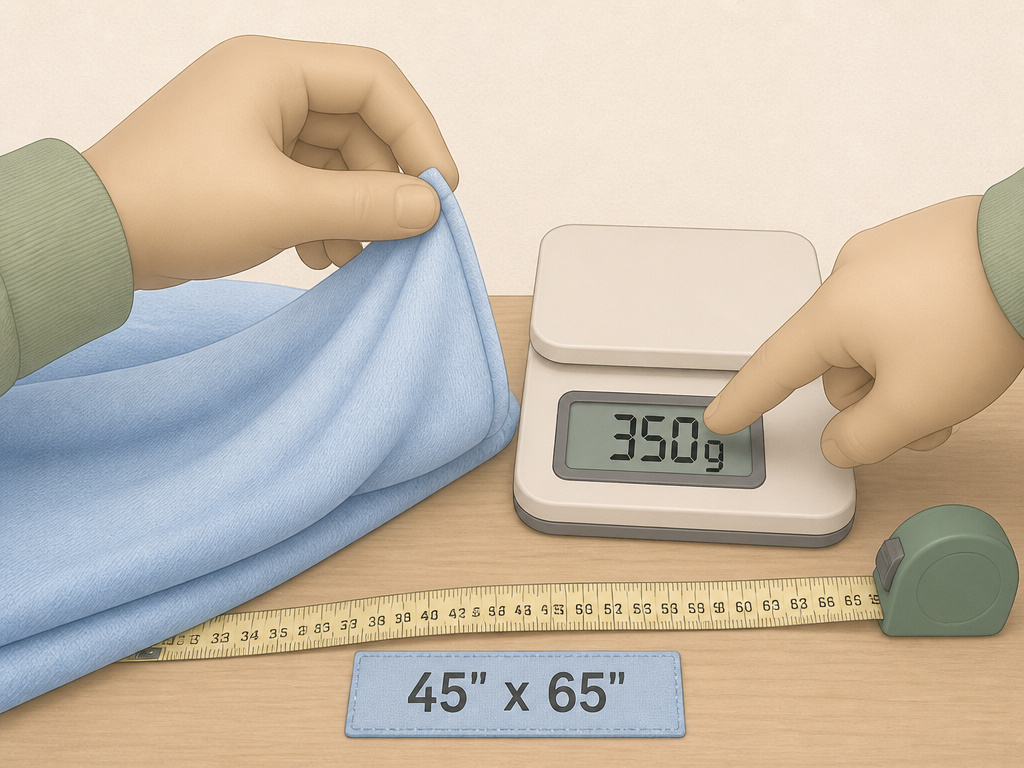
A blanket that’s too small is useless. A blanket that’s too large is a hazard. The goal is coverage without excess fabric.
The ideal dimensions for a toddler blanket are between 40″ x 60″ and 50″ x 70″. This size is large enough to provide ample coverage for a child in a toddler bed or crib, and it allows you to tuck the sides securely under the mattress. Tucking is critical, it prevents the blanket from being kicked into a loose pile that can cover the face. A blanket that hangs far over the sides of the bed is a tripping hazard if the child gets up and a potential entanglement risk.
Weight is about grams, not pounds. A good toddler sleep blanket should feel light in your hands. As a reference point, a standard receiving blanket weighs about 100-150 grams. A good toddler blanket might be 300-400 grams. You should be able to easily lift a corner of it with two fingers. If it feels substantively heavy or dense, it’s likely too warm or too restrictive for safe sleep. This lightweight principle is why the best toddler crib blankets are often single-layer cotton or muslin.
The Verdict: Our Recommendations for Different Needs
You need one answer. Here it is, broken down by the most common scenarios.
For the everyday, year-round sleep blanket: A GOTS-certified organic cotton blanket in the 300-400 gram weight range. It’s breathable, durable, easy to wash, and safe. Brands like Kyte Baby and Burt’s Bees Baby make reliable options that meet these specs. This is the blanket that should live on the bed.
For the child who sleeps hot or for summer use: A muslin cotton blanket. Its open weave provides the least insulation and maximum airflow. It can be layered if needed. Look for a multi-layer muslin weave for a bit more substance without losing breathability.
For a wearable, no-worry option (especially for new toddlers): A wearable sleep sack that complies with ASTM F3735. Choose one appropriate for your child’s height and weight, with a TOG rating (thermal overall grade) suitable for your room temperature. This eliminates all loose fabric concerns. The Halo SleepSack Wearable Blanket is a classic example with clear sizing and safety features.
What to avoid for sleep: Weighted blankets, heavy quilts, electric blankets, and blankets with long ties, loops, or detachable decorative pieces. Save the plush, heavy kids weighted blankets for quiet, supervised reading time on the floor, not for the bed.
Frequently Asked Questions
When can a toddler safely have a blanket in bed?
The AAP states loose blankets, pillows, and other soft bedding should be kept out of the sleep area until at least 12 months of age. Most children are ready for a light blanket between 12 and 18 months, once they have the motor skills to roll over and push objects away from their face consistently. A wearable sleep sack is a safe alternative from infancy through toddlerhood.
Are weighted blankets ever safe for toddlers?
Not for unsupervised sleep. The AAP safe sleep evidence base clearly states the evidence for their safety is insufficient. The potential risk of restricted breathing is serious. Some occupational therapists may use them under direct, observed supervision for specific sensory needs, but they are not a safe bedtime product for the general population.
How do I know if a blanket is breathable?
Perform a simple breath test. Hold the blanket fabric up to your mouth and try to blow air through it. If you can feel your breath easily passing through to your hand on the other side (like with muslin or a light cotton knit), it’s breathable. If your breath is blocked and the fabric feels solid (like fleece or a thick quilted polyester), it is not breathable and carries a higher overheating risk.
What’s the difference between a toddler blanket and a swaddle blanket?
Everything. A swaddle blanket is designed to wrap snugly around an infant to mimic the womb and suppress the startle reflex. It must be stopped once the baby shows signs of rolling. A toddler blanket is for warmth and comfort only. It should never restrict movement. The best swaddle blankets are made of stretchy, breathable fabric, while the best toddler blankets prioritize lightweight coverage.
How often should I wash my toddler’s blanket?
Weekly, at minimum. Toddlers are messy. Saliva, sweat, spills, and general dirt accumulate. Washing on a gentle cycle with a hypoallergenic detergent preserves the fibers and removes allergens and bacteria. Ensure the blanket is completely dry before use to prevent mildew.
Before You Go
Choosing a blanket involves matching a piece of fabric to biological and safety realities. The right blanket is lightweight, breathable, and sized to fit the sleep space without excess.It carries a certification that proves its safety claims. It is never weighted for a sleeping toddler.
Start with a certified organic cotton or muslin blanket for the bed. Use a compliant wearable sack if you want zero loose fabric. Pair that with a safe sleep environment, a firm mattress, fitted sheet, and no other soft objects, and you’ve built a space where your child can rest safely. The comfort follows from there. For everything else your child’s room needs, from the right toddler pillows to complete toddler bedding sets, the same principle applies: safety specs first, then coziness.
