
Understanding Infant Blanket Sleepers: Safety, Types, Uses
This post contains affiliate links. As an Amazon Associate we earn from qualifying purchases.
A blanket sleeper for infants is a one-piece, footed pajama made of thick, blanket-like fabric, designed as warm sleepwear. In modern safe sleep terminology, it’s often used interchangeably with “wearable blanket” or “sleep sack”—a sleeveless, bag-like garment that replaces loose blankets in the crib to prevent suffocation and overheating risks.
The distinction between the classic footed pajama and the sleeveless sack is where most parent confusion starts. The older style is about warmth as clothing. The newer definition is about safety as bedding. Both aim for the same result: a regulated, secure layer that can’t cover a baby’s face.
This guide walks through the two definitions, the federal safety rules that reshaped them, the materials and closures that matter, and how to match the right type to your nursery’s actual temperature.
Key Takeaways
- The term “blanket sleeper” now broadly covers both traditional footed pajamas and modern sleeveless wearable blankets, with the latter being the safer choice for unsupervised sleep.
- Loose blankets are not safe for infant sleep. The CPSC infant sleep product FAQ explicitly warns against them due to suffocation risk.
- A TOG rating (Thermal Overall Grade) is the essential number for choosing warmth, not fabric thickness alone. A 1.0 TOG sack is for standard room temps (68-72°F).
- Zipper closures are generally safer and more durable than snaps, which can pop open and create loose fabric.
- Stop using any sleep sack or wearable blanket when your baby shows signs of rolling over or attempting to climb out, typically between 5-8 months.
What Exactly Is a Blanket Sleeper?
You’ll find two answers, and both are correct depending on when you learned the term. The traditional blanket sleeper is the one-piece, footed pajama your grandmother might recognize—often made of fleece or thick cotton, with a zipper or snaps running from neck to toe. It’s essentially a walking, sleeping blanket. The modern, safety-focused definition is a wearable blanket or sleep sack: a sleeveless, bag-like garment with armholes and a zipper, worn over regular pajamas.
The shift from the first definition to the second wasn’t about fashion. It was a direct response to updated safe sleep guidelines from the American Academy of Pediatrics and enforceable rules from the Consumer Product Safety Commission. The older style is still sold and is fine for supervised lounging or as warm pajamas. But for actual crib sleep, the sleeveless sack is the standard because it eliminates the risk of the garment riding up over the face.
Common mistake: Using a loose blanket because the room feels cold. By the time an infant kicks it into a corner, their core temperature has already dropped. A properly rated wearable blanket maintains even warmth all night without moving.
The Regulatory Shift That Redefined Safety
The federal rules are clear. The Consumer Product Safety Commission business rules for infant sleep products are built on one principle: the sleep environment must remain clear of loose, soft bedding. This isn’t a suggestion. It’s the baseline for any product marketed for infant sleep.
While the strictest standards like the ASTM F2906 safety specification apply to bedside sleepers and bassinets, the logic permeates all sleepwear. A product that acts as bedding must not become a hazard. That’s why the modern wearable blanket is designed to be fixed in place on the baby’s body. It cannot be kicked off or pulled over the head like a traditional baby blanket.
| Feature | Traditional Blanket Sleeper (Footed Pajama) | Modern Wearable Blanket / Sleep Sack |
|---|---|---|
| Primary Use | Warm sleepwear / lounging | Safe crib bedding replacement |
| Sleeves | Long sleeves | Sleeveless (armholes only) |
| Legs & Feet | Enclosed feet | Open bottom, bag-like |
| Key Safety Rationale | Keeps child warm | Prevents face-covering and overheating |
| Best For | Supervised wear, cool homes | Unsupervised crib sleep |
Why Loose Blankets Are Not an Option
The data drove the change. The risk of suffocation from a loose blanket is not theoretical; it’s a documented, recurring pattern in incident reports. A sleeping infant lacks the motor skills and strength to push bedding away from their face if it shifts. Their airway is tiny. Even a light muslin swaddle blanket becomes a hazard if it’s not securely wrapped and anchored.
This is why the move to a wearable layer is non-negotiable for safe sleep. It provides the warmth of a best infant blanket without the mobility of one. The garment’s dimensions are fixed, and a well-designed sack will have a fitted neckline and armholes that prevent it from sliding up.
Where this goes sideways: Doubling up. Putting a wearable blanket over a footed blanket sleeper. This is a fast track to overheating. Pick one layer based on the TOG rating and room temperature.
Choosing the Right Type: A Materials & Features Guide
Not all wearable blankets are equal. The fabric, closure, and fit determine safety and comfort as much as the concept does.
Fabric & Fill: From Cotton to Wool
Your choice here dictates breathability, warmth, and care. * Cotton (Knit or Jersey): The default for most wearable blankets for newborns. Breathable, machine-washable, and good for year-round use in climate-controlled rooms. Organic cotton, like in many organic baby blankets, is gentler on sensitive skin. * Fleece (Polyester): Warmer and softer, but less breathable. Ideal for drafty rooms or winter, but monitor for sweating. Avoid it if your baby runs hot. * Muslin: Lightweight and highly breathable, perfect for summer or warm climates. Often used in swaddling products. * Wool: A natural temperature regulator used in premium sacks. It wicks moisture and keeps baby warm without overheating. Requires specific washing care.
Closures: Zippers vs. Snaps
This is a safety decision disguised as a convenience one. * Zippers (Two-Way): The safer, more durable choice. A two-way zipper lets you unzip from the bottom for diaper changes without exposing the chest. The zipper track is one continuous piece of hardware that can’t spontaneously fail like a snap. Look for a zipper garage—a fabric tab at the top to cover the zipper pull. * Snaps: Seem convenient for changes, but they pop open under pressure. A row of snaps creates multiple points of failure. If enough pop, you now have loose fabric flaps inside the crib, which is the exact hazard you’re trying to avoid.
Sizing & Fit: Non-Negotiables
A sack that’s too big is a safety risk. A sack that’s too small is uncomfortable and restrictive. * Neck Opening: Should be snug enough that it cannot slip over the baby’s head, but loose enough for two fingers to fit comfortably between the fabric and the neck. * Armholes: Should be fitted, not gaping. Excess fabric around the armholes can ride up toward the face. * Length: The sack should be roomy around the legs and feet for comfortable kicking, but not so long that the baby can sink down inside it.
The TOG Rating System Explained
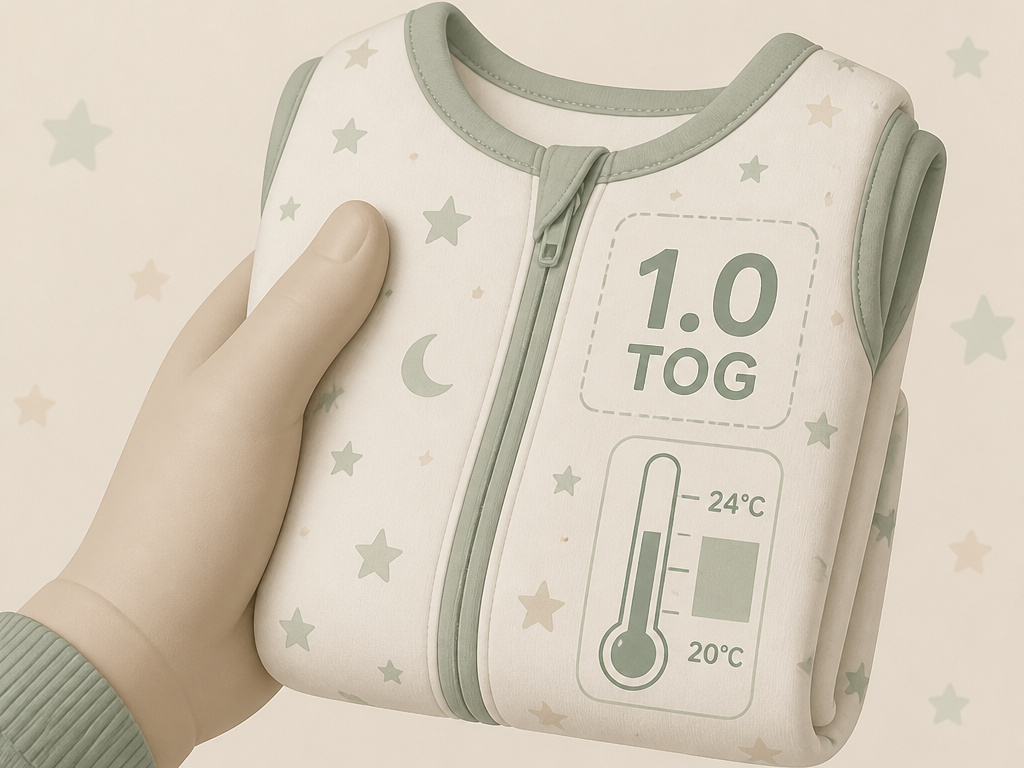
TOG stands for Thermal Overall Grade. It’s a standardized measure of thermal insulation, not a marketing term. Ignoring it is how babies end up sweaty or chilly.
A 1.0 TOG wearable blanket is the baseline for a room kept at 68-72°F (20-22°C). This is the single most useful number for parents.
The system lets you layer intelligently. Dress your baby in a light onesie and a 1.0 TOG sack for a standard room. If the room drops to 61-68°F, switch to a 2.5 TOG sack over the same onesie. The TOG rating accounts for the insulation of the sack itself, so you don’t need to guess about adding layers underneath.
| TOG Rating | Recommended Room Temperature | Typical Fabric | Best For | | :— | :— | :— | | 0.5 TOG | 75°F+ (24°C+) | Lightweight cotton, muslin | Summer, hot climates | | 1.0 TOG | 68-72°F (20-22°C) | Cotton knit, light fleece | Standard climate-controlled rooms | | 2.5 TOG | 61-68°F (16-20°C) | Thick fleece, quilted cotton | Cool rooms, winter | | 3.5 TOG | Below 61°F (16°C) | Heavy fleece, padded, wool | Drafty rooms, very cold climates |
TL;DR: Match the TOG to your thermostat, not the season. A 2.5 TOG sack in a 72°F room will cause overheating within an hour.
Blanket Sleeper vs. Swaddle: When to Transition
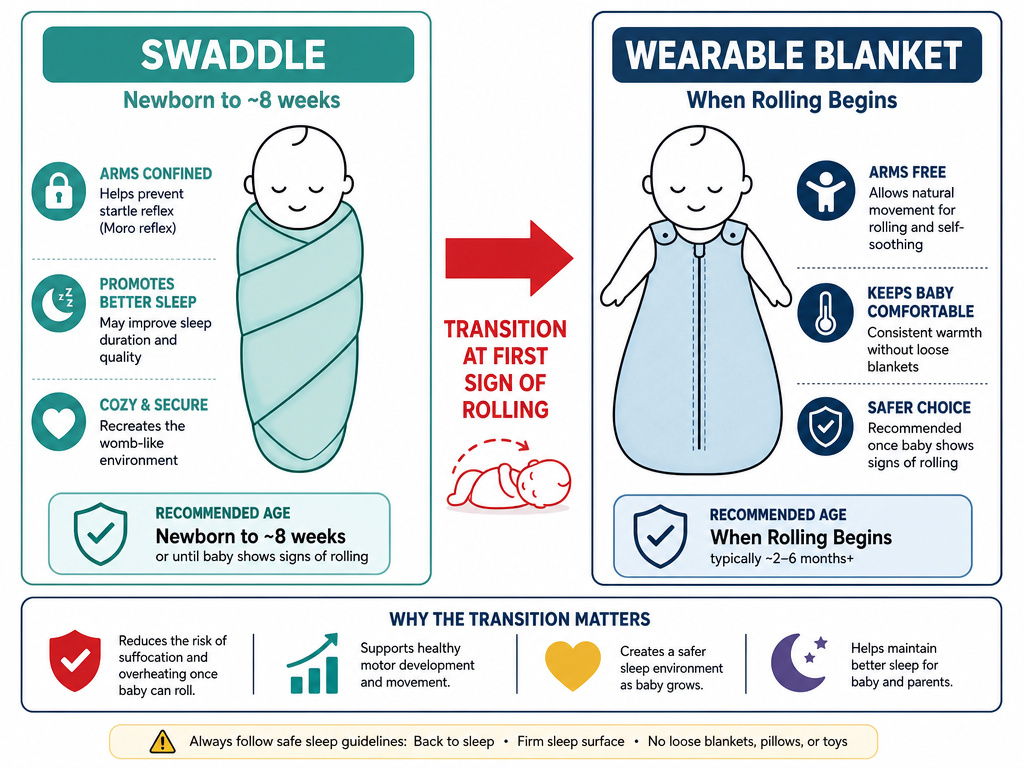
This is a timeline every parent needs. A swaddle is for newborns who have a startle reflex. A wearable blanket is for infants who can roll.
- Swaddle: A tightly wrapped swaddling blanket that confines the arms to prevent the Moro (startle) reflex from waking the baby. Safe only until the first signs of rolling, usually around 8 weeks.
- Wearable Blanket: The next stage. Arms are free, which is safer once rolling begins. The sack provides secure warmth without restriction. This is the stage where a product like the Halo SleepSack Wearable Blanket becomes a staple.
The transition is not optional. A baby who rolls while swaddled can get stuck face-down, unable to use their arms to reposition. The switch to a wearable sleep sack should happen the first time you see them attempting to roll onto their side, not after they’ve mastered it.
Safety Checklist & When to Stop Using One
A wearable blanket is a safety device. Inspect it like one.
Before Every Use:
- Check the zipper or snaps for damage. A stuck zipper can trap skin.
- Feel the interior seams for rough spots or loose threads that could wrap around tiny fingers or toes.
- Look for holes or tears in the fabric, especially near the neck and armholes.
- Ensure the size still fits the neck and armhole guidelines.
When to Stop Using It:
Stop immediately when your baby shows any ability to pull themselves to a standing position in the crib. A sack can become a tripping hazard during falls. This milestone, along with successful rolling, signals it’s time for a safe toddler blanket in a bare crib. Most babies outgrow sacks between 5 and 8 months, but the standing rule is the hard stop.
Top Recommendations & What to Skip
If you want one answer for a newborn: get a two-pack of cotton 1.0 TOG wearable blankets with two-way zippers. The Halo SleepSack is the benchmark for a reason—it’s simple, reliable, and the zipper design is foolproof.
For parents who prefer natural fibers, the Burt’s Bees Baby Beekeeper Wearable Blanket in organic cotton is a excellent choice. It runs true to size and has the essential two-way zipper.
Skip the “all-in-one” convertible products that claim to swaddle, be a sack, and a travel blanket. They usually do one job poorly and complicate the others. Dedicated tools are safer. Also, avoid any sack with added hoods, loose ties, or excessive internal padding. These are decorative hazards.
Frequently Asked Questions
Can a baby wear a blanket sleeper in a car seat?
No. Never. The thick padding of a blanket sleeper or wearable blanket compresses in a crash, creating dangerous slack in the car seat harness. Always buckle the harness snugly over thin, tight-fitting layers, and place the sack or a portable baby blanket over the buckled child as a cover.
Are weighted blanket sleepers safe for infants?
No. The AAP and CPSC have issued warnings against weighted wearable blankets or swaddles for infants under 12 months. The weight can impair breathing and make it harder for a baby to reposition themselves, increasing the risk of suffocation.
How do I wash a blanket sleeper to keep it safe?
Use mild detergent and avoid fabric softeners or dryer sheets, which can coat fibers and reduce breathability. Tumble dry on low heat. High heat can damage elastic, shrink natural fibers, and weaken zippers. Always check the manufacturer’s label first.
What should my baby wear under a wearable blanket?
This is dictated by the TOG rating and room temperature. For a standard 1.0 TOG sack in a 70°F room, a simple cotton onesie or footed pajama is perfect. The goal is to avoid overheating—if the back of the neck feels sweaty, remove a layer.
When can my toddler start using a regular blanket?
The transition from a wearable blanket to a loose blanket for toddler sleep is safe when the child can easily and consistently remove a blanket from their own face, understand basic instructions, and move freely in the crib. This is typically well after 12 months, often closer to 18-24 months.
The Bottom Line
A blanket sleeper, in the sense that matters for safe sleep, is a wearable blanket. It’s a simple solution to a complex problem: how to keep an infant warm without introducing loose fabric into their crib. The rules are straightforward. Match the TOG to your room temperature, choose a secure zipper closure, and transition out of it the moment your baby can stand up in the crib. The right one isn’t just cozy. It’s a critical piece of a safe sleep environment.
