
What Do Newborns Wear to Bed? The One-Layer Rule Explained
This post contains affiliate links. As an Amazon Associate we earn from qualifying purchases.
Newborns wear one more layer than an adult would find comfortable, typically a well-fitting cotton sleeper under a sleeveless sleep sack (wearable blanket). This combination replaces loose blankets, which are a suffocation hazard. The exact outfit depends on the room’s temperature, guided by the sleep sack’s Thermal Overall Grade (TOG) rating.
That one-layer guideline is the difference between a baby who sleeps soundly and one who wakes fussy from being too hot or too cold. Overheating is a documented risk factor for SUDI (Sudden Unexpected Death in Infancy), and it happens quietly, a baby doesn’t cry to signal they’re too warm the way they do for cold.
What follows is a breakdown of the three things that decide safe sleepwear: the layer rule matched to temperature, the specific safety standards that govern sleep sacks and pajamas, and the common items you should never use in the crib.
Key Takeaways
- Dress your newborn in one more layer than you are wearing. A cotton footed sleeper under a lightweight sleep sack is the default for most homes.
- Never use loose blankets, pillows, or hats in the sleep space. These are suffocation and overheating hazards, with studies showing loose bedding increases SIDS risk fivefold.
- Match the sleep sack’s TOG rating to your room temperature. A 1.0 TOG sack is for 68–72°F (20–22°C); add the sleeper layer underneath.
- Swaddling is only safe for the first few weeks and must stop once your baby shows signs of rolling. An ill-fitting swaddle that comes loose is as dangerous as a loose blanket.
- All sleepwear for babies over 9 months must meet federal flammability standards (CPSC 16 CFR Parts 1615 & 1616), either through flame-resistant fabric or by being “tight-fitting” to specific body dimensions.
The One-Layer Rule and TOG Rating Guide
The “one more layer” rule is straightforward, but it hinges on knowing what you’re wearing to bed. If you’re comfortable in pajamas and a light sheet, your newborn needs that plus one layer. That usually means a footed cotton sleeper (the “onesie” layer) plus a wearable blanket.
TOG Rating & Room Temperature Guide | TOG Rating | Room Temperature | Recommended Layers | |—————-|———————–|————————| | 0.5 TOG | 75°F+ (24°C+) | Cotton sleeper alone | | 1.0 TOG | 68–72°F (20–22°C) | Cotton sleeper + sack | | 2.0 TOG | 61–68°F (16–20°C) | Cotton sleeper + sack | | 2.5+ TOG | Below 61°F (16°C) | Add a undershirt layer |
The TOG (Thermal Overall Grade) number on a sleep sack tells you its warmth. It’s a standardized measurement, not a marketing term. A 1.0 TOG sleep sack is the workhorse for climate-controlled homes. The chart above gives you the pairing. Ignoring it is how you get a sweaty neck and back, the first signs of overheating.
Check the back of the neck or upper back. Hands and feet are poor indicators, as they often feel cool naturally. If the skin is warm and dry, you’re on target. If it’s damp or hot, remove a layer immediately.
Why Hats and Head Coverings Are Banned Indoors
Hospitals put hats on newborns to prevent heat loss immediately after birth. Once you’re home, that hat comes off for sleep. The head is a baby’s primary heat-release valve. Blocking it with a hat, beanie, or even a blanket that has ridden up risks a dangerous temperature spike. The official Australian government sleep practices guideline is explicit: remove hats and beanies before sleep to prevent overheating.
Safe Swaddling: A Temporary Tool
Swaddling can soothe a newborn by mimicking the womb. It has not been shown to reduce the risk of sleep-related death. Its safety window is short.
Where this goes sideways: A loose swaddle. If the fabric can be easily kicked free and cover the face, it becomes a loose blanket, the very hazard you’re trying to avoid. This happens most often in the second month as babies get stronger.
You must stop swaddling as soon as your baby shows any signs of attempting to roll, which can happen as early as 8 weeks. A swaddled baby who rolls onto their stomach cannot use their arms to push up or turn their head, creating an immediate entrapment and suffocation risk. The transition is non-negotiable.
When you do swaddle, use a purpose-made product or a muslin receiving blanket known for its breathability. The wrap should be snug around the chest but loose enough to fit two or three fingers between the fabric and the baby’s chest. The legs should have room to bend up and out at the hips to prevent hip dysplasia. The swaddle must always be placed with the baby on their back.
After swaddling, move directly to a wearable sleep sack. This is the safest long-term solution, giving warmth without restriction.
Wearable Blankets vs. Loose Blankets: The Data
This isn’t a matter of preference. It’s a documented mechanical hazard.
Bedding in the sleeping environment increases SIDS risk fivefold independent of sleep position, and this risk increases to 21-fold when the infant is placed prone. Many infants who die of SIDS are found in the supine position but with their heads covered by loose bedding.
That finding, from the AAP’s 2022 evidence review, underscores the mechanism: a baby lacks the motor skills to pull fabric away from their face. Rebreathing exhaled carbon dioxide trapped in the bedding or direct airway occlusion are the two failure modes. A wearable blanket, a sleeveless sack that zips or snaps around the shoulders, eliminates this by staying put.
The ASTM wearable sleep product standard (F3735) exists specifically to govern the safety of these products. It covers performance requirements to reduce the risk of death and injury from foreseeable use and misuse. When you choose a sleep sack that complies with this voluntary consensus standard, you’re getting a product designed with specific hazards in mind.
Loose baby blankets, no matter how cute or soft, have no place in the crib for unsupervised sleep. They are for tummy time, stroller rides, or cuddles in your arms.
Understanding Sleepwear Safety Standards
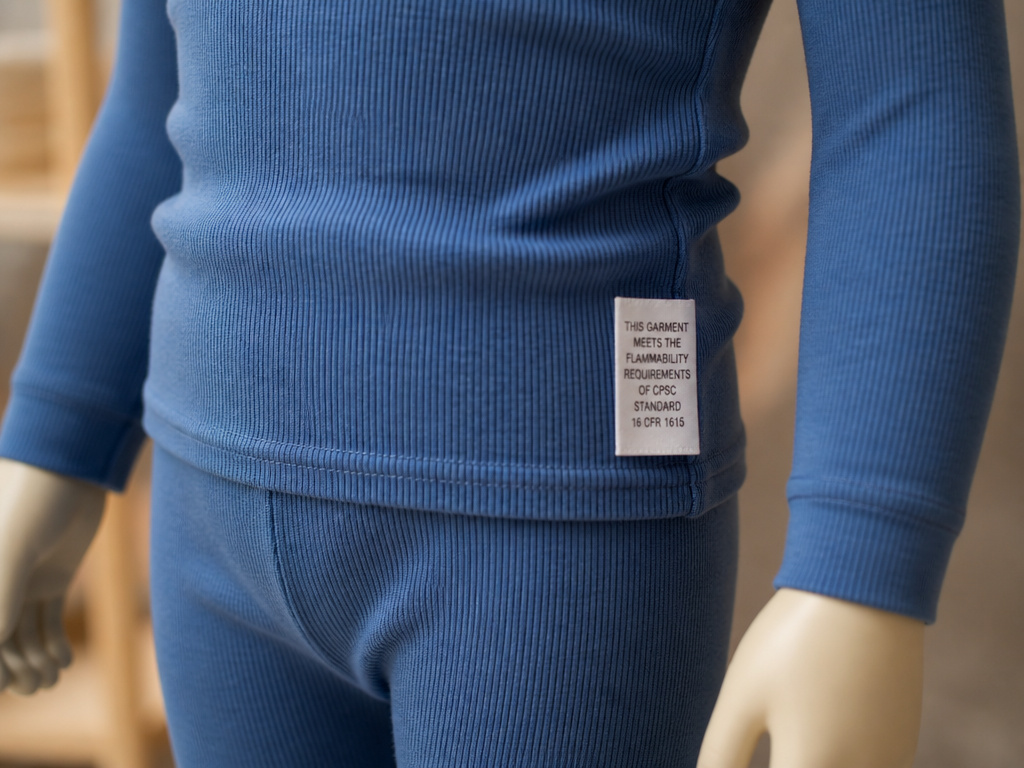 Once your baby graduates from the wearable blanket and sleeper combo to two-piece pajamas, federal regulations come into play. For children’s sleepwear above size 9 months, the U.S. Consumer Product Safety Commission (CPSC) mandates strict rules.
Garments must either be made from flame-resistant fabric that self-extinguishes or be “tight-fitting.” The CPSC sleepwear fact sheet details the exact dimensions for tight-fitting status: no trim extending more than ¼ inch, sleeves and pant legs that taper, and strict maximum lengths. These rules, known as 16 CFR Parts 1615 & 1616, are why toddler pajamas often feel snug.
The logic is simple. Loose, flowing fabric can more easily contact a flame source (like a candle). Tight-fitting fabric minimizes the air gap between the fabric and the skin, reducing flammability risk and making it harder to ignite. Always look for the permanent label stating the garment meets these flammability requirements.
What Never Goes in the Crib
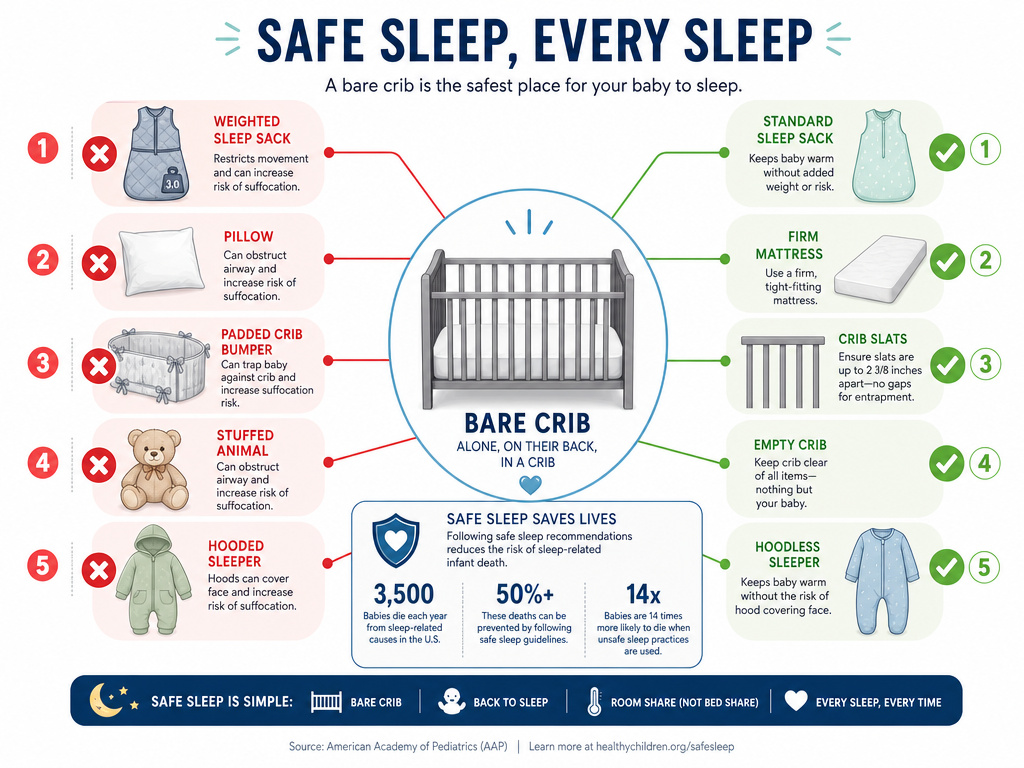 Some products are marketed for sleep but lack evidence of safety. Others are clear hazards.
| Product | Why It’s Unsafe | Safer Alternative |
|---|---|---|
| Weighted Sleep Sacks | Can restrict chest movement needed for breathing; no safety standard exists for them. | Standard, unweighted sleep sack. |
| Pillows & Cushions | Risk of airway occlusion and suffocation; not needed for spinal support in infants. | Firm, flat crib mattress only. |
| Cot Bumpers | Risk of suffocation, entrapment, and strangulation; prevent air circulation. | Bare crib slats. |
| Soft Toys | Can fall over baby’s face; also a climbing aid for older infants. | Empty crib. |
| Hooded Sleepwear | The hood can cover the face during sleep; also a strangulation hazard if ties are present. | Sleep sack or tight-fitting pajamas without a hood. |
Weighted products are a hard no. This includes weighted swaddles and blankets. The theory of deep-pressure stimulation is not proven for infant sleep safety, and the added weight could impede breathing. The AAP’s position is clear: weighted blankets, weighted sleepers, or other weights should not be placed on or near the sleeping infant.
Outerwear like snowsuits or buntings are also unsafe for crib sleep. They are too bulky, can cause overheating, and often compress into a face-covering shape. Dress your baby in indoor sleepwear and use a safe sleep sack. If the room is very cold, adjust the room temperature instead of the clothing.
Frequently Asked Questions
Can I use a blanket if I tuck it in tightly?
No. Even a tightly tucked blanket can be kicked loose by a active newborn. It also presents a rebreathing risk if it rides up near the face. The consistent, zero-fail-safe solution is a wearable blanket or sleep sack.
How do I know if my baby is too hot or too cold?
Feel the back of the neck or upper back. Sweaty, damp, or very warm skin means too hot. Cool torso skin (not hands or feet) means too cold. A baby who is too hot may also have flushed cheeks, rapid breathing, or be restless.
Are footed pajamas safe for sleep?
Yes, well-fitting footed pajamas (often called sleepers or onesies) are an excellent base layer. Ensure they are snug but not constrictive, with no loose fabric around the neck or face. For babies over 9 months, verify they are flame-resistant or tight-fitting per CPSC standards.
When should I switch from a sleep sack to a blanket?
The AAP recommends keeping loose blankets out of the crib until at least 12 months of age. Many parents continue using a wearable blanket or sleep sack into the toddler years for safety and convenience. There’s no rush. A toddler pillow should also wait until your child has transitioned to a toddler bed, usually after age 2.
Is it okay to let my baby sleep in just a diaper?
In a very warm room (above 75°F or 24°C), a diaper alone under a 0.5 TOG sleep sack or in a well-ventilated room is acceptable. The goal is to prevent overheating. Always use a firm mattress with a fitted sheet, never place a baby directly on a plastic mattress cover or sheepskin.
The Bottom Line
Safe sleepwear boils down to a simple formula: a fitted cotton layer plus a sleeveless sleep sack, matched to your room’s temperature. This system replaces loose bedding entirely. The rules, no hats, no weighted products, no loose anything in the crib, aren’t about being overly cautious. They’re the direct, physical answer to how suffocation and overheating happen to infants who can’t move fabric away from their face.
Your baby’s sleep space should contain nothing but the baby and their fitted clothing. The mattress should be firm and covered only by a tight sheet. That’s it. Everything else is a risk you can see and remove tonight.
