
How to Get Infant to Nap During the Day: Essential Sleep Cues
This post contains affiliate links. As an Amazon Associate we earn from qualifying purchases.
To get an infant to nap during the day, watch for early sleep cues like yawning or staring, then start a short, consistent pre-nap routine in a safe, dim space. Put them down drowsy but awake in their own sleep space, and follow their natural sleep needs—newborns nap every 1-2 hours, while older infants consolidate into 2-3 longer naps.
The “drowsy but awake” step is where most plans stall. It feels counterintuitive to walk away from a baby who is almost asleep. But that last bit of wakefulness is the practice session. It’s the only way they learn to connect sleep cycles on their own, which is the foundation for longer naps and fewer night wakings.
What follows: how to spot the tired signs everyone misses, why the sleep space is non-negotiable, a breakdown of behavioral methods from the medical manuals, and how to match your approach to your baby’s specific age and temperament.
Key Takeaways
- Put your baby down drowsy but awake in their own crib or bassinet. This teaches self-soothing, the single skill that extends naps.
- Follow age-appropriate sleep totals: a 3-6 month old needs 14-16 hours of total sleep, with 2-3 naps ranging from 30 minutes to 3 hours.
- A safe nap space is a firm, flat surface with no loose bedding, toys, or pillows. Always place your baby on their back to sleep.
- Use a short, calming pre-nap routine (like a book and a song) to signal that sleep is coming, but keep the routine flexible based on your baby’s cues.
- If naps are a battle after 4-6 months, structured methods like bedtime fading or graduated extinction can help reset sleep patterns, but they require consistency.
Watch the Clock, But Trust the Baby
The most common mistake is forcing a nap by the clock instead of by the cue. A newborn who’s been awake for 90 minutes is often overtired. An overtired baby fights sleep harder because stress hormones like cortisol make settling down physically harder.
Your first tool is a simple awake window guide. These aren’t schedules; they’re biological guardrails.
| Age Range | Typical Awake Time Between Naps | Why This Window Matters |
|---|---|---|
| Newborn (0-3 months) | 45 min – 1.5 hours | Sleep pressure builds very quickly. Missing this window leads to frantic, hard-to-calm crying. |
| 3-6 months | 1.5 – 2.5 hours | Sleep cycles mature. Longer wake periods allow for more interaction, but pushing past 2.5 hours often causes a meltdown. |
| 6-12 months | 2.5 – 3.5 hours | Naps consolidate into a predictable 2-nap pattern. Awake times lengthen steadily. |
Start the nap routine at the beginning of the awake window, not the end. If your 4-month-old wakes at 7:00 AM, begin winding down around 8:15 AM for a 8:30 AM nap target. This builds in time for the routine and avoids the overtired crash.
What Are the First Signs My Baby Is Tired?
The late cues are obvious: crying, fussing, rubbing eyes. The early cues are what prevent the struggle. Look for a loss of engagement—they stop looking at the mobile, their movements slow down, they get quiet. A subtle yawn. Turning their head away from stimulation. These are your green lights.
Easy to miss: A baby staring blankly at the wall or ceiling. It looks like zoning out, but it’s often the first signal of sleep pressure. That’s your moment to move toward the sleep space.
If you wait for the red-faced cry, you’ve missed the optimal window. The calming process will take longer, and the nap itself may be shorter and more restless because they entered sleep from a state of stress.
The Nap Environment Matters More Than You Think
A nap isn’t just sleep; it’s practice for nighttime. The sleep environment must be consistent and safe. This means the same core rules apply for a 30-minute catnap as for an overnight stretch.
The safe sleep rules are unambiguous. Your baby must sleep on a firm, flat surface like a certified crib mattress, always placed on their back. The sleep area must be clear of pillows, loose blankets, stuffed animals, and crib bumpers. This reduces the risk of suffocation and Sudden Infant Death Syndrome (SIDS).
Why does this affect nap length? Comfort and association. A baby who naps in a vibrating chair or a swing is learning to sleep with motion. When that motion stops at the end of a sleep cycle (around 30-45 minutes), they wake up and can’t get back to sleep without it. The same goes for napping on a parent. The sleep association is you, not the crib.
Room-sharing is recommended for the first 6 months. Having the crib or bassinet in your room makes it easier to respond to cues and facilitates feeding, but it is distinct from bed-sharing, which is not recommended due to increased safety risks.
For naps, darkness is a powerful cue. Use blackout shades or curtains to dim the room significantly. White noise can help mask daytime household sounds like doorbells or older siblings. A consistent sleep space signals to your baby’s brain that it’s time for restorative sleep, not just a quick pause.
Building a Routine That Bends Without Breaking
The word “routine” suggests rigidity. For infant naps, think “predictable sequence” instead. A good pre-nap routine is 5-10 minutes long and does two things: it calms your baby and signals the transition from play to sleep.
A simple sequence: close the curtains, put on a sleep sack, read a short book in a calm voice, sing one lullaby, then place them in the crib. The entire ritual should be low-stimulation and boring in the best way. The repetition teaches your baby what comes next.
I prefer a diaper change as the first step, not the last. A baby who gets drowsy during a book only to be jostled for a change will fully wake up. Do the change, then move to the calming activities.
The routine must be flexible. If your baby shows strong tired cues 20 minutes earlier than usual, start the routine. If they’re wide awake at the usual time, push it back 15 minutes. You’re following their biological rhythm, not imposing a calendar.
This is where a lot of parental frustration comes from. You read about a “by-the-clock schedule,” but your baby refuses to conform. That’s because those schedules are averages. Your baby is an individual. Use the routine as your tool to meet their need, not as a demand for them to meet a time.
The “Drowsy But Awake” Translation
This is the most quoted and least understood advice. What does “drowsy but awake” actually look like? Their eyelids are heavy, they might be sucking slowly on a pacifier, their body is relaxed in your arms, but they are still aware of being put down. They might stir or grunt when their back touches the mattress.
That stir is the crucial moment. If they fuss, wait. Give them a minute to try and settle. Often, they will turn their head to the side, find a comfortable position, and drift off. If the fussing escalates to crying, go in, offer a gentle pat or shush, then leave again. The goal is not to get them to fall asleep without any protest. The goal is to let them practice the final step of falling asleep without your direct intervention.
The why-layer is important here. Babies sleep in cycles. At the end of each cycle, they enter a light sleep phase. If they fell asleep in your arms, they will wake up in the crib and panic because the conditions changed. If they fell asleep in the crib, they will wake up in the crib. The conditions are the same, so they are more likely to self-soothe and connect to the next cycle. This is how 30-minute naps become 60- or 90-minute naps.
When Gentle Methods Aren’t Enough: A Look at Structured Interventions
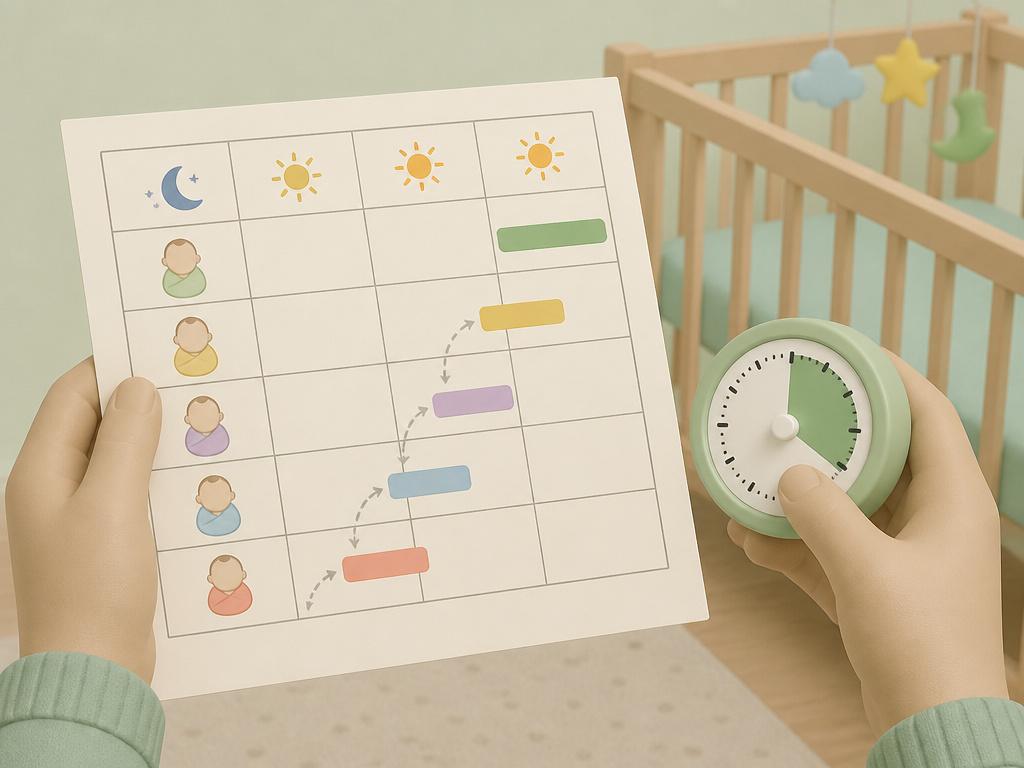
For some babies, especially after 4-6 months when sleep patterns mature, gentle cues and routines aren’t sufficient to overcome persistent short naps or nap refusal. This is when parents might consider behavioral sleep interventions outlined in pediatric resources like the Merck Manual Professional Edition on infant sleep behaviors.
It’s critical to understand these are tools for specific problems, not a first step. They are generally for babies who are developmentally ready (typically over 6 months) and for parents who are consistent enough to see them through.
Where this goes sideways: Trying “cry it out” for a 3-month-old. Their nervous system isn’t ready for self-soothing in that way, and their feeding needs are still too frequent. Wait for the 4-6 month developmental shift.
Here’s a comparison of two common structured approaches:
| Method | How It Works for Naps | Best For | The Commitment Required |
|---|---|---|---|
| Bedtime Fading | You put the baby down at their natural, observed sleep onset time, even if it’s late. Once they fall asleep easily at that time, you move the routine 15 minutes earlier every few days. | The baby who fights naps violently but crashes late. It works with their current rhythm instead of against it. | Patience. It can take two weeks to shift a nap time by an hour. You must track sleep logs. |
| Graduated Extinction | You put the baby down awake and leave. If they cry, you wait a predetermined time (e.g., 5 minutes) before going in for a brief, non-pick-up comfort. You then leave, increasing the wait time gradually. | The baby who can self-soothe at night but screams for 30 minutes at naptime. It breaks the association of crying leading to being held. | Emotional fortitude. The first few days are hard. Consistency is everything; giving in mid-process teaches longer crying. |
These methods are about teaching a skill, not punishment. The academic review of nap strategies notes that parental anxiety and perception play a huge role in outcomes. What one parent reports as “hours of crying” might be 25 minutes of intermittent fussing. Using a timer and a sleep diary provides objective data.
Matching Your Strategy to Your Baby’s Age
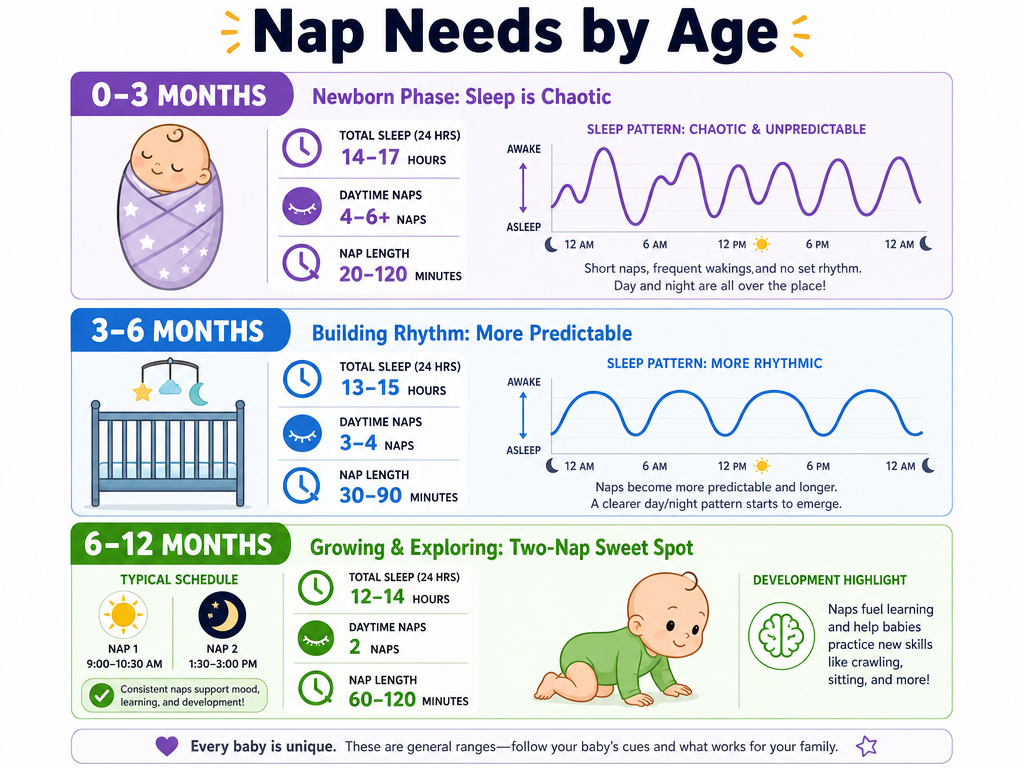
A newborn’s nap needs are nothing like a 10-month-old’s. Government health guidelines, like those from Newfoundland and Labrador, provide a helpful framework for realistic expectations.
Newborn (0-3 months): Sleep is chaotic. They need 14-18 hours total, broken into 6-8 naps that last 30 minutes to 4 hours. Follow sleepy cues obsessively. The goal isn’t a schedule; it’s preventing overtiredness. Swaddling can help mimic the womb and reduce the startle reflex. A good swaddle blanket is a key tool here.
3-6 months: A rhythm emerges. Total sleep drops slightly to 14-16 hours. Naps consolidate into 2-3 per day, each lasting 30 minutes to 3 hours. This is the prime window to introduce a more predictable nap routine and practice “drowsy but awake.” This is also when a safe, firm infant mattress in a dedicated infant bed becomes the non-negotiable sleep space.
6-12 months: Most babies move to a 2-nap schedule. Total sleep is 11-14 hours. Nap length can vary, but you’re aiming for two substantive rests. This is when nap resistance often peaks due to separation anxiety and new motor skills. Consistency with the pre-nap routine and sleep environment is your anchor. If you’re using a bedside sleeper for room-sharing, ensure it remains a boring, sleep-only zone.
Troubleshooting Common Nap Disasters
Even with the best plan, naps fall apart. Here’s what to do when the wheels come off.
The 30-Minute Nap: The baby wakes up bright-eyed after one sleep cycle. This is developmental until about 5-6 months. If it persists, ensure the room is dark enough and the white noise is continuous. When they wake, don’t rush in immediately. Wait 5-10 minutes. They might fuss and fall back asleep, learning to connect cycles.
The Nap Strike: A baby who suddenly refuses to nap for a day or two is often on the verge of a developmental leap (rolling, crawling) or dropping a nap. Stick to the routine and offer the crib. If no sleep happens after 30 minutes, get them up, keep things low-key, and try again at the next sleepy cue. Don’t force it.
The Car/Carrier Nap Trap: Sometimes, the only way a nap happens is on the go. That’s real life, and it’s okay. The problem arises when every nap is on the go. The baby never practices sleeping in the crib. Aim for at least one crib nap per day to maintain the skill. Use the on-the-go nap to protect everyone’s sanity, not as the default.
Sleep begets sleep. A baby who takes good daytime naps is often less overtired at bedtime, leading to better nighttime sleep. It’s a positive cycle. Conversely, skipping naps to “tire them out” usually leads to a hyper, wired baby who fights bedtime and wakes more at night.
Frequently Asked Questions
Why does my infant only nap for 20 minutes?
This is usually a sleep cycle issue. Newborns have short, 20-45 minute sleep cycles. They wake at the end of the cycle and haven’t learned to self-soothe back to the next one. Ensure they are put down drowsy but awake so they learn this skill in their safe sleep space. Also, check for environmental disruptions like a sunbeam hitting their face or a sudden quiet when the dishwasher stops—consistent white noise can help.
Is it okay to let my baby nap on me?
For occasional naps, yes. The warmth and comfort are bonding. But if it becomes the only way they nap, it creates a strong sleep association that is unsustainable and prevents them from learning independent sleep. Aim for at least one nap per day in their own sleep space to balance connection with skill-building.
How dark should the room be for naps?
Very dark. You should struggle to read a book in there. Darkness cues the brain to produce melatonin, the sleep hormone. Even small amounts of light from a window or a crack under the door can be stimulating and prevent deep sleep or cause early waking. Blackout curtains or shades are a worthwhile investment.
My baby fights the second nap every day. Should I drop to one nap?
Probably not until they are closer to 12-18 months. Nap strikes are common, but dropping a nap too early leads to chronic overtiredness. First, try pushing the second nap later by 30 minutes. Make sure the first nap doesn’t run too long (cap it at 2 hours if needed). If the fighting persists for two weeks and they are happy and sleeping well at night, they might be transitioning. The age range for dropping to one nap is wide—anywhere from 12 to 18 months.
Can a sleep sack help with naps?
Absolutely. A wearable sleep sack or blanket is a safe alternative to loose bedding. It provides a cozy, consistent cue that it’s sleep time. The slight weight and warmth can be soothing. Just ensure it is the appropriate TOG (thermal overall grade) rating for the room temperature to prevent overheating.
The Bottom Line
Daytime naps are a learnable skill for your infant, not a genetic lottery. Success hinges on three things: timing the nap before overtiredness hits, using a consistent and safe sleep environment like a clear crib with a firm mattress, and having the patience to let them practice falling asleep on their own from a drowsy state.
Throw out the idea of a perfect, clockwork schedule. Follow a flexible routine based on your baby’s unique cues and the age-appropriate sleep totals. When you hit a wall after 4-6 months, know that structured methods from pediatric resources exist, but they require a clear plan and consistency.
The goal isn’t just a quiet afternoon. It’s teaching your baby the restorative sleep they need to grow and learn, while giving you the predictable breaks you need to recharge. Start with one crib nap today, watch for those early sleepy signs, and be that boring, predictable signal that sleep is safe and coming.
