
Discover How Often Babies Sleep in the Womb & Sleep Stages
This post contains affiliate links. As an Amazon Associate we earn from qualifying purchases.
Babies sleep in the womb for the vast majority of the time, with sleep duration increasing as pregnancy progresses. By the last month, a fetus spends close to 95 percent of its day asleep. These aren’t random naps; they follow organized, repeating cycles of about 45 minutes, half the length of an adult’s, and include both active (REM) and quiet (non-REM) sleep stages that are critical for brain development.
The 95 percent figure is a ceiling, not a constant. It comes from tracking fetuses in the final weeks of a full-term pregnancy. Earlier on, the picture is different. At seven months, sleep occupies about 65 percent of the day. The type and quality of that sleep evolve dramatically, shifting from disorganized rest to distinct, measurable states that doctors can see on ultrasound.
What follows is a breakdown of the science behind those numbers. We’ll look at how sleep is tracked, what the different states mean for development, and why the rhythmic patterns your baby establishes now can echo into their first months in a bedside bassinet.
Key Takeaways
- Fetal sleep isn’t just rest; it’s active brain development. The self-generated neural activity during active REM sleep builds the foundational maps for sensory and motor systems.
- Sleep duration skyrockets in the third trimester. A fetus sleeps about 65% of the time at seven months, climbing to nearly 95% by weeks 38–40.
- Sleep cycles are short and fast. A fetus completes a full sleep cycle roughly every 45 minutes, compared to an adult’s 90-minute cycle.
- Movement doesn’t mean awake. Fetuses are active during sleep, with studies recording an average of 86 to 120 movements per hour even during maternal rest.
- The sleep-wake rhythm established in the womb predicts postnatal patterns. Fetuses with a stronger day/night sleep preference tend to be better sleepers as newborns.
What Does Fetal Sleep Look Like on the Inside?
You can’t see a fetus yawn or close its eyes, but technology gives us a clear window. Through ultrasound and specialized monitoring, researchers can identify at least three distinct behavioral states in the later weeks of pregnancy.
The two primary states mirror what we see in newborns: active sleep and quiet sleep. Active sleep is the fetal equivalent of REM (Rapid Eye Movement) sleep. During this state, the fetus’s eyes move rapidly beneath closed lids, and you’ll see frequent small movements, twitches, kicks, and jerks. Its heart rate is variable. This stage is neurologically busy. As noted in a peer-reviewed sleep driver article, this self-generated brain activity is crucial for wiring the sensorimotor system, essentially practicing neural connections before they’re needed for life outside the womb.
Quiet sleep is the non-REM state. Here, movement nearly stops. The fetus is still, its heart rate is steady and regular, and its breathing motions (yes, they practice breathing amniotic fluid) are consistent. This is the deep, restorative phase where energy is redirected toward physical growth and tissue repair.
A fetus between 20 and 40 weeks gestation sleeps in repeating cycles of about 45 minutes. This cycle length is roughly half that of an adult’s 90-minute sleep cycle. The proportion of time spent in active REM sleep increases as the fetus matures, peaking late in the third trimester.
Doctors observing via ultrasound can distinguish these states by combining movement, heart rate patterns, and breathing. This isn’t just academic. When a pregnant person reports decreased movement, a nonreactive Nonstress Test (NST) might simply indicate the fetus is in a quiet sleep cycle. Clinical protocols, as outlined in the StatPearls Fetal Movement entry, account for this by extending the test or moving to a Biophysical Profile (BPP) to get a fuller picture.
How Sleep Changes From the Second to Third Trimester
Sleep doesn’t switch on like a light. It develops in stages, tightly linked to the nervous system’s wiring.
- Weeks 14-22 (Second Trimester): The first flutters of “quickening” are felt, but organized sleep states aren’t yet present. The nervous system is forming, and the fetus exists in a disorganized, sleep-like state most of the time.
- Weeks 24-28 (Transition): This is a key window. Basic sleep cycling becomes visible in preterm infants, and by 28 weeks, ultrasound can reliably distinguish REM and non-REM sleep. An automated PLOS ONE fetal movement study recorded a mean of 101 movements per hour during maternal sleep at this stage.
- Weeks 32-36 (Organization): Sleep-wake cycles become clearer and more regular. The fetus spends more total time asleep. That same automated study showed movement counts during sleep at 115 per hour at 32 weeks, dropping to 86 per hour at 36 weeks, not because the fetus is less healthy, but because sleep periods are longer and deeper.
- Weeks 38-40 (Full Term): Sleep dominates. The fetus is asleep up to 95% of the day, cycling diligently between active and quiet sleep every 45 minutes or so. This intense period of neural pruning and growth is the final preparation for birth.
| Gestational Week | Approximate Sleep % | Key Sleep Development |
|---|---|---|
| 20-24 | N/A – Disorganized state | First recognizable sleep cycles begin to form. |
| 28 | ~65% | REM and non-REM sleep clearly distinguishable via ultrasound. |
| 32 | ~75-80% | Sleep cycles are regular; active sleep proportion is high. |
| 36-40 | Up to 95% | Sleep dominates the day in repeating ~45-minute cycles. |
The Critical Link Between Fetal and Newborn Sleep
The sleep habits your baby is forming now aren’t erased at birth. Research indicates they’re a blueprint. Studies tracking fetal heart rates and comparing them to newborn sleep patterns found a direct correlation: fetuses who spent more time sleeping and who developed a day/night rhythm in utero showed more mature sleep patterns as newborns.
This concept is called circadian entrainment. The fetus tunes its sleep rhythms to cues from the mother, like her cortisol levels and activity patterns. This is the focus of ongoing research into maternal-fetal circadian communication study. A fetus that learns to be more active during the day and sleep more at night is, in essence, practicing for life on the outside.
This is why the sleep environment you create post-birth matters so much. The familiar, rhythmic motion a fetus felt in the womb is why rocking and swaying soothe a newborn. The transition from the warm, dark, muffled womb to the outside world is jarring. A consistent, calm sleep space in a safe infant bed or bedside sleeper helps bridge that gap, supporting the natural rhythms they’ve already begun to develop.
Where this goes sideways: Assuming less fetal movement always means deeper, better sleep. A sustained, significant decrease in movement can be a sign of fetal compromise and needs clinical evaluation. The StatPearls Fetal Movement entry stresses that any notable drop in activity should prompt a check-up.
Fetal Movement vs. Sleep: Understanding the Signals
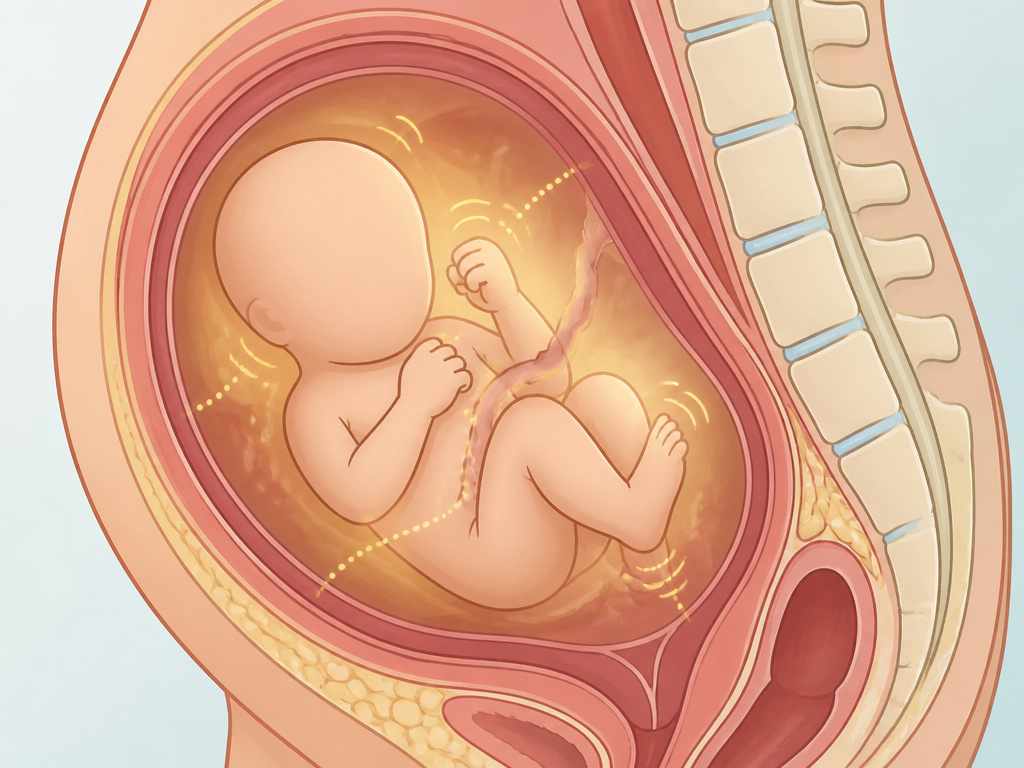
This is the most common point of confusion. Parents often think a kicking baby is an awake baby. In reality, much of that activity happens during sleep, particularly active REM sleep.
Think of those tiny jerks, rolls, and hiccups as part of the neural software running its diagnostics. They’re essential. The earlier-cited automated study provides hard numbers: during maternal sleep, fetuses averaged 86 to 120 movements per hour across the third trimester. The highest counts were at 24 weeks, gradually declining as sleep periods consolidated.
| Fetal Behavior | Likely Sleep State | What It Looks/Feels Like |
|---|---|---|
| Rhythmic hiccups | Indeterminate | Repetitive, small jumps every few seconds for minutes. |
| Isolated strong kick or roll | Could be awake or active sleep | A distinct, powerful movement you can see on your belly. |
| Period of prolonged stillness | Quiet (non-REM) sleep | 15-20 minutes with only very subtle flutters, if any. |
| Clusters of small twitches | Active (REM) sleep | Flurries of tiny, rapid movements, like muscle spasms. |
This is why “kick counts” are advised later in pregnancy, generally from around 28 weeks. You’re not counting periods of wakefulness. You’re ensuring the pattern of movement, which includes movement during sleep, remains consistent for your individual baby. Every baby has their own baseline.
How Maternal Activity and Health Influence Fetal Sleep

Your body is your baby’s entire world. Your rhythms become their rhythms.
- Your Movement: The rocking motion of you walking or moving during the day often lulls the fetus to sleep. Conversely, when you rest, they may become more active. This isn’t a hard rule, but a common pattern as they aren’t being rocked by your motion.
- Your Sleep: A growing body of research examines how maternal sleep quality and disorders like sleep apnea might affect fetal oxygenation and, in turn, fetal sleep patterns and development.
- Your Diet & Stress: Caffeine and high stress levels can cross the placenta and may act as stimulants, potentially disrupting fetal sleep cycles. A balanced diet supports the steady nutrient supply needed for healthy neurological development.
The goal isn’t to tiptoe around. It’s to listen to your body and maintain a generally healthy, rhythmic routine. Your consistency helps your baby’s internal clock find its beat, making the eventual transition to a crib mattress for newborn sleep a bit smoother.
Frequently Asked Questions
Can my baby dream in the womb?
While we can’t know for sure, it’s a compelling possibility. During active REM sleep, which the fetus spends hours in each day, the brain is highly active, and eye movements are rapid. In adults and children, this is when dreaming occurs. Since REM sleep is so prevalent in late-term fetuses and is known to be involved in memory processing and brain development, many researchers believe some form of dreaming or neural “rehearsal” is likely happening.
Why does my baby move more at night when I’m trying to sleep?
This is extremely common. During the day, your movement rocks the fetus, which can be soothing and sleep-inducing. When you lie down and are still, that rocking motion stops. The change can rouse them, or it may simply be that you’re more aware of the movements in the quiet. It also might reflect their developing circadian rhythm, which may not yet align with yours.
Should I worry if my baby isn’t moving as much during my ultrasound?
Not necessarily. Ultrasounds often capture 20-30 minute windows. If your baby is in a quiet sleep cycle during that time, movement will be minimal. Sonographers are trained to identify sleep states and will look for specific indicators of well-being beyond just kicks, like muscle tone, breathing practice, and amniotic fluid levels. They might try to gently stimulate the baby or have you change position.
How will my baby’s sleep in the womb affect sleep after birth?
The patterns set in utero create a foundation. Babies who have more organized sleep cycles and some day/night differentiation before birth often adapt to postnatal sleep routines slightly faster. However, don’t expect a full-night sleeper from day one. Newborns have tiny stomachs and need to feed around the clock. The first 3-4 months are about survival and adjustment, using tools like a secure swaddle blanket to mimic the snug feeling of the womb and promote longer sleep stretches.
Is there anything I can do to encourage good fetal sleep patterns?
Focus on supporting your own healthy circadian rhythm. Try to get regular exposure to daylight, especially in the morning, and wind down in dim light at night. Maintain consistent meal times. Moderate, regular exercise is beneficial. While you can’t directly “make” your fetus sleep, creating a stable, rhythmic external environment gives their developing internal clock the clearest signals to sync with.
The Bottom Line
Your baby is not just waiting to be born; they are actively preparing. The near-constant sleep of the third trimester is a period of intense neurological construction. Those 45-minute cycles of twitching REM sleep and still quiet sleep are building the very brain structures your child will use to learn, move, and eventually sleep through the night in their own safe infant blanket.
The takeaway isn’t to obsess over every quiet period. It’s to understand that the patterns you feel, the bursts of activity and the stretches of calm, are signs of a complex, developing sleep system. Trust those patterns, track them as advised by your doctor, and know that this foundational work in the womb is the first step toward all the restful nights to come.
