
The Truth About Letting a Newborn Cry Themselves to Sleep
This post contains affiliate links. As an Amazon Associate we earn from qualifying purchases.
No, you should not let a newborn cry themselves to sleep. Sleep interventions are not recommended for infants under six months of age because their sleep patterns are still developing and they lack the self-soothing capacity. The scientific consensus, including a 2020 PRISMA scoping review, states that circadian rhythms begin to emerge around two to three months, and the longest continuous sleep episode of about six hours does not typically appear until approximately six months.
That six-month mark isn’t an arbitrary parenting milestone. It’s a biological checkpoint. Before that, a baby’s sleep is evenly distributed across a 24-hour period, they don’t yet have the internal clock that distinguishes night from day. Trying to “train” a system that isn’t fully online is like trying to program a computer that’s still booting up. You’ll cause frustration for no functional gain.
What follows is a breakdown of the evidence: the official age minimums, the mechanics behind why early crying doesn’t work, the two research-backed methods for older infants, and how to build a safe sleep foundation from day one that makes any future sleep teaching smoother.
Key Takeaways
- Sleep training of any kind, including “cry it out,” is not recommended before six months due to underdeveloped circadian rhythms and self-soothing skills.
- The American Academy of Sleep Medicine (AASM) classifies behavioral interventions like graduated extinction and bedtime fading as effective for infants over six months.
- Research shows no long-term harm to attachment or stress levels from evidence-based sleep training used on appropriate-age infants.
- Bedtime fading, gradually shifting bedtime later, showed the strongest link to improved maternal mood in multiple studies.
- A safe sleep environment with a firm crib mattress and room-sharing is the non-negotiable first step for all ages.
The Official 6-Month Minimum
The rule comes from developmental neurology, not opinion. A newborn’s brain is not wired for consolidated nighttime sleep. The Norland College sleep interventions review synthesized 13 studies to conclude interventions aren’t recommended under six months because “circadian rhythms begin to emerge at about two or three months of age, and the longest daily continuous sleep episode of about six hours emerges at approximately six months.”
Putting a baby under six months through a crying-based sleep intervention is biologically misaligned. They cry from a primal need, hunger, discomfort, or the need for connection, not from a stubborn refusal to sleep.
This is why responding to a newborn’s cries is not “creating a bad habit.” It’s meeting a physiological requirement. Their stomachs are tiny, needing frequent feeds. Their nervous systems are immature, relying on external co-regulation from a caregiver to calm down. Expecting them to self-soothe is like expecting them to crawl, the hardware simply isn’t there yet.
What does this mean for your routine?
- 0-3 Months: Survival mode. Feed on demand, soothe as needed, and have zero expectations for a schedule. Your goal is to master safe sleep setups in a bedside bassinet and learn your baby’s hunger vs. Tired cues.
- 4-6 Months: The transition window. You might see longer night stretches, but regressions are common. This is the time to establish a consistent bedtime routine (bath, book, feed) in their own sleep space. You can start placing them down drowsy but awake to practice self-soothing, but be ready to step in if it escalates to full-blown crying.
The shift happens when they can connect sleep cycles on their own, which is a skill that matures around six months. That’s when behavioral strategies become appropriate tools, not forced marches.
Why “Cry It Out” is The Wrong Label
The term “cry it out” is a media catch-all that blurs three distinct methods defined in the AASM practice parameters PDF. Confusing them leads parents to either fear all sleep training or use the wrong technique.
| Method (Clinical Name) | What It Is | Recommended For | What It Is NOT |
|---|---|---|---|
| Unmodified Extinction | Put child down awake and do not re-enter room until a set morning time. | Rare, specific cases; not generally recommended for infants. | Letting a baby cry indefinitely without checks. |
| Graduated Extinction | Put child down awake, leave, and check in at progressively longer intervals (e.g., 2, 4, 6 minutes). | Infants 6+ months with frequent night wakings. | Ignoring the child completely. |
| Bedtime Fading | Gradually shift bedtime later to match child’s natural sleep onset, then slowly move it earlier. | Infants 6+ months with bedtime resistance. | Making a child “cry it out” at an early bedtime. |
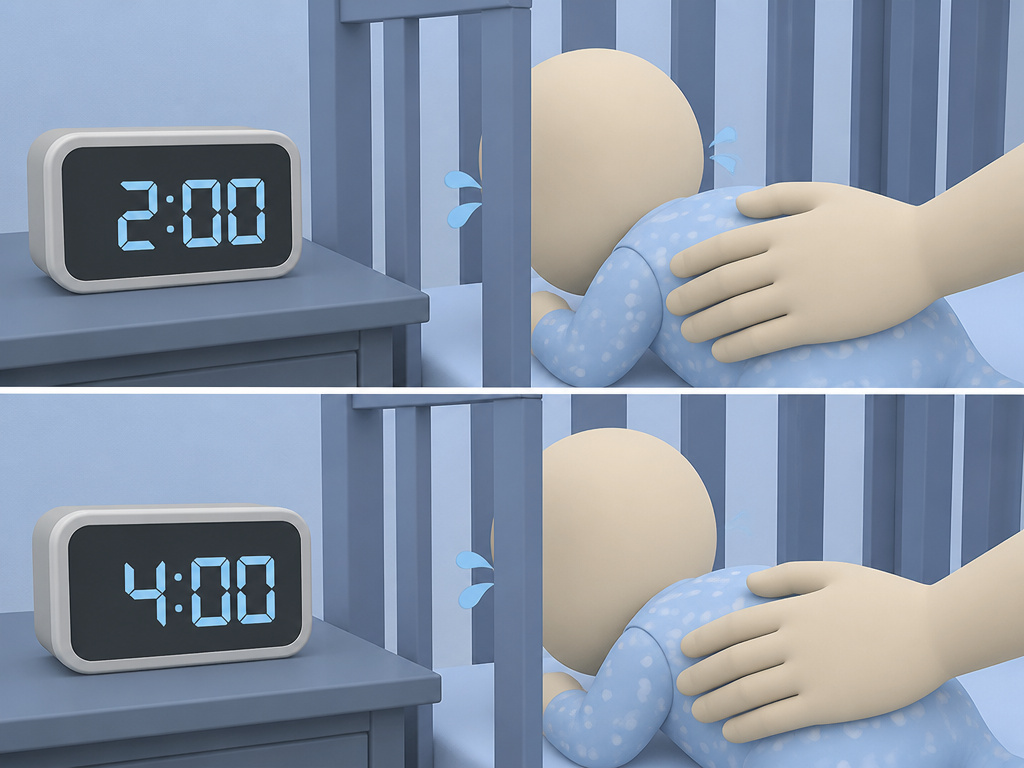
The Graduated Extinction column is what most people call “Ferberizing.” The checks are brief and non-interactive, a pat, a quiet “I’m here,” then leave. The goal is to assure the child they are safe while allowing them the space to practice falling asleep independently. The Bedtime Fading column often involves little to no crying because you’re working with the child’s biological tide, not against it.
Common mistake: Starting with an unrealistic bedtime. If you put an overtired or under-tired baby down at 7 PM and let them cry, you’re fighting biology. Bedtime fading fixes the timing first.
The 2016 Australian study cited in the Harvard Health blog analysis compared these two methods. It found both helped babies fall asleep faster than a control group, with graduated extinction leading to fewer night wakings. Crucially, follow-ups at five and six years found no differences in child behavior, stress, or parent-child attachment between the groups.
The Cortisol Question: Is Crying Harmful?
The fear is that prolonged crying floods a baby’s system with cortisol, a stress hormone, causing long-term damage. The evidence doesn’t support this for controlled, age-appropriate interventions.
The same Australian research team measured salivary cortisol in infants and mothers during their study. They found no elevated cortisol levels in the sleep-training groups compared to controls at the 12-month follow-up. In fact, maternal stress decreased more in the intervention groups. The takeaway is that short, predictable periods of crying within a loving, responsive daytime context do not create a toxic stress response.
Where this goes sideways: Using any sleep training method on a baby under four months. At that age, crying is a primary signal of need, and not responding can cause legitimate distress because they cannot self-regulate.
The stress that does cause harm is chronic, unpredictable, and occurs without a supportive caregiver. A few nights of planned check-ins with a healthy, well-fed six-month-old in a safe crib mattress environment is not that. The real, documented risk to infant well-being is chronic parental sleep deprivation leading to depression and reduced caregiving sensitivity.
Graduated Extinction vs. Bedtime Fading: A Practical Comparison
You have two evidence-backed paths for infants over six months. Your child’s specific sleep issue dictates which one to try first.
Choose Graduated Extinction if: Your baby wakes up multiple times a night and cannot fall back asleep without being rocked, fed, or held. The problem is night wakings, not falling asleep initially. 1. Follow a calm, consistent 20-minute bedtime routine. 2. Place your baby in the crib awake, say a brief goodnight, and leave the room. 3. If they cry, wait for a short interval (e.g., 2 minutes) before returning. 4. Make the check-in boring: no eye contact, no picking up, just a soft pat and a quiet “It’s sleep time.” Leave within 30 seconds. 5. Leave again, doubling the interval (e.g., 4 minutes). Continue doubling until asleep. 6. Use the same escalating intervals for any night wakings.
The interval is the tool. Starting too long is overwhelming. Starting too short becomes a frustrating game for the baby. The first night is the hardest; consistency on nights two and three is where the learning solidifies.
Choose Bedtime Fading if: Your baby fights bedtime for an hour or more with lots of crying. The problem is falling asleep at the start of the night. 1. For a week, note the time your baby actually falls asleep, regardless of when you put them down. 2. Make that observed time the new official bedtime. If they fuss until 9:30 PM, bedtime is now 9:30. 3. Stick with the 9:30 PM bedtime for 3-4 nights until they fall asleep within 15-20 minutes with minimal fuss. 4. Move bedtime 15 minutes earlier every 3-4 nights until you reach your target time.
This method works because it builds on success. You’re eliminating the long, stressful bedtime battle first, then gently shifting the schedule. It often involves less crying because you’re not asking the baby to sleep when they’re not biologically ready.
Building a Safe Sleep Foundation First
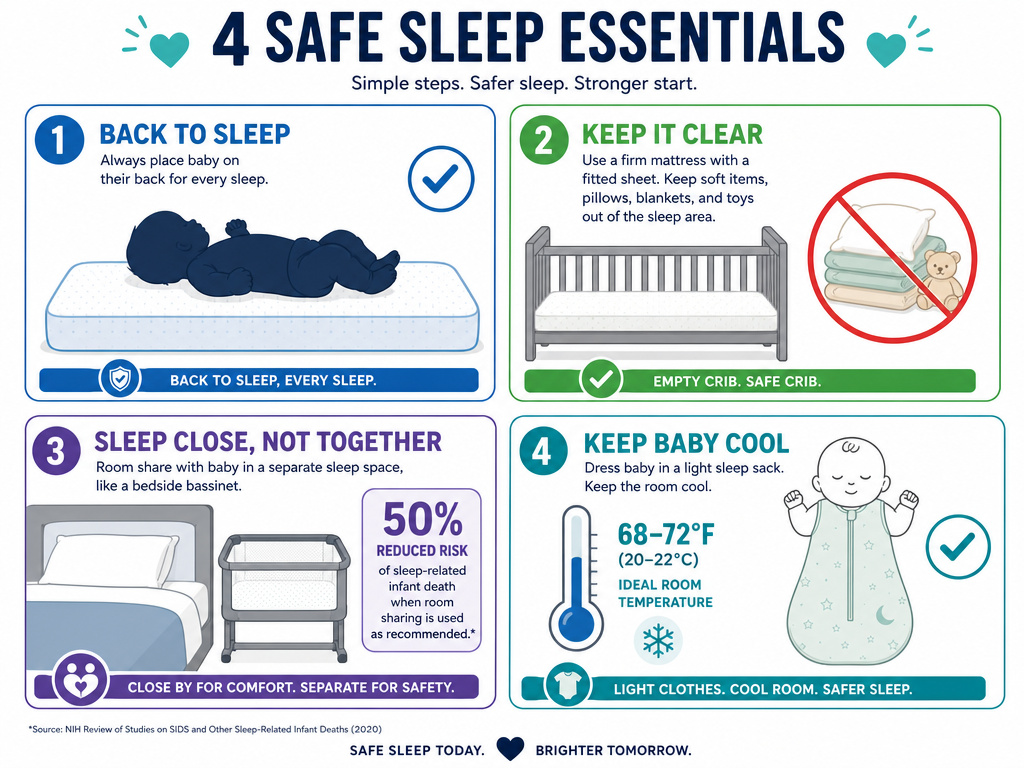
Before considering any sleep training, the physical environment must be secure. This is non-negotiable for newborns and older infants alike. The goal is to reduce the risk of Sudden Unexpected Infant Death (SUID).
The Absolute Rules:
- Back to Sleep: Always place your baby on their back on a firm, flat surface. This is the single most effective SIDS reduction step.
- Bare Crib: No pillows, blankets, stuffed animals, or bumper pads. Use a fitted sheet on a certified firm crib mattress. For warmth, use a wearable blanket or sleep sack.
- Room-Share, Don’t Bed-Share: Keep the baby’s bedside bassinet or crib in your room for at least the first six months. This arrangement is associated with a 50% reduced risk of SIDS.
- Avoid Overheating: Dress the baby in light layers. The room should be comfortable for a lightly clothed adult.
These practices create the safe container within which any sleep learning happens. A comfortable, secure safe sleep environment also makes it easier for a baby to settle. Choosing the right best bedding for newborn products, like a firm mattress and a wearable blanket, is a foundational safety step, not an optional extra.
Frequently Asked Questions
Can I sleep train my 3-month-old?
No. Three months is too early for formal sleep training. You can, however, start laying the groundwork with a predictable bedtime routine and practicing putting them down drowsy but awake. Their sleep is still too disorganized, and their need for nighttime feeds is high.
What if my pediatrician says we can start at 4 months?
Some pediatricians give the green light at four months if the baby is showing signs of longer sleep stretches and has doubled their birth weight. This is the absolute earliest threshold. The official pediatric sleep parameters and major reviews still emphasize six months as the standard. If you start at four months, you must use the gentlest possible approach (like bedtime fading) and be prepared to abandon it if it causes more distress than progress.
Will sleep training damage our bond?
All contemporary research says no. Studies following children for five and six years found no differences in attachment security, emotional health, or behavior between children who were sleep trained as infants and those who weren’t. The bond is built through thousands of loving, responsive interactions during the day. A week of structured nights does not override that.
My baby cries until they vomit. What do I do?
Stop. Vomiting is a clear sign the method or timing is not right for your child. Clean them up calmly, soothe them to sleep however you can that night, and re-evaluate. They may have an underlying reflux issue, be too young, or need a much more gradual approach. Consult your pediatrician.
Is “camping out” (parent in the room) effective?
Yes, and it’s often recommended for babies with high separation anxiety. The parent sits in a chair next to the crib, gradually moving the chair farther away every few nights until they’re out of the room. It’s a form of graduated extinction with parental presence, which the AASM also lists as an effective standard. It typically takes longer but can feel more manageable for some parents.
Before You Go
The question isn’t really “should you let a newborn cry themselves to sleep.” The answer to that is a straightforward no, grounded in their biology. The real question is, “When is my baby ready to learn independent sleep, and what’s the kindest, most effective way to teach it?”
The timeline points squarely to six months. Before that, focus on safety, responsiveness, and establishing rhythms. After that, if sleep is fractured and unsustainable, you have two proven tools: graduated extinction for night wakings, bedtime fading for bedtime battles. Both are backed by clinical standards and long-term follow-up data showing safety.
Your job isn’t to prevent all crying, that’s an impossible standard that leads to exhausted, resentful parents. Your job is to provide a safe safe sleep environment and loving responsiveness, and when the time is right, to teach a skill that benefits the whole family’s well-being. Choose the method that fits your child’s specific problem, commit to it consistently for a week, and know that a full night’s sleep is a realistic goal on the other side.
