
How to Get Infant to Sleep Without Being Held: A Gentle Guide
This post contains affiliate links. As an Amazon Associate we earn from qualifying purchases.
To get an infant to sleep without being held, you must build the physical and behavioral conditions for independent sleep. This requires a firm, flat sleep surface in your room, placing the baby down drowsy but awake, and using a consistent, calming pre-sleep routine. The goal is to help the baby learn to connect sleep cycles without your arms as a prop.
The foundation isn’t a trick. It’s a shift in environment and timing. A baby who only knows sleep in your arms has no reason to expect it anywhere else. Changing that expectation starts with where they sleep and the exact moment you put them there.
What follows breaks down the three non-negotiable conditions, explains the critical “drowsy but awake” window, and walks through the evidence-based methods that work after the foundation is set. You’ll also get the specific age brackets where each technique is appropriate and the one common mistake that resets progress every time.
Key Takeaways
- The sleep surface is the first teacher. A firm, flat mattress in a safety-approved crib or bassinet in your room is non-negotiable for safe, independent sleep.
- “Drowsy but awake” means the baby’s eyes are heavy and closing, not when they are fully asleep in your arms. Missing this 90-second window means starting over.
- Consistent bedtime routines (like feed, bath, book) signal sleep is coming and are more powerful than any sleep-training method used alone.
- Formal sleep training, like controlled crying, has robust evidence for safety and effectiveness, but it is only recommended for babies aged six months and over.
- The most common mistake is reintroducing the “prop” (rocking, feeding to sleep) after a bad night. It teaches the baby that crying long enough brings back the old way.
The 3-Step Foundation for Independent Sleep
You cannot teach a baby to sleep alone in an environment designed for co-sleeping or in a device that requires motion. The foundation is physical.
First, the sleep space. It must be a firm, flat mattress in a crib, bassinet, or portable play yard that meets current safety standards. Inclined sleepers, swings, and car seats are for transportation, not overnight sleep. The American Academy of Pediatrics states that sleep surfaces with an incline greater than 10 degrees are unsafe because they can cause a baby’s head to slump forward, restricting the airway.
A firm, flat, non-inclined sleep surface covered by a fitted sheet without other bedding or soft objects reduces the risk of suffocation or wedging. Sleep surfaces with inclines of more than 10 degrees are unsafe for infant sleep.
Second, that safe sleep space must be in your room. Room-sharing, placing the crib or a bedside bassinet right next to your bed, can reduce the risk of SIDS by as much as 50%. It allows for easy feeding and comfort without the dangers of bed-sharing. This is recommended for at least the first six months.
Third, the baby must be placed into that space awake. Not wide-awake and alert, but not passed out in your arms either. This is the “drowsy but awake” principle, and it’s the hinge the whole process swings on. If the baby is already asleep when they hit the mattress, they learn nothing about self-soothing. They only learn to wake up confused when they find themselves alone after dozing off in your warmth.
| Foundation Element | What It Does | What Happens If You Skip It |
|---|---|---|
| Firm, Flat Surface | Provides a safe, static sleep environment that doesn’t mimic being held. | Baby associates sleep with motion or containment; won’t settle on a still surface. |
| Room-Sharing | Allows proximity for comfort and monitoring without bed-sharing risks. | Increases SIDS risk; makes night feeds more disruptive, tempting bed-sharing. |
| “Drowsy But Awake” Placement | Teaches baby to complete the transition to sleep independently. | Baby cannot self-soothe; wakes fully each cycle and cries for the “prop” (you). |
What Does “Drowsy But Awake” Actually Mean?
Most parents get this timing wrong. They rock or feed until the baby is limp, eyelids still, breathing deep. That’s asleep. Putting a fully asleep baby down is just dropping a sleeping baby. It doesn’t teach a thing.
“Drowsy but awake” is a 90-second window. The baby’s sucking slows during a feed, or their body goes heavy in your arms. Their eyes glaze over and begin to close, but they flutter open once more. They might give a sleepy sigh. That’s your cue. Move them to the crib before the eyes stay shut.
Common mistake: Waiting for full, deep sleep. The transfer then becomes a delicate maneuver, and the baby often startles awake anyway because the sensation of being laid down is unfamiliar. You’ve taught them to fear the crib transfer.
This is where a consistent pre-sleep routine earns its keep. A predictable sequence, like a final feed, a diaper change, a quiet song, then into the bedside sleeper, creates sleep cues. The baby learns: “After the song comes the mattress.” That predictability makes the “drowsy but awake” moment less startling.
If the baby fusses immediately, give them a minute. Often, a few grizzles or a brief cry is them protesting the change, not signaling true distress. Intervening too fast teaches them that a small fuss brings you back instantly. Wait, listen. Many will settle within that minute, find a comfortable position, and drift off.
Building a Sleep-Promoting Routine (0-6 Months)
Before six months, the goal isn’t “sleep training.” It’s shaping sleep habits and differentiating night from day. Newborns are asleep more than they are awake, with total sleep around 18 hours in a 24-hour period, broken into short bursts.
Your tools here are environment and rhythm, not formal methods.
During the day: Open curtains. Play. Don’t tip-toe during naps. Feed on demand. This helps set their circadian rhythm.
At night: Keep lights low and voices quiet. Use a soft, red-toned nightlight for feeds and changes. Make night feeds boring, no play, minimal talk. Put the baby back down as soon as they’re fed and changed. This reinforces that night is for sleeping.
The swaddle blanket is a powerful tool for this stage. A proper swaddle mimics the secure feeling of being held and limits the Moro (startle) reflex that can wake a newborn. Use a large, breathable muslin or a dedicated swaddle sack. Stop swaddling when the baby shows signs of rolling, usually around 2-3 months.
For the sleep surface, ensure you’re using a properly fitted, firm mattress designed for an infant. There should be no gaps between the mattress and the crib sides. This is not just about comfort; it’s a primary safety requirement outlined in all CDC safe sleep guidelines.
If your baby only dozes during feeds, that’s normal. Let them finish feeding until they pull away or fall asleep at the breast or bottle. Then, attempt that drowsy transfer. Sometimes it works, sometimes it doesn’t. The practice itself is what matters.
Evidence-Based Sleep Training Methods (6 Months+)
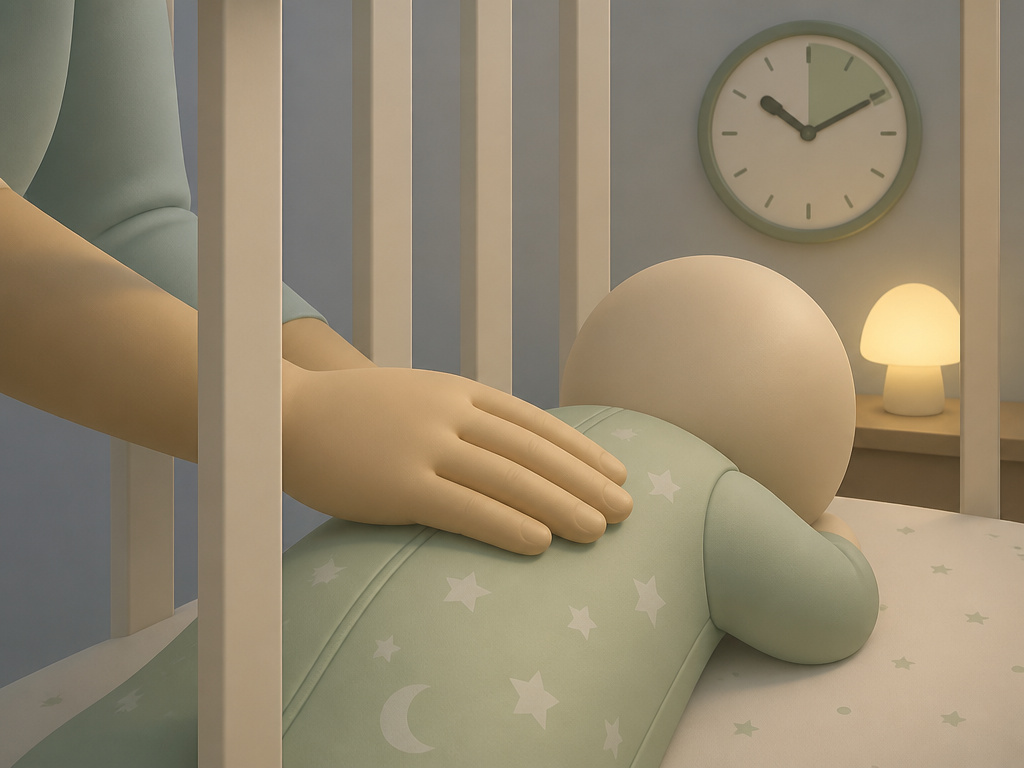
Once a baby is past six months, they are neurologically capable of learning to self-soothe. They also no longer need nighttime feeds for nutrition. This is the window where structured sleep training methods have the most evidence for effectiveness and no evidence of long-term harm.
A landmark Australian study published in Pediatrics found that techniques like controlled comforting (controlled crying) resulted in better infant sleep and lower cortisol levels, a measure of stress, in both babies and their mothers. Follow-up research found no negative effects on parent-child attachment or child emotional health years later.
Here are the two most researched approaches:
1. Controlled Comforting (Controlled Crying)
This method is for babies who can cry with intensity but are safe, fed, and dry. You put the baby down drowsy but awake after a solid routine. If they cry, you wait a predetermined interval before going in to briefly comfort them.
- Night 1: Wait 2 minutes, go in for no more than 1 minute to pat and shush (do not pick up), then leave.
- If crying continues: Wait 5 minutes, repeat comfort.
- If crying continues: Wait 10 minutes, repeat. Use the 10-minute interval for the rest of the night.
The goal is not to abandon the baby, but to show them you are present while they practice settling. It works in about 80% of babies within a week.
2. Bedtime Fading
This is a gentler alternative, ideal for more anxious babies or parents who cannot manage prolonged crying. Instead of focusing on night wakings, you adjust the bedtime.
- If the baby typically cries for 30 minutes before falling asleep at 7:00 PM, move their bedtime to 7:30 PM for a few nights.
- Once they fall asleep at 7:30 PM with little fuss, gradually move bedtime earlier by 15-minute increments every few nights until you reach the desired time.
This method works on the principle that an overtired baby fights sleep harder. A less anxious baby at a later bedtime learns to fall asleep faster, building a positive association with the crib.
Where this goes sideways: Mixing methods within the same night. If you try controlled crying but pick the baby up after 10 minutes of tears, you’ve just taught them that 10 minutes of crying gets them picked up. Consistency for 5-7 nights is the only way the learning sticks.
The Role of Sleep Props and How to Phase Them Out
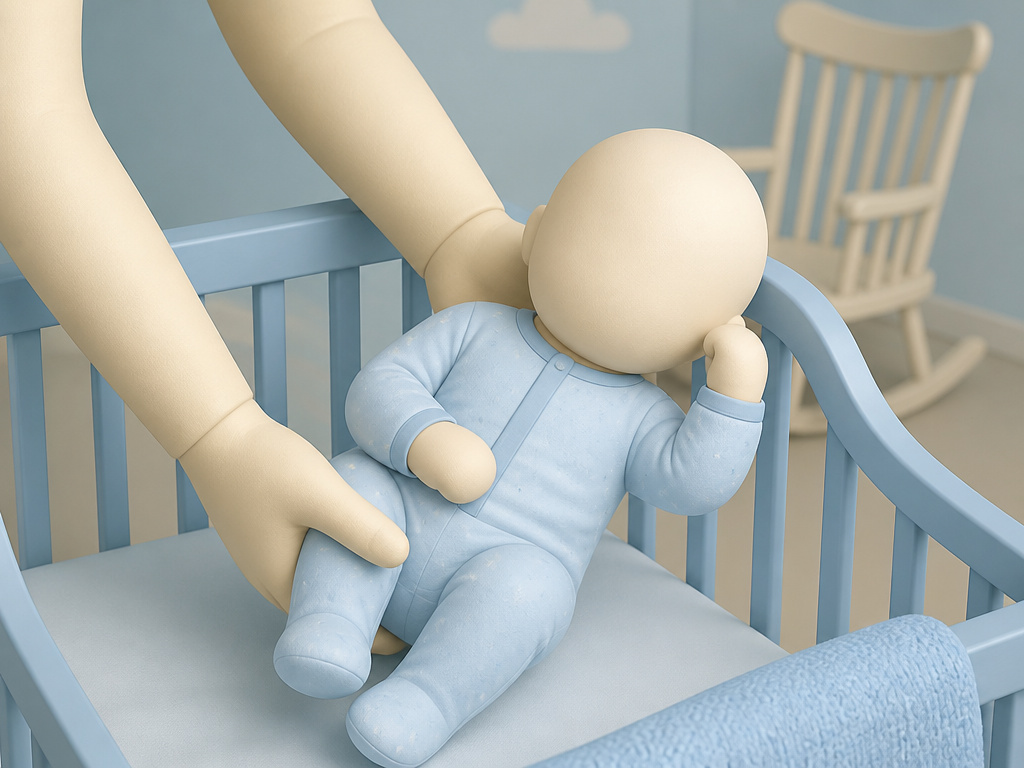
A sleep prop is anything external the baby needs to fall asleep. It could be your arms, a rocking chair, a car ride, a pacifier, or feeding. Props are not inherently bad, they are tools. The problem arises when the baby cannot start a sleep cycle without them.
If your baby relies on a prop, you have two choices: make it a permanent part of the sleep routine (e.g., always use a pacifier you’re willing to replace all night) or phase it out.
Phasing out a feeding-to-sleep prop: Move the feeding to the start of the bedtime routine. The sequence becomes feed, then bath, then book, then into crib. This breaks the direct association between sucking and unconsciousness.
Phasing out a motion prop: Reduce the motion gradually. If you rock to sleep, rock until very drowsy, then stop and hold still until asleep. Next, rock until drowsy, then put down drowsy. Finally, put down awake after rocking just for a minute of calm.
For objects, ensure any baby blanket in the crib is introduced only after 12 months and is small, breathable, and securely tucked. Before one year, the crib should be empty except for the baby and a fitted sheet on a firm mattress for the crib.
Troubleshooting Common Setbacks
The 4-Month Sleep Regression: This is a permanent change in sleep cycles, not a regression. Babies start cycling between light and deep sleep like adults. They now wake fully at the end of each cycle. If they don’t know how to get back to sleep alone, they’ll cry for you. This is why establishing “drowsy but awake” before this point is critical. Ride it out with consistency; it’s the new normal.
Teething or Illness: All rules pause for genuine pain or sickness. Comfort your baby. Use pain relief as advised by your pediatrician. The key is to return to your normal routines as soon as the acute symptoms pass, usually within 2-3 days. Don’t let a week of comforting during an ear infection become the new standard.
Early Morning Wakings: If the baby is waking for the day before 6:00 AM, treat it like a night waking. Keep the room dark, use minimal interaction, and avoid feeding. If they won’t resettle after 30 minutes, start the day but keep lights low and activities calm. This is often a sign of overtiredness or a bedtime that’s too late.
Remember, the core AAP safe sleep policy of a safe sleep environment never takes a break. Even on a bad night, the baby goes back to a flat, firm surface with no loose bedding.
Frequently Asked Questions
Is it okay to let a newborn cry?
No. Newborns cry to communicate needs, hunger, discomfort, a dirty diaper. You should always respond to a newborn’s cry. The concept of letting them “cry it out” or self-soothe is not appropriate until at least 3-6 months, and formal sleep training is not recommended until six months.
What if my baby rolls onto their stomach to sleep?
Once a baby can roll from back to stomach and stomach to back independently, you can leave them in the position they choose. However, you must still start every sleep time by placing them on their back on a firm surface with no loose bedding. This reduces risk and follows the 2022 safe sleep evidence review recommendations.
How long should I try a sleep training method before giving up?
Give any consistent method 5 to 7 full nights. Improvement often happens on nights 3 or 4, with consolidation by night 7. If you see no change at all after a week, the method may not be a fit for your baby’s temperament, or an underlying issue (like reflux or sleep apnea) may need to be ruled out by your pediatrician.
Can I use a pacifier to help my baby sleep?
Yes, pacifiers are associated with a reduced risk of SIDS. If you’re breastfeeding, wait until nursing is well-established (around 3-4 weeks). The trick is not to become the pacifier-replacer all night. Once the baby is asleep, if the pacifier falls out, leave it out. Don’t jump to reinsert it at every whimper.
My baby sleeps great in a swing. Why is that bad?
Motion-induced sleep is very deep, which sounds good but is problematic. It prevents the baby from practicing the natural sleep cycle transitions they need to master. Furthermore, sleeping in a semi-upright position in a swing, bouncer, or car seat can allow the head to fall forward, potentially obstructing the airway. These are for supervised awake time only.
The Bottom Line
Getting an infant to sleep without being held is a skill you teach, not a switch you flip. It rests on a three-part foundation: a safe, still sleep space in your room, mastering the “drowsy but awake” transfer, and a predictable bedtime routine. Before six months, focus on shaping habits and differentiating day from night. After six months, evidence-based methods like controlled comforting are safe and effective tools if you apply them with unwavering consistency for a full week.
The hardest part is the first few nights of change. The baby will protest because the old way was easier. Your job is to be calmly, reliably present while they learn the new way. Stick with the foundation, and the independent sleep will follow.
