
Is It OK for a Newborn to Sleep with a Pacifier? Safety Guide
This post contains affiliate links. As an Amazon Associate we earn from qualifying purchases.
It is okay for a newborn to sleep with a pacifier, but the timing depends on feeding method. For formula-fed infants, a pacifier can be used from birth. For breastfed newborns, major health bodies recommend delaying introduction until breastfeeding is “well established”, a milestone most define as 2 to 3 weeks of age, marked by consistent weight gain and a reliable latch. Once cleared, offering a pacifier at every sleep reduces SIDS risk, even if it falls out after the baby is asleep.
That delay is not a suggestion. It is a line drawn from hospital discharge protocols to prevent a specific, early interference that can derail milk supply. The protective effect is real, but so is the risk of attaching it wrong.
What follows: the physiological reason pacifiers protect, the exact checklist for “established” feeding, and the three attachment methods that turn a safety tool into a hazard.
Key Takeaways
- Delay pacifier introduction for breastfed newborns until feeding is firmly established, typically 2 to 3 weeks postpartum, to protect milk supply and latch.
- Once used, offer the pacifier at the start of every sleep (naps and nighttime); you do not need to reinsert it if it falls out after the baby is asleep.
- Never attach a pacifier to an infant’s clothing, neck, or crib with a cord, ribbon, or clip long enough to encircle the neck, this is a strangulation hazard.
- For non-breastfed infants, pacifier use can begin immediately, following the same safe sleep and attachment rules.
- The SIDS protection comes from the pacifier keeping the airway forward and slightly open, which helps maintain oxygen flow during deep sleep.
The Pacifier SIDS Protection: How It Works
The recommendation is not based on tradition. It is grounded in a physiological mechanism observed in case-control studies. A pacifier’s bulb and shield combination changes an infant’s sleep position and oral posture in two specific ways.
First, the bulk of the pacifier nipple keeps the tongue positioned slightly forward. This forward posture prevents the tongue from falling back and potentially obstructing the airway during the deep sleep phases where arousal is more difficult. Second, the external shield prevents the infant from burying their face flush into the mattress or bedding. Even on a firm surface, this small air gap is critical. It minimizes the chance of rebreathing, inhaling the same exhaled carbon dioxide, which can occur if an infant’s nose and mouth are pressed against a soft surface.
The pacifier’s bulb and shield help maintain airway patency and prevent complete mouth-and-nose covering. Studies cited by the American Academy of Pediatrics note the protective effect is consistent even if the pacifier falls out after sleep onset, as the initial positioning benefit remains.
This is why the advice is to offer it at the start of sleep, not to chase it all night. The protective window is those first few minutes as the infant drifts off. Forcing a pacifier on a baby who repeatedly spits it out is unnecessary and counterproductive. The evidence shows the benefit is linked to offering it, not to ensuring it stays in place for hours.
The sleep environment itself is non-negotiable. This tool only works inside a certified safe setup: a bare, firm mattress in a CPSC-approved crib or bassinet, with the infant placed on their back. Adding a pacifier to a cluttered crib, an inclined sleeper, or a shared adult bed does not mitigate those overwhelming risks. Your primary focus must be on curating a proper infant sleep environment.
The 3-Week Rule: Why Breastfed Babies Wait
For breastfed infants, the “delay until established” guideline exists for one primary reason: to protect the mother’s milk supply and the infant’s feeding skills. The mechanics of sucking on a pacifier (non-nutritive sucking) are different from the deep, compressive latch required for effective breastfeeding. Introducing an artificial nipple too early can cause nipple confusion or flow preference, where the baby becomes frustrated at the breast and does not transfer milk well.
“Established” is not a random date. Official guidance, like Indiana’s 2024 hospital protocol, defines it by three concrete benchmarks: sufficient milk supply, a consistent and comfortable latch, and appropriate infant weight gain as tracked on standard growth curves. In practice, this process typically takes 14 to 21 days. The Oregon health department puts the window at 3 to 4 weeks. This period allows for the baby’s instinctive feeding reflexes to solidify and for the mother’s milk production to become driven by demand, not just hormones.
Where this goes sideways: Giving a pacifier in the first 48 hours to soothe a crying newborn before feeding cues are recognized. This can delay early, frequent feeding sessions that are crucial for signaling milk production, leading to supply issues by week two.
Hospitals take this seriously. Many, following protocols like Indiana’s, will not routinely give pacifiers to breastfeeding newborns. They are reserved for specific, painful procedures like a heel stick or circumcision. The priority is uninterrupted skin-to-skin and feeding on demand. This initial discipline sets the stage for successful, long-term breastfeeding, which itself is an independent protective factor against SIDS, as noted in the American Academy of Family Physicians guide.
If you are combination feeding, the same cautious timeline applies. The goal is to protect the breastfeeding relationship. For exclusively formula-fed infants, this specific delay is unnecessary, and pacifier use can begin as soon as parents desire.
The 7 Pacifier Safety Rules (and 3 Banned Practices)
A pacifier is a tool, and like any tool, it has a manual. The safety rules are not optional extras.
| Do This | Why It Matters | Risk If Skipped |
|---|---|---|
| Use a one-piece, dishwasher-safe pacifier. | No small parts can detach and become a choking hazard. | A broken shield or separate handle poses an immediate choking risk. |
| Select the correct size for newborn (0-3 months). | The nipple length and shield size are designed for a small infant’s mouth and airway. | A too-large nipple can gag the infant or not fit properly behind the lips. |
| Inspect before every use. | Check for cracks, tears, or holes where moisture can harbor bacteria. | A torn nipple can break apart during use or grow mold inside, leading to illness. |
| Clean regularly with soap and water. | Basic hygiene prevents the transfer of germs. | Unclean pacifiers can contribute to oral thrush or gastrointestinal bugs. |
| Offer, don’t force. | If the baby refuses, spits it out, or cries, respect that. | Forcing can create negative associations and feeding aversion. |
| Replace every 2 months, or sooner if damaged. | Silicone and latex degrade with use, cleaning, and exposure to light. | Worn, sticky, or misshapen nipples are less safe and effective. |
| Use a pacifier without decorative toys or attachments on the shield. | A smooth, solid shield prevents anything from blocking the infant’s nostrils. | Attached stuffed animals or rattles can press against the face and obstruct breathing during sleep. |
The banned practices are where the gravest dangers lie. They are not theoretical.
- Never attach a pacifier to the infant’s clothing, neck, or crib with a cord, ribbon, or long clip. This is a strangulation hazard of the highest order. The ISPID official safety PDF states that if you must attach one while the infant is awake and supervised, use a short tether that cannot possibly encircle the neck.
- Never dip the pacifier in sweeteners like honey, juice, or formula. For infants under 12 months, honey poses a risk of infant botulism, a severe illness. For all infants, this habit promotes tooth decay (even before teeth erupt) and creates an expectation for sweetened comfort.
- Never use a pacifier to delay a feeding when the infant is showing clear hunger cues (rooting, sucking on hands, crying). This can lead to inadequate calorie intake and poor weight gain. A pacifier is for soothing after feeding, not for substituting a meal.
Your baby’s sleep area should be as bare as possible. This means no loose blankets, pillows, or stuffed toys, the same rule applies to the pacifier itself. A simple, clean pacifier is the only object that should be in the crib besides the baby and a fitted sheet. For warmth, use a wearable blanket or sleep sack instead of loose covers.
Pacifiers vs. Other Soothing Tools: When to Choose What
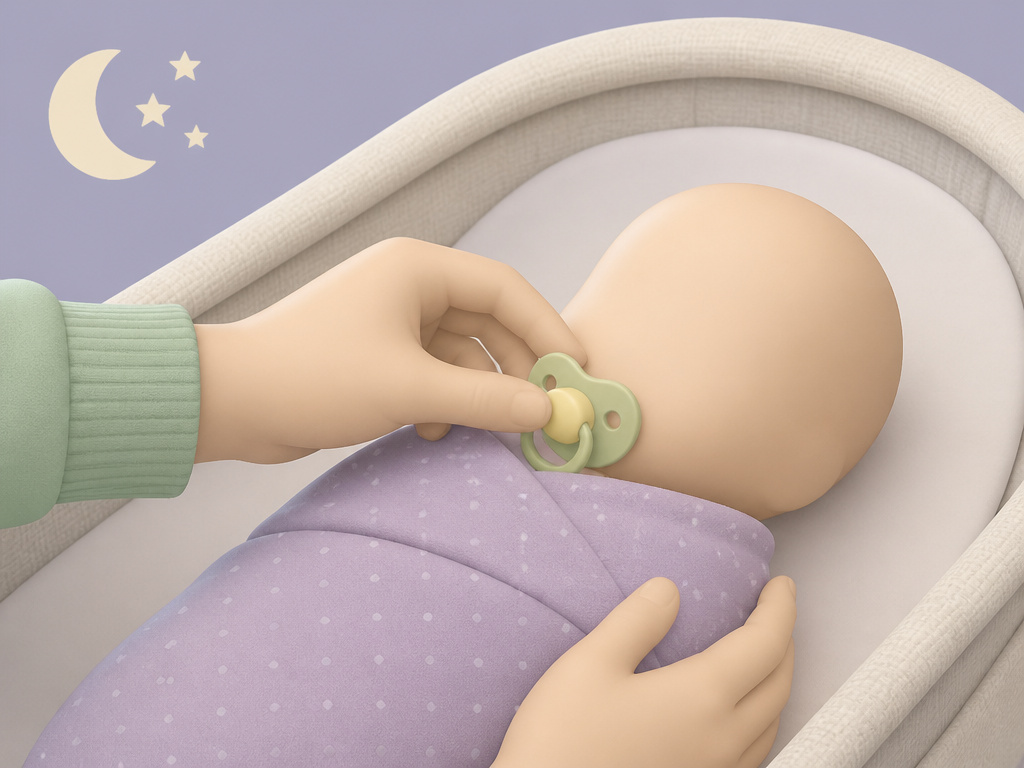
A pacifier is one option in a larger toolkit. Knowing when it’s the right tool prevents over-reliance and helps you match the solution to the problem.
| Soothing Need | Best Tool | Pacifier’s Role | Alternative to Try First |
|---|---|---|---|
| Hunger | Feeding | Not appropriate | Breast or bottle feed. |
| Sleep Onset | Pacifier or White Noise | Excellent for triggering the suck-to-sleep reflex. | Swaddling (if under 8 weeks) or gentle rhythmic patting. |
| General Fussiness | Motion or Contact | Can help, but may not address root cause (gas, boredom). | Babywearing, a walk in a stroller, or a tummy time pillows for awake play. |
| Pain (Gas, Teething) | Specific Relief | Minor distraction, but not a solution. | Burping techniques, bicycle legs, or a chilled teething ring (for older infants). |
The pacifier excels at the sleep-onset ritual. The natural suck-swallow-breathe pattern is neurologically calming. For general fussiness when you know the baby is fed and clean, try movement or contact first. Overusing a pacifier as a first-response plug for every whimper can make it harder for the baby to learn other self-soothing skills later.
For young infants, a secure swaddle blanket can provide the deep pressure and containment that mimics the womb, often reducing the need for constant sucking. The key is to stop swaddling once the baby shows signs of rolling, which is when a pacifier or sleep sack becomes the safer ongoing sleep aid.
How to Introduce (or Re-introduce) a Pacifier
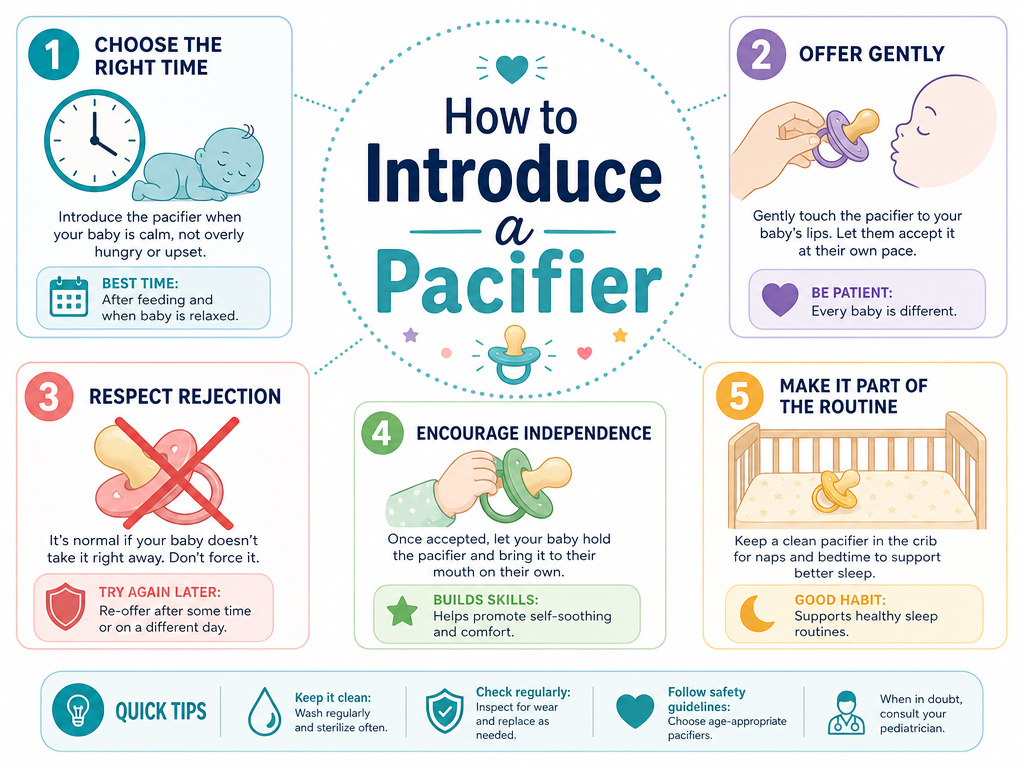
If the timing is right and you’ve chosen a safe product, introduction is straightforward. The goal is a positive, low-pressure association.
- Pick a calm moment. Don’t try when the baby is screaming with hunger or overtired. Aim for a quiet, alert time shortly after a feeding.
- Gently stroke the baby’s lips with the nipple to trigger the rooting reflex. Let them draw it into their mouth themselves.
- If they spit it out, pause. Try once more gently. If they reject it again, put it away and try another day. Forcing it creates resistance.
- Once accepted, let them hold it for a short period while awake and supervised. This helps them get used to the feel without the pressure of needing it to sleep.
- For sleep, offer it as part of the routine. During the calming pre-sleep steps (like after a diaper change and swaddling a newborn), gently offer the pacifier as you place them in the crib drowsy but awake.
What if your older baby never took one or suddenly rejects it? That is perfectly fine. The SIDS protection is statistical, not absolute. A baby who refuses a pacifier loses no points. Do not stress or try elaborate tricks. Focus on the other, more impactful pillars of safe sleep: back positioning, a firm surface, and a smoke-free environment. The official infant sleep safety PDF lists pacifier use as a recommendation, not a commandment, for this reason.
Frequently Asked Questions
Can a pacifier cause choking?
No, when used correctly. A one-piece pacifier designed for newborns is too large to be swallowed. The real choking risk comes from pacifiers that are broken, have detached parts, or are attached to cords or clips that could come loose. Regular inspection is your best defense.
Will a pacifier ruin my baby’s teeth or bite?
Not during infancy. Most dental effects are associated with prolonged, intense pacifier use well into toddlerhood and preschool years. The American Dental Association states that stopping pacifier use by age 2-4 generally allows the mouth to self-correct. For a newborn, focus on safe use and don’t worry about future orthodontics.
My baby spits the pacifier out constantly. Should I keep putting it back in?
Only until they fall asleep. The protective benefit is linked to offering it at sleep onset. If it falls out repeatedly as they are drifting off, you can reinsert it gently. Once they are in a deep sleep (you’ll notice regular breathing, no eye flutters), you do not need to reinsert it if it falls out. Chasing it all night is exhausting and unnecessary.
Are silicone or latex pacifiers better?
Silicone is generally recommended. It is hypoallergenic, odorless, tasteless, and more durable against heat and cleaning. Latex is softer and more flexible but can degrade faster, may cause allergic reactions in some, and can retain odors. For a newborn, a medical-grade silicone pacifier is the simpler, safer choice.
Can I use a pacifier if I’m co-sleeping or bed-sharing?
Major safe sleep organizations, including the AAP, advise against bed-sharing due to the high risk of suffocation and entrapment. If you are following a strict risk-minimization plan for bed-sharing, a pacifier is still recommended, but it does not negate the other dangers of an adult bed. The safest place for a sleeping infant with a pacifier is in their own separate, approved sleep space in your room.
Before You Go
The short answer is yes, with conditions. For a breastfed baby, clear the 2 to 3 week milestone of established feeding first. For any baby, use a simple, one-piece pacifier and never attach it with anything that could tangle.
The protection it offers is real but modest. It works inside a full safe sleep system: on the back, on a firm mattress, in a clutter-free crib. That system is non-negotiable. The pacifier is a helpful add-on, not a substitute for the fundamentals.
If your baby refuses it, that’s their call. Your job is to offer it safely at sleep times and then ensure everything else in their sleep world, from the blanket safety of their sleep sack to the firmness of their mattress, is locked down. That is how you build a foundation for safe, sound sleep.
