
Should Infants Sleep in Parents Room? The Key to SIDS Safety
This post contains affiliate links. As an Amazon Associate we earn from qualifying purchases.
Should infants sleep in parents room? Yes. The American Academy of Pediatrics (AAP) states infants should sleep in the parents’ room, on a separate surface like a bassinet or crib, for at least the first 6 months and ideally for the first year. This arrangement can reduce the risk of Sudden Infant Death Syndrome (SIDS) by as much as 50%.
That 50% figure results from a specific, measurable protective effect observed when a baby sleeps in the same room as a caregiver but on their own firm, flat surface. The mechanism is proximity.Being close allows you to hear subtle cues, notice changes in breathing, and respond faster without the risks that come from sharing the same sleep surface.
What follows is the breakdown of that official guidance: the 6- to 12-month timeline, the critical distinction between room-sharing and bed-sharing, the non-negotiable specs for a safe sleep surface, and the practical steps for when the plan meets real-life exhaustion.
Key Takeaways
- Room-sharing for at least 6 months cuts SIDS risk by up to 50%. Aim for a full year.
- “Room-sharing” means a separate, safety-approved sleep surface (bassinet, crib) within arm’s reach, not the adult bed.
- The sleep surface must be firm and flat, meeting CPSC standards with slats less than 2-3/8 inches apart.
- If you fall asleep while feeding in bed, move the baby back to their own surface immediately upon waking.
- There is no evidence that devices marketed to make bed-sharing “safe” are effective.
The 6-12 Month Rule & The 50% Reduction
The recommendation isn’t vague. The AAP’s 2016 policy, which remains the bedrock of current guidance, specifies a duration: at least the first 6 months, and ideally for the first year of life. This timeline aligns directly with the period of highest risk for SIDS and other sleep-related deaths.
Room-sharing decreases the risk of SIDS by as much as 50%. This arrangement also makes feeding, comforting, and monitoring your infant easier.
The 50% reduction comes from the baby’s proximity to a caregiver who can monitor them. The risk is highest in the first 6 months, which is why that period is the absolute minimum. Think of the first year as the full protective window. After that, the data on risk reduction changes, and the decision to move a child to their own room becomes one of family logistics and sleep habits, not mortality statistics.
This is where your choice of sleep surface becomes a safety specification, not a décor decision.
Room-Sharing vs. Bed-Sharing: The Line That Matters
Every parent needs this distinction locked down. Room-sharing is the recommended, protective practice. Bed-sharing is a documented risk factor.
Room-sharing means your baby is on their own separate, approved sleep surface within the same room. A bedside crib or bedside bassinet is designed for this. Bed-sharing means the infant is on the same surface as an adult, a mattress, couch, or armchair. The AAP states there is insufficient evidence to recommend devices marketed to make bed-sharing safe.
The dangers of bed-sharing are physical: soft adult bedding, pillows, and the risk of an adult rolling over. The CDC safe sleep guidelines are clear on keeping the baby’s sleep area separate.
| Practice | What It Is | Risk Level | Official Stance |
|---|---|---|---|
| Room-Sharing | Infant in a crib/bassinet in parent’s room. | Protective (up to 50% SIDS risk reduction) | Recommended for 6-12 months. |
| Bed-Sharing | Infant in the adult bed, couch, or chair. | High (increased risk of suffocation, entrapment, SIDS) | Not recommended. |
| Co-Sleeping (Ambiguous) | Often used for both room-sharing and bed-sharing. | Varies | The AAP advises against using this term due to confusion. Use “room-sharing” or “bed-sharing” instead. |
The vocabulary matters. When you’re exhausted and reading a pediatrician-backed infant sleep advice page at 3 a.m., you need the terms to be exact.
What Makes a Sleep Surface “Safety-Approved”?
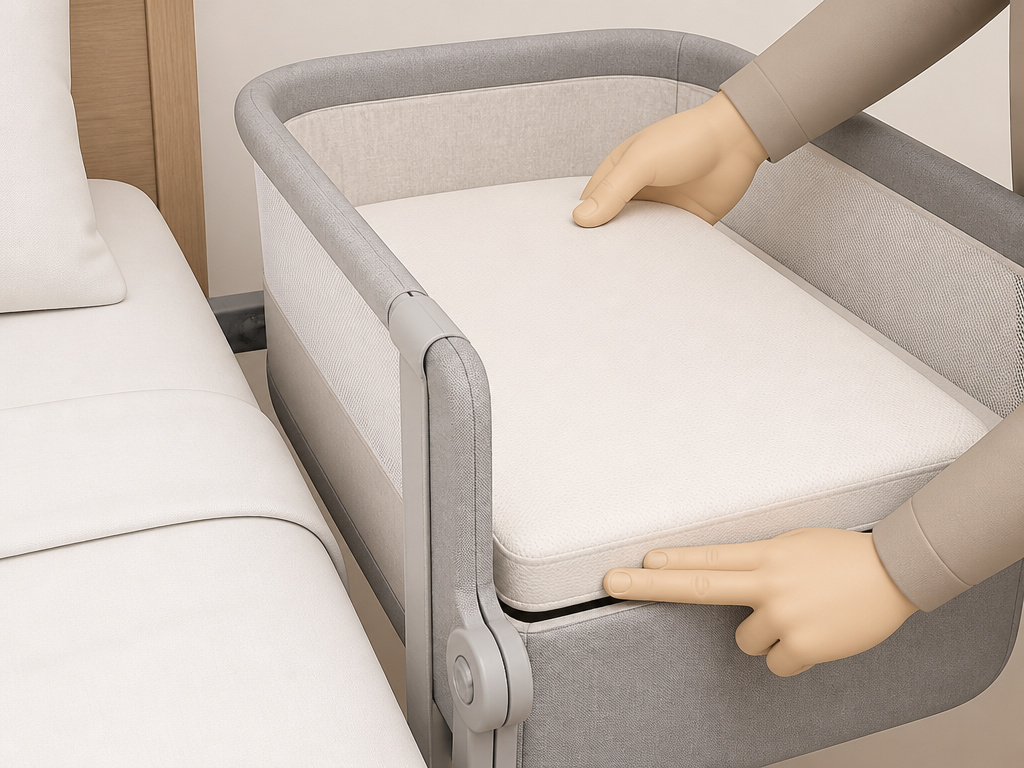
A safe sleep surface is a product that meets specific, measurable standards set by the Consumer Product Safety Commission (CPSC). The 2016 AAP safe sleep recommendations detail these specs.
The core requirements are firmness and integrity. The mattress must be firm and flat, like a tabletop. It should not indent under the baby’s weight. The product must be a crib, bassinet, portable crib, or play yard that follows CPSC standards. For cribs, this includes slat spacing of less than 2-3/8 inches, about the width of a soda can, to prevent head entrapment.
Where this goes sideways: Using a broken or hand-me-down crib with missing hardware. The AAP notes many infant deaths are associated with cribs that are broken or have missing parts. If a component is gone, the crib is gone. Do not try to rig a fix.
Your checklist for any sleep surface: * CPSC Certification: Look for a label or product documentation stating compliance. * Firm, Flat Mattress: No memory foam, no pillow-tops. Use only the mattress designed for that specific product. * Snug-Fitting Fitted Sheet: Use only a tight-fitting sheet designed for that mattress size. No loose bedding. * Empty Crib: No pillows, blankets, stuffed animals, or crib bumpers. These are suffocation hazards.
The right crib mattress is a foundational piece of this system. It must be firm and fit the crib perfectly, with no gaps larger than two fingers between the mattress and the crib side.
The Real-World Scenarios (When the Plan Meets Exhaustion)
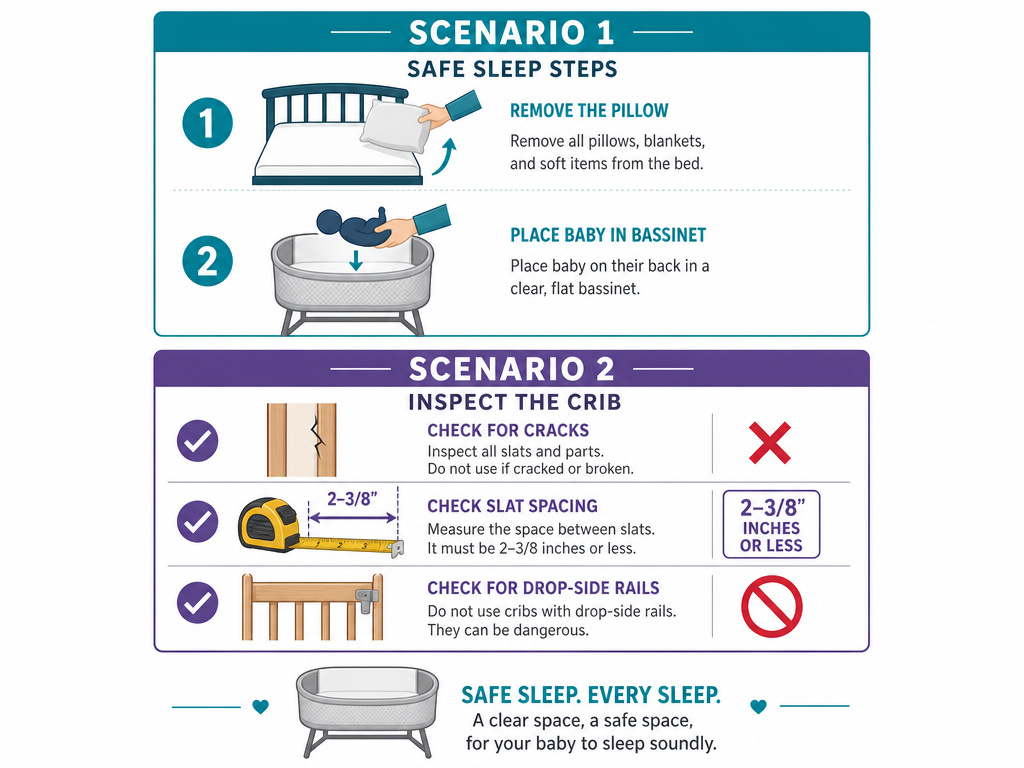
The official guidance lives on a PDF. Your life happens at 2 a.m. During a growth spurt. Two edge cases break the standard advice, and the guidance has specific protocols for them.
Scenario 1: Falling Asleep While Feeding or Comforting in the Adult Bed.
This happens. The Texas DSHS room-sharing recommendations provide a clear contingency plan: 1. Before bringing the baby into bed, remove all soft bedding, pillows, and blankets from the area. 2. If you fall asleep, place the baby back on their separate sleep surface as soon as you wake up.
Scenario 2: Using a Second-Hand or Hand-Me-Down Crib.
Inspect it like a safety inspector. Check for: * Missing, loose, or broken hardware. * Slats that are cracked or wider than 2-3/8 inches. * A drop-side rail (these are banned and should not be used). * Lead paint (for very old cribs). If anything is off, the crib is not safe. A new, certified safe bassinet is a smaller, often more affordable starting point.
Addressing Common Concerns & Myths
“Won’t my baby choke if they sleep on their back?”
No. This is a persistent myth. The AAP is explicit: the back-sleep position does not increase choking risk. Infant airway anatomy and reflexes protect against aspiration. This holds true even for babies with gastroesophageal reflux (GER). The risk of SIDS from prone sleeping far outweighs any concern about choking.
“But I’ll sleep better if the baby is in another room.”
Your sleep quality is important, but the trade-off in risk is not balanced during the first 6 months. The proximity of a bedside sleeper often means you can settle the baby with a hand on their chest without fully waking up, potentially improving sleep for both of you.
“When is it actually safe to move the baby to their own room?”
After the first 6 months, the SIDS risk begins to decline. The “ideal through year one” guideline balances continued risk reduction with practical family dynamics. There’s no magic switch at 12 months and 1 day. The transition should involve ensuring the nursery room is fully safety-proofed with a proper infant mattress in a certified crib.
How to Set Up a Safe Room-Sharing Space
Your bedroom needs a re-org. The goal is to create a safe zone for the baby’s sleep product within your reach.
- Choose the Right Product: Select a CPSC-certified bassinet for baby or crib. Ensure it has a firm, flat mattress.
- Position It Safely: Place the sleep surface close to your bed, but away from windows, blinds, cords, and heavy furniture that could tip. The baby’s sleep area should be clear on all sides.
- Dress for the Environment: Dress your baby in a wearable blanket or sleep sack. Do not use loose blankets. Adjust the room temperature so you are comfortable with light clothing, the baby likely is, too.
- Commit to the Back: Always place your baby on their back to sleep, for naps and nighttime. Once they can roll over independently both ways, you can leave them in the position they find.
This setup turns the AAP’s statistic into a physical reality in your room. The evidence base for infant room-sharing shows the effect is real, but only if the details are correct.
Frequently Asked Questions
How long should a baby sleep in the parents’ room?
The AAP recommends room-sharing for at least the first 6 months and ideally for the entire first year. The first 6 months are the period of highest SIDS risk, making this the non-negotiable minimum.
Does room-sharing prevent SIDS?
Room-sharing is associated with a reduction in the risk of SIDS by as much as 50%. It is a protective factor, not a guarantee. It must be combined with other safe sleep practices: back sleeping, a firm surface, and no soft bedding.
What is the difference between a bedside crib and a bassinet?
Both are safe, separate sleep surfaces for room-sharing. A bassinet is typically smaller, lighter, and designed for younger infants (often up to 15-20 lbs or when they start pushing up). A bedside crib is often larger and may convert into a standalone crib. The key is that either must be CPSC-certified.
Is it safe to have the baby in a DockATot or lounger in my bed?
No. Infant loungers, nests, and in-bed sleepers like the DockATot are not approved for safe sleep, even when placed in an adult bed. They have soft, padded sides that pose a suffocation risk. The AAP warns against products that claim to make bed-sharing safe.
What if I only have a small bedroom?
The sleep surface does not need to be large. Many bassinets for parents room have a minimal footprint. The priority is having the separate, approved surface. Even a compact, certified portable crib placed next to your bed fulfills the requirement.
The Bottom Line
Should infants sleep in parents room? The medical answer is a defined yes, for a defined period, under defined conditions. The 6- to 12-month rule, backed by a 50% risk reduction, is one of the most concrete pieces of infant care guidance available. The work is in the execution: choosing a certified safe sleep bassinet, maintaining a firm, empty sleep surface, and knowing the plan for when you inevitably nod off during a feeding. This concerns using the clear, evidence-based protocol that stands between a common practice and a preventable tragedy.
