
The Final Verdict: Should a Newborn Sleep on a Pillow?
This post contains affiliate links. As an Amazon Associate we earn from qualifying purchases.
No. A newborn should never sleep on a pillow or any soft bedding. Their sleep surface must be firm, flat, and completely bare, only a fitted sheet on a safety-certified crib or bassinet mattress. Pillows, blankets, and soft toys pose a direct suffocation risk and increase the risk of Sudden Infant Death Syndrome (SIDS) by 21-fold according to pediatric research. This is not a matter of preference; it’s a federal safety standard and a core tenet of the American Academy of Pediatrics’ safe sleep guidelines.
That answer is absolute because the stakes are. The confusion often starts with well-meaning products marketed for infant comfort, like nursing pillows or loungers, which are now explicitly regulated. The rest of this guide walks through the specific mechanics of the risk, why a pillow is dangerous even if the baby is on their back, and gives you the clear, safe alternatives that actually work. You’ll leave knowing exactly what a safe sleep space looks like and why every nap, not just nighttime, needs this rule.
What follows: the federal regulation that just changed, the research behind the 21-fold risk, a breakdown of unsafe vs. Supervised products, and the short list of safe swaps for pillows.
Key Takeaways
- Federal law now prohibits pillows for infant sleep. The Consumer Product Safety Commission’s (CPSC) 16 CFR Part 1242 standard, effective April 2025, bans nursing pillows with infant restraint systems and mandates they carry a “Do not use for sleep” warning.
- Bedding increases SIDS risk 21-fold. Soft objects like pillows can obstruct an infant’s airway if they turn or wiggle; this risk multiplies dramatically if the baby ends up prone.
- “Supervised use only” is the critical label. Products like tummy time pillows or nursing pillows are for awake, watched play, never for sleep, naps, or unsupervised rest.
- The only safe sleep surface is firm and bare. Use a certified crib mattress or bassinet sheets that fit tightly, with no pillows, blankets, bumpers, or stuffed animals.
- Swap blankets for wearable layers. For warmth, use a wearable blanket or sleep sack, or add a layer of clothing instead of loose bedding.
The Short Answer: A Clear ‘No’
The question isn’t debated. Every major health and safety authority gives the same directive. The American Academy of Pediatrics (AAP), the Centers for Disease Control and Prevention (CDC), and the Consumer Product Safety Commission (CPSC) all state that soft bedding, including pillows, quilts, comforters, and loose blankets, should be kept out of an infant’s sleep area. This unanimous stance is based on decades of data linking these items to suffocation, entrapment, and SIDS.
Soft objects and loose bedding in the sleeping environment increase the risk of SIDS fivefold independent of sleep position, and this risk increases to 21-fold when the infant is placed prone.
This statistic, drawn from the AAP’s 2022 evidence review, underscores the severity. A pillow isn’t just uncomfortable for a newborn, it’s an airway obstruction hazard. Newborns lack the head and neck control to move away from a soft surface that blocks their nose and mouth. Even if placed on their back initially, movement during sleep can lead to a dangerous situation.
The 21-Fold Risk: How a Pillow Becomes a Hazard
Parents often think, “I’ll watch them,” or “It’s just a small, flat pillow.” The danger is mechanical and doesn’t require a large, fluffy adult pillow to manifest. It operates in three specific ways, often in combination.
Airway Obstruction: This is the most immediate risk. A newborn’s face can press into the plush surface of a pillow, or the pillow can shift to cover the nose and mouth. Their respiratory muscles are weak, and they cannot reliably turn their head to clear an obstruction.
Rebreathing: When an infant’s face is near a soft, porous surface like a pillow, they can rebreathe their own exhaled carbon dioxide. This displaces oxygen and can lead to silent suffocation without obvious signs of struggle.
Overheating: Pillows and padded bedding trap heat. Overheating is a known risk factor for SIDS. A baby dressed for sleep in a safe wearable blanket on a firm mattress is less likely to overheat than one surrounded by insulating bedding.
The risk isn’t theoretical. Case reviews consistently find soft bedding as a primary factor in sleep-related infant deaths. The CPSC’s own analysis of incidents highlights pillows and blankets as common culprits in suffocation scenarios.
What the Federal Regulation Says (16 CFR Part 1242)
This isn’t just best-practice advice anymore; it’s codified in federal law. The CPSC’s 16 CFR Part 1242. Safety Standard for Nursing Pillows took effect on April 23, 2025. This regulation targets products that have been dangerously misused for infant sleep.
The standard prescribes strict requirements to reduce the risk of death and injury. Two of its mandates are directly relevant to every parent:
- “Do not use for sleep.” This warning must be conspicuously placed on nursing pillows. The regulation explicitly states nursing pillows shall not include any infant restraint system and are not for sleep.
- Stringent testing for seams and integrity. Products must be conditioned and tested to ensure they don’t fail in a way that creates small parts or hazards during use.
Where this goes sideways: Using a nursing pillow or infant lounger for a napping baby. These products are for awake, supervised feeding and bonding only. Leaving an infant to sleep in one, even propped on their back, violates the product’s warnings and the federal standard.
The regulation makes the boundary clear. A product marketed to support a baby while feeding is not a sleep aid. This federal infant product safety rule closes a dangerous loophole that has contributed to preventable tragedies.
“Supervised Use Only” vs. Sleep Products
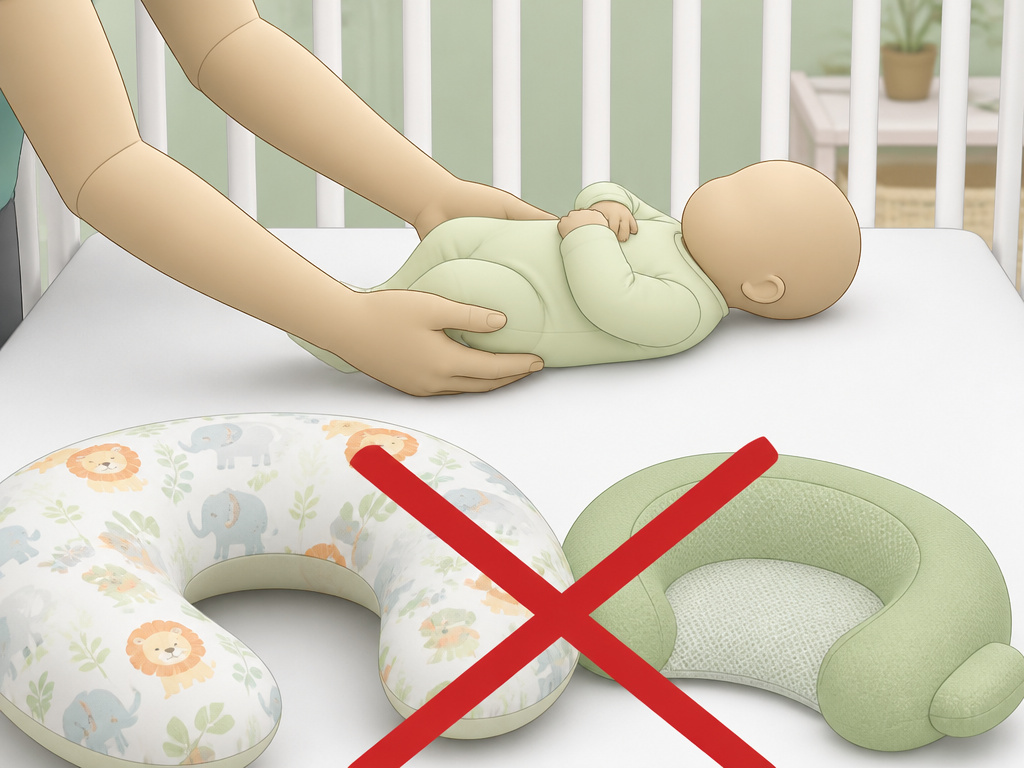
This is the crucial distinction that clears up marketplace confusion. Many pillow-like products are safe, and beneficial, when used correctly. The dividing line is constant adult supervision.
| Product Type | Intended Use | Sleep Safe? | Key Rule |
|---|---|---|---|
| Tummy Time Pillow | Supports neck/chest during awake, supervised floor play. | Never | The baby is awake, you are watching, and they are on their stomach. |
| Nursing Pillow | Supports parent’s arms and baby’s position during feeding. | Never | The baby is awake and feeding. Remove it immediately after. |
| Crib/Bassinet Mattress | The firm, flat surface for all sleep and naps. | Yes | Must be safety-certified with only a tight-fitting fitted sheet. |
| Wearable Blanket (Sleep Sack) | Provides warmth without loose fabric. | Yes | Use instead of loose blankets; ensure it’s the correct size. |
Developmental pillows, like those designed for flat head prevention, fall into a special category. They are medical or positional aids often recommended by pediatricians for babies with positional plagiocephaly. Their use for sleep must be explicitly directed and monitored by your child’s doctor. Never use one during sleep without that specific medical instruction.
The rule of thumb: if a product cradles, contours, or elevates the baby’s head or body, it’s for supervised awake time. The sleep surface is a different category entirely.
Safe Alternatives to Pillows
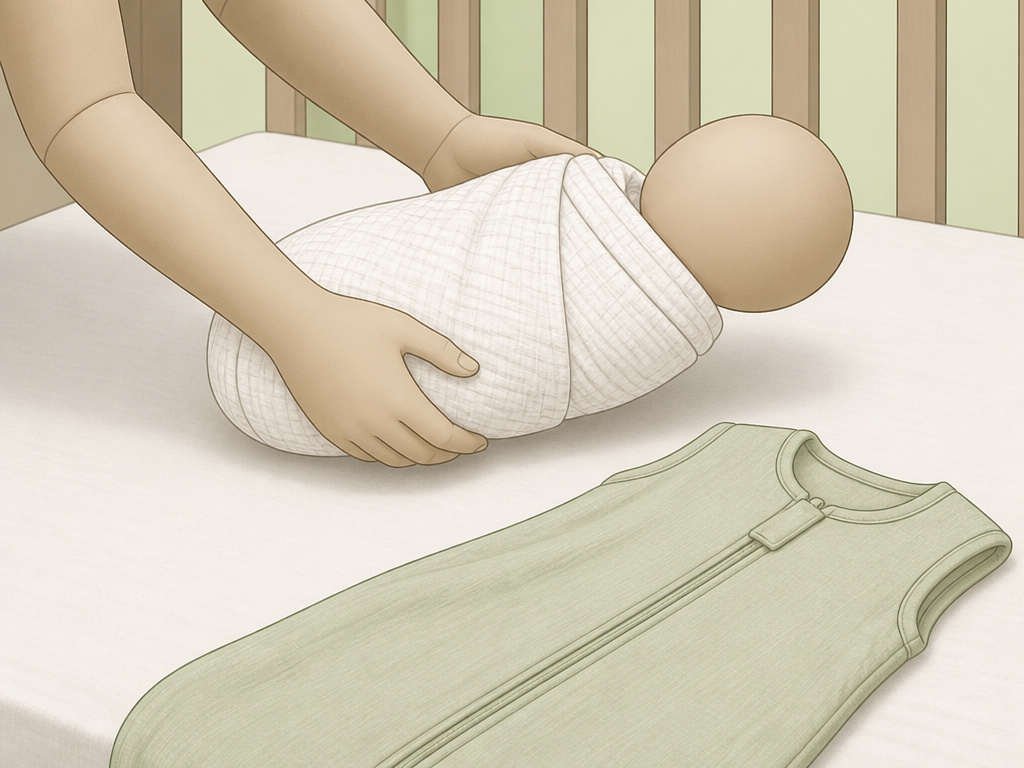
If pillows are out, what actually works to keep a newborn comfortable and safe? The answer focuses on the sleep environment itself and the baby’s clothing.
The Sleep Surface: Firm, Flat, and Certified
This is non-negotiable. The mattress in your crib or bassinet must be firm enough that it doesn’t indent when the baby is lying on it. It should be specifically designed for that product, with no gaps between the mattress and the crib sides. Cover it with a well-fitted sheet, nothing else. A quality, firm crib mattress is the single most important piece of safe bedding for newborns.
For Warmth: Wearable Layers, Not Loose Fabrics
This is where many parents instinctively reach for a blanket. The safe swap is a wearable blanket, often called a sleep sack. It zips or snaps around the baby’s body, leaving their arms free but providing blanket-like warmth without any loose fabric that could cover their face. Alternatively, dress them in an extra layer, like a onesie under a footed sleeper. The CDC safe sleep guidelines recommend this approach to avoid overheating.
For Comfort and Security: Swaddling (Early On)
For newborns who startle easily, a properly fitted swaddle can provide the secure feeling they crave. Use a thin, muslin swaddle blanket or a swaddle sack with velcro or zipper closures. The key is to stop swaddling as soon as the baby shows signs of trying to roll over, usually around 2-3 months. A swaddle that comes loose in the crib becomes a loose blanket hazard.
Common mistake: Adding a mattress pad or “topper” for softness. Even a thin, memory-foam pad can compromise the firmness of the sleep surface and create a rebreathing pocket. Use a waterproof mattress protector underneath the fitted sheet if needed, but it must be tight and thin.
When Can a Baby Safely Use a Pillow?
The transition from a bare crib to using a pillow is a milestone, not a race. The consensus among pediatricians and safety experts is to wait until the child is at least 2 years old, and preferably until they transition from a crib to a toddler or regular bed.
Why wait so long? – Continued SIDS/Suffocation Risk: While the risk decreases after 12 months, toddlers can still become entangled in or trapped under pillows. – Motor Skills: A two-year-old is far more capable of moving themselves and a pillow, but the hazard doesn’t vanish overnight. – No Developmental Need: Toddlers do not need a pillow for spinal alignment or comfort in the way an older child or adult might. They sleep fine without one.
When you do introduce a pillow, make it a small, firm, flat toddler pillow, not a plush adult pillow. Even then, keep the rest of the bedding minimal. This 2022 safe sleep evidence review reinforces that the safe sleep environment principles apply well into the second year.
Frequently Asked Questions
What about pillows to prevent flat head?
Flat head syndrome, or positional plagiocephaly, is common. Specialized pillows for flat head are designed with a central cutout to relieve pressure. These are not for unsupervised sleep. They are typically used during supervised awake periods, like in a stroller or bouncer, or under direct medical guidance. For sleep, the best prevention is plenty of supervised tummy time while awake and alternating the direction your baby’s head faces in the crib.
Are there any “safe sleep” pillows for newborns?
No reputable health or safety organization certifies any pillow as safe for infant sleep. Products marketed as such are navigating a gray area against clear federal infant sleep recommendations. The AAP and CPSC stance is that the safest sleep environment has no pillows at all. Any claim otherwise should be scrutinized heavily.
My baby sleeps better propped up. What can I do?
If your baby has reflux or congestion, talk to your pediatrician. They may recommend slightly elevating the head of the crib mattress by placing a firm, stable object like a phone book under the mattress legs, never by placing a pillow or wedge under the baby or the sheet. This creates a gentle, safe incline without introducing soft, movable hazards.
What about dock-a-tots, loungers, and nests?
These infant loungers are now explicitly covered under the CPSC’s new standard for infant support cushions (16 CFR Part 1243, effective May 2025). They are defined as products with a raised perimeter for an infant to recline. Like nursing pillows, they are not for sleep and must carry warnings against such use. They are for brief, supervised awake time only.
The Bottom Line
The evidence is unambiguous and the law is now explicit: a pillow has no place in a newborn’s sleep space. The safe path is simpler than the dangerous one. Commit to a firm, certified mattress with a tight sheet. Use a wearable blanket for warmth. Reserve any pillow-like product, from a nursing pillow to a tummy time aid, for moments when your eyes are on your baby and your hands are free.
Creating a safe sleep environment is one of the most concrete ways to protect your newborn. It removes variables and follows the data. That peace of mind is worth far more than the temporary comfort a pillow promises but cannot safely provide.
