
Newborns Sleeping on Their Side: Is It Okay? Safety Guide
This post contains affiliate links. As an Amazon Associate we earn from qualifying purchases.
No. It is not safe for a newborn to sleep on their side. The only safe sleep position from birth until a baby can roll over independently is flat on their back. Placing a baby who usually sleeps on their back onto their side or stomach even once increases their risk of Sudden Infant Death Syndrome (SIDS) by up to 45 times.
That 45-times figure isn’t a scare tactic. It’s the quantified finding from state health research. The side position is unstable and allows rebreathing of carbon dioxide, which can lead to hypoxia. This guide walks through the evidence that refutes every common reason for side-sleeping—from reflux concerns to hospital practices—and gives you the clear, non-negotiable rules for a safe sleep space.
What follows: the primary-source numbers on side-sleeping risk, the biomechanical reason inclines fail, the exact milestone that changes the rules, and how to build a sleep environment that protects your newborn during every nap and night.
Key Takeaways
- Side sleeping is not safe for newborns and carries a SIDS risk similar to stomach sleeping.
- If a back-sleeping baby is placed on their side even once, their SIDS risk multiplies by up to 45 times.
- Stop swaddling immediately when a baby shows signs of rolling, usually around 3 months.
- Products with an incline greater than 10 degrees are unsafe for infant sleep and increase rolling risk.
- Once a baby can roll from back to stomach and back again on their own, you do not need to reposition them.
The Official Answer and the 45x Risk
The American Academy of Pediatrics (AAP) is unambiguous: “Side sleeping is not safe and is not advised.” This stance is rooted in decades of data. Since the AAP’s “Back to Sleep” campaign began in 1992, SIDS rates in the U.S. Have dropped dramatically. The back position, or supine position, keeps an infant’s airway open and clear.
Side sleeping is inherently unstable. The probability of an infant rolling to the prone (stomach) position from the side is significantly greater than rolling prone from the back. In one U.S. Study, the SIDS risk associated with the side position was similar in magnitude to that associated with the prone position.
The most startling data point comes from a New Jersey Department of Health publication. It states that if a baby who usually sleeps on their back is placed on their stomach or side to sleep, their risk for SIDS increases by up to 45 times. This extreme multiplier highlights that consistency is not just ideal—it’s a critical layer of protection. An infant unaccustomed to the prone position is at vastly greater risk if placed there.
The mechanism is physical. In the side position, a newborn can more easily roll onto their stomach, where they may lack the head and neck strength to turn back. Furthermore, their face can press against the mattress or bedding, leading to “rebreathing”—inhaling their own exhaled carbon dioxide—which can cause hypercapnia and hypoxia.
Debunking the Three Biggest Side-Sleeping Myths
Most parents who consider side-sleeping have heard a compelling reason to try it. Each one collapses under the weight of pediatric evidence.
Myth 1: “Side-sleeping helps with reflux.”
This is a persistent belief, but clinical guidelines are clear. The AAP states there is no evidence that elevating the head of the crib or using lateral positioning treats symptoms of gastroesophageal reflux disease (GERD) in sleeping infants. A biomechanical analysis found that infants cannot be placed at a 30-degree incline without sliding down, potentially into a position that compromises breathing. The safest approach for a baby with reflux is back-sleeping on a firm, flat surface.
Myth 2: “The hospital placed my baby on their side.”
You may have seen this in the newborn nursery. The AAP’s 2022 technical report addresses it directly: “Placement of infants on the side after birth by physicians, nurses, or other clinicians continues to be a concern.” This practice stems from an outdated belief that it helps clear amniotic fluid. No evidence supports that claim. More importantly, when parents see medical staff using the side position, they may infer it is safe to copy at home. Healthy newborns should be placed supine on a flat surface for every sleep when not in skin-to-skin contact.
Myth 3: “They seem more comfortable on their side.”
Newborn sleep cues can be misleading. What looks like comfort may be the startle reflex being subdued. The risk does not change based on perceived comfort. The CDC safe sleep guidelines are based on population-level mortality data, not individual baby preferences. Safety always trumps a presumed comfort gain.
Common mistake: Using a positional pillow or wedge to prop a baby on their side. These products are not safe for sleep and are often linked to suffocation incidents. A firm, flat surface is the only safe foundation.
The Complete Safe Sleep Checklist (Beyond Just Position)
Sleep position is the most critical factor, but it works in concert with the entire sleep environment. An unsafe mattress or extra bedding can negate the benefit of back-sleeping.
| Sleep Element | Safe Practice | Risk If Compromised |
|---|---|---|
| Surface | Firm, flat, and safety-approved (meets CPSC standards). | Soft surfaces conform to face, causing airway blockage and rebreathing. |
| Mattress | Snug-fitting in crib with only a tight sheet. Gaps can trap limbs. | Entrapment and suffocation against crib slats. |
| Bedding | None. No pillows, blankets, quilts, or bumper pads. | Suffocation and entanglement hazards; increases overheating risk. |
| Clothing | Wearable blanket or sleeper appropriate for room temperature. | Loose blankets can cover face; overheating is a known SIDS risk factor. |
| Location | In a safe bedside sleeper, bassinet, or crib in parents’ room. | Adult beds, couches, and armchairs carry high risks of entrapment and overlay. |
A proper infant mattress is non-negotiable. It must be firm enough that it does not indent when your baby is lying on it. Many modern breathable crib mattresses are designed to allow airflow even if a baby rolls face-down, adding a valuable secondary safety feature.
Room-sharing for at least the first six months is recommended. This means giving your baby their own separate sleep space, like a baby bassinet, right next to your bed. Bed-sharing, however, is not safe and increases the risk of suffocation and SIDS, especially on soft surfaces or with pillows and blankets present.
The Rolling Milestone: When Side Sleep Happens Naturally
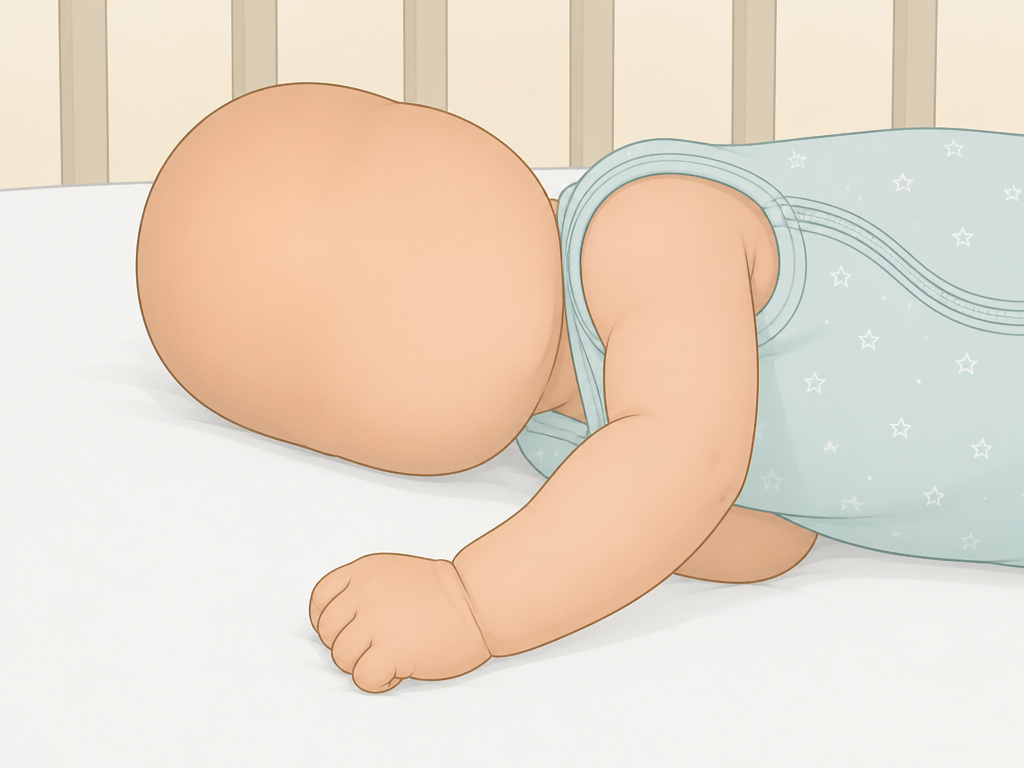
The rule “back is best” has one official exception, and it’s driven by your baby’s own motor skills, not your choice. The transition point is rolling.
The AAP’s guidance is specific: Once babies can roll from back to stomach and from stomach to back on their own, you can leave them in the position they choose after starting sleep on their back. This ability typically emerges between 4 and 6 months.
| Baby’s Age | Observed Behavior in Study | Parent Action Required |
|---|---|---|
| 16 weeks | 6% of infants placed on back found prone. | Reposition to back if found on stomach. |
| 23 weeks | 12% of infants placed on back found prone. | Reposition to back if found on stomach. |
| 24+ weeks | 14% placed on back, 18% placed on side found prone. | If baby can roll both ways, no need to reposition. |
This timeline is why swaddling has a hard stop. The AAP advises to avoid swaddling once a baby shows signs of rolling over, usually around 3 months of age. A swaddled baby who rolls onto their stomach cannot use their arms to push up or adjust their head, dramatically increasing suffocation risk. Transition to a wearable sleep sack instead.
If your baby can only roll one way (e.g., back to stomach but not back again), you should still reposition them to their back if you find them on their stomach. The risk remains until they have the mobility to get themselves out of a compromised position.
Products to Avoid: Inclines, Positioners, and Nappers
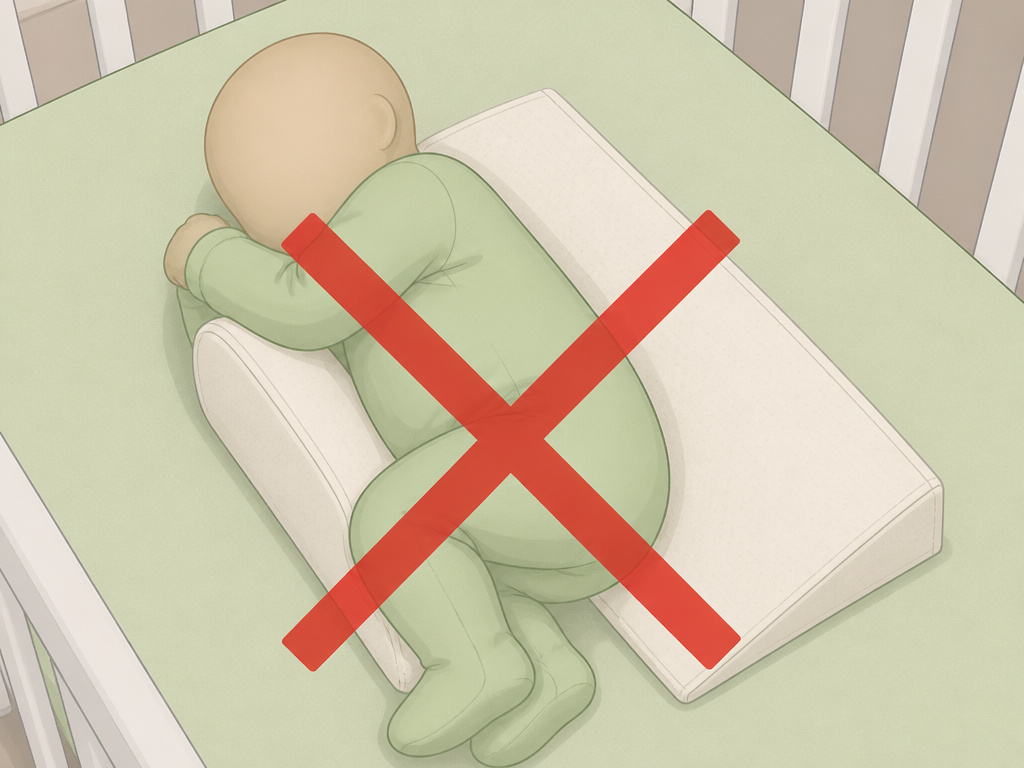
The market is full of products that directly contradict safe sleep principles. Knowing what to skip is as important as knowing what to buy.
Inclined Sleepers: Any product designed for infant sleep that has an incline greater than 10 degrees is unsafe. This includes many “nappers,” “loungers,” and “rockers.” The incline can cause a baby’s head to slump forward, chin-to-chest, which can obstruct their airway. It also makes it easier for them to roll into a dangerous position.
Sleep Positioners and Wedges: These products claim to keep a baby on their back or alleviate reflux. The AAP and the U.S. Food and Drug Administration warn against them. They have been associated with suffocation deaths and provide no proven benefit.
Soft Bedding and Crib Bumpers: Even the most breathable mesh bumper is not recommended. Crib slats are regulated to be safe; bumpers introduce a entanglement and suffocation risk. The only thing that should be in the crib is the baby, in appropriate clothing, on a firm mattress with a fitted sheet.
When choosing a bassinet for a newborn, look for one that is JPMA certified, has a firm, flat base, and no added padding or incline. The simplicity of the design is a feature, not a flaw.
Frequently Asked Questions
What if my newborn rolls onto their side during sleep?
If your newborn (under 3-4 months) rolls onto their side on their own, gently reposition them onto their back. This is uncommon before they develop intentional rolling skills, but it can happen. Ensure their sleep space is free of loose blankets or items that could trap them against the side of the crib.
Can I prop my baby on their side for a short nap?
No. Not for a nap, not for five minutes. The state health department SIDS guide is explicit: “It is not safe to place babies on their sides or stomachs to sleep, not even for a nap.” The risk is present regardless of sleep duration.
My baby has reflux. Won’t sleeping on their back cause them to choke?
This is a very common fear. The AAP’s review of the evidence finds that back-sleeping does not increase the risk of choking or aspiration, even in babies with reflux. In fact, a baby’s airway anatomy has protective reflexes that make aspiration less likely when on their back. Elevating the head of the crib is ineffective and unsafe.
When can I stop worrying about SIDS and sleep position?
SIDS risk declines significantly after 6 months of age, but the safest practices should continue through the first year. By one year, most children have the motor skills and neurological maturity to move themselves out of dangerous positions consistently. However, continuing with a firm, flat sleep surface and avoiding loose bedding remains a good practice for toddler safety as well.
Are weighted sleep sacks or swaddles safe?
No. The AAP explicitly recommends against using weighted blankets, sleepers, or swaddles on or around your baby. The added weight can restrict chest movement and make it harder for a baby to breathe, especially if they roll over. Stick with lightweight, well-fitting wearable blankets or sleep sacks.
Before You Go
The evidence leaves no room for debate: side-sleeping is a dangerous gamble for a newborn. The 45-fold increase in risk is a stark, non-negotiable statistic. Your single most powerful action is to place your baby on their back, every single time, on a surface that is firm, flat, and empty.
Invest in a certified crib or bedside sleeper with a firm organic crib mattress if that aligns with your preferences. Use a wearable blanket instead of loose swaddle blankets as soon as rolling signs appear. And curate your baby bedding choices to prioritize safety over decoration.
The “Back to Sleep” campaign saved thousands of lives. By following the updated, evidence-based rules from the AAP safe sleep evidence, you are giving your newborn the safest possible foundation for sleep. It’s a simple, repetitive act that carries immense protective power.
