
How to Use Baby Dry Sheets & Avoid Dryer Cold-Weather Jams
This post contains affiliate links. As an Amazon Associate we earn from qualifying purchases.
—**
To use a baby dry sheet, place a single sheet on top of the wet laundry load before starting the dryer. Match the sheet to your dryer’s manual. GE and Whirlpool approve Bounce® sheets, Amana limits you to one sheet per load, and Samsung’s FlexDry™ has a dedicated magnetic case. The real limit is temperature: operating below 45°F (7°C) can stall the cycle and burn out the auto-feed motor.
That temperature threshold is a physical limit written into Whirlpool and Amana service manuals because cold air tricks the moisture sensor. The dryer runs longer, never shuts off, and the motor overhears trying to push damp, cold air through the vent.
What follows is the breakdown most parenting sites skip: the OEM specs that actually govern your machine, the one-sheet rule for residue, and the direct choice between chemical softeners and wool balls for sensitive skin.
Key Takeaways
- Dryers from Whirlpool and Amana will not shut off automatically in rooms colder than 45°F (7°C) because the moisture sensor can’t read damp, cold air correctly.
- Always use only one dryer sheet per load, as specified in the Amana manual, to prevent waxy residue from clogging the lint screen and coating your baby sheets.
- The Samsung FlexDry™ has a dedicated magnetic dryer-sheet case in the upper dryer; forcing a large sheet in can jam the case but won’t hurt drying performance.
- For baby bedding, wool dryer balls outperform sheets on three counts: no chemical residue, better airflow for faster drying, and zero risk of coating waterproof mattress protectors.
- Never use a dryer sheet with flame-retardant sleepwear or items treated with waterproofing; the chemicals can degrade the fabric’s safety coating.
The 45°F (7°C) Rule That Stalls Your Dryer
Check your garage or basement temperature before you load a wash. If the thermometer reads below 45°F (7°C), your dryer might not work as advertised.
The Whirlpool electric dryer manual states it directly: operating the dryer below this temperature “can result in longer drying times and the dryer might not shut off at the end of an automatic cycle.” Amana’s manual echoes the same 45°F (7ºC) floor. This concerns physics.
Where this goes sideways: A cold room means cold air enters the dryer drum. The moisture sensor measures electrical resistance between two metal pins. Damp clothes lower the resistance. But cold, damp air doesn’t conduct electricity as well as warm, damp air. The sensor gets a false “dry” reading too early, or it never gets a clear signal at all. The heater cycles, the drum turns, but the load stays wet. The motor and heating element run continuously, which is how you burn out a $200 control board on the third load of winter bedding for crib.
The fix is simple. Move the dryer to a climate-controlled space, or at least ensure the room stays above that 7°C line. For a quick diagnostic, run a timed dry cycle instead of an automatic sensor cycle on cold days. The timer doesn’t rely on the faulty moisture reading.
What Your Dryer’s Manual Actually Says About Sheets
Manufacturer advice is model-specific, and ignoring it voids warranties. Here’s the consensus distilled from the OEM manuals.
GE Appliances explicitly approves Bounce® Fabric Conditioner Dryer Sheets for use in all its dryers. Whirlpool’s manual doesn’t ban them. The approval is conditional: use as directed on the sheet box, and never more than one per load.
Amana’s manual adds a critical warning: “use only one fabric softener sheet and use it only once.” It also cautions against letting the sheet block the grille or lint screen. A single sheet contains enough wax and surfactant to coat a standard load; a second sheet just deposits excess residue on your crib sheets for baby.
| Brand | Dryer Sheet Stance | Critical Restriction |
|---|---|---|
| GE Appliances | Approved (Bounce® specified) | Use as directed on sheet packaging. |
| Amana | Approved | One sheet only, use once. Do not block lint screen. |
| Whirlpool | Implied approval (no ban) | Use in normal conditions (above 45°F/7°C). |
| Samsung (FlexDry™) | Approved with special case | Dedicated magnetic case in upper dryer. |
Samsung’s FlexDry™ model has a unique built-in solution. The upper dryer includes a magnetic “dryer-sheet case” that clips to the top of the flexible rack. The manual notes that a large-sized sheet may prevent the case from closing fully, but confirms this doesn’t affect drying. This is a design quirk, not a problem.
Step-by-Step: How to Use a Dryer Sheet with Baby Laundry
The process takes ten seconds. The consequences of getting it wrong add up over months.
- Select a single sheet. Tear one sheet from the box. Using two doesn’t make clothes softer; it makes the wax buildup on your dryer drum and lint screen twice as thick. That residue then transfers to the next load of organic crib sheets.
- Place it on top of the wet load. Do not tuck it under clothes or throw it in empty. The sheet needs tumbling contact with the laundry to distribute its chemicals evenly. Burying it reduces effectiveness.
- Start the dryer on the appropriate cycle. For everyday baby bedding like cotton sheets, use a Normal or Casual cycle with medium heat. For delicate items, match the cycle to the fabric.
- Remove the sheet after the cycle. Discard the used sheet. A surprising number of people leave it in the drum, where it can stick to wet clothes in the next load and leave a concentrated stain.
Common mistake: Reusing a dryer sheet. The coating is spent after one cycle. A second run deposits dry, flaky residue directly onto your laundry and the dryer’s moisture sensor.
Skip the sheet entirely for certain items. Flame-retardant sleepwear, waterproof mattress pads, and athletic wear with moisture-wicking coatings can be degraded by the softening chemicals. The waxy film clogs the technical fabric’s pores.
Dryer Sheets vs. Wool Balls for Baby Items

This is the real choice. Dryer sheets are convenient. Wool dryer balls are compatible.
Dryer sheets work by depositing a thin layer of quaternary ammonium compounds (softeners) and fatty acids (waxes) onto fabrics. This coats the fibers, making them feel slick. It also coats everything else, the dryer drum, the lint screen, and the moisture sensor pins. Over time, this buildup reduces airflow and sensor accuracy.
Wool dryer balls work by physical action. They bounce around, separating fabrics to improve hot air circulation. This can cut drying time by 20-30%. They contain no chemicals, so they leave no residue on crib sheet materials like organic cotton or bamboo.
| Aspect | Dryer Sheets | Wool Dryer Balls |
|---|---|---|
| Softening Mechanism | Chemical coating | Physical fiber separation |
| Drying Time | No change | Reduces by 20-30% |
| Residue | Yes (waxy film) | None |
| Scent | Yes (added fragrance) | None (can add essential oils) |
| Best For | General family laundry | Baby items, sensitive skin, technical fabrics |
| Cost Over Time | Ongoing purchase | One-time purchase |
For a nursery, wool balls win. They’re safer for sensitive skin, better for the dryer’s health, and they help personalized crib sheets and thick quilts dry more evenly without any chemical transfer.
The One Product That Changes the Routine
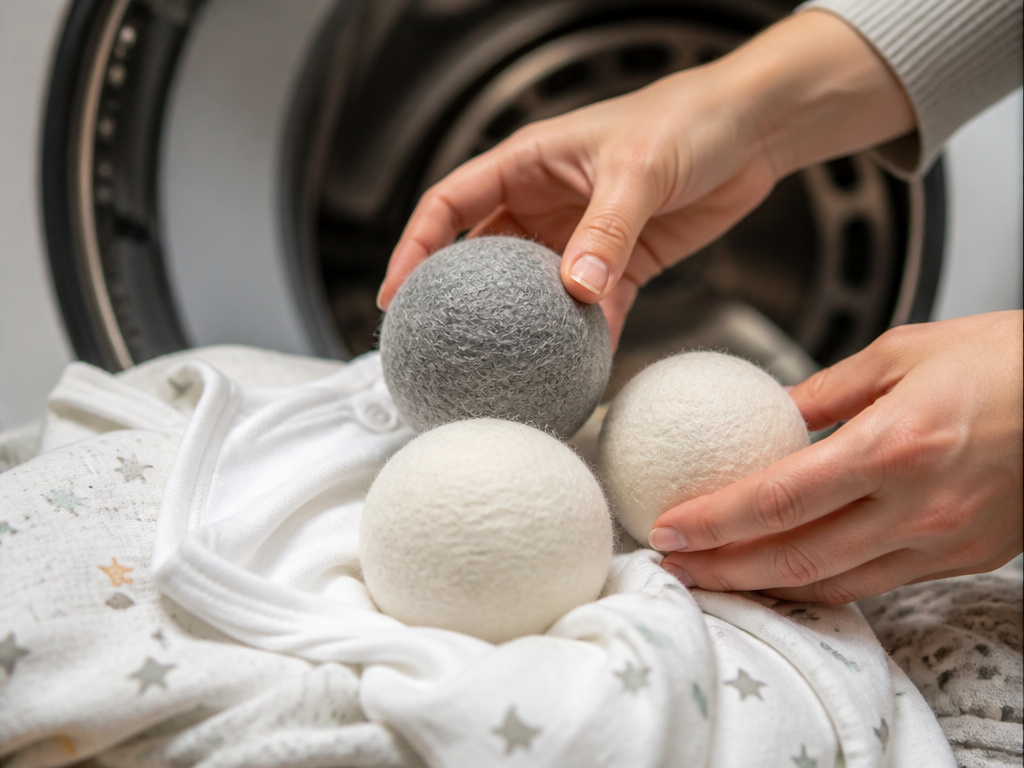
If you only buy one thing after reading this, make it a set of wool dryer balls. Brands like Smart Sheep or Handy Laundry make durable, felted wool balls that last for years. Drop three or four into every load of baby laundry.
They replace dryer sheets entirely for cot sheets and everyday wear. The faster drying time alone pays for them in reduced energy bills within a few months. For the occasional load where you really want static reduction and a light scent, you can use a single dryer sheet alongside the balls, but it’s rarely necessary.
Keep a dedicated set for baby laundry to avoid cross-contamination with heavy-duty chemicals from adult loads.
Frequently Asked Questions
Can You Use Dryer Sheets with Baby Bedding?
Yes, but with caution. You can use a single sheet with standard cotton or polyester crib sheets. Avoid using them with any bedding that has a waterproof layer, like a mattress protector cover, as the chemicals can break down the waterproof coating. For organic or sensitive-skin bedding, prefer wool dryer balls.
Do Dryer Sheets Ruin Dryers?
They don’t “ruin” them instantly, but they cause incremental damage. The waxy residue builds up on the lint screen, reducing airflow and forcing the motor to work harder. It also coats the moisture sensor, leading to inaccurate readings and over-drying. Regular cleaning of the lint screen and sensor with rubbing alcohol mitigates this.
Why Does My Dryer Run Forever in the Winter?
The most likely cause is ambient temperature below 45°F (7°C), as outlined in the Whirlpool and Amana manuals. The moisture sensor cannot operate correctly in cold, damp conditions. The dryer will run a full cycle, sense that clothes are still damp, and restart, effectively running forever until you manually stop it. Move the dryer to a warmer space or use timed dry cycles.
Are Dryer Sheets Safe for Newborn Clothes?
They are chemically safe in that they are designed for use on laundry. However, many newborns have sensitive skin that can react to the fragrances and softening agents. The American Academy of Pediatrics recommends fragrance-free products for newborn laundry. Using a single, fragrance-free sheet is an option, but wool dryer balls are the recommended, zero-risk alternative.
How Many Dryer Sheets Should I Use?
Use only one sheet per load, regardless of size. This is the direct instruction in the Amana dryer manual and the standard industry guidance. Using more sheets does not increase softness; it dramatically increases the amount of residue left in your dryer and on your clothes.
Can I Put the Dryer Sheet in the Washer?
No. Dryer sheets are designed for the heat and tumbling action of the dryer. Putting one in the washer will leave waxy clumps on your clothes and can clog the washer’s pump filter. Always place the sheet in the dryer with the wet load.
Before You Go
Your dryer’s manual holds the specifics, the 45°F limit, the one-sheet rule, the model-specific quirks like Samsung’s magnetic case. Temperature is the silent cycle-killer. Wool balls are the safer, faster choice for everything in the nursery. And that single sheet? It’s enough. Anything more is just wax waiting to cause a problem.
