
Is 75 Degrees Too Hot for Baby to Sleep? Key Safety Factors
This post contains affiliate links. As an Amazon Associate we earn from qualifying purchases.
Yes, 75 degrees Fahrenheit is the maximum allowable room temperature for a sleeping infant according to North Carolina’s childcare regulation 10A NCAC 09 .1724. It is not an ideal target. Major health organizations like The Lullaby Trust and the Irish Health Service Executive recommend a cooler, safer range of 16–20°C (62–68°F). A room at 75°F pushes the upper limit of safety and significantly increases the risk of overheating, which is a documented factor in sleep-related infant deaths.
That 75°F figure isn’t a suggestion, it’s a legal line drawn by a state. It exists because childcare centers need a clear, enforceable rule to prevent dangerous heat. In your home, the goal is different. You’re aiming for the temperature that keeps your baby comfortably cool, not just legally compliant.
This guide breaks down where that 75°F number comes from, the science behind the cooler 62–68°F ideal, and the practical steps to monitor your baby’s temperature without a thermostat. You’ll learn how to dress them, what bedding to avoid, and why a sweaty neck is a more urgent signal than warm hands.
Key Takeaways
- 75°F is a regulatory maximum, not a recommendation. North Carolina law uses it as the absolute ceiling for infant rooms in licensed childcare.
- The ideal safe sleep temperature is 16–20°C (62–68°F), as advised by The Lullaby Trust and the Irish HSE.
- Check for overheating by feeling the baby’s chest or the back of their neck. Their hands and feet are often cooler and are not a reliable gauge.
- Never let a baby sleep in a hat indoors or under a duvet. These trap heat and are a direct overheating hazard.
- Use a sleep sack or wearable blanket instead of loose bedding. This maintains warmth without the risk of covering the face or causing overheating.
The Simple Answer: Yes, 75°F is the Legal Ceiling
The direct answer to “is 75 degrees too hot” lives inside a government document. North Carolina’s administrative code for licensed childcare centers states it plainly: “the temperature in the room where infants aged 12 months or younger are sleeping does not exceed 75°F.” This rule, part of their mandated safe sleep policy, was amended in February 2021. It’s a hard stop.
The temperature in the room where infants aged 12 months or younger are sleeping does not exceed 75°F., 10A NCAC 09 .1724, North Carolina Child Care Rules.
Regulations like this exist because they are enforceable. An inspector can walk into a daycare, read a thermometer, and write a violation. For institutions, a bright-line rule is necessary. But at home, your job isn’t enforcement, it’s optimization. You’re not trying to hit 75°F; you’re trying to stay well below it.
The problem with treating 75°F as a target is physiology. A baby’s system for regulating temperature is immature. They release excess heat primarily through their head. In a warm room, bundled in even a light sleeper and a swaddle, their core temperature can rise faster than they can dissipate it. The evidence base for infant sleep from the American Academy of Pediatrics consistently links overheating with an increased risk of sleep-related infant death.
The Ideal Range: Why 62–68°F (16–20°C) is the Sweet Spot
If 75°F is the legal ceiling, the comfortable, safe living space is on a lower floor. This is where authoritative health bodies, not regulators, give their guidance.
The Irish Health Service Executive (HSE) and the UK-based charity The Lullaby Trust are unequivocal: a room temperature of 16–20°C (62–68°F) is optimal. They didn’t pick this range because it’s a nice round number. It’s the band where a baby in appropriate sleep clothing, like a well-fitting sleep sack, can maintain a stable body temperature without working too hard.
| Temperature Guide | Category | What It Means for Baby |
|---|---|---|
| Below 61°F (16°C) | Too Cold | Baby may need an extra layer under the sleep sack. Check for cool chest. |
| 62–68°F (16–20°C) | Ideal Range | Perfect for a baby in a sleep sack and light pajamas. Low overheating risk. |
| 69–74°F (21–23°C) | Warm | Use lighter pajamas or a lower-TOG sleep sack. Monitor closely for sweat. |
| 75°F (24°C) & Above | Overheating Risk | Maximum legal limit for childcare. At home, actively cool the room. |
This range works because it accounts for the insulating effect of safe baby bedding. A firm crib mattress covered by a fitted crib sheet and a wearable blanket provides warmth without the dangerous loose fabric of a quilt. The room does the heavy lifting of keeping the ambient temperature safe, so the bedding doesn’t have to.
Where this goes sideways: Assuming the baby’s hands are a good indicator. Their extremities are often cool. If you base clothing on cold hands, you’ll over-bundle the core. Check the chest or back of the neck every time.
How to Actually Check Your Baby’s Temperature (The Right Way)
You don’t need to guess. There are two reliable methods: a tool, and your own touch. The tool is a simple room thermometer. Place it near the crib, away from direct sunlight, vents, or windows. It gives you the data point you can’t feel accurately, humans are terrible at judging air temperature.
The second method is tactile and immediate. Feel your baby’s chest or the back of their neck. Their skin should feel warm and dry, not hot or clammy with sweat. If it’s sweaty, they are too hot. Remove a layer immediately. Their hands and feet will often feel cooler; this is normal and not a sign they are cold.
What does overheating look and feel like? * Damp hair or a sweaty neck/chest * Flushed, red cheeks * Rapid breathing * Restlessness or fussiness
A baby who is too cold will generally protest loudly. A baby who is too hot may become lethargic and quiet, a far more dangerous signal. This is why the New Jersey safe sleep checklist emphasizes regular checks and avoiding over-bundling.
Dressing Your Baby for Sleep: The Layer-By-Layer Strategy
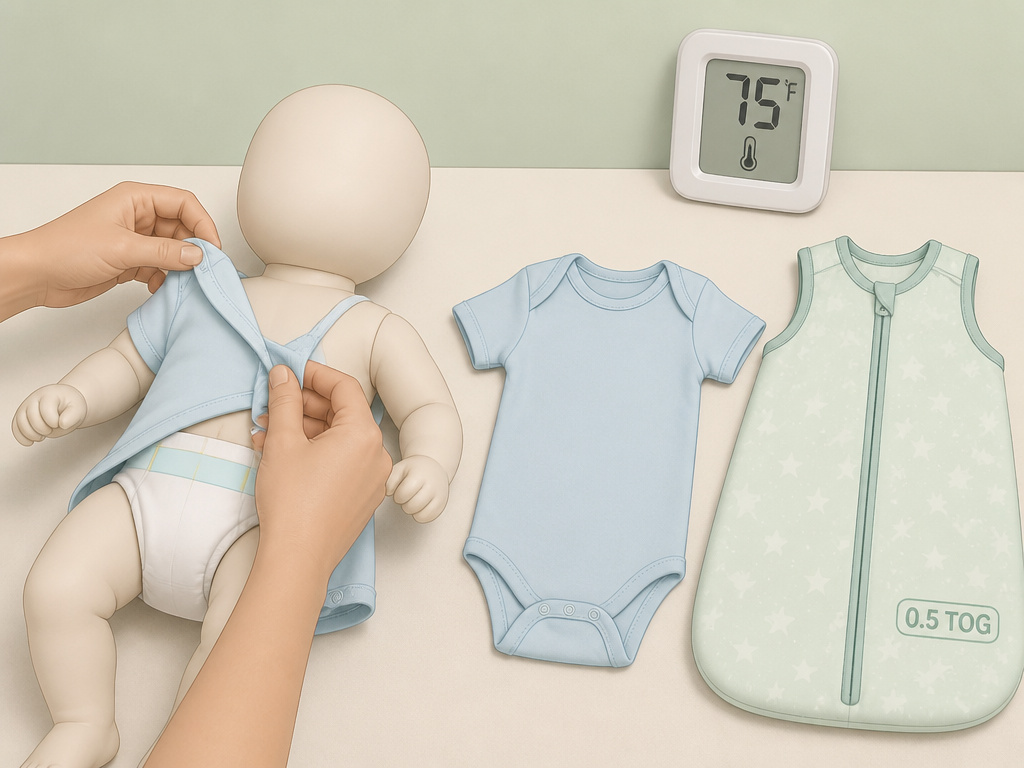 Temperature dictates the uniform. Dressing a baby for sleep is about matching layers to the room’s temperature, not the season outside. A sleep sack (wearable blanket) is the cornerstone, it keeps them warm without the suffocation risk of loose blankets.
Follow this basic layering guide: 1. Start with a diaper. 2. Add a onesie or light pajamas. For very warm rooms (above 74°F), a diaper alone under the sleep sack may be enough. 3. Choose the correct TOG-rated sleep sack. TOG measures thermal resistance. A 0.5 TOG is for warm rooms, a 2.5 TOG is for cooler rooms. 4. Never add a hat for sleep indoors. This traps critical heat they need to release.
The right crib sheets matter, too. Natural fibers like cotton or bamboo are breathable and help wick moisture. A breathable mattress can also aid airflow around the baby.
Common mistake: Using a regular adult blanket “tucked in tightly.” It’s not safe. It can come loose, cover the face, or cause overheating. A wearable blanket is the only safe blanket alternative for infants.
What to Do When the Room is Too Warm
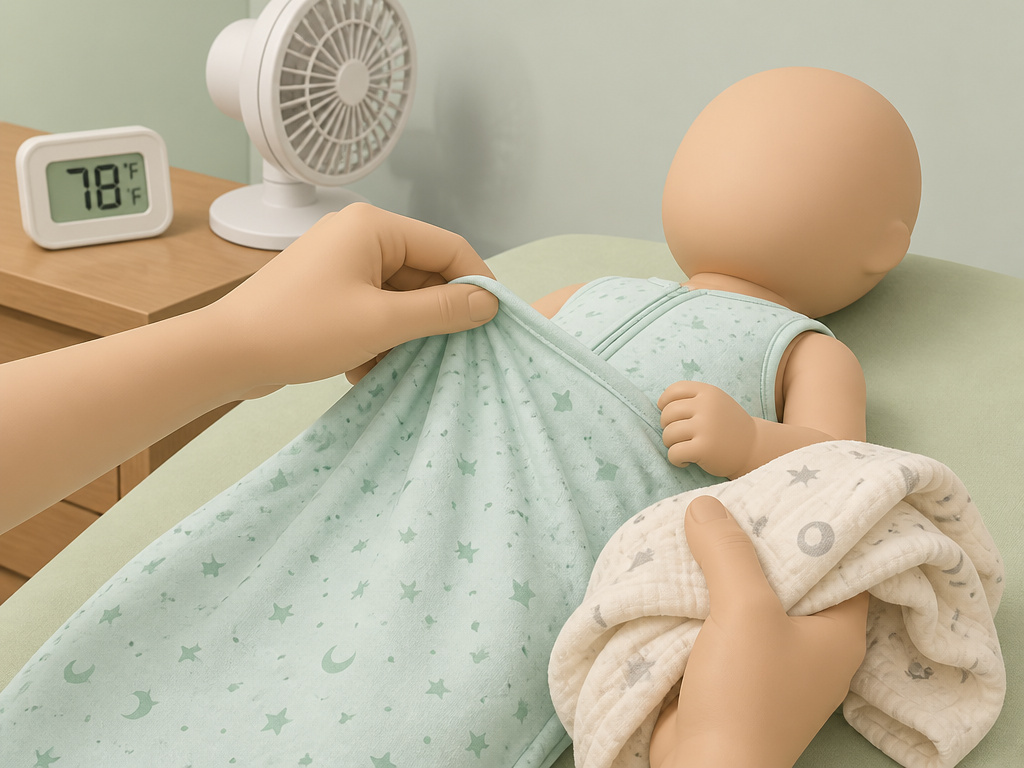 Summer nights, power outages, or old apartments can push temperatures past the comfort zone. You have safe tools to manage this.
First, improve airflow. Open a window in the room if it’s safe and secure. Use a fan in the bedroom, but point it at a wall to circulate air indirectly, not directly at the crib. Close blinds or curtains during the day to block sun-heat.
Next, adjust the baby’s layers. Strip them down to just a diaper and a very light, low-TOG sleep sack or even just a diaper and a swaddle. Ensure they are well-hydrated with regular milk feeds.
Finally, consider the sleep surface itself. A breathable crib mattress and bamboo crib sheets can feel several degrees cooler against the skin than standard polyester blends. For babies with sensitive skin or who run hot, this can make a noticeable difference.
| Problem | Immediate Action | Longer-Term Solution |
|---|---|---|
| Room is 75°F+ | Remove a layer from baby. Use a fan for air circulation (not aimed at crib). | Use blackout curtains, consider a portable AC unit for the nursery. |
| Baby is sweaty at chest/neck | Immediately remove one layer (e.g., take off swaddle, switch to lighter sack). | Re-evaluate the TOG of the sleep sack and the material of their pajamas and sheets. |
| No air conditioning | Use a fan, open windows at night, dress baby in diaper only. | Cool the room before naptime by closing up during peak heat. |
The Bigger Sleep Safety Picture: It’s Never Just Temperature
Temperature is one critical variable in the safe sleep equation. It works in concert with other non-negotiable rules. The American Academy of Pediatrics’ safe sleep guidelines form the complete picture: ABC. Alone, on their Back, in a bare Crib.
- Alone: No pillows, blankets, stuffed animals, or bumper pads in the sleep space. The crib should contain only the baby and a fitted sheet on a firm mattress.
- Back: Always place your baby on their back for every sleep, night and nap, until they are 1 year old.
- Crib: Use a firm, flat, safety-approved sleep surface. Inclined sleepers, car seats, and swings are not for routine sleep.
A safe temperature in an unsafe sleep environment is still unsafe. The hyperthermia and SIDS risk is amplified when combined with soft bedding or prone sleeping. Your goal is to control all the factors you can: a cool room, a bare crib, and a baby on their back in a wearable blanket.
Frequently Asked Questions
Is 74 degrees too hot for a baby to sleep?
74 degrees Fahrenheit (about 23°C) is at the very top of the “warm” category. It is not inherently unsafe like the 75°F+ range, but it requires vigilance. At 74°F, dress your baby in minimal layers, a diaper and a very light sleep sack (0.5 TOG) or just a onesie. Always check their neck for sweat. It’s safer to aim for the middle of the 62-68°F ideal.
How can I cool down my baby’s room without AC?
Use a fan to circulate air (point it at a wall, not the crib). Open windows at night when the outside air is cooler. Close blinds or blackout curtains during the day to block solar heat. Dress your baby minimally. You can also place a cool washcloth on their feet or offer more frequent milk feeds to ensure hydration.
Will a fan in the room dry out my baby or make them sick?
No. A fan does not cause illness; viruses and bacteria do. A fan is an excellent tool for preventing overheating by moving air and disrupting carbon dioxide pockets. It can actually reduce the risk of SIDS. Ensure the fan is clean, secure, and not blowing directly on the baby to avoid a constant draft.
What is the best type of thermometer for a baby’s room?
Simple, digital room thermometer is best. Look for one that displays both temperature and humidity. Place it at crib level, away from direct sunlight, heaters, or drafts. You don’t need a fancy “nursery” model, a basic indoor thermometer from a hardware store works perfectly.
My baby’s hands are always cold. Does that mean they are cold?
No. Cold hands and feet are normal in babies due to their still-developing circulation. It is not a reliable sign of being cold. Always check their core temperature by feeling their chest or the back of their neck. If those areas are warm and dry, they are dressed appropriately.
Before You Go
75 degrees Fahrenheit is a line drawn by regulation, not a target for your nursery. The science and major child health charities point to a cooler, safer range of 62 to 68 degrees Fahrenheit. Your most important tools are a room thermometer and your own hand on your baby’s chest. Pair that comfortable temperature with the ABCs of safe sleep, a bare crib, a back-sleeping baby, and a wearable blanket instead of loose bedding. Control the environment you can, and you create a foundation for safer, sounder sleep.
