
Do Bigger Babies Sleep Better | The Data-Driven Answer
This post contains affiliate links. As an Amazon Associate we earn from qualifying purchases.
Do bigger babies sleep better? No, not directly. A baby’s size or weight at birth does not predict their sleep quality or duration in the first six months. Sleep is governed by neurological development, feeding patterns, and environmental cues, not by pounds or ounces. The belief often stems from confusing correlation with causation: formula-fed babies, who tend to gain weight slightly faster, also tend to wake less at night, but the feeding method is the driver, not the weight.
That gap between correlation and cause is where most advice gets tangled. Weight is an outcome, not a setting you can adjust for sleep.
What follows: the specific numbers from sleep studies that separate fact from folklore, the measurable difference between breast milk and formula on night wakings, and the one intervention proven to add minutes of sleep that has nothing to do with size.
Key Takeaways
- Birth weight and growth percentiles show no statistically significant link to longer sleep or fewer night wakings in the first six months.
- Breastfed infants wake more often at night, a 2021 systematic review found they have a greater number of night wakings, and at six months, they are 66% more likely to wake than formula-fed babies.
- Early introduction of solid foods (around 3-4 months) is associated with a small sleep benefit, about 16.6 extra minutes of sleep per night at six months, but this is not a solution for sleep problems.
- The most reliable way to improve infant sleep is targeted sleep intervention around four months of age, which can extend nighttime sleep by over an hour compared to usual care.
- A baby’s ability to self-soothe, which develops around 3-4 months, is a stronger predictor of consolidated sleep than their size or diet.
The Myth of Size and Sleep
You hear it at the playground, in pediatrician’s offices, from well-meaning relatives: “He’s such a big baby, he must sleep like a log.” The logic feels sound, a bigger baby has a bigger stomach, can hold more milk, and should therefore sleep longer between feeds. It’s a comforting narrative, but it collapses under the data.
A 2022 prospective cohort study of 359 infants tracked sleep from 30 days to six months. It found no statistically significant association between intrauterine factors (which influence birth size) and infant sleep outcomes. Total sleep time decreased from about 13 to 11 hours over that period, and the longest uninterrupted sleep stretch increased from 4 to 6 hours. These changes happened universally, regardless of whether a baby was in the 10th or 90th percentile for weight.
Common mistake: Equating a “good sleeper” with a “big baby.” The correlation is usually coincidental, linking two separate outcomes of a third variable, feeding method.
The real mechanism is metabolic and neurological. Newborn sleep is fragmented because their tiny stomachs demand frequent feeding and their immature circadian rhythms can’t distinguish day from night. By around four months, neurological development allows for longer sleep cycles and the beginnings of a day-night rhythm. This process is on a biological timetable, not a weight-based one.
What Does the Research Actually Say?
Infant sleep time decreased from approximately 13–11 hours from 30 days to 6 months of age (p<0.001), while the longest period of uninterrupted sleep increased from approximately 4–6 hours during the same period (p<0.001). No association was found between intrauterine environments (affecting size) and infant sleep.
The studies are clear. A baby’s size is a demographic detail, not a sleep setting. If you’re looking for levers to pull, they are elsewhere.
The Real Levers: Feeding, Food, and Routine
If size doesn’t dial the sleep knob, what does? Three factors have measurable, documented effects: the type of milk, the timing of solids, and structured sleep habits. These are the variables the research actually tracks.
Breastfeeding vs. Formula: The Sleep Reality
This is the factor most often mistaken for a size effect. Formula-fed babies do, on average, wake less at night. A 2021 systematic review in Nutrients concluded that exclusively breastfed infants (≤6 months) had a greater number of night wakings. After six months, most studies reported breastfed infants sleeping less at night and over 24 hours than formula-fed infants.
The reason is digestibility, not density. Formula is harder to digest than breast milk. It moves through the gut more slowly, which can keep a baby feeling full for a longer period. Breast milk is digested quickly, leading to more frequent hunger cues. There’s also a behavioral component: breastfed babies often use nursing for comfort and to fall asleep, creating a sleep association they rely on to transition between sleep cycles.
| Feeding Method | Typical Night Wakings (0-6 mos) | Primary Sleep Influence | Consideration for Sleep |
|---|---|---|---|
| Exclusive Breastfeeding | More frequent | Quick digestion, strong sleep-to-nurse association | May require more parental intervention for night settling. |
| Formula Feeding | Less frequent | Slower digestion, less metabolic demand overnight | Can support longer initial sleep stretches, but doesn’t eliminate wakings. |
| Combination Feeding | Variable | Depends on timing and proportion of each feed | A nighttime formula feed might extend one sleep block. |
The takeaway isn’t that one is “better” for sleep. It’s that your feeding choice sets a baseline for night wakings. Fighting that baseline is exhausting. Working with it, by understanding the why-layer of digestion and sleep associations, is how you stay sane.
The Solid Foods Surprise (It’s Small)
The old advice to “add cereal to the bottle” to make a baby sleep longer is largely folklore, but a nuanced truth exists. A 2018 secondary analysis of a large randomized clinical trial found that early introduction of solids (around three months) was associated with 16.6 minutes longer sleep per night at six months and a reduction in night waking frequency.
Where this goes sideways: Using solids as a first-line sleep fix. Sixteen minutes is statistically significant in a study of 1,300 infants, but in your living room at 2 a.m., it may not feel like a solution. Introducing solids before a baby is developmentally ready (able to sit with support, has lost the tongue-thrust reflex) risks choking and digestive upset.
The sleep benefit likely comes from increased calorie intake and a fuller stomach, not from the food itself being more “substantial.” It’s a marginal gain, not a magic bullet. The UK’s National Health Service still states that starting solids won’t make your baby more likely to sleep through the night, and for most families, that’s the practical reality.
The Intervention That Actually Works
If you want a measurable impact, look to sleep hygiene and intervention. A 2024 randomized controlled trial tested an early sleep intervention at four months of age. The intervention group received guidance on sleep routines, self-soothing, and environment. The results weren’t marginal.
At six months, the intervention group had: * Nighttime sleep duration: 585 minutes (9.75 hrs) vs. 496 minutes (8.27 hrs) in the usual care group. * Night waking duration: 61 minutes vs. 89 minutes. * Longest sleep period: 213 minutes (3.55 hrs) vs. 170 minutes (2.83 hrs).
The part nobody mentions: The intervention didn’t just add sleep; it reduced the stress of night wakings by making them shorter and less frequent. Teaching a baby to self-settle is the skill that pays compound interest.
This is the lever to pull. It has nothing to do with ounces or percentiles and everything to do with consistency, environment, and responding to cues in a way that encourages independent sleep.
Building Better Sleep, Regardless of Size
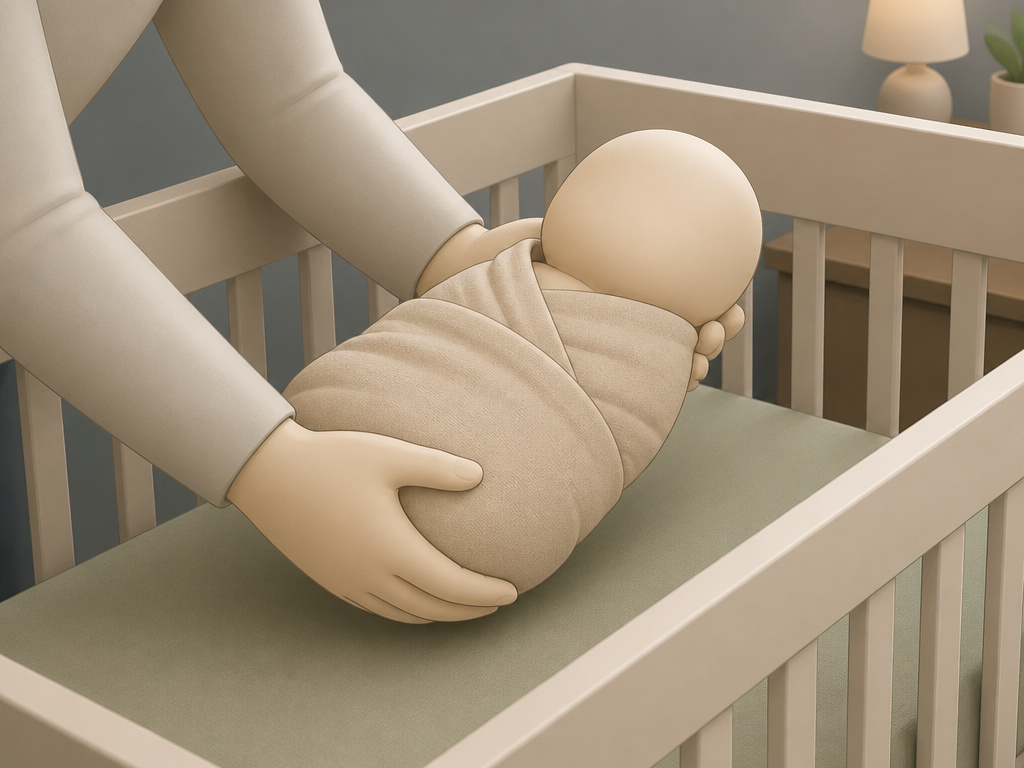
Forget the scale. Focus on the schedule, the space, and the responses. These are the elements within your control that build sustainable sleep habits.
- Prioritize a Consistent Bedtime Routine. Start this by 2-3 months. A predictable 20-30 minute sequence (e.g., feed, bath, book, lullaby, bed) signals to your baby’s brain that sleep is coming. Do the feeding at the start, so they don’t depend on sucking to fall asleep.
- Master the Art of the Drowsy But Awake Put-Down. This is the cornerstone of self-soothing. Place your baby in their safe infant sleep surface when they are sleepy but still aware of their surroundings. This lets them practice falling asleep in the same place they’ll wake up, reducing night-time confusion.
- Optimize the Sleep Environment. This means a firm, flat crib mattress with a fitted sheet, no pillows, blankets, or toys. Use a bedside sleeper for convenience, but ensure it meets the same safety standards as a crib. Keep the room dark, cool (68-72°F), and use white noise to mask household sounds.
- Differentiate Day from Night. During the day, expose your baby to natural light and normal household noise. Keep feeds and playtime interactive. At night, keep lights dim and interactions calm and boring during feeds or changes. This helps set their internal circadian rhythm.
- Watch for Sleep Cues, Not the Clock. Rubbing eyes, zoning out, yawning, and fussiness are more reliable indicators of sleep readiness than a rigid schedule. Putting a baby down when they’re already overtired makes it harder for them to fall and stay asleep.
TL;DR: Routine beats weight. Environment trumps ounces. Response style matters more than percentile.
Frequently Asked Questions
Does a heavier baby sleep through the night sooner?
No. The ability to “sleep through the night” (a 5-6 hour stretch) is a developmental milestone linked to brain maturation and self-soothing ability, typically emerging between 4-6 months. A baby’s weight does not accelerate this timeline.
Should I switch to formula to get more sleep?
Maybe, but know the trade-off. While formula may slightly increase the length of the first sleep stretch, it doesn’t eliminate night wakings or teach sleep skills. The decision should balance sleep goals with the well-established health benefits of breastfeeding. For some, a single dream feed with formula can extend a block without fully switching.
My big baby is a terrible sleeper. Why?
Because size and sleep are unrelated. A large baby can have gas, reflux, a strong nursing-to-sleep association, or an inconsistent routine just like a smaller baby. Look to feeding timing, sleep environment, and settling methods before worrying about weight.
Do growth spurts affect sleep?
Yes, but temporarily. During a growth spurt (often around 3 weeks, 6 weeks, 3 months, and 6 months), your baby may cluster-feed and be fussier, which disrupts sleep. This is a short-term demand for calories to fuel growth, not a permanent change in sleep patterns. Ride it out with extra feeds and comfort; the pattern will reset.
What’s the single best thing I can do for my baby’s sleep?
Establish a consistent, safe sleep environment and put your baby down drowsy but awake from an early age. Investing in a quality, firm mattress for the crib and practicing this put-down method does more for long-term sleep health than any dietary change.
Before You Go
The question “do bigger babies sleep better” is a search for a simple rule in a complex system. The answer is no. Sleep is a skill babies learn, not a prize awarded for growth.
The evidence points you away from the scale and toward the schedule. It highlights the digestibility of breast milk, the minor bump from early solids, and the profound importance of early, gentle sleep intervention. Your baby’s size is a footnote in their sleep story. The plot is driven by neurology, routine, and the safety of their sleep space, like a firm, approved infant mattress in a quiet, dark room.
Focus on what you can control: the consistency of the bedtime routine, the safety of the crib, and your response to night wakings that encourages self-reliance. That’s how you build a better sleeper, pound for pound.
