
Switching a Newborn Sleep Schedule: A Step-by-Step How-To
This post contains affiliate links. As an Amazon Associate we earn from qualifying purchases.
To switch a newborn sleep schedule, you work with their biology, not against it. Before 3 months, focus on teaching day versus night using light, sound, and activity cues. A true schedule with predictable naps and a long night stretch isn’t biologically possible until after the 3-month mark, when sleep cycles mature. Forcing a rigid timetable earlier leads to overtiredness, more night waking, and parental frustration. The goal isn’t control but gentle guidance toward longer nighttime sleep blocks.
That 3-month ceiling is the single most important fact in this guide. It comes straight from pediatric sleep research at institutions like Stanford Children’s Health, which notes most babies don’t start sleeping 6 to 8 hours at night until about 3 months old. Before that point, their brains simply aren’t wired for consolidated sleep. Your job is to set the stage so when their neurology is ready, the shift toward nighttime sleep happens naturally.
What follows is a breakdown of why newborn sleep is chaotic, the three non-negotiable rules for any schedule attempt, and a phased approach to introducing day-night cues that actually work. We’ll also cover what “sleeping through the night” really means and when to drop the whole project and just survive.
Key Takeaways
- Forget a true schedule before 3 months. Newborn sleep cycles are irregular and short; aiming for a clock-based routine before this neurological milestone sets you up for failure.
- “Sleeping through the night” means 6–8 hours, not 12. This stretch typically begins around 3 months or when a baby weighs 12–13 pounds, but some babies take closer to a year.
- Your primary tool is contrast, not routine. Use bright, noisy days and dark, quiet nights to teach the difference between day and night long before naps become predictable.
- Never wake a sleeping baby for a schedule. Forced waking, common in some care settings, disrupts the fragile sleep-wake cycle and can hinder sleep development.
- The sleep environment is non-negotiable. A safe, consistent space, like a firm crib mattress in a bedside bassinet, is the foundation for any schedule shift.
Why Newborn Schedules Fail (And When They Start Working)
A schedule implies predictability. Newborn neurology offers none. For the first 6 to 8 weeks, your baby operates on a simple cycle: sleep, wake, feed, sleep. This cycle repeats every 1 to 3 hours, around the clock. Their stomach is tiny, their sleep is dominated by light REM sleep, and their circadian rhythm, the internal clock that regulates day and night, isn’t fully functional.
Most babies don’t have regular sleep cycles until they are about 6 months old. Newborns sleep about 16 to 17 hours per day, but they may not sleep more than 1 to 2 hours at a time. Most babies don’t start sleeping through the night (6 to 8 hours) without waking until they are about 3 months old.
This quote from Stanford Children’s Health sets the realistic timeline. “Sleeping through the night” is a 6 to 8 hour stretch, not a full 12-hour night. That stretch becomes possible around the 3-month mark because of two changes: sleep cycles consolidate into deeper, longer blocks, and the circadian rhythm begins to respond to environmental cues like light and dark.
Trying to impose a by-the-clock nap schedule at 6 weeks is like trying to schedule the weather. It creates unnecessary stress. Your energy is better spent on the one schedule element you can influence: the difference between day and night.
The Three Core Rules for Switching a Sleep Schedule
If you remember nothing else, these three rules prevent the most common mistakes. They apply from day one.
Rule 1: Day is Bright and Lively, Night is Dark and Boring.
During daylight hours, open curtains. Run the dishwasher. Talk in a normal voice. Don’t tiptoe around naps. When the sun goes down, dim the lights. Use a soft nightlight for feeds and changes. Keep interactions quiet and minimal. This contrast is the primary signal for your baby’s developing circadian clock.
Rule 2: Never Wake a Sleeping Baby to Stick to a Plan.
This rule is counterintuitive but critical. A 2023 study in a neonatal intensive care unit (NICU) found that before staff training, over 90% of professionals forced newborns awake for feeding times. After an intervention teaching respect for the sleep-wake cycle, those forced wakings dropped dramatically, and infant sleep scores improved significantly. The lesson applies at home: let sleep trump the clock. A well-rested baby sleeps better next time.
Rule 3: The Sleep Space is Sacred and Safe.
All sleep, naps and night, should happen in a consistent, safe location. This means a firm, flat surface like a crib mattress that meets current safety standards, free of pillows, blankets, or toys. For the first 6 months, the American Academy of Pediatrics recommends room-sharing with a separate sleep surface, like a bedside sleeper. This reduces SIDS risk and makes nighttime feeds easier without establishing a feed-to-sleep association in your bed.
What “Sleeping Through the Night” Actually Means
Parents and pediatricians often talk past each other on this phrase. In medical literature, “sleeping through the night” is defined as a 6 to 8 hour continuous stretch of sleep. It does not mean 12 hours without a sound.
The Children’s Hospital of Philadelphia states most babies don’t begin this 6-8 hour stretch until at least 3 months of age, or until they weigh 12 to 13 pounds. They also note a crucial caveat: this varies considerably, and some babies do not sleep through the night until closer to 1 year.
| Age Range | Typical Night Sleep Stretch | What’s Happening |
|---|---|---|
| 0-3 months | 1-4 hours | Sleep cycles are short (50-60 min), dominated by light REM sleep. Waking is for feeding. |
| 3-6 months | 6-8 hours (for some) | Sleep cycles lengthen, deeper non-REM sleep increases. Circadian rhythm is established. |
| 6-12 months | 8-12 hours (with possible wakes) | Neurological maturity allows longer consolidation, but teething, milestones, and separation anxiety can cause regressions. |
Setting a 6-8 hour stretch as the initial goal is realistic. Expecting a 2-month-old to sleep 7pm to 7am is a fantasy that leads to desperate, ineffective sleep training.
Step-by-Step: Introducing Day-Night Cues (0-3 Months)
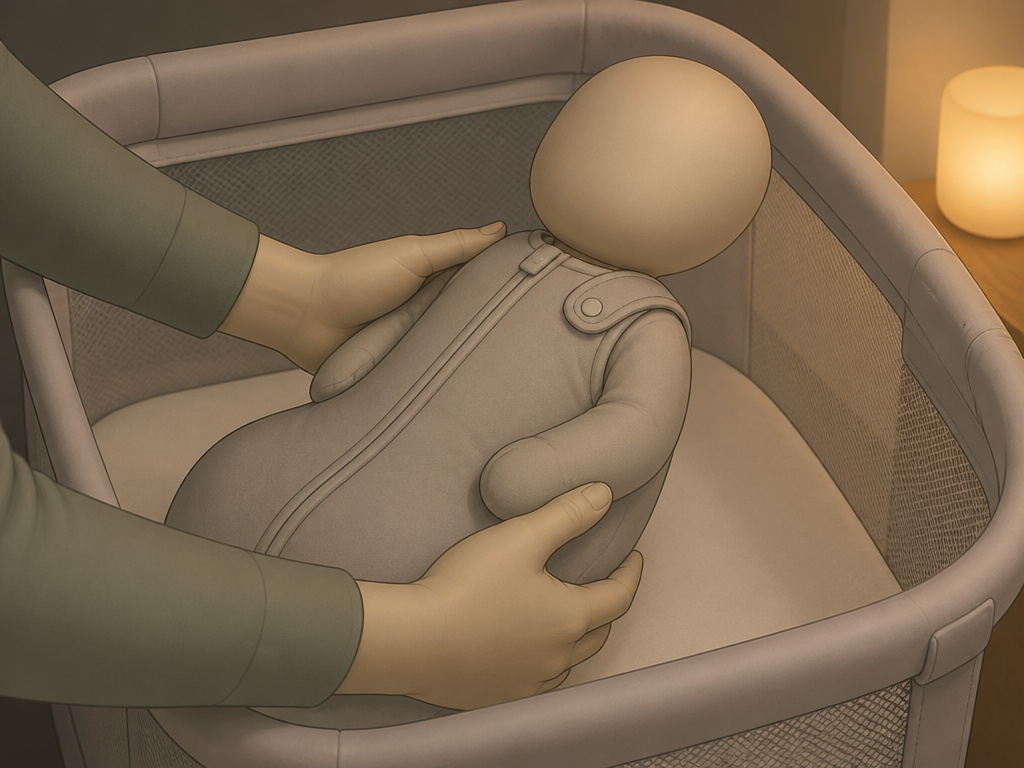
This isn’t a schedule. It’s conditioning. Your goal is to make nighttime sleep more appealing than daytime sleep.
1. Master the Morning Reset.
Within 30-60 minutes of when you want the “day” to start, get sunlight into the room. Open blinds. Take baby to a bright window. This light exposure is the strongest cue to reset the circadian clock.
2. Differentiate Nap vs. Night Sleep Environments.
For naps, use a lighter-weight wearable blanket or a simple swaddle blanket. Let some ambient household noise continue. For nighttime, use a darker room and a consistent, heavier sleep sack. The different sensory feel helps signal a longer sleep period.
3. Build a Mini-Bedtime Routine.
Keep it short and boring: feed, change into night clothes and fresh diaper, maybe a song or two in the dim room, then into the bedside bassinet. Do this at a consistent time each night, even if the subsequent sleep is short. The repetition builds sleep association.
4. Handle Night Wakings with Minimal Stimulation.
Use a dim red or amber nightlight. Feed and change with little talk or eye contact. Avoid turning on overhead lights. The message is: night is for sleeping, not for play or socializing.
Where this goes sideways: Creating a vibrant, interactive ritual for 2 a.m. Feeds. If you turn on bright lights, chat, and make it fun, you teach your baby that nighttime is party time. The next wake-up will come sooner, expecting the same show.
The Tools That Make a Difference

Your gear choices support your strategy. They don’t replace it.
A Consistent Sleep Surface: Whether it’s a bedside bassinet for the first few months or a full crib, consistency matters. The Halo Bassinest or the BabyBjörn Cradle are examples of products designed for safe room-sharing and easy access for night feeds.
Appropriate Sleep Wear: Ditch loose blankets immediately. Use a wearable blanket like the Woolino 4-Season or a simple cotton sleep sack. For young babies who startle easily, a well-fitted swaddle blanket like the SwaddleMe Original can promote longer sleep stretches until the baby shows signs of rolling.
Light Control: Blackout curtains for the nursery are a long-term investment. For immediate, portable darkness, the SlumberPod is a popular choice for travel and day naps.
Sound: A consistent white noise machine, like the Hatch Rest or the Marpac Dohm, masks disruptive household sounds and creates a stable auditory environment. It’s a cue that says, “It’s sleep time.”
When to Pivot: Signs Your Baby Isn’t Ready
Sometimes, the best schedule is no schedule. If you see these signs, pull back and focus on survival for a few more weeks.
- Frequent, short naps (20-45 minutes) regardless of your efforts.
- Increased night waking after you’ve tried to impose more structure.
- Difficulty settling for sleep, with lots of crying that wasn’t present before.
- Your own frustration is skyrocketing.
This usually means your baby’s brain just isn’t mature enough for the next step. Return to the basic day-night cues and feed on demand. Revisit scheduling in 7-10 days. The CHOP newborn sleep patterns guide reinforces that individual variation is enormous, and pushing against biology rarely works.
Frequently Asked Questions
Can I start sleep training at 2 months?
No. True sleep training methods that involve allowing a baby to cry for intervals are not developmentally appropriate or safe before 4-6 months. Before that, focus solely on establishing good sleep habits and day-night differentiation, as outlined in the Mayo Clinic baby sleep guide.
My newborn sleeps all day and is up all night. How do I reverse this?
You can’t reverse it instantly. Start by ensuring they get bright, natural light exposure during the day. Wake them gently if any single nap exceeds 3 hours during daylight. Be persistently boring at night. A complete flip can take 5-7 days of consistent effort.
What if my baby only sleeps while being held?
This is extremely common in the first 8-12 weeks. Use a safe bedside sleeper that allows you to be close. Try transferring when they are in a deep sleep (limp limbs, regular breathing). Sometimes, using a pre-warmed sleep surface with a heating pad (removed before placing baby down) can ease the transition from warm arms to a cooler mattress.
How do I know if my baby’s sleep environment is safe?
Follow the ABCs of safe sleep: Alone, on their Back, in a Crib (or bassinet). The surface should be firm and flat with only a fitted sheet. The room should be cool (68-72°F). There should be no pillows, blankets, bumpers, or stuffed animals in the sleep area. Always place your baby to sleep on their back.
Before You Go
Switching a newborn sleep schedule is a marathon of gentle nudges, not a sprint of strict rules. Your most powerful tools are light, consistency, and patience. Remember the 3-month milestone, it’s the biological gate that has to open before longer sleep stretches are possible. Until then, your job is to faithfully teach the difference between day and night and provide a safe, boring place for sleep to happen. The rest is up to your baby’s growing brain. Trust that it will get there, and in the meantime, lower the bar for what a “good night” looks like.
