
Master How to Swaddle Your Newborn for Sleep Safely & Easily
This post contains affiliate links. As an Amazon Associate we earn from qualifying purchases.
To swaddle a newborn for sleep, use a lightweight cotton or muslin blanket in a diamond fold, wrap snugly across the chest below the chin, and leave the hips loose to prevent dysplasia. The blanket must be tight enough to resist a baby’s startle reflex but loose enough to fit two adult fingers between the fabric and the baby’s chest. Always place a swaddled baby on their back on a firm, flat surface with no other bedding.
That chest-finger test is the line between a calming wrap and a breathing restriction. Get it wrong, and the swaddle loosens overnight or presses on the ribs.
What follows is the mechanics behind that rule: a three-step diamond fold, the two signs you’ve wrapped too tight, and the one age where introducing a swaddle becomes a documented risk instead of a sleep aid. We’ll cover material choice, hip safety, and the exact milestone that means you’re done with swaddling for good.
Key Takeaways
- Swaddle only with a single, lightweight muslin or cotton blanket, never use weighted products or multiple layers.
- Use the diamond-fold technique to secure the wrap across the chest and under the arms, leaving the hips and legs free to bend and move.
- Stop swaddling at the first sign of rolling, which can happen as early as 2 months, continued use after this point drastically increases the risk of suffocation.
- Never start swaddling a baby for the first time at 3 months old; research shows this unfamiliar practice can suppress their arousal reflexes during the peak risk period for SIDS.
- Always place a swaddled infant on their back on a firm, flat sleep surface with no pillows, stuffed toys, or loose bedding.
Why Swaddle? The Sleep Science vs. The Safety Trade-Off
Swaddling works because it limits the Moro, or startle, reflex. That involuntary jerk can wake a baby just as they’re falling asleep. A firm wrap mimics the womb’s containment. But the same restriction that quiets the startle reflex also quiets something else: the baby’s ability to rouse themselves from a deep sleep.
A 2023 NIH-published review in PMC noted that swaddling “decreased total arousability” in infants, especially those not previously swaddled. For babies naive to the intervention, this suppression of arousal could increase risk during the critical SIDS window under 6 months.
This isn’t about discarding a useful tool. It’s about using it with precision. The benefit, longer sleep stretches, comes with a non-negotiable requirement for correct technique. Every safety rule addresses a specific, documented failure mode: overheating from polyester, hip dysplasia from straight legs, suffocation from a loose blanket near the face.
The goal isn’t the tightest burrito. It’s the minimum effective restraint.
The Gear You Actually Need (And What to Trash)
You need one item: a large, square, breathable blanket. A muslin swaddle is the default because the open weave prevents overheating. A cotton receiving blanket works if it’s large enough, at least 40 by 40 inches. The fabric must be thin enough to pass the “hand test”: if you can’t see light through it when held up, it’s too thick for safe swaddling.
Trash the extras. Do not use a second blanket for warmth. Do not use a weighted swaddle or weighted sleep sack of any kind. The American Academy of Pediatrics explicitly warns against them because the pressure can impair chest expansion and lung function. Do not use swaddles with Velcro or zippers that pin the arms straight down at the sides, these can also stress the shoulder joints.
Your baby’s sleepwear matters too. Under the swaddle, dress them in no more than one layer more than you would wear comfortably. A simple cotton onesie is often enough. Overheating is a known risk factor for SIDS, and a swaddle adds insulation.
The 3-Step Diamond-Fold Swaddle (With Photos)
This method creates a secure wrap that stays below the chin and allows for hip movement. The UC Davis safe sleep guide illustrates a similar technique, emphasizing placement below the shoulders.
Step 1: Create the Diamond
Lay your blanket flat in a diamond shape. Fold the top corner down about six inches to form a straight edge. Place your baby on their back with their neck and shoulders resting just above this folded edge. Their head should be on the blanket, but the fold should line up with their armpits. This prevents the fabric from creeping up.
Step 2: Secure the Right Arm
Take your baby’s right arm and gently bend it at the elbow so their hand is near their face. Pull the left corner of the blanket straight across their body, tucking it snugly under their right side and back. The wrap should be tight across the chest and under the arm, but their left arm is still free.
Step 3: Fold, Tuck, and Secure the Left Arm
Lift the bottom corner of the blanket up and over your baby’s feet, loosely draping it toward their chest. Now take their left arm, bend it gently, and pull the remaining right corner of the blanket across their body. Tuck this final corner into the fold you created at the front. The wrap is done.
Where this goes sideways: Tucking the blanket too tightly over the hips and legs. This forces the legs into a straight, extended position. The American Academy of Pediatrics guide links this to hip dysplasia, where the joint doesn’t form properly. The bottom fold should be loose enough that the baby can bend their knees and hips naturally.
Check your work. The swaddle should be snug across the chest and shoulders, but you must be able to slide two or three fingers between the blanket and your baby’s chest. The hips are loose. The blanket’s edge is below the chin and aligned with the shoulders.
| Checkpoint | Correct | Incorrect (Risk) |
|---|---|---|
| Chest Tightness | 2-3 finger space | Too tight (breathing restriction) or too loose (arms escape) |
| Hip & Leg Position | Legs can bend and kick freely | Legs are pressed straight together |
| Blanket Height | Edge below chin, at shoulder line | Fabric near or over mouth |
| Material | Single layer of muslin/cotton | Multiple layers or thick fleece |
The Two Silent Risks: Overheating and Hip Dysplasia
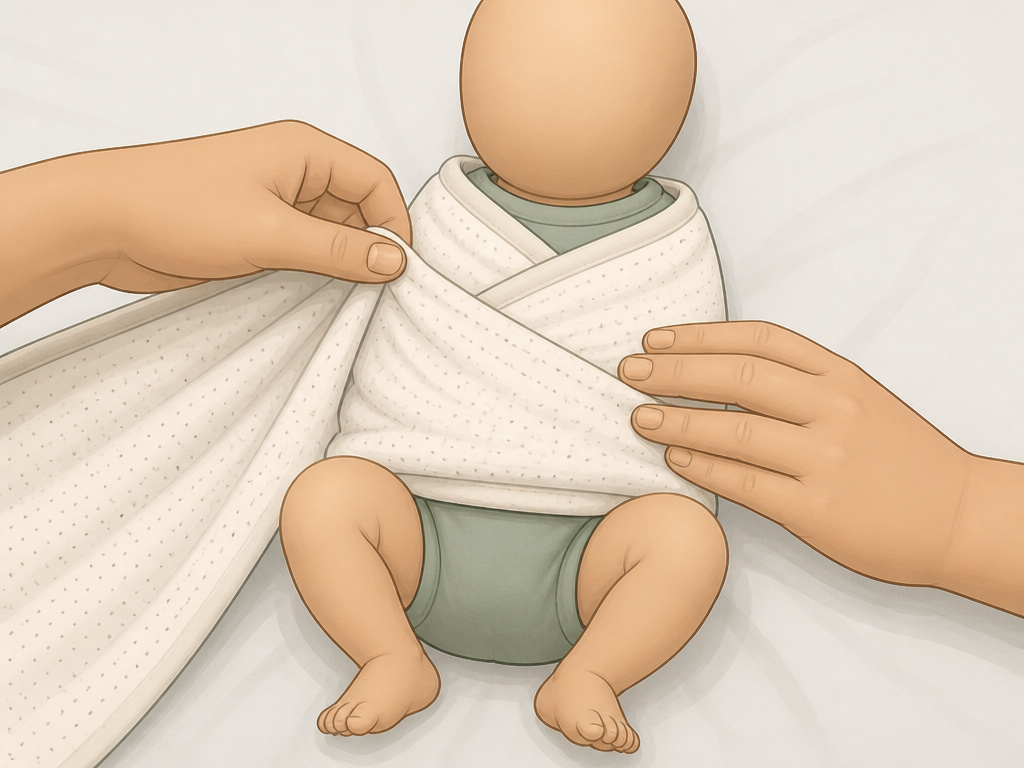
A safe swaddle manages heat and development. These risks don’t announce themselves with a cough or a cry, they’re cumulative.
Overheating happens slowly. A baby who is too hot will feel damp at the back of the neck or chest, their skin may be flushed, and they may seem overly fussy or lethargic. The fix is simple: use a breathable swaddle fabric and dress them lightly underneath. Remember, the swaddle itself is a layer.
Hip dysplasia is a developmental problem. The hip joint is a ball-and-socket that needs movement to form correctly. A tight swaddle that holds the legs straight and together can impede this, potentially leading to a shallow socket. The International Hip Dysplasia Institute recommends a “hip-healthy” swaddle: knees should be able to fall apart into a frog-like position. This is why the bottom of the diamond fold must be left loose.
If you’re using a commercial swaddle sack, look for ones labeled as “hip-healthy” or those with a wide, pouch-like bottom for the legs.
When to Stop Swaddling: The Rolling Milestone
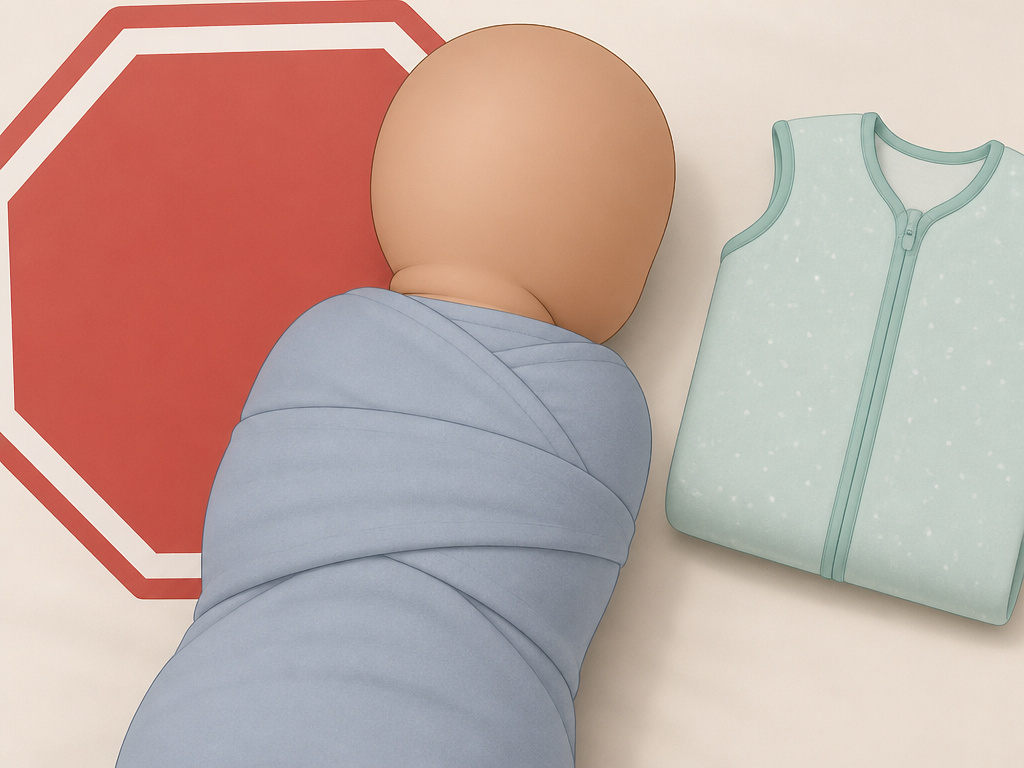
The rule is absolute: stop swaddling the moment your baby shows any sign of attempting to roll from back to front. This isn’t a vague future date. Some babies start working on rolling as early as 2 months old.
Common mistake: Continuing to swaddle because your baby hasn’t fully rolled yet. The attempt is the signal. A swaddled baby who rolls onto their stomach cannot use their arms to push up or turn their head to clear an airway. The risk of suffocation is immediate and severe.
Transition to a wearable blanket or sleep sack. These keep babies warm without restricting their arms, so they can move freely and use their limbs if they roll. It may take a few nights for sleep to settle again, but the safety trade-off is non-negotiable.
This transition point is also why choosing good newborn blankets from the start matters, you’ll only use them for a short window, so quality and safety over quantity.
The 3-Month Rule: Why Introducing a Swaddle Late Is Dangerous
Here is the counterintuitive, research-backed rule most parents haven’t heard. According to the International Society statement on swaddling, it is safest to swaddle from birth. You should not begin swaddling an infant for the first time at 3 months of age.
The reason is physiological. The peak age for SIDS risk is around 3 months. The NIH study on swaddling effects found that swaddling suppressed arousal reflexes most significantly in infants who were “naïve” to it, not accustomed to sleeping swaddled. Introducing this unfamiliar, deep-sleep-promoting practice right at the peak vulnerability period could be dangerous.
If your baby is already 3 months old and has never been swaddled, skip it. Move directly to using a sleep sack. If you’ve been swaddling from birth, you may continue, but remain hyper-vigilant for rolling signs and be prepared to stop immediately.
Frequently Asked Questions
Can I swaddle with arms out?
Yes, and for some babies, it’s a great transition step. Use the same diamond-fold technique, but simply leave both arms free after you position them on the blanket. The wrap across the chest can still provide a sense of security and prevent the startle reflex from jolting the body, while the arms have mobility. This is a useful method if your baby fights having their arms tucked or as you approach the rolling milestone.
How tight should a newborn swaddle be?
The swaddle should be snug across the chest and shoulders, tight enough that it doesn’t come loose with a few kicks, but loose enough that you can easily fit two or three fingers between the blanket and your baby’s chest. If your baby’s breathing seems labored or their skin is indented from the fabric, it’s too tight. If their arms escape within minutes, it’s too loose.
What is the best fabric for swaddling?
The best swaddle fabric is lightweight, breathable, and naturally fibrous. Muslin cotton is the top choice because its loose weave maximizes airflow, reducing overheating risk. Standard cotton flannel is also safe. Avoid polyester, fleece, or any fabric that doesn’t breathe well, as it traps heat and moisture against the baby’s skin.
Can swaddling cause hip problems?
Yes, if done incorrectly. Tight swaddling that forces the legs into a straight, extended position can contribute to hip dysplasia. This is why the “hip-healthy” method is critical: the swaddle must be loose around the hips and legs, allowing the knees to bend and fall outward naturally. Always ensure the blanket is snug on the upper body only.
When should you stop swaddling at night?
Stop swaddling for nighttime sleep at the same milestone as for naps: the first sign of attempting to roll. Since you aren’t watching your baby constantly overnight, many experts recommend transitioning to a sleep sack by 8 weeks as a conservative precaution, even if rolling hasn’t been observed. Never assume your baby won’t roll for the first time in the middle of the night.
Before You Go
Swaddling is a short-term tool with long-term stakes. Master the diamond fold, respect the chest-finger test, and keep the hips loose. Your materials matter, stick to muslin or cotton.
The clock starts ticking at birth. Watch for rolling from day one, and have a sleep sack ready for the transition. Most critically, if your baby is past the newborn stage and has never been swaddled, don’t start now. The safe sleep journey doesn’t end with unswaddling; it simply moves to the next stage of giving your child the space to move safely on their own.
