
Learn How to Decor Kids Bunk Bed for Fun & Functionality
This post contains affiliate links. As an Amazon Associate we earn from qualifying purchases.
Decorating a kids bunk bed starts with three safety rules: maintain a 5-inch guardrail clearance above the mattress, avoid hanging anything from the bed frame, and secure all wall-mounted decor directly to studs. These rules are federal requirements for beds made after June 19, 2000, designed to prevent entrapment and strangulation.
That 5-inch guardrail clearance is the line where cute becomes dangerous. A canopy that drapes over the rail, a thick mattress topper, or a row of stuffed animals piled against the side, each one eats into that space. The decor that works is the kind that respects the bed’s structure instead of fighting it.
What follows is a method that layers safety, function, and personality. We’ll walk through the non-negotiable rules, match decor strategies to your specific bunk bed type, and build a theme that can evolve as your child grows.
Key Takeaways
- The upper bunk guardrail must have at least 5 inches of clearance above the mattress surface, measure this after adding all bedding.
- Never attach canopies, swings, or hanging storage to the bed frame itself; this creates a strangulation hazard.
- Choose a low-profile mattress (6-8 inches thick) to preserve guardrail height and make bunk access safer.
- Utilize vertical wall space and under-bed areas for decor and storage, keeping the sleep zone clutter-free.
- Build your theme with removable, changeable elements like wall decals, sheet sets, and modular lighting.
The 3 Non-Negotiable Safety Rules Before You Start Decorating
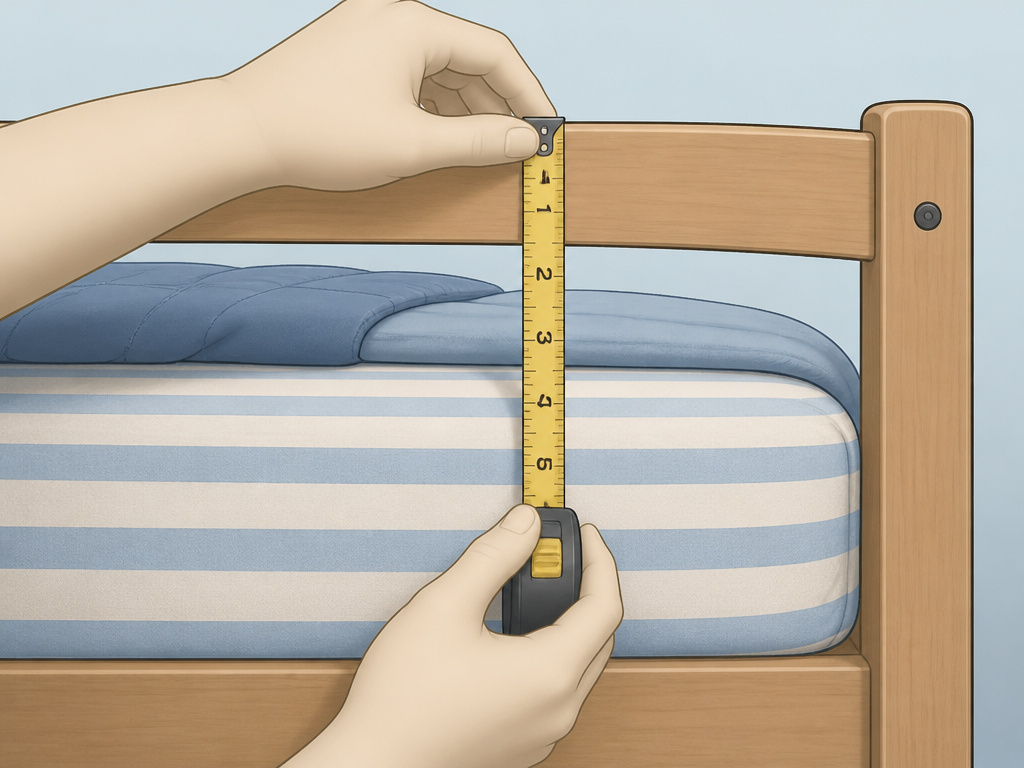 You cannot decorate around safety. You decorate within it. The U.S. federal bunk bed safety regulations, specifically 16 CFR Part 1213, set the physical boundaries your creativity must work inside. Ignoring them for a Pinterest look risks real injury.
The rules are specific, and they exist because kids have died. Your first decor step is a tape measure and a checklist.
Rule 1: Guardrail Clearance Is Sacred
The top edge of the upper bunk guardrail must be at least 5 inches above the top of the mattress. This is law for any bunk bed manufactured after June 2000. The guardrail is there to stop a rolling child from falling; if the mattress is too tall, the rail is useless.
Where this goes sideways: Adding a plush mattress topper or a folded quilt as a pad. A standard 6-inch mattress with a 2-inch topper puts the sleep surface at 8 inches. If your guardrail is only 11 inches tall, you now have just 3 inches of clearance. A child can roll over that.
How to decorate with this rule: Choose a low-profile mattress. Many bunk bed mattresses are designed to be 6 or 8 inches thick. Measure from the top of your chosen mattress to the top of the rail. If you have less than 5 inches, you need a thinner mattress. Your bedding choice matters too, a puffy, pillow-top comforter shoved against the rail counts as part of the sleep surface. Opt for fitted sheets and thinner, tighter-weave blankets.
Rule 2: The Frame Is Not a Mounting Point
The bed frame is for sleep, not for draping. The official safety standard for bunk beds explicitly warns against attaching or hanging items like canopies, ropes, belts, or swings to any part of the bunk bed. These create loops that can lead to strangulation.
How to decorate with this rule: If you want a canopy effect, attach it to the ceiling, not the bed. Use a secure ceiling hook in a stud, and ensure the fabric is taut, not loose or draping. All lighting, banners, or mobiles should be mounted on the wall or ceiling, with a safe distance from the bed.
Rule 3: Everything Must Be Securely Anchored
Wall shelves, art, light fixtures, and anything else you add must be firmly attached. A falling picture frame or a poorly mounted shelf is a hazard, especially for the child on the lower bunk.
How to decorate with this rule: Use wall anchors rated for the item’s weight, and drill into studs whenever possible. For lighter items like removable wall decals or posters, use safe mounting putty. Avoid glass frames. A good test: give any mounted item a firm tug after installation. If it wobbles or comes loose, it’s not safe.
| Decor Element | Safe Approach | Unsafe (and Why) |
|---|---|---|
| Canopy | Mounted to ceiling stud, fabric kept taut | Draped over guardrail (entanglement/strangulation) |
| Wall Art | Hung with proper anchors, away from bunk ladder | Leaning on furniture, glass frames (fall hazard) |
| Lighting | Plug-in wall sconces or ceiling-mounted fixtures | String lights woven through guardrails (chew/electrical hazard) |
| Storage | Under-bed bins, wall-mounted shelves | Hanging organizers from side rails (pull bed over) |
Match Your Decor Strategy to Your Bunk Bed Type
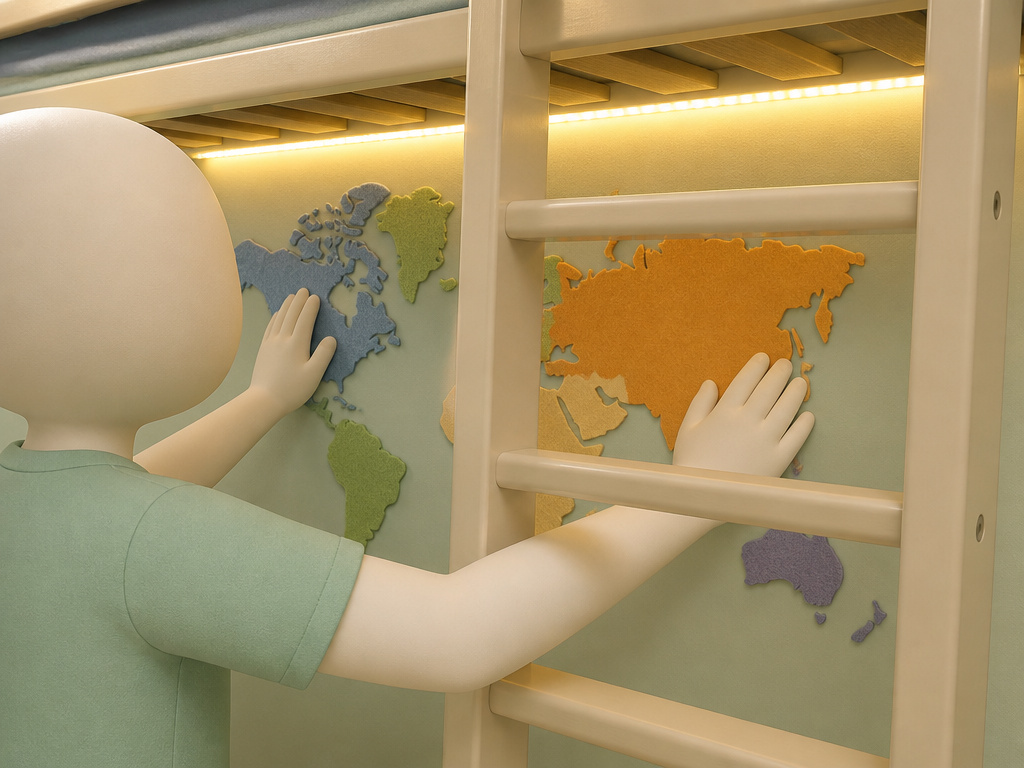 A twin-over-twin with a ladder demands a different plan than a bunk bed with stairs or a loft bed for kids. The access point and the footprint dictate where your decor energy should go.
Decorating Ladder-Access Bunks
The ladder is the focal point and a high-traffic zone. This area needs to be clear and safe. * Leave the ladder clear. Don’t hang anything on the ladder rungs. Don’t let bedding drape over it. This is a tripping and snagging hazard during nighttime climbs. * Use the wall behind the ladder. This is prime real estate for a fun, durable material. Consider peel-and-stick wallpaper on the wall behind the bunk, or a large, soft map or felt board that won’t hurt if bumped. * Light the path. Install a plug-in wall sconce or a motion-activated LED strip light under the upper bunk to illuminate the ladder steps without blinding the lower bunk occupant.
Decorating Bunk Beds with Stairs
Staircase bunks, like many bunk beds featuring staircases, offer built-in storage and a safer climb. Your decor can integrate with this structure. * Decorate the stair risers. Each step front is a small canvas. Use chalkboard contact paper, stick-on numbers, or your child’s artwork in clip frames. * Maximize under-stair storage. The drawers or cubbies are part of the decor. Use matching bins or baskets to keep toys and clothes contained, making the whole unit look tidy and intentional. * Create a reading nook at the bottom. If the stairs create a sheltered space below, add a small rug, a floor pillow, and a wall-mounted book rack to define a cozy corner.
Decorating Loft Beds and Bunks with Desk
A loft bed for kids or a bunk bed with built-in desk shifts the visual weight. The space underneath is the main event. * Define the zones. Use a different area rug to anchor the “play” or “study” zone under the loft. A small room divider or a back-to-front bookshelf can separate it from the rest of the room. * Light for function. The under-loft area will be dark. A good desk lamp for a study space bunk bed or a ceiling-mounted puck light for a play area is essential. Run cords along wall guards to outlets, never across the floor. * Keep the bed simple. Since the loft is high and prominent, let the bedding be a solid color or simple pattern. Let the vibrant decor happen in the usable space below, where it can be seen and touched.
Create a Cohesive Theme (That Can Change in an Hour)
Themes make a room fun, but kids’ tastes change fast. Build your theme with layers you can peel away, not paint you have to redo.
Start with the biggest, most neutral layer: the walls. Paint them a versatile color like light grey, creamy white, or soft sage. This background lets everything else pop and won’t clash with a future theme shift.
Add the temporary middle layer: wall decor and textiles. This is where your theme comes alive. 1. Removable wall decals are your best friend. They go on easy, come off clean, and can transform a wall from galaxies to dinosaurs in an afternoon. 2. Themed bedding sets for bunk beds define the look. You can have a space comforter, a jungle sheet set, and a solid duvet cover for rotation. This is the most cost-effective way to change the vibe. 3. Accent pillows and throw rugs add pops of color and texture. They’re easy to store when the theme changes.
Finish with the functional top layer: storage and lighting. These should be neutral but playful. * Use woven baskets, solid-colored bins, or clear acrylic organizers. They work with any theme. * Choose lighting with a clean shape, a geometric pendant or a simple wall lamp, and let the light color (via a smart bulb) set the mood. You can have blue for ocean adventures or green for a forest hideout.
The part nobody mentions: Let your child curate one “show-off” shelf. Dedicate a single wall shelf or a clear-front bin to their current obsession, rocks, action figures, Lego creations. This personal museum makes the room theirs and contains the clutter that would otherwise spread everywhere.
Smart Storage Solutions for Tight Spaces
Bunk beds are a space-saving choice, often used in bunk beds for small rooms. Good decor must include smart storage, or the room will descend into chaos.
First, look under the bed. The space under the lower bunk is a goldmine. Use low, wheeled bins that slide out easily. Label them with pictures or words so kids can help with cleanup. For a cleaner look, use a fitted bed skirt with discrete access slits.
Second, claim the vertical space. Walls are your storage shelves. * Install floating shelves high up, near the ceiling, for displaying special items like trophies or model ships. * Use pegboards on the wall beside the bed. They are endlessly configurable for hooks, baskets, and shelves to hold everything from hats to art supplies. * Hang a pocket organizer on the back of the bedroom door for small items.
Third, use multi-functional furniture. If you have space for one chair, make it an ottoman with storage inside. A bedside table should have drawers. Every piece needs to earn its footprint.
| Storage Spot | Solution | Best For |
|---|---|---|
| Under Lower Bunk | Wheeled plastic bins | Toys, out-of-season clothes, extra bedding |
| Guardrail (Exterior) | Never attach anything | N/A—this is a safety hazard |
| Wall Above Bed | Floating shelves | Books, lightweight decor, a small plant |
| End of Bed | Hanging fabric organizer (on wall, not bed) | Stuffed animals, pajamas |
| Corner | Tall, narrow bookcase | Books, baskets, a small lamp |
Lighting Choices That Set the Mood and Keep Sleep On Track
Lighting in a bunk bed room serves two masters: it needs to be fun and functional for play, but also support winding down for sleep. Overhead lights often fail at both.
Give each bunk its own light. The child on top needs light to read; the child on bottom needs darkness to sleep. Individual, directional lights are the answer. * Clip-on reading lights that attach to a book or the guardrail (making sure the cord is secured away from sleep space). * Wall-mounted swing-arm lamps installed on the wall beside each bunk. They can be aimed exactly where needed. * Battery-operated LED tap lights stuck underneath the upper bunk frame. They provide a soft glow for the lower bunk without being blinding.
Incorporate smart ambient lighting. LED strip lights are popular for a reason. Adhere a strip to the back of the bunk bed frame (not on the guardrail) or along the top of the baseboard to create a soft, indirect glow. Use smart plugs or color-changing bulbs to set a “calm down” color like amber or dim blue an hour before bedtime.
Easy to miss: Nightlights are a safety feature for navigating a room at night, but their blue-spectrum light can disrupt sleep. Use a red or orange-toned nightlight plugged into an outlet near the floor. It provides enough light to see without signaling the brain to wake up.
How to Evolve the Decor as Your Child Grows
The nursery-to-teen-room transition is expensive if you start from scratch each time. The bunk bed room you design today should have a growth plan.
Ages 3-6: Bold and Simple. Themes are literal (trucks, fairies). Focus on safety and durability. Use rug pads, soft wall decor, and bedding that can be washed weekly. Storage should be open and easy, low bins they can access themselves.
Ages 7-10: Interest-Based. Kids develop specific passions. This is the prime time for those removable wall decals and collectible displays. Introduce more responsibility with labeled storage and a dedicated study area, perhaps with a bunk bed incorporating a desk. Lighting becomes important for homework and crafting.
Ages 11+: Personality and Privacy. The bunk bed might become a loft bed for kids with a seating area below, or one bunk may be removed. Themes become more about color palettes and textures, think band posters, string lights, and more sophisticated bedding. Storage needs to be more discreet (closed cabinets, under-bed drawers). Ensure their individual lighting is good for late-night reading.
The key is to anchor the room with flexible, quality pieces, the bunk bed itself, a sturdy dresser, good lighting fixtures, and let the cheaper, easier-to-swap layers (paint color, bedding, wall art) do the heavy lifting of change.
Frequently Asked Questions
What is the safest way to hang things near a bunk bed?
The safest way is to not hang things from the bunk bed. Use the wall. For posters or light art, use mounting putty or painter’s tape. For shelves, mirrors, or heavier art, you must use wall anchors and drill into studs. Always keep any hanging item well away from the ladder and any climbing path.
Can I use a bed skirt or canopy on a bunk bed?
You can use a bed skirt on the lower bunk if it is fitted and does not create a tripping hazard. For the upper bunk, a bed skirt is not recommended as it can interfere with the bed’s structure. A canopy is only safe if it is mounted securely to the ceiling, not attached to the bed frame, and the fabric is kept taut to avoid loops.
How do I choose bedding that fits and is safe?
Check your bunk bed manual for the exact mattress dimensions. Bunk bed mattresses are often a specific length and width. Buy sheets labeled for that size (e.g., “Twin XL” for a 75-inch mattress). Avoid oversized comforters or quilts that bunch up and reduce guardrail clearance. Fitted sheets and lightweight blankets or duvets are safest.
Are there themes that work better for bunk beds than others?
Themes that utilize vertical space and wall decor work brilliantly. Space, jungle, castle, or underwater themes are great because you can use wall decals, hanging mobiles (from the ceiling), and bedding to create the look without cluttering the sleep space. Avoid themes that rely on lots of floor-based figurines or loose, small items that become tripping hazards.
My kids share a room with bunk beds but want different themes. How do I handle that?
Let each child claim their “bunk zone.” They can choose their own bunk bed sheets and comforter. Use the wall behind each bunk for their preferred decals or a small poster. A shared, neutral color on the main walls and a fun, mix-matched rug can tie the two themes together happily. Individual bedside caddies or shelves let them personalize their immediate space.
Before You Go
Decorating a kids bunk bed is a puzzle with safety as the border. Every choice, from mattress thickness to the stickiness of a wall decal, fits inside that frame. The goal is a functional, joyful space that lets kids feel ownership, supports their sleep, and adapts as they leap from one childhood passion to the next. Start with a tape measure, respect the guardrail, and build your layers from there.The rest is just fun.
