
Learn How to Choose a Duvet Insert | Key Factors Explained
This post contains affiliate links. As an Amazon Associate we earn from qualifying purchases.
To choose a duvet insert, match five specs to your sleep and climate: fill type (down, wool, synthetic), fill power (550-800+), fill weight in GSM (150-500+), construction (baffle-box or box stitch), and exact size. The insert must match your duvet cover’s dimensions, not your mattress size. For most Canadian bedrooms, an all-season wool insert or a 600-750 fill-power down insert handles the full year.
That match between insert and cover is the whole game. Get it wrong by one size and the insert slides into a corner every night. Get the fill weight wrong and you’re either sweating by 2 AM or reaching for an extra blanket.
What follows is the decoder ring for the labels. We’ll walk through the five specs that actually matter, how Canadian climate forces a specific compromise, and why your kid’s organic kids bedding deserves an insert that lasts more than three winters.
Key Takeaways
- Match sizes exactly. A queen insert belongs in a queen cover. Mismatching guarantees nightly bunching and cold spots.
- Fill power measures loft, not warmth. A 750 fill-power down is lighter and fluffier than 550, but a 550 with higher fill weight (GSM) can be warmer.
- Synthetic fills have a short lifespan. They compress and lose insulation in 3 to 5 years; a quality down or wool insert lasts 10 to 15.
- Baffle-box construction is best for loft, but box stitch is often preferred for all-season inserts as it prevents overheating.
- Consider two inserts. For regions like Brantford with hot summers and cold winters, swapping between a lightweight and a winter insert beats one compromised all-season piece.
The 5 Specs That Decide Warmth and Longevity
Forget style first. The tag holds the data that determines whether you sleep comfortably for a decade or shop again in three years.
The two numbers that confuse everyone are fill power and fill weight. They are not the same.
Fill power measures loft quality—the volume one ounce of down occupies. Fill weight (GSM) is the total amount of fill in the insert. A high fill power (750+) with a low fill weight (250 GSM) makes a light, fluffy summer piece. A moderate fill power (600) with a high fill weight (400 GSM) makes a denser, warmer winter duvet.
Fill power runs from 550 to 850 and beyond. See 550-650 as good, 700-800 as excellent, and anything above 800 as premium luxury down. Higher numbers mean better loft with less weight, not necessarily more warmth.
Fill weight is measured in grams per square meter (GSM). This is the warmth dial. – 150-300 GSM: Lightweight for summer or hot sleepers. – 300-500 GSM: Mid-weight for all-season use. – 500+ GSM: Heavyweight for winter.
Fill type breaks into three camps. Down is the gold standard for lightweight warmth but requires careful washing. Wool regulates temperature in both directions and is naturally hypoallergenic, making it a superb choice for bedding for kids with allergies. Synthetic is budget-friendly and machine-washable, but it packs down permanently.
Construction is how the shell holds the fill. Baffle-box uses fabric walls between stitch lines to maximize loft and prevent shift. Box stitch creates small, uniform pockets that limit shift but can feel less fluffy. Some argue box stitch is better for all-season inserts because baffle-box can trap too much heat.
Shell material is the fabric you don’t see. A tight, down-proof weave like cotton percale or sateen keeps feathers in and feels breathable. A cheap poly shell feels clammy.
| Spec | What It Means | The Trade-Off |
|---|---|---|
| Fill Power (e.g., 750) | Loft & quality of down | Higher = lighter, fluffier, more expensive. Does not equal warmth. |
| Fill Weight (e.g., 350 GSM) | Total amount of fill | Higher = warmer. The primary warmth control. |
| Baffle-Box Construction | Fabric walls between stitches | Maximizes loft, minimizes cold spots. Can be too warm for hot climates. |
| Box Stitch Construction | Small, stitched-through pockets | Prevents fill shift, often more affordable. Can feel less lofty. |
| Organic Cotton Shell | Natural, breathable outer fabric | More durable and comfortable than polyester. Usually costs more. |
Your choice here dictates the insert’s lifespan. A quality down or wool insert lasts 10 to 15 years. A synthetic insert lasts 3 to 5 years before the fill compresses and stops insulating evenly.
The Sizing Rule That Stops Bunching Cold
This is the step every hurried buyer skips. They buy a king insert for a king bed. The problem is their duvet cover is a queen.
Match the insert to the cover, not the bed. If your duvet cover is queen, buy a queen insert. Mismatching by even one size guarantees the insert will slide and bunch inside the cover, creating thin spots and cold patches.
Standard Canadian duvet insert sizes are: – Twin: 64 x 86 inches – Double: 76 x 86 inches – Queen: 90 x 95 inches – King: 104 x 95 inches
There are two valid reasons to size up. First, if you share a bed with a cover thief, using a queen insert and cover on a double bed creates overhang. Second, if you want a dramatically fluffy, overstuffed look, some guides suggest buying the insert one size up from the cover.
Just don’t mix sizes between the insert and its cover. That never works.
The right fit also matters for specialty beds. If you’re sourcing loft bed bedding, a duvet that’s too long will drape onto the ladder or desk below.
Down vs. Wool vs. Synthetic: The Real Sleep Difference
This isn’t about price. It’s about how each material manages moisture, heat, and the next eight years.
Down (goose or duck) is the benchmark. It offers the best warmth-to-weight ratio. It’s also the most finicky. Down must be kept dry, requires a large front-load washer for cleaning, and needs dryer balls to re-loft. For a winter-only layer in a dry climate, it’s unmatched. The Canadian Hutterite down duvet is a classic example.
Wool is the regulator. It wicks moisture, breathes deeply, and naturally resists dust mites. It provides warmth without the heat-trapping feel of down, which is why all-season wool inserts are a frequent recommendation for Canadian climates. It’s often machine-washable. For a child’s room where temperature swings are common, wool is a smart, durable foundation for any kids bedding sets.
Synthetic (polyester clusters or microfiber) is the practical choice. It’s hypoallergenic, machine-washable, and affordable. The trade-off is longevity and loft. The fibers break down and flatten within a few years. It can also feel less breathable, trapping heat and moisture. It’s a good fit for a guest room, a toddler bedding setup you know will be outgrown, or as a summer piece you store most of the year.
| Fill Type | Best For | Wash Care | Expected Lifespan |
|---|---|---|---|
| High-Fill-Power Down | Cold, dry winters; maximum loft | Professional clean or front-load washer with dryer balls | 10–15 years |
| Wool | All-season use; hot sleepers; allergy sufferers | Usually machine-washable; check tag | 8–10 years |
| Synthetic | Budget; strict washing needs; guest rooms | Machine wash and dry | 3–5 years |
The part nobody mentions: Your indoor climate matters. Health Canada recommends 30-50% humidity. Down loses loft in high humidity. Wool handles it fine. If your bedroom runs damp, wool or synthetic is the safer bet.
How to Match an Insert to Your Canadian Climate
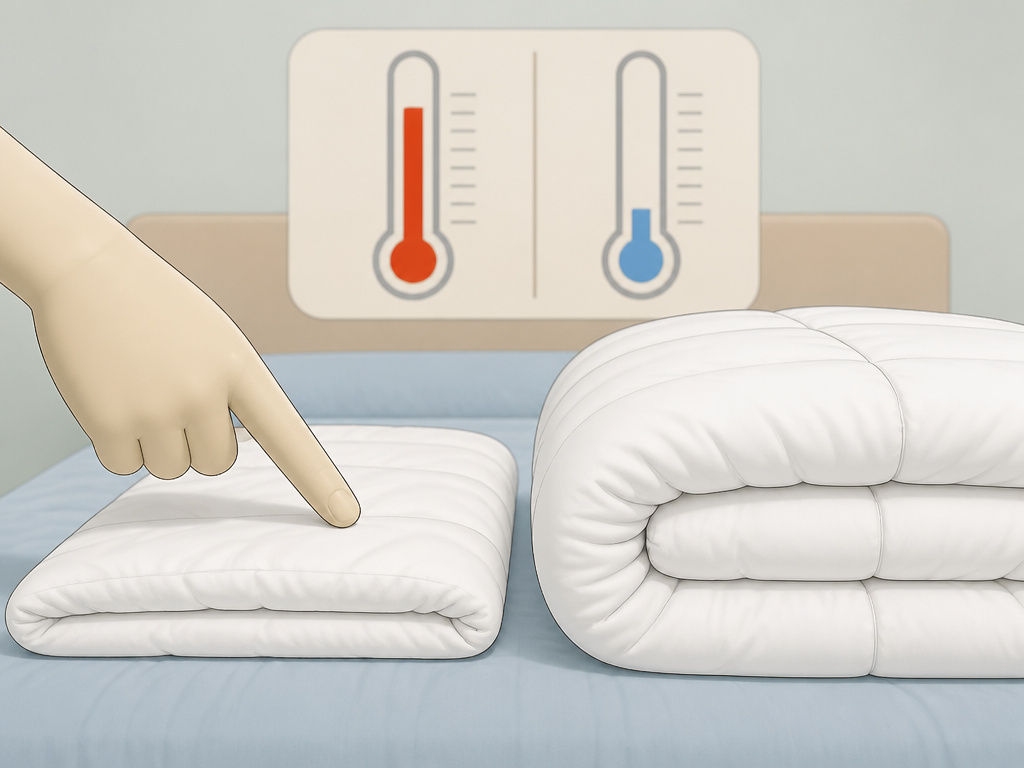 Most guides talk about “all-season” weight. In Canada, that term is stretched thin. Brantford sees humid Julys and dry, cold Februaries. Shoulder seasons swing 15 degrees in a day.
The Canadian Sleep Society links a cool bedroom (16–19°C) with better sleep. Your insert can’t fight that biology.
You have two honest paths: 1. The One-Insert Compromise: Pick a true all-season weight (300-400 GSM). For down, that’s a 600-750 fill power. For wool, it’s an all-season rating. This works if your thermostat is consistent and you sleep in light pajamas. 2. The Two-Insert Swap: Use a lightweight insert (150-250 GSM) for summer and a winter insert (450+ GSM) for winter. This is more hassle but delivers ideal comfort year-round. It’s the choice of most households that have the storage space.
Where this goes sideways: Buying a “winter weight” synthetic insert for a child who overheats. By February, the compressed fill feels flat and the poly shell traps sweat. You’re shopping again next fall.
Hot sleepers should lean into wool or lightweight down with a breathable cotton or linen duvet cover. The fabric of the cover is half the battle for temperature regulation.
Care and Lifespan: Making an Insert Last a Decade
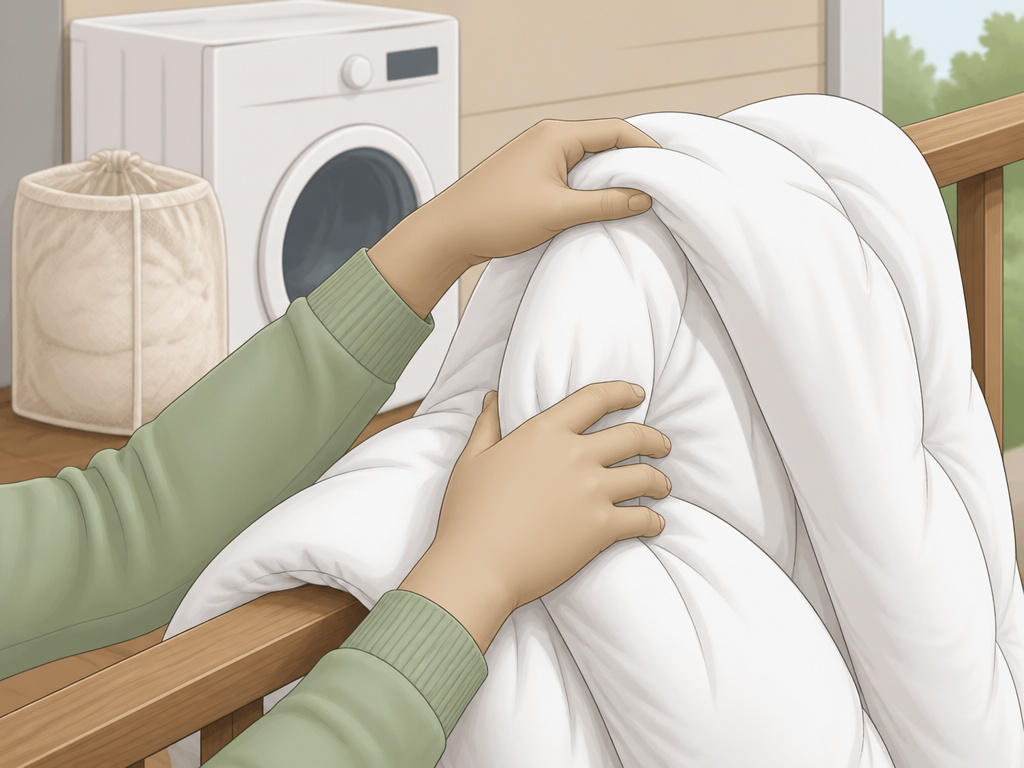 A duvet insert isn’t a comforter. You rarely wash it. The cover takes the weekly wear. This is why buying a separate insert makes sense.
Fluff and air your insert every week or two. Hang it over a chair or balcony railing for an hour. This restores loft and releases moisture.
Wash only when necessary. For down, this might be once every few years. Use a large, front-loading washer on a gentle cycle with a down-specific detergent. Top-loaders with agitators tear the clusters. Tumble dry on low heat with clean tennis balls or dryer balls to break up clumps.
Wool and synthetic inserts are often machine-washable. Always use cold water and a gentle cycle. Check the tag—some wool can felt if washed incorrectly.
Store it properly. In the off-season, keep your insert in a large, breathable cotton storage bag—never a plastic bin. Plastic traps moisture and can mildew down or wool.
This care routine is what gets a down insert to its 15-year potential. Treat it like a pillow, not a sheet.
Frequently Asked Questions
What is the difference between a duvet insert and a comforter?
Duvet insert is designed to go inside a removable cover. A comforter is a standalone, decorative blanket. Inserts are plain white and functional; comforters have patterned fabric. The insert-and-cover system lets you wash the cover weekly and change your style without replacing the warm layer.
Can I use a duvet insert without a cover?
Technically, yes. Practically, it’s a bad idea. The insert will get dirty quickly, is harder to wash, and lacks the style or added softness of a cover. The entire point of the system is the removable, washable duvet covers.
How do I keep my duvet insert from sliding inside the cover?
Use the corner ties. Most quality duvet covers have fabric loops in each corner. Your insert should have corresponding fabric tabs or loops. Tie them together. If your insert lacks tabs, you can safety-pin the corners of the insert to the corners of the cover from the inside. This solves 90% of bunching problems.
Is a higher fill power always better?
Not always. Higher fill power (800+) is lighter and fluffier, but it’s also more expensive and can be too lofty for some sleepers or bed frames. For most people, a 600-750 fill power offers the best balance of performance, loft, and value. The fill weight (GSM) is a more important indicator of warmth.
What is the best duvet insert for a child’s bed?
Prioritize safety, washability, and breathability. A mid-weight wool insert is excellent for temperature regulation and is naturally hypoallergenic. A high-quality synthetic insert is also a good, affordable choice for bedding for toddlers, as it’s easy to wash and can be replaced as they grow. Avoid heavy, overly warm inserts for young children.
The Bottom Line
Skip the fluff and start with the tag. Find the fill weight (GSM) that matches your season, then the fill type that fits your care routine and budget. Remember the cardinal rule: the insert’s dimensions must match your cover’s dimensions, line for line.
For the simplest single answer for a Canadian bedroom: an all-season wool insert. It breathes in July, insulates in January, and outlasts three synthetic ones. Pair it with a 100% cotton or linen cover, use the corner ties, and fluff it every other week. That system gets you a decade of quiet nights.
If you’re layering for a teen’s evolving style, remember that a great insert is the foundation for any teen bedding look. They can change the cover as often as they like; the warmth stays consistent.
