
Can an Infant Sleep in a Crib? Key Federal Rules to Follow
This post contains affiliate links. As an Amazon Associate we earn from qualifying purchases.
Yes, an infant can and should sleep in a crib—but only in a crib that meets three specific, non-negotiable federal safety standards. The crib must comply with ASTM F1169-25 (the full-size crib standard codified in 16 CFR Part 1219), have slats spaced no more than 2-3/8 inches apart, and provide a firm, flat sleep surface with no incline. A product marketed as a “crib” that fails any of these points is not safe for infant sleep.
That distinction between a crib and a safe crib is the line between a regulated sleep environment and an unregulated hazard. The Consumer Product Safety Improvement Act of 2008 forced the issue, and the current standard (ASTM F1169-25, approved December 15, 2025) is what manufacturers must build to. Your job is to verify.
What follows: the three federal rules, the physics behind a firm mattress, the documented risks of used and non-compliant cribs, and how to check your own setup against the code.
Key Takeaways
- The only legally safe crib for an infant in the US is one built to ASTM F1169-25, as mandated by 16 CFR Part 1219. Look for a certification label.
- Crib slat spacing must be under 2-3/8 inches. A wider gap lets an infant’s head become entrapped—a leading cause of suffocation in unsafe sleep environments.
- Inclines over 10 degrees are banned for sleep. A CPSC-commissioned expert report found no inclined sleep product safe for infants; this led to the June 2021 rule requiring all infant sleep products to meet crib, bassinet, or play yard standards.
- Used cribs are a high-risk category. Missing hardware, unavailable instructions, and outdated designs that no longer meet code are responsible for documented infant deaths.
- Room-sharing for the first 6-12 months on a separate, safe surface reduces the risk of Sudden Unexpected Infant Death (SUID) by as much as 50%.
The 3 Non-Negotiable Crib Safety Rules (From the CPSC)
Forget generic “crib safety” lists. The law is specific. The full-size crib safety standard, known as 16 CFR Part 1219, incorporates by reference one document: ASTM F1169-25, Standard Consumer Safety Specification for Full-Size Baby Cribs. If a crib doesn’t comply with this standard, it cannot be sold as a full-size baby crib in the United States. Your first check is for a label or mention of this standard.
Where this goes sideways: Assuming a new crib is automatically compliant. Retailers sometimes sell “mini cribs” or “portable cribs” that follow different standards (ASTM F406). For a primary sleep space, you need a full-size crib that explicitly meets F1169-25.
The standard dictates hundreds of design and performance tests, but three rules are your immediate, visual checkpoints.
- **Bar Spacing: 2-3/8 Inches Maximum.This is a pass/fail test in the standard. Use a tape measure.If the gap between any two slats is wider than 2-3/8 inches (about the width of a soda can), an infant’s head can fit through but their body cannot, leading to entrapment and strangulation. This measurement is non-negotiable.
- Firm, Flat Mattress with No Gaps. The mattress must be specifically designed for the crib model. When you press the center and edges, there should be no significant give. There must be no gaps larger than two fingers’ width between the mattress and the crib frame where an infant could become wedged. The surface cannot be inclined.
- No Drop-Sides. This is a historical but critical point. The CPSC banned the manufacture and sale of drop-side cribs in 2011. Their moving parts can fail, creating a dangerous gap where an infant can become trapped and suffocate. If you are considering a used crib, a drop-side is an instant disqualifier.
| Rule | What to Look For | Risk If Violated |
|---|---|---|
| ASTM F1169-25 Compliance | Label on crib or in manual stating compliance. | Crib may have untested structural flaws, sharp edges, or hazardous hardware. |
| Slat Spacing ≤ 2-3/8 in. | Tape measure confirms gap. | Head entrapment, leading to strangulation or positional asphyxia. |
| Firm, Flat Mattress Fit | No gaps >2 fingers; mattress doesn’t compress easily. | Infant can roll into gap and suffocate; soft surface increases re-breathing risk. |
| No Drop-Sides | Fixed, stationary sides only. | Hardware failure creates a dangerous V-shaped gap, a documented cause of death. |
These rules are written in response to specific, documented infant fatalities. The CPSC Safe Sleep campaign exists because these hazards are real and predictable.
Why a Firm, Flat Mattress Isn’t Just Advice—It’s Physics
The “firm and flat” directive is the most misunderstood part of safe sleep. Parents often think a softer surface is more comfortable. For an infant, it’s a physiological hazard.
An infant’s airway is soft and easily obstructed. On a soft surface, their head can sink in, causing their chin to tilt toward their chest. This kinks the trachea. It also allows them to re-breathe their own exhaled carbon dioxide, which can pool in the mattress fabric around their face. A firm surface prevents both by keeping the head in a neutral position and allowing air to circulate.
A 2023 AAP technical report on the evidence base for safe sleep describes the “triple risk model” for SIDS: an exogenous stressor (like a soft sleep surface), during a critical developmental period (1-4 months), meeting an intrinsic vulnerability (an immature cardiorespiratory system). A firm mattress removes one of the three legs of that model.
This is why inclined sleepers are illegal for infant sleep. In 2021, the CPSC passed a rule stating any product marketed for sleep for infants under 5 months must meet the existing standards for cribs, bassinets, or play yards. An independent expert hired by the CPSC conducted infant testing and demonstrated that no inclined sleep product was safe. The report concluded that any incline over 10 degrees significantly increases the risk of suffocation.
Your crib mattress must be flat. If it came with a wedge or pillow, throw it away. The same goes for any “napper” or “lounger” with an inclined back. They are for supervised awake time only.
The Used Crib Dilemma: When “Perfectly Good” Isn’t Good Enough
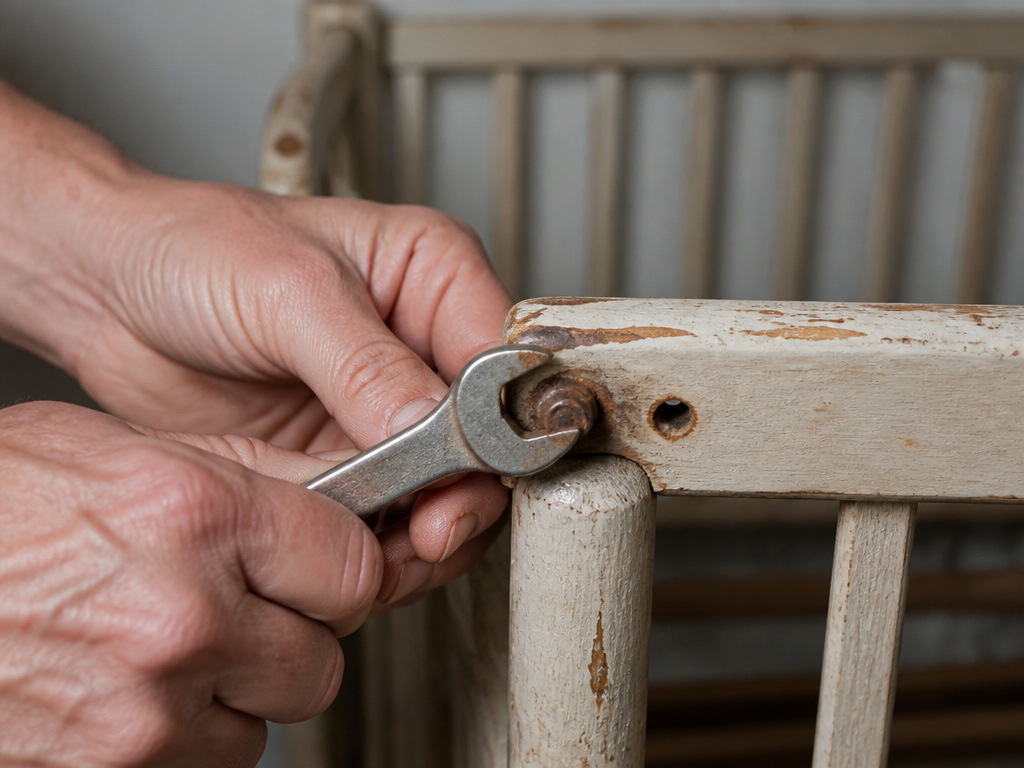
The American Academy of Pediatrics recommends new cribs. This is a safety stance born from incident data.
Common mistake: Accepting a hand-me-down crib that “looks fine.” The AAP’s 2022 policy statement notes that many deaths have occurred in cribs that were broken, had missing parts, or were incorrectly assembled.
A used crib presents three concrete risks: 1. Missing or Non-Compliant Hardware. Over time, bolts strip, screws get lost, and replacement parts from a hardware store are not tested to the crib’s original safety standard. A wobble you can’t fix is a failure point. 2. Outdated Design. Crib safety standards evolve. A crib from 2008 does not meet the 2025 standard. It may have wider slat spacing, different mattress support requirements, or toxic finishes since banned. 3. Recall Status. The crib could be subject to an unaddressed recall. You must check the model number on the CPSC website.
If you must use a used crib, your checklist is non-negotiable: * Locate the model number and check for recalls. * Have the original assembly instructions and all original hardware. * Verify slat spacing is under 2-3/8 inches. * Confirm it is NOT a drop-side crib. * Ensure the structure is rigid with no loose joints, cracks, or splinters.
Missing even one item on that list means the crib is not safe. The cost of a new, compliant crib mattress is far lower than the risk.
Room-Sharing vs. Bed-Sharing: What the 50% Risk Reduction Actually Means

You will hear “room-sharing reduces SIDS risk by 50%.” This statistic comes from the AAP safe sleep policy statement. It means infants sleeping in a separate, safe surface in the parents’ room have half the risk of SUID compared to infants sleeping in a separate room.
The mechanism is thought to be lighter parental sleep, easier monitoring, and more synchronous arousals between parent and infant. The recommendation is for at least the first 6 months, ideally for the first year.
Bed-sharing is different. The AAP cannot recommend bed-sharing under any circumstances due to the risk of overlay, entrapment, and suffocation from adult bedding. The risk is magnified if the parent is fatigued, has consumed alcohol, or if the infant is preterm. Couches and armchairs are exceptionally dangerous.
The safe setup is a compliant crib, bassinet, or bedside sleeper placed within arm’s reach of your bed. This allows for easy feeding and comforting while maintaining a safe, separate sleep surface for the infant. For newborns, a bassinet that meets CPSC standards can be an excellent room-sharing option before transitioning to a full-size crib.
Assembling and Maintaining a Safe Sleep Zone
A safe crib is the centerpiece, but the environment around it matters just as much. Follow this list every time you put your infant down.
What’s IN the Crib (The Bare Necessities):
- A firm, flat mattress for an infant covered by a tight-fitting, fitted crib sheet.
- The infant, placed on their back.
- That’s it.
What’s OUT of the Crib (The Zero-Tolerance List):
- Soft Bedding: Blankets, quilts, pillows, comforters, and stuffed animals. For warmth, use a wearable blanket or sleep sack.
- Bumper Pads: Mesh or padded. All pose entrapment, strangulation, and suffocation risks and are not recommended.
- Monitoring Devices: Cardiorespiratory monitors, wedges, positioners, or any product claiming to reduce SIDS risk. These are not proven effective and can create a false sense of security.
Crib Placement & Environment:
- Place the crib away from windows, blinds, cords, and electrical outlets.
- Ensure the room temperature is comfortable for a lightly clothed adult (68-72°F). Overheating is a risk factor.
- Offer a pacifier at nap and bedtime once breastfeeding is established (it does not need to be reinserted if it falls out).
A waterproof protector is acceptable if it is tight-fitting and does not create a soft, padded layer on top of the mattress. Look for a protector that is breathable and specifically designed for cribs.
Frequently Asked Questions
What if my baby rolls onto their stomach in the crib?
Once an infant can roll from back to front and front to back independently (usually around 4-6 months), you should still place them on their back to sleep. If they roll onto their stomach during sleep, you do not need to reposition them. Their newfound mobility reduces the risk, but the back-to-sleep position for initiation remains critical.
Can I use a crib that’s older than 10 years?
It is strongly discouraged. Crib standards have undergone significant changes, especially with the 2011 ban on drop-sides and subsequent updates to hardware, slat strength, and mattress support. An older crib is very unlikely to meet the current legal crib requirements text of ASTM F1169-25. The risk of undetected wear, fatigue, or non-compliance is high.
Are all crib mattresses created equal?
No. A safe crib mattress must be firm, flat, and fit your specific crib model with no gaps. Beyond that, parents may choose between inner-spring and foam cores, and may prioritize organic crib mattress or non-toxic crib mattress materials. Regardless of material, the firmness and fit are the non-negotiable safety specs.
When is it safe to add a blanket or lovey?
The AAP recommends keeping the crib free of all soft objects until at least 12 months of age. Some experts suggest waiting until the child is transitioned to a toddler bed (around 2.5-3 years old), when they have the motor skills to reliably push objects away from their face. A small, breathable security blanket may be introduced after 12 months if you are comfortable with the risk, but large blankets or plush toys should still be avoided.
How do I know if my crib’s mattress is firm enough?
Conduct the “hand test.” Press firmly on the center of the mattress and around the edges. The mattress should snap back immediately and you should not be able to contour your hand around its surface. There should be no visible indentation after you remove your hand. If it feels plush or memory-foam-like, it is not firm enough for infant sleep.
The Bottom Line
An infant can sleep safely in a crib—a specific, regulated, full-size crib that complies with ASTM F1169-25. Your checklist is short but absolute: measure the slats, verify the standard, ensure a firm flat fit, and keep the sleep space bare. This is about adhering to a code written in response to real losses.
The guidelines from the CDC safe sleep guidelines and the AAP all funnel into this same set of physical rules. Your job is to execute them without compromise. Choose a new, compliant crib and a matching firm mattress. Set it up in your room. Then place your baby on their back, and let them sleep.
