
Your Guide on How to Choose a Safe Baby Blanket | Key Tips
This post contains affiliate links. As an Amazon Associate we earn from qualifying purchases.
To choose a baby blanket, match three things: the product’s intended use (sleep, play, or stroller), its compliance with safety standards like ASTM F15.19, and its material’s breathability and weight. For sleep, a wearable blanket or sleep sack is the only safe choice under one year of age. The CPSC found weighted wearable blankets can concentrate 0.0846 pounds per 10.6 square inches on an infant’s chest, over triple the weight of non-weighted options, a risk factor not yet capped by current standards.
That weight concentration figure isn’t a hypothetical. It comes from a 2023 U.S. Consumer Product Safety Commission market scan of 108 products, a direct measurement that revealed a regulatory gap. The current ASTM ballot for wearable infant blankets lacks maximum weight limits, meaning a dangerously heavy product could technically pass.
What follows: a breakdown of that CPSC data, the three blanket standards that actually matter, the material science behind “breathable,” and how to decode product labels for real safety, not just marketing claims.
Key Takeaways
- Sleep requires a wearable blanket. Loose blankets, quilts, and comforters are not safe in a crib for babies under 12 months due to suffocation risk. A fitted sleep sack is the standard.
- Weight limits are missing from the rulebook. The proposed ASTM F15.19 standard for wearable blankets does not set maximum weight, a gap the CPSC explicitly warned could allow “an extremely heavy weight” product to meet the code.
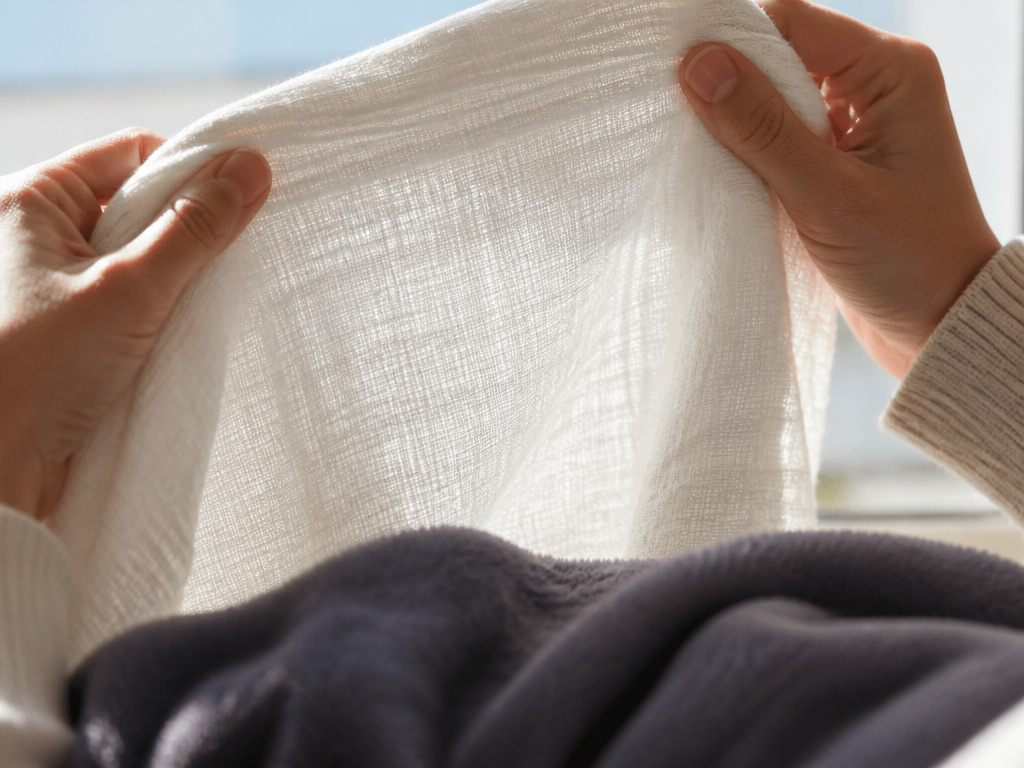
- “Breathable” means a visible weave. Hold the fabric up to a light. If you can see through the gaps in the knit or weave, air passes through. Tight, solid fabrics like fleece or minky are not breathable.
- General blanket standards exclude infants. ASTM D5432 covers thermal blankets for household use but explicitly does not include electric blankets or address infant-specific suffocation hazards. Infant products fall under separate, stricter scrutiny.
- The chest-weight number is the tell. The CPSC measured weight concentrated on a 10.6 square inch area to simulate chest pressure. Non-weighted blankets ranged from 0.0035 to 0.0245 lb/10.6in²; weighted samples hit 0.0288 to 0.0846 lb/10.6in².
The Regulatory Gap: Why “Safe” on the Tag Might Not Mean Safe
The most important step in choosing a baby blanket happens before you touch a single product. You need to know which rules apply, and, critically, which ones don’t exist yet.
Where this goes sideways: Assuming all baby blankets sold in the U.S. Meet a strict, government-enforced safety standard for infant sleep. For wearable blankets and swaddles, the key standard (ASTM F15.19) is still in ballot, and its current draft lacks a maximum weight limit, a flaw regulators have publicly criticized.
The ASTM F15.19 standard is the one manufacturers reference for wearable infant blankets and swaddles. It’s a voluntary standard developed by industry experts, but it carries weight because retailers often require compliance. The CPSC, however, voted negatively on the 2023 ballot. Their staff comments state the standard “could sell a wearable blanket or swaddle with an extremely heavy weight in it and still meet the standard.” They recommended establishing weight concentration limits, citing concerns from the NIH and CDC that weighted blankets are not safe for infants.
This is not a minor technicality. It means a blanket marketed as “ASTM compliant” for a 0-6 month old could, within the letter of that standard, be several times heavier than a typical non-weighted product. The burden of identifying that risk shifts to you.
Separately, ASTM D5432 is the general performance specification for household blankets. It covers durability, shrinkage, and colorfastness for woven or knitted blankets. It explicitly “does not include requirements for electric blankets” and is not designed to address infant sleep safety hazards like suffocation or entanglement. A cozy throw blanket might meet this standard but be utterly unsafe in a crib.
Your first filter, then, is intent. Is this for sleep in a crib, bassinet, or play yard? If yes, you are shopping for a wearable sleep sack that should comply with ASTM F15.19, and you must be aware of the weight gap. Is this for supervised play, tummy time, or stroller use? Then a standard blanket meeting ASTM D5432 may be appropriate, provided it’s used only under direct watch.
The Hidden Numbers in a CPSC Market Scan
The CPSC’s 2023 market scan gives us the first concrete numbers to compare weighted and non-weighted wearable blankets. They conditioned 93 non-weighted and 15 weighted samples (all marketed for 0-12 months) to a standard temperature and humidity, then measured two things: total weight and concentrated chest weight.
| Measurement | Non-Weighted Blankets (Range) | Weighted Blankets (Range) |
|---|---|---|
| Total Weight (oz) | 2.82 – 3.53 oz | 6.70 – 8.11 oz |
| Chest Weight (lb/10.6 in²) | 0.0035 – 0.0245 lb | 0.0288 – 0.0846 lb |
The chest-weight measurement is the critical one. It uses a 10.6 square inch area to approximate the pressure on an infant’s chest region. The heaviest weighted sample (0.0846 lb/10.6in²) exerted over 24 times more pressure than the lightest non-weighted sample (0.0035 lb/10.6in²). Even at the low end of the weighted range, the pressure is roughly double the high end of the non-weighted range.
Why does chest weight matter? Infant respiratory muscles are weak. Added pressure can restrict chest wall movement, making breathing more laborious. In a deep sleep, that extra work could become dangerous. The CPSC staff noted this differentiation as a key reason to establish weight limits, which the current ASTM ballot lacks.
When you evaluate a wearable blanket, heft it in your hand. Does it feel surprisingly dense or heavy for its size? Compare it to a basic, non-weighted Halo SleepSack or Burt’s Bees Beekeeper. The difference should be obvious. If a product is marketed as “weighted” or “calming,” check if it specifies the total weight and the age range. Without those specs, it’s a skip.
Material & Weave: What “Breathable” Actually Means
Material choice is about managing two things: temperature and moisture. A baby who overheats is at higher risk for SIDS. A damp blanket against skin can lead to irritation and chill.
“Breathable” is a marketing term, but it has a physical test. Hold the blanket up to a bright light or window.
- GOOD (Breathable): You see light passing through the tiny gaps between threads. Cotton muslin, with its loose, gauzy weave, is the classic example. Lightweight cotton knits and certain bamboo blends also pass this test.
- BAD (Not Breathable): The fabric blocks light completely, appearing solid. Plush fleece, minky dot, and heavy polyester quilts fail this test. They trap heat and moisture against the skin.
The part nobody mentions: A breathable blanket feels cool to the touch initially. A non-breathable one often feels warm or clingy straight off the shelf. Run the back of your hand across the fabric. The one that feels cooler is moving air.
Here’s a quick guide to common materials:
| Material | Best For | Watch Out For |
|---|---|---|
| Cotton Muslin | Everyday sleep, warm climates. Light, breathable, durable. | Can feel rough if low-quality; soften with washes. |
| Cotton Knit | Year-round sleep sacks, swaddles. Soft, stretchy, breathable. | Stretch can loosen over time, affecting swaddle security. |
| Bamboo Viscose | Sensitive skin, temperature regulation. Silky, moisture-wicking. | Often more expensive; requires gentle washing. |
| Microfiber | Stroller blankets, car seats. Lightweight, packable, soft. | Not breathable. Never use for unsupervised sleep. |
| Fleece / Minky | Supervised play, cold-weather stroller rides. Very warm, soft. | Not breathable. Overheats quickly during sleep. |
For a primary sleep blanket, stick to natural fibers like cotton or bamboo. They regulate temperature better than synthetics. Our guide to the best organic baby blankets details specific brands that prioritize these materials.
Size, Fit, and the Wearable Blanket Mandate

For babies under one year, size isn’t about length and width. It’s about the fit of a wearable blanket or sleep sack. A loose blanket is a hazard; a well-fitted wearable is a safe alternative.
A proper sleep sack fits like a snug garment, not a billowy bag. – Neck Opening: It should be snug enough that the baby cannot slip down into the sack (a phenomenon called “submarining”), but loose enough to fit two adult fingers between the neck and the baby’s collarbone. – Armholes: They should be sized so the baby’s arms can move freely but the fabric cannot ride up over the face. – Length: The sack should be long enough for the baby to kick and move legs freely, but not so long that excess fabric can be bunched up.
The CPSC incident data from May 2023 listed “submarining into oversized neck openings” as a precursor event to hazardous situations. This is a direct fit failure. When you try a sleep sack on your baby, check that the neckline stays put at the shoulders when you gently lift the baby’s arms.
For non-wearable blankets, used only during awake, supervised time, size still matters. A blanket that’s too large is a tripping and tangling hazard during floor play. A good stroller blanket is typically smaller, around 30″ x 40″, for easy tucking without excess fabric.
The Certification & Label Decoder
Tags and packaging are dense with information. You’re looking for three specific things.
- Age/Weight Range: This is a mandatory warning label. A blanket intended for a toddler should not be used with an infant. Heed it.
- ASTM Compliance: Look for “Meets ASTM F15.19” for wearable sleep products. For general-use blankets, “Meets ASTM D5432” indicates it passed basic performance tests. Remember, F15.19 is the relevant one for sleep safety.
- Flammability Compliance: All clothing textiles, including wearable blankets, must meet 16 CFR Part 1610 (the U.S. Flammability Standard). Some may also be tested to ASTM D4151, the blanket-specific flammability test method used by the industry since 1972. This is a baseline safety check against rapid flame spread.
Common mistake: Assuming a “OEKO-TEX Standard 100” certification means a product is safe for infant sleep. OEKO-TEX tests for harmful chemical substances. It’s a valuable certification for material safety, but it says nothing about physical safety risks like suffocation, entanglement, or weight. It’s one layer of assurance, not the whole picture.
You should also check for a manufacturer’s date of manufacture or a lot code. This is useful in the rare event of a recall. Brands that stand behind their products make this information accessible.
How to Choose a Baby Blanket: A Step-by-Step Filter
This process turns the research into a decision. Follow it in order.
- Define the use case. Is this for crib sleep? If yes, go to Step 2. Is it for the stroller, car seat, or supervised play? Skip to Step 4.
- Select a wearable sleep sack. Browse options specifically designed for sleep. Compare our lists of best baby blankets and blankets for newborns for vetted sleep sacks.
- Audit for weight and fit.
- Heft it. It should feel light, like a piece of clothing.
- Verify the neck and armhole measurements match your baby’s size.
- Check the tag for “ASTM F15.19.” Be aware of the weight limit gap.
- Choose material by climate and use.
- For sleep: Cotton muslin or knit (TOG 0.5-1.0 for warm rooms, TOG 2.0-2.5 for cooler).
- For stroller: Packable microfiber or a mid-weight cotton blend.
- For play: Soft, durable cotton or a personalized baby blanket for keepsake value.
- Perform the breathability test. Hold it to the light. If light doesn’t pass through, it is not for sleep.
- Inspect the seams and closures. Zippers should have a fabric guard at the top to protect the chin. Velcro on swaddles should be strong and not curl after washes. Loose threads or weak stitching are a red flag.
Skip any blanket that fails a step. The consequence of a poor material choice is overheating within an hour. The consequence of a poor fit is a documented hazard of fabric covering the mouth and nose.
Frequently Asked Questions
Are weighted baby blankets safe?
No, weighted baby blankets are not considered safe for infant sleep. The CPSC, NIH, and CDC all warn against them. The proposed ASTM standard for wearable blankets currently lacks maximum weight limits, a regulatory gap that allows potentially dangerous products to be sold. The CPSC’s own market scan found weighted wearable blankets can exert over 24 times more chest pressure than non-weighted ones.
What is the safest blanket for a newborn?
The safest “blanket” for a newborn is a fitted, wearable sleep sack or swaddle that meets ASTM F15.19. For supervised bonding or tummy time, a small, lightweight cotton muslin blanket is acceptable as long as you are actively watching the baby. Loose blankets of any kind do not belong in a sleeping newborn’s bassinet or crib.
How do I know if a blanket is breathable?
Perform the light test. Hold the blanket up to a bright light source or window. If you can see light passing through the weave of the fabric, it is breathable. If the fabric appears solid and blocks the light, it is not breathable and should not be used for unsupervised sleep. Breathable fabrics include cotton muslin, lightweight cotton knits, and certain bamboo blends.
What does ASTM F15.19 mean on a baby blanket?
ASTM F15.19 is the voluntary safety standard specification for wearable infant blankets and swaddles. A label stating it meets this standard means the product has been designed and tested to address specific hazards like entanglement, loose parts, and flammability. However, the 2023 ballot for this standard does not include maximum weight limits, a significant concern raised by the CPSC. It’s a necessary certification, but not a complete guarantee of safety.
Can I use a regular throw blanket for my baby?
You can use a regular throw blanket for your baby only during fully awake, supervised moments, like cuddling on the couch. It should never be placed in a crib, bassinet, or play yard for sleep, nor should it be left with a baby who might roll or pull it over their face. For sleep, you must use a wearable product designed for that purpose.
What size baby blanket is best?
For a wearable sleep sack, the “size” is the fitted age/weight range, follow the manufacturer’s sizing chart precisely. For a non-wearable, supervised-use blanket, a 30″ x 40″ size is versatile for swaddling (under supervision), tummy time, and stroller use. Larger blankets (over 40″ square) become cumbersome and pose a greater tangling risk for mobile infants.
Before You Go
Choosing a baby blanket is a safety exercise first, a comfort decision second. The landscape is shaped by ongoing regulatory debates, not settled science. The CPSC’s data on weighted wearable blankets provides a concrete number, 0.0846 pounds per 10.6 square inches, that should make any parent pause.
Your checklist is short but non-negotiable: a wearable sack for sleep, a breathable natural fiber, a fit that prevents submarining, and a label that shows awareness of the current standards (and their limits). The best blankets, like the Aden + Anais muslin classics or the Kyte Baby sleep sacks, get these fundamentals right without gimmicks. They provide warmth without weight, and security without restriction.
That’s the goal. Not just a cozy blanket, but one that lets you rest easy, too.
