
How Soon for a Toddler Pillow? Key Readiness Signs & Safety Tips
This post contains affiliate links. As an Amazon Associate we earn from qualifying purchases.
A toddler can safely use a pillow when they show specific physical readiness signs, typically between 18 months and 3 years old, not just at a calendar age. The American Academy of Pediatrics (AAP) advises against pillows before age 2 due to suffocation risk, but a child who can roll freely, push objects from their face, and has transitioned to a toddler bed may be ready earlier with a thin, firm, toddler-sized pillow.
That “typically between” range is where most guides stop. They leave you with a fuzzy 18-to-24-month window and a pile of anxiety. The real answer lives in your child’s physical capabilities, not the date on their birthday cake. A 14-month-old who sleeps like a gymnast and shoves blankets away is mechanically safer with a proper pillow than a sleepy 28-month-old who still burrows face-first into everything.
What follows is the breakdown that cuts through the noise: the seven observable readiness signs, the three absolute stop signs, the federal safety rules most parents never see, and the specs for a first pillow that won’t become a hazard. By the end, you’ll know how to read your child’s sleep, not just a chart.
Key Takeaways
- The AAP’s “age 2” guideline is a safety floor for the highest-risk group, but a child showing clear motor skills and sleeping in a toddler bed may be ready sooner.
- Readiness is proven by physical actions: rolling both ways easily, using arms or blankets as a makeshift pillow, and actively pushing objects away from their nose and mouth.
- Never introduce a pillow if your child is still in a crib with sides, as it can become a climbing step or get trapped in the rails.
- The first pillow must be toddler-sized (roughly 13×19 inches), firm, and made of breathable, hypoallergenic materials like organic cotton or bamboo.
- Pillow size is not about cuteness. An adult pillow’s loft is too high for a toddler’s narrow shoulders, craning the neck and risking airway obstruction.
Why “Age 2” is the Rule—And When It Bends
The American Academy of Pediatrics is unambiguous in its 2022 AAP technical report: keep all soft objects, including pillows, out of the sleep area for the first year. For toddlers, they extend that recommendation to age 2. This isn’t arbitrary caution. The data shows that soft bedding in the sleep environment increases the risk of sleep-related death fivefold. For infants placed on their stomachs, that risk jumps 21-fold.
The mechanism is physical, not mystical. A young child lacks the neck strength and motor control to consistently reposition if their airway becomes blocked. A soft pillow can conform to their face, or they can roll into it and not roll back.
Where this goes sideways: Assuming “age 2” is a magic switch that flips on a child’s second birthday. Development isn’t calendar-driven. The guideline protects the highest-risk children in the population. A child who has been walking for six months, climbing off couches, and sleeping on a flat mattress in a toddler bed is in a different risk category than a less mobile peer.
So when does the rule bend? When your child’s development outpaces the statistical risk profile. The pivot isn’t age—it’s observable, repeatable physical competence. The next section lays out exactly what to look for.
The 7 Physical Readiness Signs (and 3 Hard Stops)
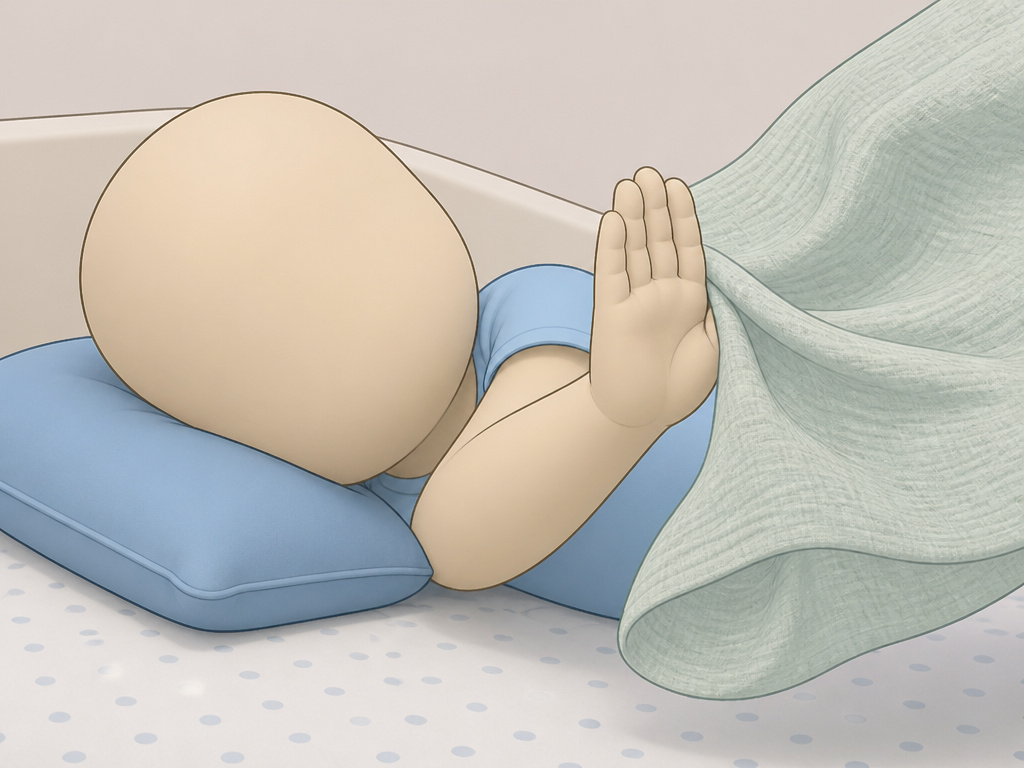
Forget guessing. Readiness for a pillow is a checklist of physical competencies. If your child shows several of these signs consistently, they are demonstrating the motor skills that make a pillow a comfort, not a hazard.
- They have transitioned to a toddler bed. This is the foundational sign. A toddler bed, per the Consumer Product Safety Commission rules, is designed for a child at least 15 months old and under 50 pounds. It has no enclosed sides, so there’s no risk of a pillow getting wedged against a crib rail. The child can enter and exit freely, which correlates with the mobility needed to adjust their position around bedding.
- They roll over easily in both directions during sleep. Watch them on the monitor. Do they go from back to stomach and stomach to back without struggle? This proves they can reposition their entire body away from an obstruction.
- They use a stuffed animal, blanket, or their own arm as a makeshift pillow. This is the clearest signal. They are seeking head elevation and support. Giving them a proper, firm pillow is safer than the bunched-up blanket they’ve invented.
- They can deliberately push objects away from their face while awake and asleep. Try placing a light muslin cloth over their face during play. A ready child will immediately swipe it away. This instinct must be automatic.
- They have strong head and neck control when sitting and moving. This isn’t about infant head lag. Can they turn their head side-to-side while lying down? Can they sit up from lying down without using their arms for leverage? This strength is crucial for airway management.
- They sleep primarily on their side or stomach. Back sleeping is safest for infants, but many toddlers find their own position. A side-sleeper’s spine needs the gap between head and mattress filled for alignment. A flat bed doesn’t provide that.
- They verbally ask for a pillow or show clear interest in yours. Curiosity plus capability is a strong combo. It means they are developmentally aware of the concept of comfort.
| Readiness Sign | What It Proves | Risk If Missing |
|---|---|---|
| In a toddler bed | Freedom of movement; no entrapment points | Pillow can jam against crib slats, creating a suffocation pocket. |
| Rolls both ways | Ability to escape an obstructed airway | Child may not be able to turn face away from pillow. |
| Uses makeshift pillow | Actively seeks head support/comfort | May burrow face into softer, less breathable materials. |
| Pushes objects from face | Strong, automatic airway-protection reflex | May not respond if fabric covers nose/mouth during sleep. |
The 3 Hard Stops: Do Not Pass Go
If any of these are true, do not introduce a pillow. Full stop. * They are still in a crib. A pillow is a climbing aid. It also can be forced through the slats, creating a dangerous entanglement. * They have respiratory issues, severe allergies, or reactive skin. Consult your pediatrician first. A pillow introduces new materials and potential allergens directly to their breathing zone. * They are swaddled or in a wearable sleep sack. This restricts the very mobility needed to be safe with loose bedding.
The Hidden Rules: What the CPSC Actually Says About Pillows
Most parenting blogs reference the AAP. Almost none cite the Consumer Product Safety Commission. That’s a missed layer. The CPSC doesn’t just give advice—it enforces rules.
The CPSC pillow safety FAQ details a specific ban on “infant pillows and cushions.” These are defined as items with a flexible fabric covering, intended for kids under one, loosely filled with granular material (like polystyrene beads), easily flattened, and capable of conforming to an infant’s body or face. That last phrase is the key: conforming to the face. This is the regulatory description of a suffocation hazard.
The part nobody mentions: The CPSC carve-out. The ban explicitly exempts “nursing pillows” stuffed with poly-fill. This tells us the regulation targets specific, high-risk designs (loose, granular fill) rather than all padded objects. For toddler pillows, the lesson is clear: avoid loose, beanbag-like fills. A firm, stable fill that doesn’t flow and conform is inherently safer.
This regulatory lens should shape your shopping. Look for construction that resists conforming to a child’s face. A firm, shredded memory foam or dense wool fill maintains its shape. A pillow filled with tiny polystyrene beads does not.
Choosing the Right First Pillow: Size, Firmness, and Material
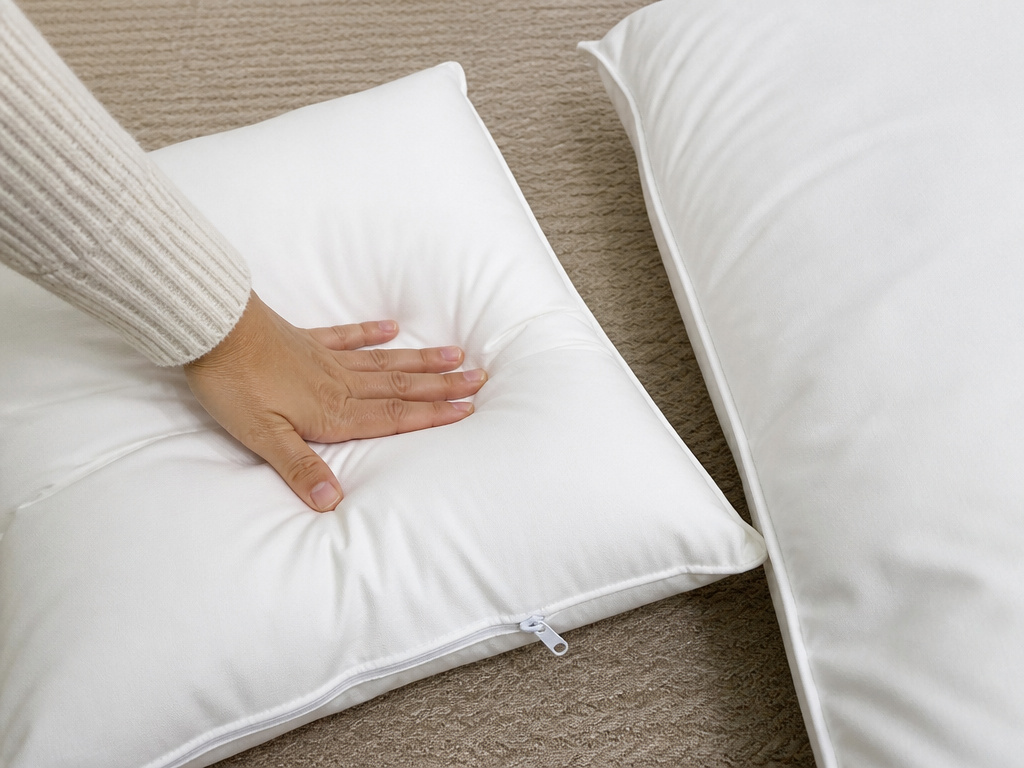
Once you’ve checked the readiness signs, the wrong pillow can undo all that safety. An adult pillow is a hazard. A plush, decorative pillow is a hazard. You need a tool designed for the job.
Size and Loft: The Non-Negotiables
A toddler’s shoulders are narrow. The gap between their head and the mattress when lying on their side might only be 2 or 3 inches. An adult pillow with 6 inches of loft doesn’t fill the gap—it cranes the neck upward, tilting the head forward and potentially kinking the airway.
- Correct Dimensions: A true toddler pillow is roughly 13 by 19 inches. This smaller surface area stays put on their bed. A standard 20×26-inch pillow is too wide and shifts around.
- Correct Loft: Aim for 2 to 3 inches of height. This fills the shoulder-head gap without over-elevating.
Fill and Firmness: Support Over Sink
The fill must be firm and supportive. You should not be able to easily flatten the pillow with gentle hand pressure. * Good: Shredded, firm memory foam. Dense wool. Firm latex. These materials offer support and bounce back. * Bad: Ultra-soft down alternative. Loose polyester fiberfill that compresses to nothing. Beanbag-style beads.
Materials: Skin and Lung Safety
This pillow will be against their face for 10-12 hours a night. Material matters. * Cover: Look for a 100% organic cotton or bamboo cover. These are naturally breathable, moisture-wicking, and free from pesticide residues. A zippered, removable, washable cover is mandatory. * Fill: Hypoallergenic is a must. Organic materials are preferable. Our research into the best organic toddler pillows consistently shows parents prefer natural fills like wool or organic latex for their temperature regulation and lack of off-gassing chemicals.
A Named Example
For a first pillow that gets the specs right, the Woolshire Toddler Pillow is a benchmark. It uses a firm wool fill in a 13×19-inch size with a 2.5-inch loft and an organic cotton cover. Wool is naturally temperature-regulating, hypoallergenic, and resistant to dust mites. It’s a specific answer that aligns with the safety criteria.
How to Introduce the Pillow (The First-Night Protocol)
You’ve picked the perfect pillow. Now, don’t just toss it in the bed at bedtime. That’s asking for a novelty-fueled sleep strike.
Start at naptime. Introduce the pillow for a few days of naps first. This lets them get used to it during a shorter, often more flexible sleep period. Make it part of the routine. Place the pillow on their bed while they’re getting dressed. Let them sit on it to read a book. Remove the “new toy” excitement before lights-out. Position it correctly. Show them how it’s for their head. For a back-sleeper, the pillow should be under the head and neck, not the shoulders. For a side-sleeper, it should fill the gap so their spine is straight. Watch the monitor. For the first few nights, pay extra attention. Are they managing it well? Is it ending up on the floor or over their face? Most children adapt quickly, but vigilance is key.
If they reject it, put it away for a few weeks. There’s no medal for early adoption. Comfort and safety are the only goals. For more on smoothing this transition, our guide on choosing a first pillow for a toddler walks through common hiccups and solutions.
Pillows for the Crib? Navigating a Gray Area
You might see products marketed as crib pillows. This is a contentious category. The AAP and CPSC guidance is clear: no loose bedding in a crib, period. A pillow is loose bedding.
However, some parents of older, highly mobile toddlers (think 18-24 months) who are clearly ready for a pillow but not yet in a toddler bed face a dilemma. The strict answer is to wait for the bed transition. The pragmatic assessment some experts cite is that a very firm, toddler-sized pillow for a child who can stand, climb, and forcefully push objects away presents a minuscule risk compared to the risk of a crib fall if that child is using blankets and stuffed animals as climbing aids.
I won’t recommend a crib pillow. The safety math is too messy. If your child is demonstrating all the readiness signs and is literally using a lovey as a pillow, the safer path is to transition them to a toddler bed and then give them a proper pillow. The crib is a container designed for a non-mobile infant. A pillow-ready toddler has outgrown its primary safety premise.
If you are considering this route despite the guidance, the pillow must be exceptionally firm and small enough that it cannot possibly get lodged between the mattress and crib slats. You are entering a zone of parental risk assessment that no official body will endorse.
Frequently Asked Questions
Can a 1-year-old have a pillow?
No. The AAP recommends no soft objects in the sleep area for the first year, and the CPSC bans specific infant pillow designs. Beyond regulations, a 1-year-old generally lacks the consistent motor skills to ensure safe pillow use. Focus on a firm, flat mattress with a fitted sheet only.
My 18-month-old sleeps with a lovey under their head. Is that a sign?
Yes, that is one of the strongest behavioral signs they are seeking head support. A lovey is often softer and less breathable than a firm toddler pillow. If they are also in a toddler bed and show other readiness signs, introducing a proper pillow may be the safer choice.
What if my 2.5-year-old doesn’t want a pillow?
That’s perfectly fine. There is no developmental requirement for pillow use. Many children sleep comfortably flat on their backs or stomachs well into childhood. Do not force it. Offer it occasionally, but if they push it away, respect their preference. Comfort is personal.
Are adjustable pillows safe for toddlers?
No. Avoid toddler pillows with zippers to add or remove fill. The zipper mechanism is a small parts hazard, and the concept invites unsafe adjustments. A pillow should have one, safe, fixed loft appropriate for the age range.
How do I wash a toddler pillow?
Always follow the manufacturer’s label. Most quality toddler pillows have a removable, machine-washable cover. The inner core may be spot-clean only or require air-drying. A waterproof mattress protector under the pillowcase can shield the pillow from accidents and extend time between full washes. For a durable sleep setup, pair it with a quality toddler mattress.
Before You Go
The question “how soon?” is answered by your child’s abilities, not a birthday. Watch for the move to a toddler bed, the deliberate search for head support, and the powerful push-away reflex. When you see those, choose a pillow that matches their small frame—firm, breathable, and about 13 by 19 inches.
Skip the decorative cushions and the hand-me-down adult pillows. This is a piece of safety equipment first, a comfort item second. The right choice supports their spine and keeps their airway clear for every dream-filled night.
