
Bedwetting from Sleep Apnea in Children: The Connection
This post contains affiliate links. As an Amazon Associate we earn from qualifying purchases.
Sleep apnea in a child causes bedwetting through two distinct, documented physiological pathways: it dramatically increases nighttime urine production (nocturnal polyuria) and it raises the child’s arousal threshold so deeply that they cannot wake to a full bladder. The specific trigger is a hormone surge, brain natriuretic peptide (BNP), released in response to the physical strain of obstructed breathing, which floods the system and overrides normal bladder control.
That hormone surge is the mechanical link most parents never hear about. It turns a breathing problem into a kidney and bladder problem, all while the child sleeps too deeply to respond.
What follows is a breakdown of those two pathways, the specific 130% urine-production threshold that defines the problem, the real-world success rate of surgical intervention, and the checklist of signs that should prompt a conversation with your pediatrician.
Key Takeaways
- Sleep apnea triggers a release of brain natriuretic peptide (BNP), a hormone that directly increases urine production, often pushing it past 130% of a child’s expected bladder capacity.
- The struggle to breathe against an obstruction also leads to fragmented, poor-quality sleep with a very high arousal threshold, meaning the child physically cannot wake up to bladder signals.
- Adenotonsillectomy resolves bedwetting in about 50% of cases, not the near-guarantee some older sources suggest.
- The absence of loud snoring does NOT rule out sleep apnea as a cause of bedwetting; quiet breathing with pauses is a major red flag.
- Managing the bedding situation with a reliable waterproof mattress protector is a practical first step while investigating the root cause.
The Two Proven Physiological Pathways
Forget the vague idea that sleep apnea “disturbs sleep.” The connection is precise, measurable, and operates on two parallel tracks that both have to fail for bedwetting to occur.
First, the hormone problem. When a child’s airway is partially blocked, they create intense negative pressure in their chest trying to pull in air. This strain directly stimulates the heart to release brain natriuretic peptide.
BNP acts like a diuretic on overdrive. It tells the kidneys to excrete more sodium and water, and it suppresses the hormone that normally reduces urine production at night (vasopressin). The result is a literal flood of urine that can overwhelm even a healthy-sized bladder.
Second, the brain problem. The same breathing struggle fractures sleep architecture. The child never reaches deep, restorative sleep but instead lingers in a state of high arousal threshold, they are exhausted but unrousable. A full bladder signal simply isn’t loud enough to break through.
The 130% Rule
Clinicians don’t guess at this. They diagnose nocturnal polyuria when a child’s nighttime urine output exceeds 130% of their Expected Bladder Capacity (EBC). You can estimate EBC roughly with the formula: (Age in years + 1) x 30 = capacity in milliliters. For a 6-year-old, that’s about 210ml. If they’re producing over 273ml at night, they’ve crossed the diagnostic threshold.
This is why generic advice to “limit drinks before bed” often fails for these kids. The problem isn’t what goes in; it’s what the body decides to produce on its own after lights out.
When Bedwetting Signals Sleep Apnea (And When It Doesn’t)
Not every child who wets the bed has sleep apnea. But certain patterns should shift your suspicion. The classic symptoms of pediatric OSA, loud snoring, gasping, and pauses in breathing, are strong indicators. However, one critical edge case changes the game.
The child who doesn’t snore. Research notes that the absence of snoring is not sufficient to exclude obstructive sleep apnea. Some children have what’s called “silent OSA,” where the airway obstruction is severe enough to cause apneas and all the downstream effects (like BNP release) but doesn’t generate the classic snoring sound. Mouth breathing, restless sleep, and daytime sleepiness may be the only visible clues.
Here is a symptom checklist that helps differentiate typical bedwetting from bedwetting linked to a breathing problem.
| Symptom | More Common in Typical Bedwetting | Red Flag for Sleep Apnea Link |
|---|---|---|
| Snoring | Occasional, mild | Loud, habitual, with observed pauses/gasps |
| Sleep Position | Any | Hyperextended neck, frequent tossing |
| Daytime Behavior | Normal energy | Hyperactive, irritable, or unusually fatigued |
| Response to Fluid Restriction | Often improves | Little to no improvement |
| Bedwetting Pattern | Variable nights | Every night, large volume |
If you’re navigating this, protecting the mattress is a non-negotiable first step. A high-quality mattress cover designed for heavy use can save the mattress and reduce laundry stress while you seek answers.
Diagnosis: What the Doctor Will Look For
If sleep apnea is suspected, the path to diagnosis moves from the pediatrician to a sleep specialist. The goal is to connect the dots between breathing, sleep quality, and bladder function.
The cornerstone is a polysomnogram (sleep study). This overnight test in a lab measures brain waves, blood oxygen levels, heart rate, breathing effort, and leg movements. It can definitively diagnose OSA and quantify its severity. It also documents those high arousal thresholds and sleep fragmentation.
Before that, your pediatrician will take a detailed history. They will ask about the bedwetting pattern, daytime habits, and any signs of constipation, which can mimic or worsen bladder issues. They may recommend a bladder diary: measuring and recording all fluid intake and urine output over 24-48 hours, including weighing overnight diapers or sheets to calculate that crucial 130% figure.
Where this goes sideways: Assuming a child will “grow out of it” without tracking the pattern. If bedwetting is nightly, of large volume, and paired with any breathing concerns, watchful waiting is not the safest plan. The sleep disruption and oxygen dips of untreated OSA can affect growth, behavior, and learning.
Treatment: Fixing the Breathing to Stop the Wetting

Treatment targets the root cause: the obstructed airway. The first-line intervention for pediatric OSA caused by enlarged tonsils and adenoids is an adenotonsillectomy. The outcomes for bedwetting, however, require realistic expectations.
Common mistake: Viewing surgery as a cure-all for bedwetting. A recent meta-analysis cited in the European Association of Urology standards found the improvement in bedwetting incidence after surgery is lower than historically expected. The surgery should be performed to treat the sleep apnea, with bedwetting resolution as a possible, but not guaranteed, benefit.
Approximately 50% of enuretic children with sleep-disordered breathing will become dry after surgery. For the other half, the bedwetting persists because the hormonal and arousal patterns are entrenched, or because a separate bladder issue coexists.
What if surgery isn’t the answer or isn’t needed?
For mild OSA or while awaiting treatment, other management strategies come into play: * Continuous Positive Airway Pressure (CPAP): A machine that delivers gentle air pressure through a mask to keep the airway open during sleep. It’s highly effective but can be challenging for young children to tolerate. * Orthodontic Interventions: For some children, guided dental expansion can widen the nasal passages and improve airflow. * Weight Management: If obesity is a contributing factor, a healthy diet and exercise plan can reduce airway tissue size and improve symptoms.
Throughout any treatment, maintaining a comfortable and stress-free sleep environment is key. The right pillows for kids can aid in proper airway alignment, and a familiar, safe toddler blanket can help a child feel secure amidst changes.
Managing Bedwetting While Addressing the Cause
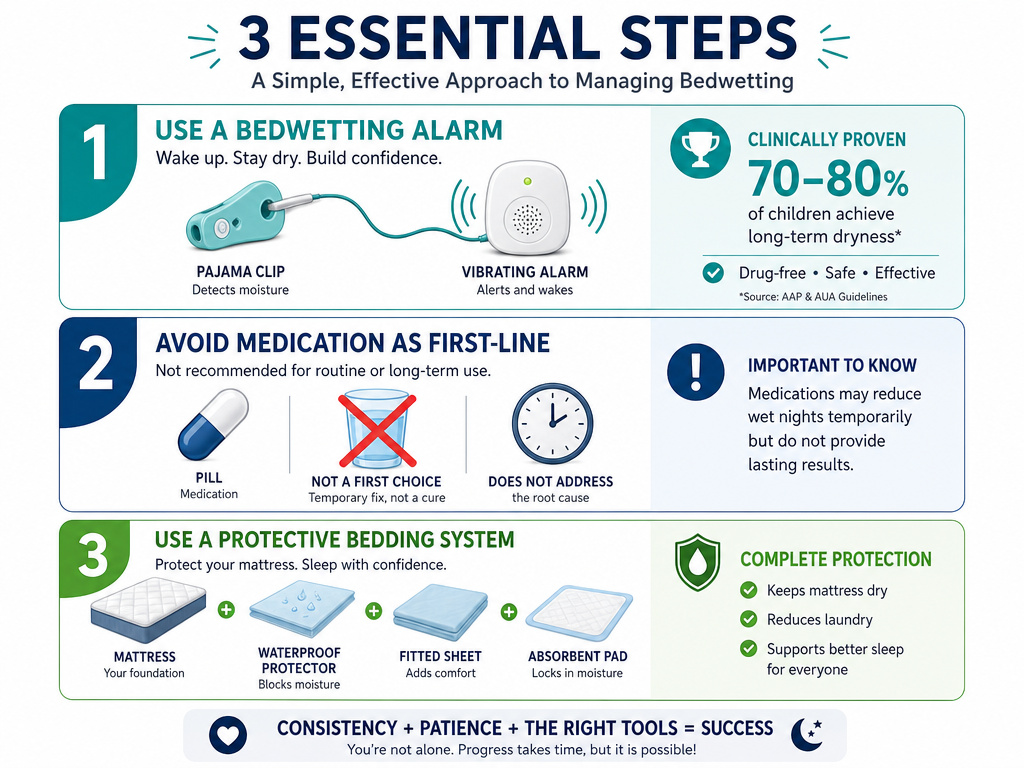
Even as you treat the sleep apnea, the bedwetting may take time to resolve. A parallel management plan is essential to protect your child’s self-esteem and your sanity.
1. The Bedwetting Alarm
This is a first-line treatment for enuresis itself. A moisture sensor clips to the pajamas and triggers a loud alarm or vibration at the first sign of wetness. The goal is to condition a lower arousal threshold, to train the brain to recognize the full bladder signal.
- Success: Initial response rates are 60-80%, but relapse is common when the alarm stops.
- The catch: The child must be motivated. It requires a parent to help wake them fully when the alarm sounds. It can be disruptive for the family. For a child already exhausted from poor sleep, this added disruption needs careful consideration.
2. Medication (Desmopressin)
This synthetic hormone mimics the body’s natural vasopressin, directly countering the nocturnal polyuria caused by BNP. It’s a temporary bridge, not a cure.
- How it’s used: A tablet or melt given at bedtime. It can reduce wet nights by 1-2 per week.
- Critical safety note: Fluid intake must be strictly limited from 1 hour before the dose until 8 hours after to prevent dangerous water intoxication and hyponatremia.
3. Bladder Training & Supportive Care
- Scheduled voiding: Waking the child for a bathroom trip before parents go to bed.
- Positive reinforcement: Celebrate dry nights without punishment for wet ones. Charts and stickers can help a motivated child.
- Practical bedding: Use a layered system, a fitted waterproof mattress protector, a regular sheet, then a second absorbent pad and sheet on top. This allows for quick changes in the middle of the night without remaking the entire bed.
For children with additional sensory or safety needs, such as those who may benefit from a secure sleep space, exploring specialized beds can be part of a holistic solution.
Frequently Asked Questions
Can sleep apnea cause bedwetting in a child who doesn’t snore?
Yes. The absence of snoring does not rule out obstructive sleep apnea. “Silent OSA” involves significant airway obstruction that disrupts breathing and sleep without the vibrating tissue sound. Key signs to watch for are mouth breathing, restless sleep, daytime fatigue or hyperactivity, and persistent, heavy bedwetting.
What percentage of kids stop bedwetting after tonsil surgery?
Approximately 50% of children with bedwetting related to sleep-disordered breathing become dry after an adenotonsillectomy. This figure comes from a standardization document by the International Children’s Continence Society. It is a significant improvement, but not a guarantee, which is why surgery is recommended primarily to treat the breathing disorder itself.
How is sleep apnea-related bedwetting diagnosed?
Diagnosis involves linking three pieces: a sleep study (polysomnogram) to confirm OSA, a detailed voiding diary to document nocturnal polyuria (output >130% of expected bladder capacity), and a clinical history ruling out other causes like diabetes or urinary tract infection. Your pediatrician or a pediatric urologist will coordinate this workup.
Are some children more at risk for this connection?
Yes. Children with obesity, allergies, enlarged tonsils/adenoids, certain craniofacial syndromes, or neurodevelopmental conditions like ADHD are at higher risk for both sleep apnea and enuresis. The genetic overlap is complex, but a family history of either condition increases a child’s likelihood.
What’s the first step if I suspect this link?
Talk to your child’s pediatrician. Document what you see: note breathing patterns during sleep, the frequency and volume of bedwetting, and daytime symptoms. Be prepared to discuss a referral to a pediatric sleep specialist or an otolaryngologist (ENT). In the meantime, implement practical bedding solutions to reduce stress.
Before You Go
The link between pediatric sleep apnea and bedwetting is more than an inconvenience, it’s a physiological chain reaction with a clear starting point. The strain of obstructed breathing triggers a hormone surge that floods the bladder while locking the child in deep, unresponsive sleep.
The fix starts with recognizing the specific signs: not just snoring, but any disordered breathing paired with heavy, nightly wetting. A formal diagnosis through a sleep study and bladder diary is crucial. Treatment focuses on the airway, with surgery helping about half of children achieve dryness. For others, managing the enuresis with alarms, medication, and unwavering practical support is the path forward.
Your role is to connect the dots for your child, advocate for the right tests, and create a supportive environment at home. That includes a reliable mattress protector, the right pillow for a 5-year-old or toddler, and a whole lot of patience. The goal is restful sleep, dry nights, and a child who wakes up ready for the day.
