
Do Twin Sheets Fit Toddler Bed? The Mattress Gap Explained
This post contains affiliate links. As an Amazon Associate we earn from qualifying purchases.
No, twin sheets do not fit a toddler bed. A standard toddler bed uses a full-size crib mattress, which measures 51 5/8 inches long by 27 1/4 inches wide. A standard twin mattress measures 38 inches wide by 74 1/2 inches long. A twin sheet is designed for a mattress that is 13 inches longer and nearly 11 inches wider, creating dangerous, loose fabric that can pose an entrapment or suffocation risk for a child.
That 13-inch length gap is the whole story. It’s not a matter of a tight fit; it’s a complete mismatch defined by federal safety regulations. The Consumer Product Safety Commission (CPSC) mandates that a toddler bed must be intended to accept that specific full-size crib mattress.
What follows is a breakdown of the exact numbers from the ASTM F1821 safety standard, the specific hazards of using the wrong bedding, and your options for finding sheets that fit correctly and safely. The goal isn’t just to answer the question, but to show you why the answer is a non-negotiable safety line.
Key Takeaways
- Toddler beds legally require a full-size crib mattress (51 5/8″ x 27 1/4″), not a twin mattress. The federal standard 16 CFR Part 1217 incorporates ASTM F1821, which defines this.
- A twin mattress is 13 inches longer and 10.75 inches wider. A twin sheet will billow and sag dangerously over the smaller toddler mattress.
- Loose bedding is a documented entrapment and suffocation hazard. Gaps between the sheet and mattress can trap a child’s head or limbs.
- Sheets labeled “crib” or “toddler bed” are sized for the 51 5/8″ x 27 1/4″ mattress. This is the only safe choice.
- Convertible “toddler-to-twin” beds are a different product. They use two distinct mattress sizes and require two sets of sheets.
The Simple Math: Standard Mattress Dimensions
The question dissolves when you lay the specs side by side. This isn’t about brand differences or “close enough” measurements. The dimensions are codified in safety standards.
A full-size crib mattress – the only mattress intended for a standalone toddler bed – has minimum dimensions of 51 5/8 inches in length and 27 1/4 inches in width. Its maximum thickness is typically 6 inches. This is not a suggestion; it’s the test mattress size specified in section 7.1 of the ASTM F1821 safety standard that manufacturers must use for certification.
A standard twin mattress measures 38 inches wide by 74 1/2 inches long, with a common thickness of 6 to 8 inches. The sheet for this mattress is engineered to stretch over that larger surface area.
Where this goes sideways: Assuming a “toddler bed” is just a small twin bed. The regulatory definition is precise: a bed intended for a child 15 months to 50 lbs that accepts a full-size crib mattress. A twin bed frame might physically hold a crib mattress, but the resulting gaps violate the standard.
The mismatch is dramatic. A twin sheet placed on a toddler mattress will have over a foot of excess length to deal with. You can’t tuck that much material securely. It will pull loose.
| Mattress Type | Standard Dimensions (Length x Width) | Primary Use Case |
|---|---|---|
| Full-Size Crib / Toddler Bed | 51 5/8″ x 27 1/4″ (1310 mm x 690 mm) | Toddler beds, cribs. Required by ASTM F1821. |
| Twin | 74 1/2″ x 38″ (1892 mm x 965 mm) | Twin beds, youth beds, and the “twin” configuration of convertible toddler-to-twin beds. |
| Difference (Twin – Crib) | +22 7/8″ longer, +10 3/4″ wider | Illustrates why sheets are not interchangeable. |
The takeaway is blunt. You are shopping for two completely different product categories. Searching for toddler bedding or kids sheets sized for a crib mattress is the correct path. Looking at twin sheets is a dead end.
Why “Close Enough” Is a Safety Failure
This is where the conversation shifts from convenience to hazard. A poorly fitted sheet is more than an annoyance; it’s a risk factor with a documented history.
Loose fabric can form pockets or gaps between the sheet and the mattress edge. A toddler, moving in sleep, can wedge their face or head into that space. The CPSC and ASTM standards explicitly design toddler beds to minimize entrapment hazards, using a correctly sized mattress that leaves no gap between it and the bed frame is the first rule. A too-large sheet reintroduces that very hazard you’re trying to avoid.
The federal regulation, 16 CFR Part 1217 text, exists because infants have died in toddler beds from entrapment. The standard’s entire framework, guardrail spacing, mattress fit requirements, warning labels, is built to prevent this. Adding a billowing twin sheet undermines every single one of those engineered protections.
Common mistake: Trying to “make it work” by folding or tucking a twin sheet. The fabric will work itself loose within a night or two of a child moving around. That’s when the hazard presents itself.
Furthermore, a loose sheet can become a strangulation hazard if a child gets tangled in the excess material. It can also be a tripping hazard if a child climbs out of bed and catches a foot in draped fabric.
The safety logic is simple. The bed is designed for a specific mattress. The mattress requires a specific sheet. Shortcutting that chain compromises the system. Your best bet for safe, durable options is to consult a guide on recommended sheets for kids’ beds that addresses fit and fabric safety.
What About “Toddler-to-Twin” Convertible Beds?
This is the one scenario where the word “twin” legitimately enters the toddler bed conversation. Products like the Little Tikes Jeep Wrangler or Step2 Roadster are “toddler-to-twin” convertible beds. They have two distinct modes.
In toddler bed mode, the frame is shortened and uses a full-size crib mattress (51 5/8″ x 27 1/4″). You must use crib/toddler bed sheets.
In twin bed mode, the frame is extended to full length and uses a standard twin mattress (38″ x 74 1/2″). At this point, you switch to twin sheets.
The part nobody mentions: You need two separate sets of bedding for the life of this product. You cannot use the same sheets for both configurations. Planning for this upfront avoids a late-night sheet crisis when you convert the bed.
If you’re considering this type of bed for longevity, research is key. Look at reviews for twin beds for kids that focus on durability and ease of conversion. Similarly, when it’s time for the twin mattress, you’ll want a durable twin mattress for kids that can handle the transition from toddler to elementary school years.
Finding the Right Sheets: Your 3-Step Checklist
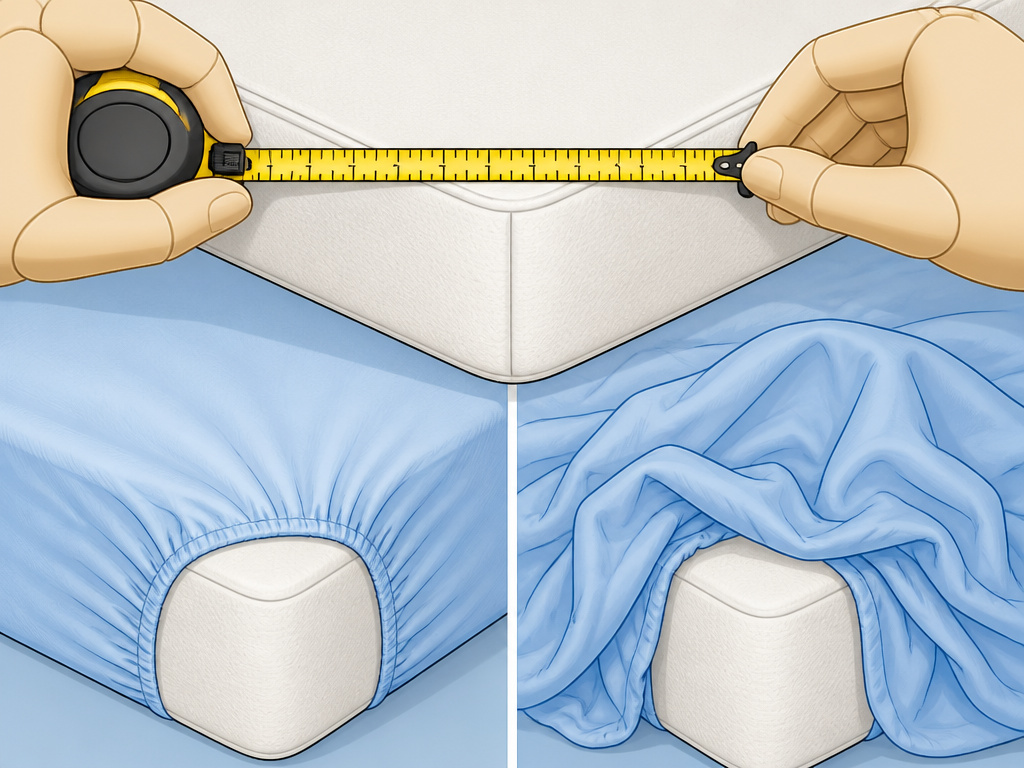
Forget twin sheets. Here’s how to actually get bedding that fits, lasts, and is safe.
1. Verify the Mattress Label or Dimensions.
Before you buy anything, confirm your mattress size. If it’s in a toddler bed, it is almost certainly a full-size crib mattress. Measure it: 51 5/8” x 27 1/4” is the magic number. Some “mini crib” mattresses are smaller, but they are not standard for toddler beds. Know what you have.
2. Shop for “Crib Sheets” or “Toddler Bed Sheets.”
These terms are used interchangeably in the market for sheets designed to fit the 51 5/8” x 27 1/4” mattress. Look for labels that specify this size. A well-fitting sheet will have elastic all around (full elastic) and will snap snugly over the mattress corners without excessive force or sagging.
3. Prioritize Fit, Fabric, and Safety.
- Fit is non-negotiable. It must be tight. Tug on the corners after putting it on. There should be no slack.
- Fabric affects durability and comfort. Cotton percale is crisp and cool; jersey cotton is soft and stretchy. For sensitive skin, look into eco-friendly kids sheets made from organic cotton or TENCEL™.
- Safety means no loose threads, tight elastic, and non-toxic dyes. Certifications like OEKO-TEX Standard 100 indicate the fabric has been tested for harmful substances.
| Sheet Type | Fits Mattress Size | Key Feature | Best For |
|---|---|---|---|
| Crib / Toddler Bed Sheet | 51 5/8″ x 27 1/4″ (Full-Size Crib) | Full elastic encasement, tight fit. | Any standalone toddler bed or convertible bed in toddler mode. |
| Twin Sheet | 38″ x 74 1/2″ (Twin) | Larger dimensions, deeper pockets. | Twin beds or convertible beds in twin mode. Never for toddler bed mattress. |
| Universal Fit Stretchy Sheet | Multiple sizes (via stretch) | Extreme stretch material (e.g., jersey). | Can work if size range explicitly includes “crib,” but verify fit. |
Brands like Burt’s Bees Baby, American Blossom Linens, and Target’s Cloud Island line reliably offer sheets in the correct crib size. The investment in two or three proper-fitting sheets beats the risk and frustration of a makeshift solution.
The Legal Definition: “Sized” vs. “Intended”
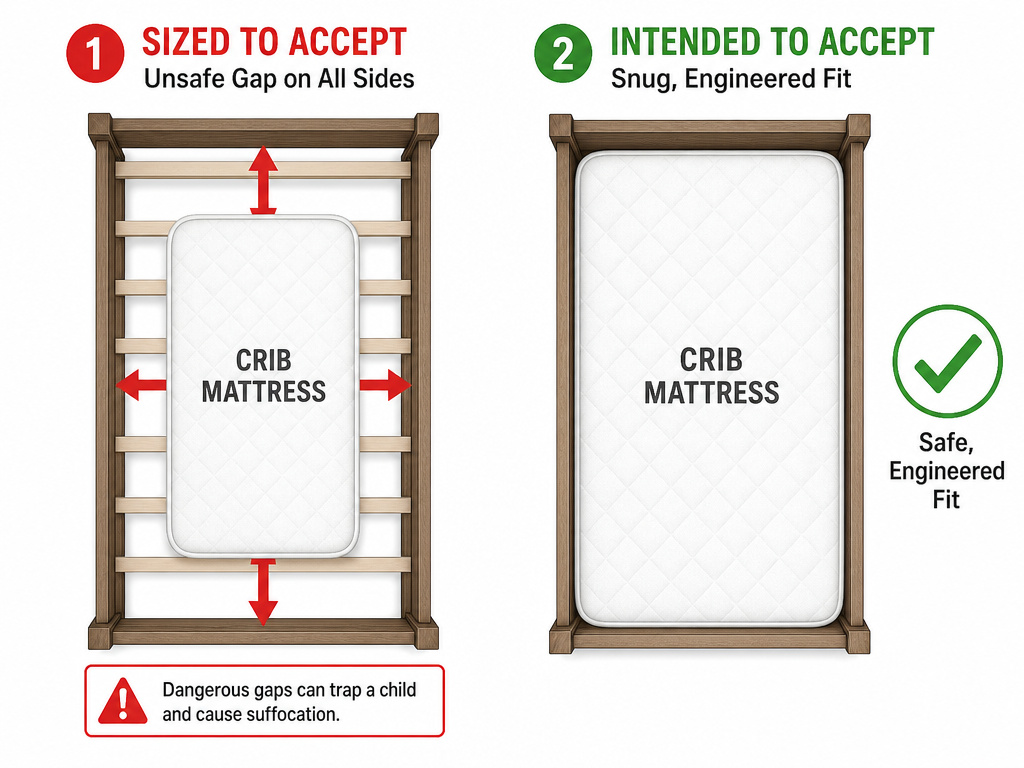
The official ASTM F1821 safety specification provides critical clarity that cuts through the confusion. The 2026 revision to the standard changed one key word in its scope.
The old language said a toddler bed is a bed “sized to accept a full-size crib mattress.” This led to a technical loophole: a twin bed frame is physically “sized” to hold a crib mattress, it’s big enough, but it would leave dangerous gaps on all sides.
The new language in ASTM F1821-26 states a toddler bed is a bed “intended to accept a full-size crib mattress.” This is a purposeful legal clarification. It means the product is specifically designed and tested to fit that mattress snugly, with guardrails and end structures positioned correctly for it.
This update, referenced in the official federal toddler bed rule, reinforces that a toddler bed is not just any small bed. It is a product with a defined purpose, governed by a mandatory safety standard that includes mattress fit. When you follow the CPSC toddler bed business guidance, this is the standard you’re following.
The practical impact for you? It validates the dimensional mismatch. A twin sheet doesn’t fit because the toddler bed system, frame and mattress, is engineered as a discrete unit. Using the wrong component breaks the system.
Frequently Asked Questions
Can I use twin sheets on a toddler bed if I fold them?
No. Folding or tucking excess material is temporary and unsafe. The fabric will inevitably come loose with a child’s movement, creating loose bedding hazards. It also creates uncomfortable lumps. It is not a reliable or safe solution.
Are toddler bed sheets the same as crib sheets?
Yes, for a standard full-size crib. The terms are used interchangeably for sheets fitting a 51 5/8” x 27 1/4” mattress. Always check the product dimensions, as some “mini crib” sheets are for smaller, non-standard mattresses.
My toddler is in a twin bed. What sheets do I need?
If your child has transitioned to an actual twin-sized bed (with a 38” x 74.5” mattress), you need standard twin sheets. The transition from a crib to toddler bed is one step; moving to a twin bed is another, requiring all new bedding. For this stage, focus on twin beds for toddlers designed with low profiles and safety rails.
How do I make sure the sheet fits safely?
The fit test is simple. After putting the sheet on, press down on the mattress center. The sheet should remain taut at the edges. Run your hand between the sheet and mattress edge all the way around. There should be no gaps or pockets large enough to fit your fingers into easily. If there are, the sheet is too big.
What if I have a non-standard mattress?
Measure it. If it deviates from the standard 51 5/8” x 27 1/4”, your options are limited. You may need to contact the bed manufacturer for recommended sheets or seek out custom bedding. Using a significantly smaller mattress in a standard toddler bed creates dangerous gaps with the bed frame, a serious entrapment risk.
Before You Go
Twin sheets and toddler beds don’t mix. The mismatch is rooted in federal safety standards, not manufacturer whim. A toddler bed is designed for one specific mattress size, and the sheet must match it perfectly to avoid creating new hazards.
Skip the twin aisle entirely. Look for “crib sheets” or “toddler bed sheets” labeled for a 51 5/8” x 27 1/4” mattress. Prioritize a tight, elastic fit and safe, breathable fabrics. For a convertible bed, remember you’re committing to two sets of bedding, one for toddler mode, one for twin mode.
The right sheet is a small detail that completes a safe sleep environment. It’s worth getting right.
