
Are Sleep Sacks Safe for Newborns | The CPSC Warning
This post contains affiliate links. As an Amazon Associate we earn from qualifying purchases.
Sleep sacks are safe for newborns when they are standard, non-weighted wearable blankets that fit properly, allow free arm movement, and meet the CPSC’s mandatory safety standard for infant sleep products (16 CFR Part 1236). The U.S. Consumer Product Safety Commission explicitly warns that weighted sleep sacks, swaddles, and blankets are unsafe, linking them to multiple infant deaths as of an April 2024 safety alert.
That federal warning is the line. A sleep sack that passes the standard is a safe alternative to loose bedding. One that adds weight is a documented hazard.
What follows is a breakdown of the three specs that make a sleep sack safe, the one feature that immediately disqualifies it, and the transition timeline from swaddle to sack that most guides get wrong. This is about matching a product to a regulation and a baby’s development.
Key Takeaways
- Weighted sleep products are banned by safety authorities. The CPSC, AAP, NIH, and CDC all state weighted infant swaddles, sacks, and blankets are unsafe for sleep due to suffocation and oxygen desaturation risks.
- Safety hinges on fit and freedom. A safe sleep sack must be sleeveless, have snug neck and arm openings to prevent slipping, and allow full hip and leg movement.
- Stop swaddling at the first sign of rolling. Transition to a sleep sack when your baby shows attempts to roll, usually around 8 weeks, not at a preset age.
- Verify it meets the federal standard. Any sleep product marketed for infants up to 5 months must comply with the CPSC’s infant sleep product safety standard (16 CFR Part 1236). Look for certification.
- Never combine with other bedding. Using a sleep sack with a duvet or blanket increases SIDS risk, according to international research.
The 3 Non-Negotiable Safety Rules (And the One That’s Banned)
A sleep sack’s safety is a checklist verified by federal regulation and pediatric research. Get these three right, and you have a safe sleep environment.Miss one, and you introduce a known risk.
1. It Must Be a Standard, Non-Weighted Wearable Blanket.
The most critical rule is also the simplest: avoid any added weight. In April 2024, the CPSC issued a stark warning: “Don’t use weighted blankets or weighted swaddles” for babies. This aligns with warnings from the CDC and NIH. The mechanism is physical: an infant’s rib cage is not rigid. Even light, distributed pressure from a weighted product can restrict breathing and cardiac function.
Where this goes sideways: Choosing a weighted sack like those from Dreamland Baby or Nested Bean. These products often claim safety based on short, supervised studies. The AAP states there is no peer-reviewed evidence evaluating their safety for healthy infants in unmonitored, overnight sleep. The risk is suffocation and lower oxygen levels, with multiple infant deaths reported.
2. It Must Fit Correctly – Snug Neck, Free Hips.
Fit is a safety mechanism, not a comfort feature. The International Society for the Study and Prevention of Infant Death (ISPID) notes the opening for the arms and head must not be too large, preventing the baby from slipping down inside. Conversely, the sack must be roomy enough around the hips and legs to allow for free movement and healthy hip development.
| Fit Element | Correct Fit | Risk If Wrong |
|---|---|---|
| Neck & Arm Openings | Snug, cannot slip over head or shoulders. | Baby slips down, fabric covers face; suffocation within minutes. |
| Torso Length | Allows natural curl, does not force legs straight. | Restricts movement; if baby rolls prone, cannot push up. |
| Hip & Leg Room | Ample space for frog-legged position and kicking. | Can contribute to hip dysplasia; restricts rolling recovery. |
3. It Must Be Sleeveless and Used Alone.
Arms must be free. This allows a baby who rolls onto their stomach to use their arms to push up or roll back. A sleeveless design is non-negotiable for babies showing any sign of rolling. Furthermore, the sleep sack is the bedding. The ISPID factsheet clearly states that combining a sleeping sack with a duvet increases the risk of SIDS. You don’t add a blanket on top.
The federal backbone for these rules is the infant sleep product safety standard (16 CFR Part 1236). This CPSC regulation mandates that any product marketed or intended for sleep for infants up to 5 months must meet strict safety requirements, effectively treating them like bassinets. When you choose a wearable blanket, you are choosing a product that should fall under this rule.
How Safe Sleep Sacks Actually Protect Your Newborn
The protection is mechanical. A standard sleep sack addresses specific, documented physical risks in the sleep environment.
First, it eliminates loose bedding. The AAP recommends no loose blankets, pillows, or stuffed animals in the crib for the first year. A sleep sack is a wearable blanket that cannot become entangled or cover a baby’s face. This directly prevents a common suffocation pathway.
Second, it can delay and shorten a dangerous window. Research cited by the ISPID suggests babies in sleep sacks turn onto their stomachs (prone) later than those without one. More importantly, it shortens the period between when they can first roll prone and when they can roll back. This “inexperienced prone sleeping” period is a high-risk window for SIDS. A sleep sack that hinders rolling until motor skills are better developed is providing a measurable, if not fully quantified, protective effect.
Finally, the right sleep sack supports healthy physiology. The baggy bottom promotes the “frog-leg” position, which is optimal for hip joint development. This stands in contrast to tight swaddles or restrictive clothing that can force the legs straight and together, a risk factor for hip dysplasia.
Sleep Sack vs. Swaddle vs. Blanket: The Transition Clock Starts Earlier Than You Think
This is where timing matters more than product choice. Each option has a strict expiration date dictated by your baby’s development, not the calendar.
Swaddles (Blankets or Wraps): A swaddle snugly wraps a newborn’s arms and body, mimicking the womb. It’s effective for calming. The Minnesota Department of Health Safe Sleep FAQ outlines the risks: suffocation if the wrap loosens, overheating, and increased SIDS risk if a swaddled baby rolls. The rule is absolute: stop swaddling at the first sign of attempted rolling, which can happen as early as 8 weeks. A swaddled baby on their stomach is in extreme danger.
Sleep Sacks (Wearable Blankets): This is the safe next step. A sleeveless sleep sack provides warmth while keeping arms free. It is safe from birth (with correct sizing) until a child transitions to a toddler bed or blanket, often around age 2. It is the only safe “blanket” alternative for the first year.
Loose Blankets: Traditional newborn blankets are unsafe for unsupervised sleep until at least 12 months of age. They pose entanglement and suffocation risks. They are for playtime, car rides, or supervised cuddles, not crib sleep.
The part nobody mentions: The transition isn’t a slow swap. It’s a hard stop. The night you see your baby trying to roll during tummy time or wiggle a swaddled arm free, that’s the last night for the swaddle blanket. Have a correctly sized sleep sack ready to go.
Choosing a Safe Sleep Sack: A Spec-by-Spec Guide
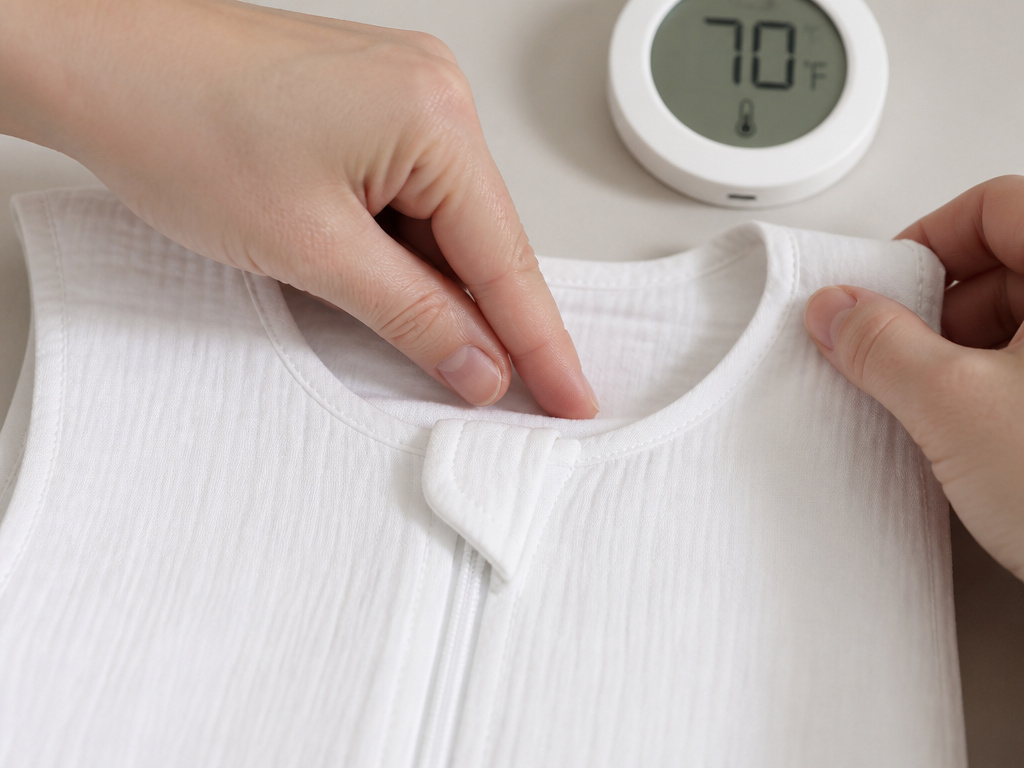
Forget cute prints. Look for these specifications, which are your direct evidence of safety.
Material & TOG Rating: Match the fabric to your room temperature. A lightweight, breathable cotton or muslin (TOG 0.5-1.0) is ideal for standard indoor temperatures (68-72°F). Avoid heavy, non-breathable fabrics that can lead to overheating, a known SIDS risk factor.
Closure Type: A zipper with a tab cover at the top (to protect the chin) is safest. Snaps can pop open or be mismatched, creating a loose fabric hazard. The zipper should run from foot to neck or have a two-way design for easy diaper changes.
Size & Fit Verification:
- Weight/Range: Do not size up for “room to grow.” A sack that is too large creates excess fabric that can cover the face.
- Neck Hole: Perform the two-finger test. You should be able to snugly fit only two fingers between the neckline and your baby’s neck.
- Arm Holes: Should be snug enough that the baby’s shoulders cannot slip through.
Certification: Look for a label stating it meets ASTM F2194 (the standard for bassinets and cradles, which sleep products must now meet) or explicit certification for the infant sleep product safety standard. This is your proof it complies with the federal mandatory sleep product rules.
When evaluating your baby bedding choices, the sleep sack is the workhorse of safe sleep. Brands like Halo, Burt’s Bees Baby, and Kyte Baby offer well-sized, standard options. The default pick for most newborns is a simple, sleeveless cotton muslin sack in the correct size.
The Weighted Sleep Sack Controversy: Why “10% of Body Weight” Is a Dangerous Myth
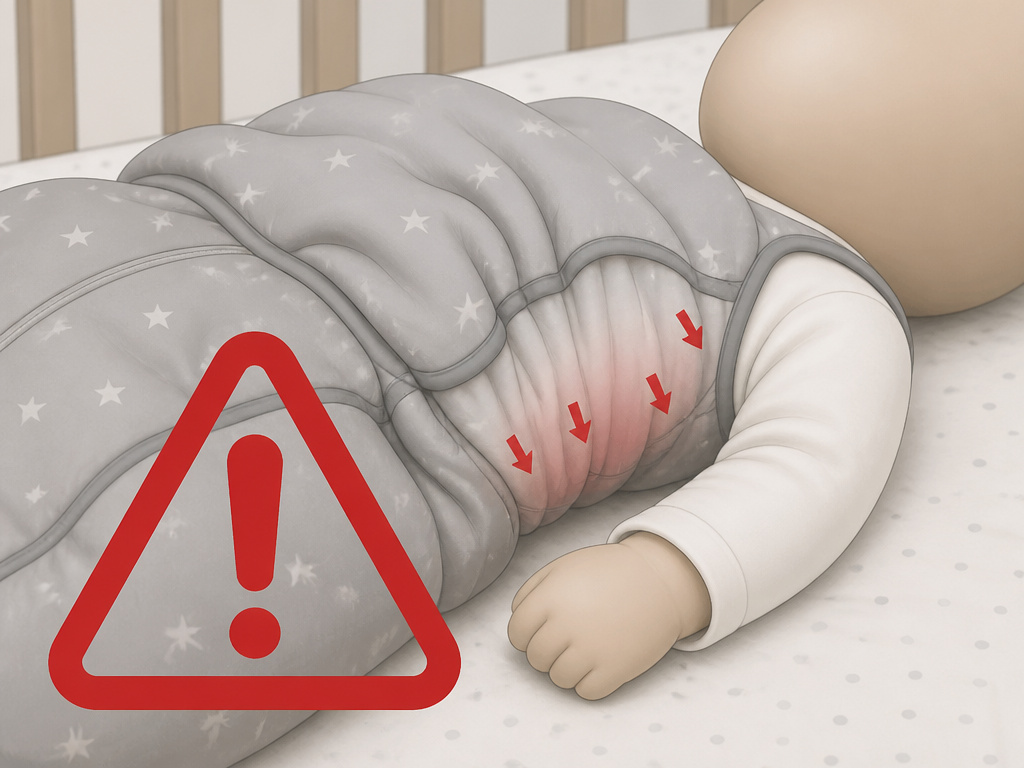
Some companies market weighted sleep sacks and swaddles claiming the weight, often 10% of a baby’s body weight, is safe and calming. This is a direct contradiction to every major safety authority.
The AAP safe sleep policy statement and related guidance form the medical consensus. Dr. Rachel Moon, co-chair of the AAP’s SIDS task force, explains the physiological danger: a baby’s pliable rib cage means “it doesn’t take a lot of pressure to press on it and create obstruction there.”
The CPSC’s April 2024 warning is a regulatory red flag. It cites multiple infant deaths and urges retailers to stop sales. The cited studies from manufacturers are critically flawed: they observe babies for minutes while awake and supervised, not for hours during unsupervised sleep. There is no evidence that weighted products are safe for overnight use.
Common mistake: Believing a product sold by major retailers must be safe. The Consumer Product Safety Commission guide is clear: an item not being recalled does not mean it has been tested and deemed safe. The onus is on the manufacturer to prove safety, and for weighted products, that proof does not exist in the peer-reviewed literature.
Choosing a safe infant blanket or sleep sack means rejecting this category entirely. The risk, oxygen desaturation and suffocation, is severe and documented.
Frequently Asked Questions
Can a newborn wear a sleep sack from day one?
Yes, provided it is the correct size (often “preemie” or “newborn” size) to ensure the neck hole does not slip over the baby’s head. The sack must be sleeveless and not weighted. Always follow the manufacturer’s weight/height guidelines, not just age.
How do I know if the sleep sack is too big or too small?
Too big: The neck opening is loose, and excess fabric can pool near the face. The baby can slip down inside. Too small: The fabric is taut, restricting leg and hip movement. The zipper strains when closed. Your baby should be able to move their legs freely in a frog-like position.
Are sleep sacks safe for babies who roll over?
Yes, that’s their primary advantage over swaddles. A sleeveless sleep sack keeps arms free, allowing a baby who rolls onto their stomach to push up, turn their head, and reposition themselves. This is why the transition from a swaddle blanket to a sleep sack is mandatory at the first roll attempt.
What should my baby wear underneath a sleep sack?
Dress the baby in lightweight, breathable pajamas appropriate for the room temperature, a simple onesie or footed sleeper. The sleep sack is the blanket layer. Feel the baby’s chest or back to check for overheating; they should feel warm, not sweaty.
Do sleep sacks reduce the risk of SIDS?
Observational studies, like those summarized in the ISPID Working Group document, suggest sleep sacks are associated with a reduced risk of SIDS, likely because they prevent face-covering, delay prone sleeping, and promote back-sleeping. They are a recommended part of a comprehensive safe sleep environment, which includes a firm mattress, back-sleeping, and a clear crib.
Before You Go
The safety of a sleep sack comes down to verified facts, not marketing. A standard, well-fitted, sleeveless wearable blanket that meets the CPSC’s infant sleep product safety standard is a safe and recommended choice. It is a logical replacement for loose baby blanket selection in the crib.
Any product that adds weight, no matter the brand or claimed percentage, contradicts the explicit warnings of the CPSC, AAP, NIH, and CDC. That April 2024 warning is the current, non-negotiable line.
Your move is straightforward. Choose a simple, certified sleep sack in the right size. Use it alone in a bare crib. Stop swaddling the moment rolling begins. This protocol, grounded in the official safe sleep guidance, removes the major physical hazards and lets you focus on what matters: a resting baby.
