
How to Wash a Duvet | The 3-Step Wash-Dry-Storage Cycle
This post contains affiliate links. As an Amazon Associate we earn from qualifying purchases.
To wash a duvet, match three things: your washing machine’s drum capacity, the care label’s temperature and cycle instructions, and a low-heat dryer cycle with dryer balls. A duvet that doesn’t tumble freely in the washer won’t get clean and can damage the machine. For a king-size synthetic duvet, you need a 10kg capacity washer; for down, a gentle cold wash is non-negotiable.
The capacity number is the line between a clean duvet and a broken machine. A cramped drum strains the motor and leaves detergent trapped in the filling. The care label tells you the fabric’s limits, but the washer’s drum tells you the physical reality.
What follows: the three-step wash-dry-store cycle, the one material you should never put in a machine, and the exact test to know your duvet is bone-dry before you put it away.
Key Takeaways
- Check your washer’s drum capacity against the duvet’s size, a king-size duvet needs a 10kg machine. Overloading breaks the washer and leaves soap in the filling.
- Use dryer balls (or clean tennis balls) on a low-heat setting. They break up clumps in down and synthetic fill as the duvet dries, which takes 2-3 cycles.
- Never store a duvet in a plastic bag. Use a breathable cotton storage cover instead; plastic traps moisture and leads to mildew within a season.
- Inspect and mend any tears or loose seams before washing. A small hole becomes a filling escape route during the spin cycle.
- Down and feather duvets must never be dry-cleaned. The chemicals dry out the down clusters, destroying their loft and insulation permanently.
The 3-Step Wash-Dry-Storage Cycle
Washing a duvet isn’t complicated, but it is precise. Skip one of these three phases, and you’ll either break something or end up with a damp, lumpy mess.
Step 1: The Pre-Wash Inspection & Machine Check
Before you touch the detergent, do two things: inspect the duvet and audit your washing machine.
Where this goes sideways: Washing a duvet with a torn seam. The spin cycle forces filling out through the hole, and you’ll find a layer of polyester fiber or down feathers coating the inside of your drum.
First, lay the duvet flat and check every seam. Look for pulled threads, small holes, or worn corners. Mend any flaw with a needle and thread. This is non-negotiable for down duvets, a single loose feather can become hundreds during the spin.
Second, verify your washing machine can physically handle it. This isn’t about the “large load” setting; it’s about drum volume.
| Duvet Size | Minimum Washer Drum Capacity | Why It Matters |
|---|---|---|
| Twin / Double (140x200cm) | 5 kg | Allows enough room for water and detergent to circulate through the filling. |
| Queen / King (200x220cm) | 7–10 kg | Prevents the duvet from becoming a solid, waterlogged mass that strains the motor. |
| Super King (240x220cm+) | 10 kg+ | The duvet must tumble freely. A cramped drum guarantees an uneven wash and wear. |
If your duvet fills more than 2/3 of the drum empty, it’s too big. Take it to a laundromat with an oversized front-loader. Forcing it will cost you more in repair than the coin-op wash.
Finally, check the care label. It holds the manufacturer’s tested limits. A Wenatex wenaCel® duvet, for example, is certified for a 60 °C wash. Your label might say 40°C gentle or “dry clean only.” Obey it.
Step 2: The Wash & Dry – Settings Are Everything
With a sound duvet and the right machine, the process is straightforward but slow.
- Strip and Treat. Remove the duvet covers for children and wash them separately. Spot-treat any stains on the duvet shell with a mild detergent. Don’t scrub, dab.
- Load and Dose. Fold the duvet loosely into the drum. Use a liquid, mild detergent without optical brighteners. Powder detergents often don’t fully dissolve in a bulky load. Half the normal dose is usually enough.
- Select the Cycle. Use a gentle, bulky-items, or bedding cycle. If your machine has a dedicated duvet program (like Electrolux’s DuvetCare), use it. These cycles use more water and slower spins to protect the fill. Set the temperature to the care label’s maximum, often 40°C for synthetics, 60°C for anti-allergy washes, or cold for down.
- Dry with Strategic Help. This is the longest part. Tumble dry on low heat. Throw in three clean tennis balls or a set of dryer balls. They bash the filling apart as it dries, preventing clumps.
A Casper down duvet needs a large front-load machine, a cold gentle wash, and tumble dry low with dryer balls. The brand explicitly says not to dry clean it, the chemicals destroy the down’s resilience.
Drying a king-size duvet can take two to three full dryer cycles. Check between cycles and shake it out to redistribute the filling. It’s done only when it’s completely dry in the very center. Any dampness left will mold.
Step 3: The Storage Mistake Everyone Makes
You’ve washed and dried it perfectly. Now don’t ruin it in the closet.
Never store a duvet in a plastic bag. The plastic traps residual moisture from the air. Within a few months, that moisture encourages mildew, and you’ll pull out a duvet that smells like a damp basement.
The right move is a breathable cotton storage bag or an old pillowcase. Store it in a cool, dry place. Before you pack it away, make sure it’s fluffed and has returned to its full loft. A flat, compacted duvet can take days to re-loft when you need it.
The One Material You Should Never Machine Wash
Most duvets are machine-washable. One common type is not: silk.
Silk duvet shells and silk-filled duvets are too delicate for the agitation of a home washing machine. The fabric can tear, and the delicate silk fill can clump or mat irreversibly. The White Company explicitly states their silk collection is not suitable for domestic machine washing.
For silk, you have one safe option: professional wet cleaning. It’s a specialist service that cleans without harsh agitation or chemicals. The cost is higher, but it’s cheaper than replacing a shredded silk duvet.
This rule highlights why the care label is your first authority. It overrides any general guide, including this one.
Down vs. Synthetic: The Critical Care Differences
The filling changes the rules. Getting it wrong doesn’t just make a mess, it ruins the duvet’s ability to keep you warm.
Down and Feather Duvets are high-maintenance but long-lasting if you care for them right. * Wash: Cold water, gentle cycle, large front-loader only. Heat can damage the down clusters. * Dry: Low heat, multiple cycles, with dryer balls. You must achieve total dryness. * Never: Dry clean or iron. Dry-cleaning chemicals strip the natural oils from down, making it brittle and destroying its loft. This damage is permanent. * Normal: A few feather bits poking through the shell after washing is normal. It doesn’t mean the duvet is defective.
Synthetic Fiber Duvets (hollow fiber, microfiber) are the workhorses. * Wash: Can typically handle warmer temperatures (40-60°C), which is better for killing dust mites. Use a standard bedding cycle. * Dry: Low or medium heat. They dry faster than down but still need dryer balls to prevent the fibers from clumping into hard knots. * Toughness: They withstand machine washing better and are often a more durable choice for a child’s bedding set.
| Aspect | Down / Feather Duvet | Synthetic Fiber Duvet |
|---|---|---|
| Best Wash Temp | Cold | 40°C – 60°C |
| Dryer Heat | Low only | Low or Medium |
| Biggest Risk | Dry cleaning (chemical damage) | High-heat drying (melting, clumping) |
| Drying Time | Long (2-3+ cycles) | Moderate (1-2 cycles) |
| Best For | Allergy sufferers (if washed hot in a sealed cover), longevity | Kids’ rooms, easy care, budget-friendly choices for bedding for kids |
How Often Should You Wash a Duvet?
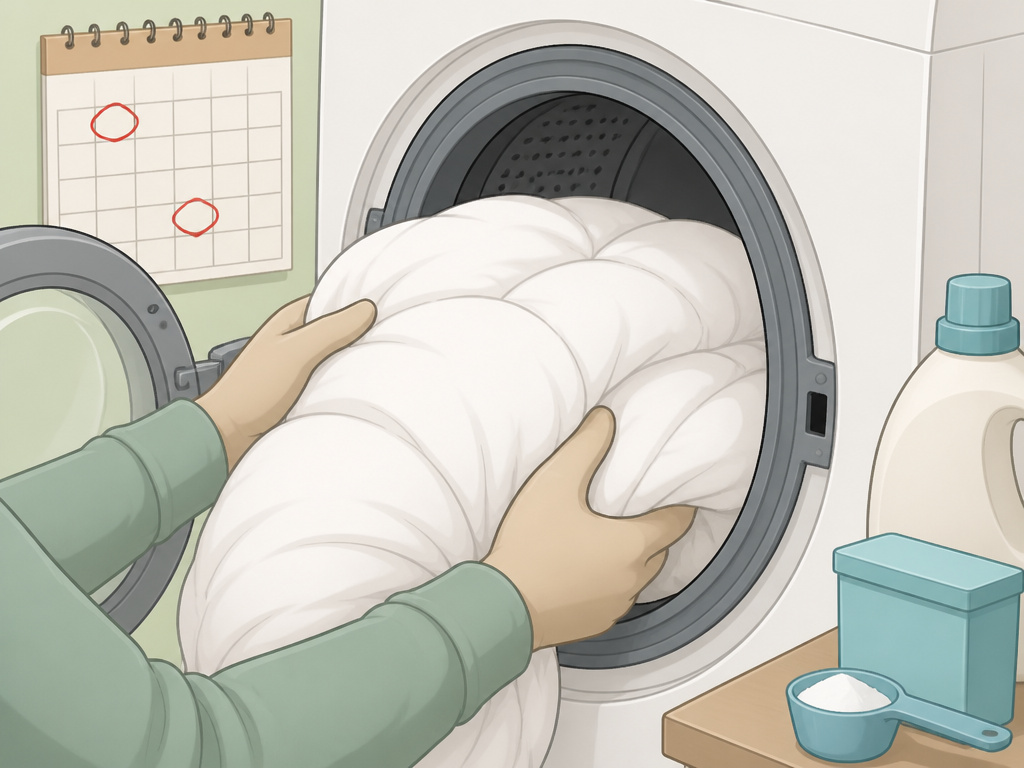 Wash it every six months, or at the change of seasons. If it’s used directly without a cover, or by a child who has accidents, wash it quarterly. A duvet cover isn’t a forcefield, dust, skin cells, and moisture still get through.
For organic kids bedding, which is often more delicate, stick to the six-month schedule but always use the gentlest cycle and mildest detergent specified for the materials.
More frequent washing than this wears out the fabric and stitching. Less frequent washing allows allergen buildup. The six-month rhythm is the balance point.
Frequently Asked Questions
Can you wash a duvet in a 7kg washing machine?
You can wash a twin or double duvet in a 7kg machine if it tumbles freely. A queen or king duvet will be too bulky. It won’t get clean, the detergent won’t rinse out, and you risk breaking the machine’s drum or motor. When in doubt, use a larger machine.
How do you dry a duvet without a dryer?
Lay it flat over several clotheslines or clean, dry surfaces outdoors in a breezy, shaded spot. Flip it every few hours. This can take two to three full days for a down duvet to dry completely, and you must be certain the center is dry. Indoor air-drying in a damp climate is not recommended, as it often leads to mildew.
Can you put a duvet in the dryer?
Yes, and for down or synthetic fills, you should. Use a low-heat setting and add dryer balls or clean tennis balls to break up clumps. Check it every 30-45 minutes and shake it out. Ensure it is 100% dry before removing it.
What temperature should you wash a duvet at?
Use the maximum temperature listed on the care label. Common guidelines are: cold for down, 40°C for most synthetics and cotton shells, and 60°C for anti-dust mite or anti-allergy washes. Never exceed the label’s instruction.
Is it better to wash or dry clean a duvet?
For most modern duvets, washing is better and often the only safe method. Dry cleaning uses chemicals that can damage down fills and degrade synthetic fibers over time. Always follow the care label. If it says “dry clean only,” respect it, but know that most “machine washable” duvets will last longer with careful home washing.
The Bottom Line
Washing a duvet comes down to respecting three limits: your washer’s capacity, the care label’s temperature, and the dryer’s patience. Use a front-loader big enough to let it move, a gentle cycle with mild detergent, and low heat with dryer balls until every last bit of filling is dry and fluffy. Store it in breathable cotton, never plastic. Do that, and even a good down duvet will last through years of cozy sleep. For the rest of the sleep setup, from the best comforters for teenagers to soft blankets for children, the same rule applies, check the label, then match your machine to the job.
