
What Age Do Kids Stop Wetting the Bed? Parent’s Age Guide
This post contains affiliate links. As an Amazon Associate we earn from qualifying purchases.
Most children stop wetting the bed between ages 5 and 7, but the path isn’t the same for everyone. The Canadian Paediatric Society puts the prevalence at 15% at age 5, 10% by age 7, and 5% by age 10. Bedwetting is considered a standard part of development until at least age 5, and formal treatment is typically only considered from age 7 onward.
That 15% number at age five is the starting point, not an alarm bell. The real question isn’t just when they stop, but what the range of normal looks like and when a wait-and-see approach shifts toward actionable steps.
What follows: the exact prevalence numbers that define the timeline, the 15% yearly resolution rate that offers perspective, the line between common childhood development and a treatable condition, and the practical, non-punitive strategies that work when you and your child are ready.
Key Takeaways
- Bedwetting is common for 15% of 5-year-olds and 10% of 7-year-olds; it only becomes a condition targeted for treatment around age 7.
- Constipation is a hidden driver in over 80% of simple cases, and addressing it resolves bedwetting for more than half of those kids.
- Enuresis alarms are the first-line treatment for motivated kids over 7, but they require 4-8 weeks of consistent, supervised use to start working.
- The goal is managing the situation without shame, using reliable mattress protectors and waterproof covers protects sleep surfaces and reduces family stress.
- If bedwetting persists with daytime symptoms past age 7, or suddenly returns after a long dry period, a pediatric visit is warranted to rule out underlying causes.
The Core Prevalence Numbers by Age
Forget vague “most kids” timelines. The question of when kids stop wetting the bed is answered with specific, age-bracketed data from pediatric research. These numbers turn anxiety into context.
The Canadian Paediatric Society (CPS) guideline provides the clearest benchmarks: prevalence is 15% at age 5 years, 10% by age 7, and 5% by age 10. This data frames bedwetting not as a binary problem but as a developmental process with a predictable decline.
The prevalence of nocturnal enuresis is 15% at age 5 years, 10% by age 7, and 5% by age 10. Untreated enuresis has an estimated prevalence into adulthood of up to 2%. Family studies support strong genetic links.
A separate large study cited by the NIH/NCBI gives an even earlier snapshot. At 54 months (4.5 years), it found 8.3% of children had nocturnal enuresis (at least 2 wet nights per week), while a larger group, 21.3%, had infrequent bedwetting (less than 2 wet nights per week). This distinction is critical. Isolated accidents are far more common than the frequent wetting that defines the condition.
| Age | Prevalence (Frequent: ≥2 nights/week) | Key Context |
|---|---|---|
| 4.5 years | 8.3% | 21.3% have infrequent wetting (<2 nights/week). |
| 5 years | 15% | Bedwetting is still developmentally normal; not a “problem”. |
| 7 years | 5-10% | Formal assessment and treatment options begin here. |
| 10 years | 5% | Spontaneous yearly resolution rate of 15% applies. |
| Adolescence | 1-2% | The European Association of Urology protocol notes a 2:1 boy-to-girl ratio at any age. |
The most hopeful number comes from urology guidelines: a spontaneous yearly resolution rate of 15% at any age. This means that each year, for any group of kids with bedwetting, about 15% will simply outgrow it without any intervention. That rate is why watchful waiting is a medically sound strategy for younger children who aren’t distressed by it.
When Is Bedwetting Considered a “Problem”?
Medical guidelines draw a clear line between common childhood development and a condition warranting clinical attention. That line is primarily defined by age and frequency, not parent frustration.
The NICE clinical guideline states it has been common practice to define enuresis as abnormal from age 5 and only to consider children for treatment when they are 7 years. This seven-year mark is the practical pivot point. Before that, the focus is on education, reassurance, and ruling out simple fixes like constipation.
The type of bedwetting matters, too. Primary enuresis means a child has never had a prolonged dry period (at least 6 months). This is the most common type and is strongly linked to developmental pace and genetics. Secondary enuresis is when wetting starts again after at least six months of dryness. This type warrants a closer look for triggers like a urinary tract infection, new stressors, or sleep apnea.
Where this goes sideways: Punishing or shaming a child for bedwetting. The CPS is explicit: enuresis is unintentional and cannot be improved through consequences. Shame only adds anxiety, which can worsen the problem.
The child’s and family’s distress level is the other half of the equation. If a 6-year-old isn’t bothered and their self-esteem is intact, and the family can manage with good protective mattress covers, waiting is recommended. If a child is avoiding sleepovers or feeling ashamed, that emotional impact signals it’s time to explore solutions, even if they’re not yet 7.
The Hidden Factor Most Parents Miss: Constipation
You can follow every bedtime routine perfectly and still miss the most common physical cause of persistent bedwetting. The link between the bowel and the bladder is direct, and constipation is often the silent saboteur.
The CPS notes that one recent study found 82% of children with primary, simple enuresis had constipation. The kicker? Treating the constipation alone resolved bedwetting in more than half of those children. When the rectum is full, it puts pressure on the bladder, reducing its capacity and irritating the nerves that signal fullness. The brain gets confused.
Parents often miss constipation in school-aged kids because they’re not monitoring bathroom habits as closely. Look for clues beyond frequency: large, hard, or painful stools; stool leakage (encopresis); abdominal bloating; and a history of holding bowel movements.
Managing this is framed as “bladder-friendly bowel health.” It involves: 1. Increasing water and fiber intake consistently throughout the day. 2. Establishing a regular, unrushed toilet routine after meals. 3. Using a pediatrician-approved stool softener if needed, not as a punishment but as a tool to retrain the system.
Fixing this can be the entire solution. It’s always the first box to check before moving to more involved treatments like alarms or medication.
When Is It Time to Consider Treatment?
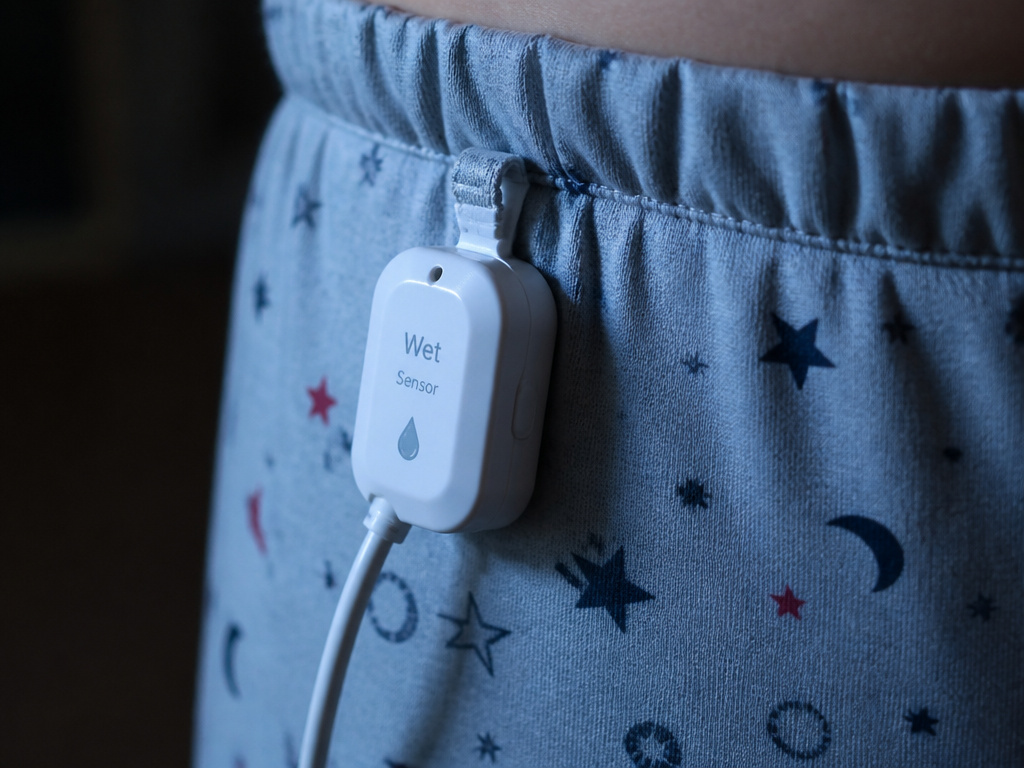
Treatment isn’t about age alone. It’s a decision based on the child’s maturity, motivation, and the family’s capacity to consistently support a plan. The two first-line options backed by guidelines are enuresis alarms and medication, each with a specific role.
Enuresis alarms are the most effective long-term solution. They work by conditioning the brain to wake to the sensation of a full bladder. The NICE BNF summary recommends them for motivated, well-supported children with more than 1–2 wet beds per week. Success requires a committed 2-3 month window.
- How they work: A moisture sensor clips to the pajamas. At the first drop of urine, it triggers a loud alarm or vibration.
- The reality: The child often does not wake up at first. A parent must wake them, help them to the toilet to finish, and reset the alarm. This disrupts sleep for weeks.
- Review point: Treatment should be reviewed after 4 weeks and continued until at least 2 weeks of completely dry nights are achieved.
- For younger kids: Alarms can be considered for children under 7 depending on the child’s maturity and understanding.
Desmopressin is a medication that reduces the amount of urine produced at night. It’s a “bridge” solution, effective for sleepovers, camp, or reducing wet volume quickly. It doesn’t teach the bladder to wake up, so stopping it often leads to relapse if used alone. It’s about 50% effective and requires careful fluid restriction in the evenings to prevent low sodium levels.
The choice often comes down to logistics. Does your family have the stamina for 8 weeks of interrupted nights for a potential long-term cure (alarm)? Or do you need a reliable dry night for a specific event with a plan to address the root cause later (medication)? A pediatrician can help you navigate this.
Practical Management While You Wait
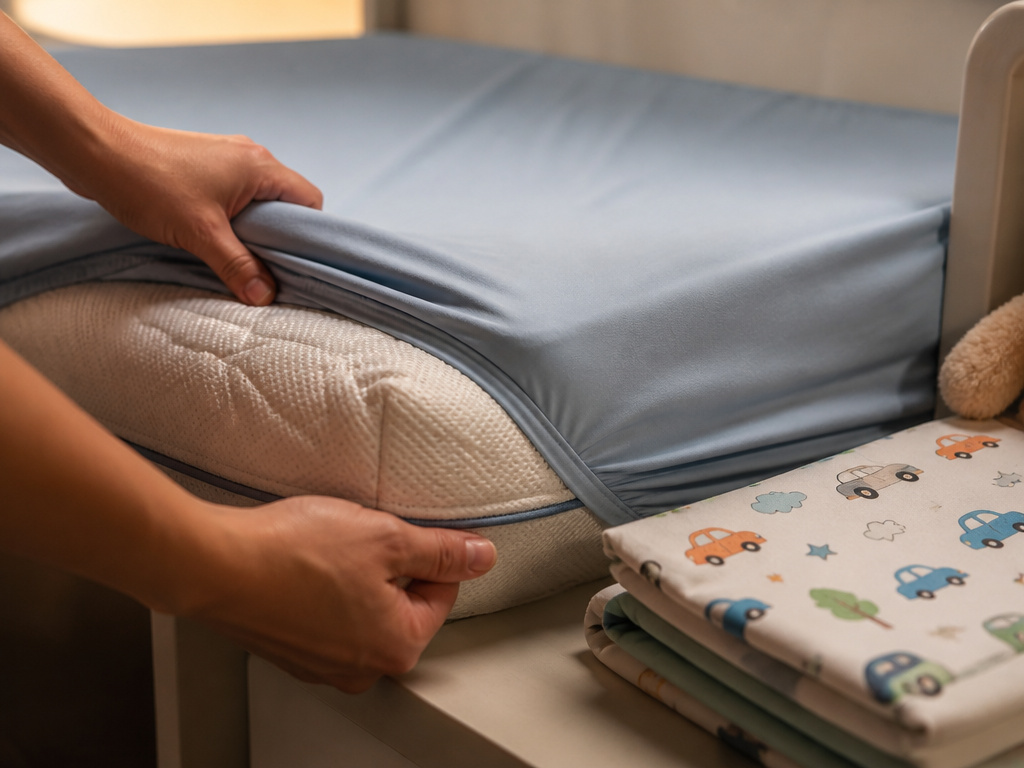
While working on underlying causes or waiting for development to catch up, your daily goal is damage control and dignity preservation. A good strategy removes stress from the equation for everyone.
Your first purchase should be a high-quality, silent waterproof mattress protector. Not the crinkly vinyl sheet of the past, but a modern, quilted, breathable pad that fits snugly and feels like part of the kids bedding. Layer it with easy-to-change kids sheets. This creates a “strip-and-go” system for quick nighttime changes without flipping mattresses or major disruptions.
Make the bathroom trip easy. Use a nightlight in the hallway and bathroom. Keep a small, dim lamp on in their room if total darkness is scary. Consider a portable potty in the room for younger children who wake up but can’t make it down the hall.
Limit fluids 1-2 hours before bed, but ensure they drink well throughout the day. Dehydration leads to concentrated urine, which can irritate the bladder. Always have a final “double void” bathroom trip right before lights out.
Easy to miss: The smell. Enzymatic cleaners designed for pet stains are the only thing that fully breaks down urine crystals in a mattress. Standard detergents or vinegar masks the odor temporarily; enzymes eliminate it.
This phase is about practicality, not punishment. You’re managing a physiological event, not a behavior. Keeping a stock of clean bedding sets and a calm middle-of-the-night routine does more for everyone’s well-being than any reward chart.
When to Talk to a Pediatrician
Most bedwetting resolves with time and simple management. Certain signs, however, warrant a professional conversation to rule out other issues.
Schedule a visit if you see: * Daytime symptoms: Any daytime wetting, urgency, pain with urination, or straining. * The return of wetting: Secondary enuresis, a dry period of 6+ months followed by a restart. * Persistent frequency: Continued bedwetting more than twice a week past age 7. * Physical signs: Cloudy or pink urine, unusual thirst, or snoring/sleep apnea symptoms. * Emotional distress: The child expresses significant shame, anxiety, or avoids social activities.
The visit will likely involve a urine test to rule out infection, a discussion of bowel habits, and a full history. This isn’t about assigning blame. It’s a checkpoint. As the Cleveland Clinic bedwetting overview notes, bringing it up can be hard, but it’s a common, treatable part of pediatric care. You’re gathering information, whether that leads to a treatment plan or simply the reassurance that your child is on their own normal curve.
Frequently Asked Questions
Is bedwetting more common in boys or girls?
Yes, there is a consistent gender difference. The European Association of Urology protocol notes the incidence is about two boys to one girl at any age. The reasons are not fully understood but are believed to be linked to slightly slower maturation of bladder control systems in boys.
My 10-year-old still wets the bed. Are we too late for help?
Not at all. While prevalence drops to around 5% by age 10, that still represents many children. The same effective treatments (alarms, medication) are used, often with high motivation from the child. The spontaneous resolution rate of 15% per year still applies, but at this age, proactive treatment is usually welcomed and can quickly improve quality of life and self-esteem.
Can certain drinks make bedwetting worse?
Yes, caffeine is a bladder irritant and a diuretic, meaning it increases urine production. It’s found in soda, iced tea, and chocolate. Citrus juices and artificial sweeteners can also irritate some children’s bladders. The best practice is to stick to water or milk in the evening hours.
Do pull-ups or nighttime diapers prevent a child from learning to be dry?
This is a common worry, but there’s no evidence that using protective underwear delays dryness. For a deeply sleeping child, a pull-up is a practical tool that preserves sleep for the whole family and protects the mattress. The key is to frame it neutrally, as a “nighttime underwear” that keeps them comfortable, not as a babyish regression. It’s a management tool, not a treatment.
Before You Go
The path to dry nights is a curve, not a deadline. Anchor your expectations in the data: 15% of 5-year-olds, 10% of 7-year-olds. Your job in the early years is less about fixing and more about managing, with reliable mattress protectors, calm routines, and a check for constipation.
When your child is around 7 and motivated, that’s the window for proven interventions like alarms. Until then, or if the wetting is infrequent, your reassurance is the most powerful medicine. They will get there. Your calm, practical support, choosing soft organic cotton bedding for comfort and effective waterproof layers for peace of mind, builds the foundation for dry nights, whenever they arrive.
