
Proven Methods: How to Get Kids to Sleep in Their Own Bed
This post contains affiliate links. As an Amazon Associate we earn from qualifying purchases.
To get a child to sleep in their own bed, use a consistent behavioral method for five to seven nights. The American Academy of Sleep Medicine recommends unmodified extinction, graduated extinction, or positive bedtime routines as effective treatments for bedtime resistance and night wakings. Success hinges on consistency, a pre-sleep routine starting 20-45 minutes before bed, and putting the child down drowsy but awake.
That five-to-seven-night window isn’t a guess. It’s the documented efficacy timeline from controlled crying studies. The method you pick changes what those nights feel like for everyone in the house.
This guide walks through the three evidence-backed behavioral methods, how to set up the physical room to support the plan, and what to do when the standard advice doesn’t fit your child. By the end, you’ll have a clear, step-by-night plan tailored to your tolerance for protest and your child’s temperament.
Key Takeaways
- Method dictates duration. Unmodified extinction (full ignoring) often works fastest but is hardest on parents; graduated extinction (timed checks) typically takes five to seven nights.
- The routine is non-negotiable. A strict, calming bedtime routine must start 20-45 minutes before sleep and end with the child in bed, drowsy but awake.
- Environment enables independence. A comfortable, safe, and inviting kids bed with familiar bedding is a prerequisite, not an afterthought.
- Anxiety changes the game. For highly anxious children, “camping out” or parental presence fading is a more suitable starting point than controlled crying.
- Consistency beats intensity. One lenient night can reset the clock. The plan only works if every caregiver follows the same rules every night.
The Three Core Behavioral Methods (And How to Pick One)
The clinical consensus is clear. Behavioral interventions are the first-line treatment for getting kids to sleep independently. The American Academy of Sleep Medicine recommendations list three as effective standards: unmodified extinction, graduated extinction, and positive routines with faded bedtime.
Your choice isn’t about which is “best.” It’s about which one you can stick with for a full week.
Unmodified extinction involves putting the child to bed at a set time and then ignoring all protests and cries until a set morning time, except for genuine illness or danger. The goal is to remove parental attention as a reinforcement for waking.
Unmodified Extinction (“Cry It Out”)
This is the most direct approach. You complete the bedtime routine, say goodnight, and leave the room. You do not re-enter until morning unless you suspect the child is ill or in danger. – Expected timeline: Often shows improvement within 3 nights, with resolution by night 5-7. – Best for: Parents with a high tolerance for initial crying who need a fast, definitive solution. – The hard part: The first night can involve up to two hours of crying or protesting. Walking back in before the child sleeps teaches them that more crying eventually works.
Graduated Extinction (“Controlled Comforting”)
This method uses timed check-ins. You leave after bedtime, but return for brief, boring visits at set intervals (e.g., 5, then 10, then 15 minutes). – Expected timeline: Typically five to seven nights to establish consistent sleep. – Best for: Parents who find full ignoring too distressing. The checks reassure the child without providing the interaction they’re crying for. – Where this goes sideways: Making the checks too long or engaging. You enter the room, say a scripted phrase like “It’s time for sleep, I love you,” and leave within 30 seconds. No picking up, no stories, no extended soothing.
Positive Routines & Faded Bedtime
This is a gentler, stimulus-control method. You temporarily set bedtime later, coinciding with when the child naturally falls asleep quickly. You then move it 15 minutes earlier every few nights. – Expected timeline: Slower, often 2-3 weeks, but with minimal crying. – Best for: Children who fight bedtime with intense anxiety or for families philosophically opposed to crying methods. – Critical rule: If the child doesn’t sleep within 20 minutes, you use “response cost” — you take them out of bed for a short, boring period before trying again.
| Method | Core Action | Parental Difficulty | Child’s Typical Protest | Best Fit For |
|---|---|---|---|---|
| Unmodified Extinction | Ignore all protests until morning | High (first 3 nights) | Intense, long-lasting | Parents needing fastest results |
| Graduated Extinction | Timed, boring check-ins | Moderate | Moderate, diminishing | Most families; balances speed & compassion |
| Faded Bedtime | Move bedtime later, then gradually earlier | Low | Low | Anxious children or crying-averse parents |
TL;DR: Pick graduated extinction if you’re unsure. Its structured check-ins provide a manageable path for most families, and its five-to-seven-night success rate is about 80%.
Before You Start: The Non-Negotiable Bedtime Routine
A behavioral method fails without the scaffold of a predictable pre-sleep ritual. This isn’t about love. It’s about neurology — the routine cues the brain that sleep is next.
The American Thoracic Society patient guide is explicit: a strict routine starts 20-45 minutes before sleep time. Every minute matters.
Your routine must be: 1. Consistent in order. Bath, pajamas, brush teeth, two books, lights out. The sequence is a signal. 2. Calming in content. No roughhousing, scary stories, or screens. Blue light from tablets suppresses melatonin for over an hour. 3. Ending in the bed. The last step is the child in their own bed, drowsy but awake. Falling asleep in your arms and being transferred teaches the wrong sleep association.
Common mistake: Extending the routine with “just one more” story or song when the child stalls. This rewards limit-testing and tells them bedtime is negotiable. The stall ends the moment you give in.
If the routine currently happens in your bed or on the couch, move it into the child’s room now, a week before starting any extinction method. The location is part of the cue.
Build a Bedroom That Welcomes Sleep
You can’t ask a child to stay in a room that feels scary or uncomfortable. The physical space must be a co-conspirator in your plan. This is where your choice of bedding and sheets moves from aesthetics to strategy.
Safety and Security First:
- Install bed rails if transitioning from a crib. A toddler bed with integrated rails often feels safer than a vast open big-kid bed.
- For older children in a standard bed, consider low-profile safety rails to prevent falls and ease anxiety.
- Use a waterproof mattress protector underneath the sheets. Anxiety can lead to accidents, and the stress of a wet mattress will derail your progress.
Comfort and Connection:
- Let them choose a new pillow or kids bedding set for their “big kid bed.” Ownership builds pride.
- Ensure the mattress is supportive. An old, sagging hand-me-down can cause real physical restlessness.
- For sensory-seeking or anxious children, a weighted blanket can provide deep-pressure input that calms the nervous system. Introduce it during calm daytime moments first.
Environment Tweaks:
- Use a dim, warm-colored nightlight if needed, placed low and out of direct sight.
- Consider a white noise machine to mask household sounds that might cause alertness.
- Keep the room cool — around 68-70°F (20-21°C) is ideal for sleep.
The goal is a room that feels safe, cozy, and theirs. A child is far less likely to flee a nest they’ve helped feather.
Night One Through Seven: The Step-by-Step Guide for Graduated Extinction
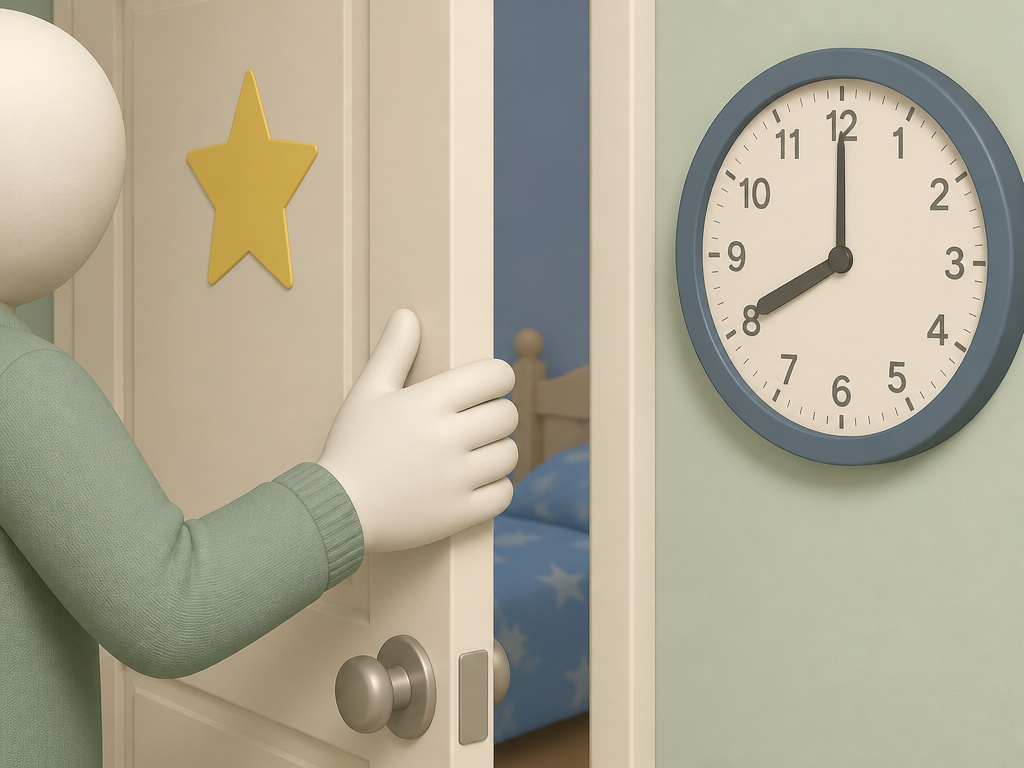
This is the nightly playbook for the most common method. Adjust the check-in times to fit your child’s age and temperament (shorter intervals for younger/more anxious kids).
Before Bed:
- Start the 20-45 minute routine on time.
- Give a clear, positive preview: “Tonight, after our stories, I’ll give you a hug and leave. I’ll come back to check on you in a little while, but I won’t stay. It’s time to practice sleeping in your awesome bed.”
- Follow the routine exactly. Place them in bed awake, say your goodnight phrase, and walk out.
The Check-In Schedule (Example):
- Night 1: Leave. Check at 5, 10, then 15-minute intervals if crying continues.
- Night 2: Check at 10, then 15-minute intervals.
- Night 3: Check at 15-minute intervals.
- Nights 4-7: Extend to 20 or 25-minute intervals if needed. Most children stop calling out before checks are needed by night 4 or 5.
Every Check-In Must Be Boring:
- Enter the room calmly. Do not turn on the main light.
- Use a monotone voice. “It’s time to sleep. I love you. Goodnight.”
- Do not pick them up, rub their back, or lie down.
- Leave within 30 seconds, even if crying escalates. The escalation is a test.
What if they come out of the room?
- Walk them back, silently and calmly, every single time. Do not engage in conversation.
- The first few nights, you may do this 20 times. The 21st time must be identical to the 1st.
The part nobody mentions: The crying on night two or three is often a frustrated protest, not distress. They know the system now and are testing its boundaries. This is when consistency pays the entire bill.
When the Standard Plan Doesn’t Fit: Adaptations for Anxious or ND Children
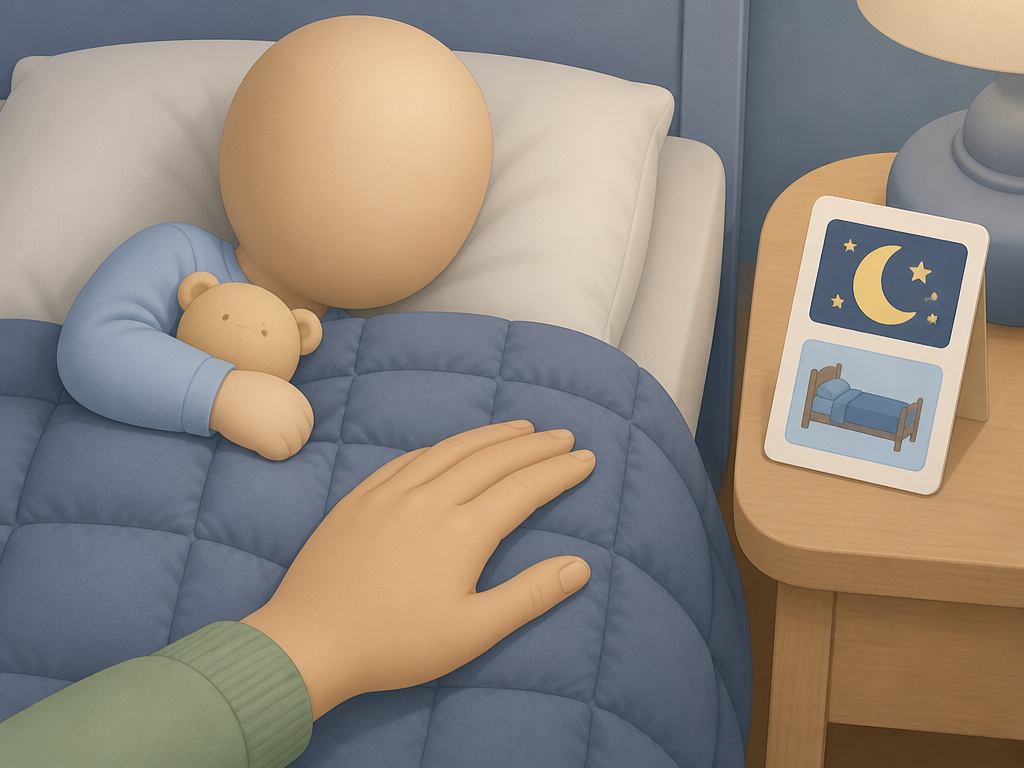
The five-to-seven-night rule assumes a typically developing child. For kids with high anxiety, autism spectrum disorder (ASD), or other neurodevelopmental differences (NDDs), the path needs modification.
For the Anxious Child: “Camping Out” (Parental Presence Fading)
This starts with you in the room. You sit in a chair next to the bed until the child falls asleep. Every few nights, you move the chair farther away, then into the hallway, then out of sight. – Timeline: Slow — can take 2-4 weeks. – Why it works: It slowly decouples your physical presence from sleep onset without the panic of sudden separation.
For Children with NDDs:
- Behavioral methods still come first, but may need adaptation. Visual schedules showing the bedtime routine can help.
- Melatonin may be considered, but only after consulting a pediatrician. Studies in children with NDDs show it can reduce sleep onset time, but side effects like morning fatigue or mood swings occur in about 6% of cases.
- The core principle remains: they must learn to fall asleep in their own bed. External aids like melatonin or a sensory weighted blanket are supports, not replacements, for the behavioral skill.
Hard Stop: Never use any form of extinction with an infant under three months old. Their needs are physiological, not behavioral.
Troubleshooting the Most Common Setbacks
The plan is simple. Sticking to it is hard. Here’s what to do when you hit these predictable walls.
“They cried until they vomited.”
Clean them up quickly and calmly with minimal interaction. Change the pajamas and sheet (this is where a spare bed sheets set layered over a mattress protector is a lifesaver). Put them back in bed and continue your check-in schedule. They learn that vomiting does not end the bedtime.
“They fell asleep on the floor by the door.”
Carry them to their bed. Do not let them sleep on the floor. It reinforces that leaving the bed is an option.
“My partner gave in and brought them to our bed last night.”
This resets the clock. You must align with all caregivers before starting. One lenient night teaches the child that persistence beats consistency.
“It’s been 10 nights and there’s no improvement.”
If after 7-10 nights of flawless execution there is zero progress, stop. Consult your pediatrician to rule out underlying issues like sleep apnea, restless legs, or significant anxiety that needs a different clinical approach.
Frequently Asked Questions
How long does it take for a child to get used to their own bed?
For a typically developing child using a consistent behavioral method like graduated extinction, the adjustment period is typically five to seven nights. The first 2-3 nights are the hardest, with noticeable improvement by nights 4-5. The “used to it” feeling, where they go to bed without protest, solidifies over 2-3 weeks.
What age is best to transition a child to their own bed?
The best age is when the child is developmentally ready, usually between 18 months and 3.5 years. Key readiness signs include climbing out of the crib, expressing interest in a big kid bed, and being able to understand simple directives. Starting after age 3 can be harder due to more established habits and stronger will, but the same methods still apply.
Is it harmful to let a child “cry it out”?
According to current research, including studies measuring infant stress hormones (cortisol) and long-term attachment, controlled crying methods like graduated extinction show no evidence of short-term or long-term harm when used with appropriate-age children (over 3 months) without underlying conditions. The stress of chronic, fragmented sleep for the entire family often outweighs the short-term protest crying during the learning period.
My child comes into my room every night. What do I do?
Walk them back, immediately and calmly, every single time. Do not engage in conversation, scold, or give in. Consistency is the only solution. For persistent wanderers, a visual reminder like a “stop sign” on their door knob or a reward chart for staying in bed all night can help.
Will a nightlight or special blanket create a bad sleep association?
No. Positive sleep associations are encouraged. A nightlight, favorite stuffed animal, or special weighted blanket are portable comforts that help the child self-soothe. A bad sleep association is something that requires your presence, like rocking or feeding to sleep. Independent sleep tools are good.
Before You Go
Getting a child to sleep in their own bed is a mechanical skill, not a magical one. It requires a clear plan, a supportive environment with the right bedding and safety rails, and the fortitude to follow through for about a week.
Pick one behavioral method — graduated extinction is the default for most — and commit to the timeline. Prepare the room so it’s a place they want to be. Remember that the crying you hear on night three is usually frustration, not fear. They are learning a new skill, and frustration is part of that.
The payoff is more than a full night’s sleep for you. It’s teaching your child the foundational skill of self-soothing and independent sleep, a gift that lasts long after they’ve outgrown their toddler bed. Start on a Friday night, rally your partner, and follow the script. By next Friday, you’ll likely be turning out the light on a child who stays put.
