
Can a Baby Sleep in a Snuggle Me? The Critical Safety Standards
This post contains affiliate links. As an Amazon Associate we earn from qualifying purchases.
No, babies cannot safely sleep in a Snuggle Me lounger. Federal law defines any product marketed or intended for infant sleep as an “infant sleep product” and mandates it must meet strict safety standards for bassinets, including a sleep surface angle of 10 degrees or less. The Snuggle Me is explicitly classified by its manufacturer as a “non-sleep product” and does not meet these mandatory requirements, creating documented risks of suffocation and positional asphyxia.
That classification isn’t a suggestion. It’s the line between a product that passed third-party testing for unsupervised sleep and one that didn’t. The difference is written into the Code of Federal Regulations sleep requirements.
What follows is the breakdown of that law, the specific mechanical hazards a lounger introduces, and the list of products that are legally certified to keep a sleeping baby safe. This isn’t about vigilance; it’s about engineering.
Key Takeaways
- The Snuggle Me Organic is legally and explicitly a “non-sleep product.” Using it for sleep, even supervised naps, violates its safety guidelines and federal regulations.
- Federal law (16 CFR § 1236.2) requires all infant sleep products to have a sleep surface angle ≤10° and meet the bassinet safety standard (ASTM F2194). Loungers like the Snuggle Me do not comply.
- Placing a Snuggle Me inside a crib, bassinet, or pack and play voids the sleep product’s safety certification, creating an unsafe sleep environment.
- CPSC data from a two-year period recorded 254 incidents, including 21 fatalities, linked to infant sleep products that did not meet safety standards.
- The only safe place for an infant to sleep is alone, on their back, on a firm, flat surface in a product certified for sleep: a crib, bassinet, play yard, or bedside sleeper.
The Federal Safety Standard That Makes the Answer “No”
The question isn’t about parental watchfulness. It’s about a product’s legal and engineering classification. In mid-2022, a new federal safety standard for infant sleep products became enforceable.
An “infant sleep product” is defined as “a product marketed or intended to provide a sleeping accommodation for an infant up to 5 months of age.” The rule mandates the sleep surface angle cannot exceed 10 degrees from horizontal, and the product must fully comply with the existing Safety Standard for Bassinets and Cradles (16 CFR part 1218).
This CPSC infant sleep product safety standard was informed by incident data. Between January 2019 and December 2020, the CPSC received reports of 254 incidents, including 21 fatalities, related to infant sleep products. The standard was written to address the specific hazards those incidents revealed.
The Snuggle Me Organic’s manufacturer states unequivocally on its safety page: “Snuggle Me products are non-sleep products. They are not designed, marketed or intended for sleep.” This declaration places it outside the scope of products that must meet the bassinet standard. By its own definition, it is not engineered for the risks of unsupervised sleep.
Where this goes sideways: Assuming “supervised sleep” is safe sleep. Supervision cannot prevent positional asphyxia, where a baby’s airway is blocked by their own chin tucking to chest. That happens internally, silently, and within minutes.
The 3 Mechanical Hazards a Lounger Introduces
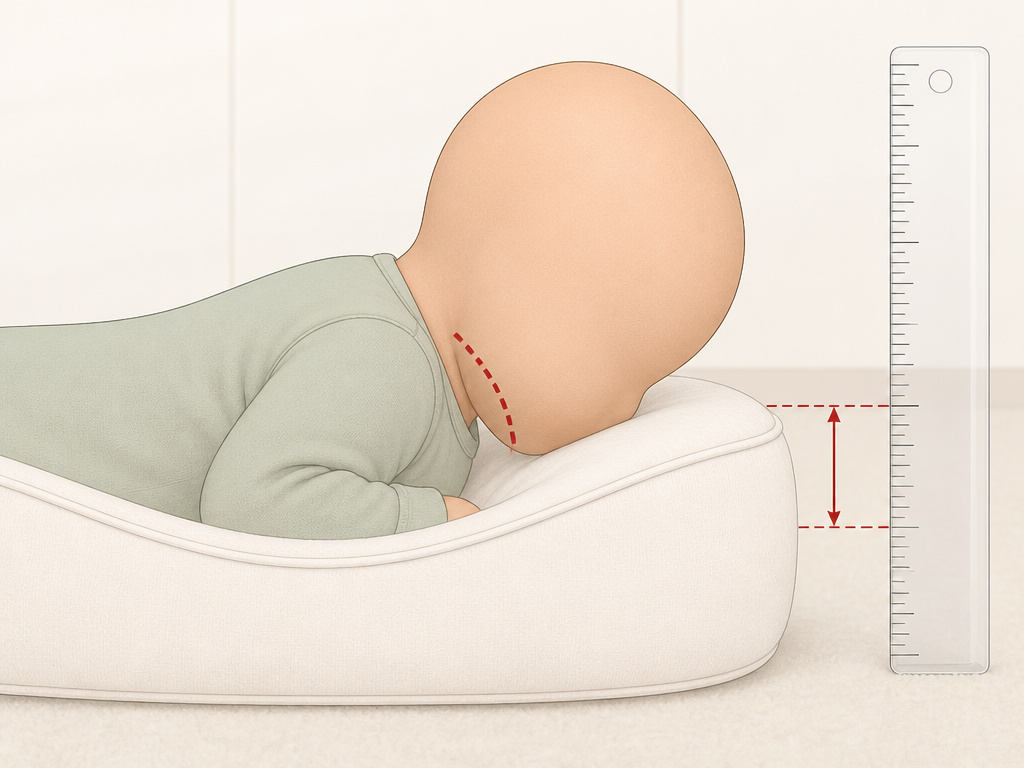 Why does a soft, padded lounger fail the safety test? The design creates three specific physical dangers that a firm, flat bassinet mattress is built to avoid.
- Surface Angle and Containment. A lounger’s sling design cradles the baby, often creating a curved surface that can tilt their head forward. This chin-to-chest position can restrict the airway. Furthermore, the low, soft sides do not meet the 7.5-inch minimum side height required for bassinets to prevent falls and contain the baby.
- Surface Firmness and Suffocation Risk. The padded, plush surface is not firm. If a baby rolls onto their side or stomach, which can happen even before they can intentionally roll, their face can press into the soft material, blocking breathing. A firm crib mattress prevents this indentation.
- Re-Breathing and Overheating. The padded sides and deep sling can limit air circulation around the baby’s face. If their face is pressed against soft fabric, they can re-breathe their own exhaled carbon dioxide, leading to a dangerous drop in oxygen. This risk is elevated if any blanket or lovey is added.
Common mistake: Placing the Snuggle Me inside a crib for “safe” naps. This directly contradicts the manufacturer’s warning: “Bassinets, cribs, and pack and plays are considered safe sleep spaces. By adding a Snuggle Me to these environments, this changes the safety of the sleep space and creates an unsafe sleep environment.”
The certification of a crib or bedside bassinet is based on testing its specific, firm, flat mattress and its exact structural dimensions. Adding any aftermarket product, no matter how well-intentioned, invalidates that certification.
What Happens If a Baby Falls Asleep in One?
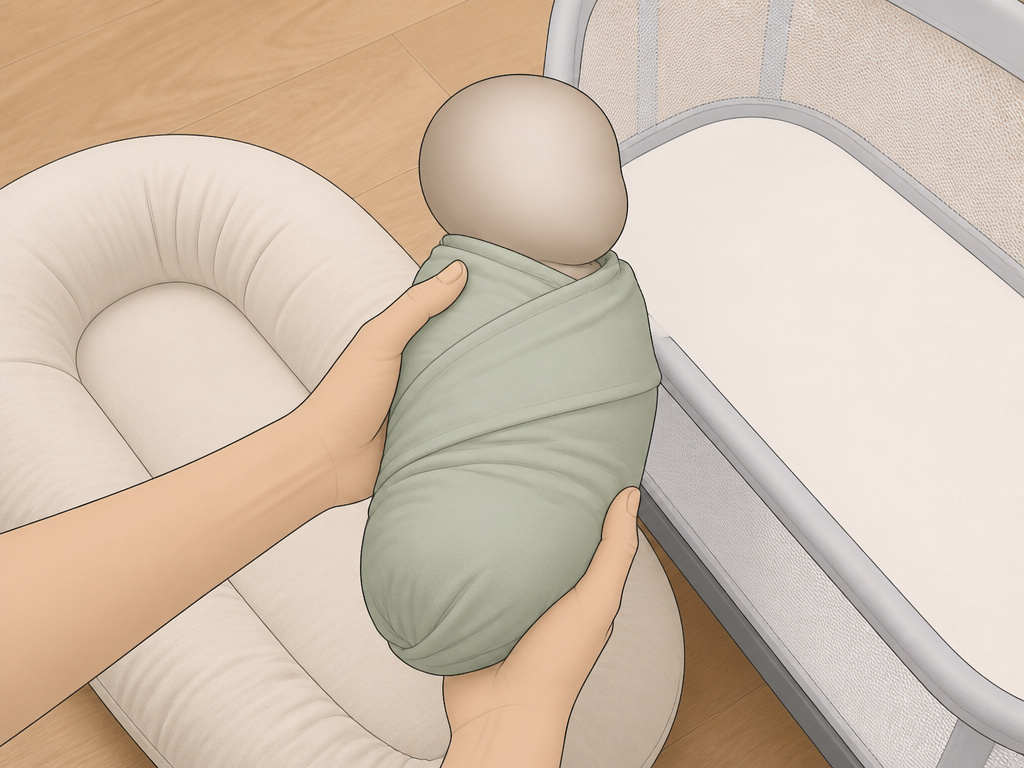 It’s inevitable. Newborns sleep 16-17 hours a day, in short bursts. They will fall asleep in swings, car seats, and loungers. The protocol is not to watch them closer, but to move them.
The American Academy of Pediatrics (AAP) and the CPSC are clear: if a baby falls asleep in a product not designed for sleep, they should be moved to a firm, flat sleep surface as soon as is practical. This is the core of the “back to sleep” campaign’s success, consistent, safe sleep environments every time.
| Scenario | Immediate Risk | Correct Action |
|---|---|---|
| Baby nods off in Snuggle Me on floor | Positional asphyxia from curved surface | Gently transfer to crib or bassinet sleepers |
| Baby asleep in lounger placed in adult bed | Suffocation from soft bedding/ mattress, fall risk | Move baby alone to a safe surface; remove lounger from bed entirely |
| Using lounger for “just a quick nap” | Normalization of unsafe sleep space; caregiver fatigue leads to prolonged use | Establish the rule: the lounger is for awake time only, no exceptions |
The transfer might wake them. That’s okay. It reinforces the safety habit. The goal is zero sleep hours in an uncertified space.
Safe, Certified Alternatives for Infant Sleep
If the Snuggle Me is for play and bonding, what products are actually designed and tested for sleep? These are the categories that meet the federal standard.
Certified Bassinets & Bedside Sleepers
These are the direct, portable solution for the first 5-6 months. Look for a label stating compliance with ASTM F2194 (Bassinets) or ASTM F2906 (Bedside Sleepers). A good bedside crib attaches securely to the adult bed, providing a separate, firm surface for the baby while keeping them within arm’s reach.
Full-Size Cribs & Play Yards
These are the long-term, stationary sleep spaces. A crib with a firm, snug-fitting mattress and a tight-fitting sheet is the gold standard. A play yard (like a Pack ‘n Play) with its included, firm mattress board is also fully certified for sleep and is excellent for travel or naps in other rooms.
The part nobody mentions: The “firm” in “firm, flat surface” means it should not indent at all under the baby’s weight. Press your hand into the mattress, if it contours easily around your fingers, it’s too soft.
When choosing a bassinet for newborns, the simpler the better. Avoid padded siding, pillow-like inserts, or rocking functions that can lock in a tilted position. The bare-bones model is often the safest.
Frequently Asked Questions
Can a baby take a short nap in a Snuggle Me if I’m watching?
No. Supervised sleep in an unsafe product is still unsafe sleep. Positional asphyxia is silent and can occur in minutes while a baby appears to be sleeping peacefully. The CPSC new sleep standard announcement was created in response to deaths that occurred during what caregivers believed was supervised sleep.
Why are Snuggle Mes sold if they’re not for sleep?
They are sold as infant loungers for awake interaction, tummy time, and propped play under direct, hands-on supervision. Their marketing and labels must state they are not for sleep. Their intended use is similar to a play mat, not a mattress.
Is it safe to put a Snuggle Me in a bassinet to make it more comfortable?
This is explicitly warned against by the manufacturer and violates safe sleep guidelines. Adding anything to a certified sleep space, including a lounger, padded liner, or blanket, voids its safety certification and creates entrapment and suffocation hazards. The bassinet’s firm, flat surface is the safety feature.
What does the AAP say about products like the Snuggle Me?
The AAP recommends a “firm, flat, noninclined sleep surface.” It states that any product that does not meet the CPSC’s June 2021 federal safety standard for infant sleep products should not be used for sleep. The AAP cites an independent expert review for the CPSC which found that “none of these tested products were safe for infant sleep” if they were inclined.
Are there any lounger-like products approved for sleep?
No. By definition, a “lounger” implies a cushioned, contoured, or inclined surface. The federal standard requires a flat surface under 10 degrees. For safe sleep, you need a bedside bassinet for newborn, crib, or play yard, not a lounger.
Before You Go
The data is specific. The law is clear. The Snuggle Me Organic is a lounger, not a sleeper. Its safe use is confined to awake, supervised play on the floor.
The transition from “awake time only” to “asleep in a safe space” is the critical ritual. Have your certified infant sleepers set up and ready before you settle in for cuddles. When those newborn eyelids get heavy, the move is non-negotiable: from the cozy lounger to the firm, flat crib. That simple transfer is the habit that aligns with the engineering, the regulations, and the evidence. It’s the one that works.
