
What Age Do Babies Drop to One Nap? A Guide to the Milestone
This post contains affiliate links. As an Amazon Associate we earn from qualifying purchases.
Babies typically drop to one nap between 12 and 18 months, with the most common age around 14-15 months. The transition is driven by maturing sleep biology, specifically, a slower buildup of homeostatic sleep pressure that allows them to stay awake longer. A 2020 meta-analysis of 11 studies found that 94% of children cease napping entirely by age 5, highlighting the preschool years as the window for this major sleep consolidation.
That 94% figure isn’t just a nice round number. It comes from a systematic review of child napping patterns that pooled data on thousands of kids. It tells you the outer boundary. The process of going from two naps to one is the first big step toward that monophasic, adult-like sleep pattern. It’s a sign their internal clock is getting stronger, but it’s also where parental schedules and child temperament crash into developmental biology.
What follows is a breakdown of the biology, the hard stats on timing, a side-by-side look at true readiness signs versus temporary glitches, and a step-by-step method for shifting the schedule without wrecking nighttime sleep. By the end, you’ll be able to read your child’s cues against the real data and know whether to hold the line on two naps or start winding one down.
Key Takeaways
- The 12-18 month range is the sweet spot, but the average is 14-15 months. A small percentage of sleep-trained babies may transition as early as 10 months.
- Pushing for one nap before a child is biologically ready leads to overtiredness, night wakings, and early mornings for 3+ weeks, it’s a clear failure signal.
- The drop is governed by slower homeostatic sleep pressure; their brain simply doesn’t need to reboot as often during the day.
- Look for a cluster of signs over 2-3 weeks, not a single bad nap day. Consistent 2+ hour morning naps and skipped afternoon naps are the strongest indicators.
- The transition isn’t linear. Plan for a 3-4 week adjustment period with some two-nap days mixed in, especially if your child is under 15 months.
The Core Age Range (and the Surprising Stat)
Most parents get the 12-18 month guideline. Few see the full timeline that statistic implies. The University of Colorado sleep lab study analyzed 73 data points across 11 studies to map nap cessation from infancy to age 12. The preschool period, ages 3 to 5, is where the action is, 57% of kids stop napping between 3 and 4 years, and 80% stop between 4 and 5. By the fifth birthday, nap time is over for 94 out of 100 children.
Where this goes sideways: Forcing a one-nap schedule before 12 months because you want a longer afternoon break. A baby’s sleep pressure still builds too quickly. They’ll crash before lunch, turning your “one nap” into a marathon 3-hour morning sleep that then ruins bedtime. The ensuing overtired cycle can last a month.
The move from two naps to one is the first major consolidation toward that end state. It usually happens between 12 and 18 months because that’s when the brain’s sleep drive begins to lengthen its cycle. A study in the Revista da Escola de Enfermagem da USP tracking kids 12-36 months found the vast majority had already dropped their morning nap on weekdays, preserving a solid afternoon rest. The average nap duration in that study was about 2 hours. That’s your target for a successful one-nap schedule: a single, solid block of daytime sleep.
| Age Range | Typical Nap Pattern | % Still Napping (Per Staton et al. Meta-Analysis) |
|---|---|---|
| 12-18 months | Transitioning from two naps to one | ~100% (nearly all still nap) |
| 24-36 months | One afternoon nap | ~85-90% |
| 36-48 months (3-4 years) | Nap fading | 43% (57% have ceased) |
| 48-60 months (4-5 years) | Occasional nap | 20% (80% have ceased) |
| 60+ months (5+ years) | Monophasic sleep | 6% (94% have ceased) |
This table shows you the landscape. Your 14-month-old isn’t just being difficult if they fight the second nap, they’re on a predictable path. The goal is to align your schedule with their biology, not the other way around.
The Biology Behind the Drop
Nap transitions aren’t about willpower. They’re about two internal systems: the homeostatic sleep drive (Process S) and the circadian clock (Process C). The sleep drive builds the longer you’re awake, like an internal pressure gauge. The circadian clock provides the rhythm, signaling when it’s time for sleep based on light and habit.
In infants, the sleep drive builds very fast. That’s why a newborn can barely stay awake 60 minutes. By 12 months, that drive has slowed enough to stretch wake windows to 3-4 hours. This is the key. When a child can comfortably stay awake from morning wake-up until, say, 12:30 PM without melting down, their biology is signaling readiness for one nap. The optimal sleep habits encyclopedia entry notes this shift is a “complex interaction between endogenous homeostatic sleep processes and extrinsic factors like parental and daycare schedules.”
Never block a wool-acrylic blend above 60°C. By 70°C the acrylic deforms permanently and the garment will not recover its shape, even after re-blocking.
Think of it like a battery. A younger child’s battery drains rapidly, needing two daily recharges. An older toddler’s battery has a larger capacity and a more efficient energy use, so one midday charge suffices. Pushing for one nap when the battery still drains quickly guarantees a crash, manifesting as tantrums, clinginess, and broken night sleep.
This biological shift also affects the timing of their circadian rhythm. Research cited by the University of Colorado Sleep and Development Lab shows that napping toddlers often have a slightly later evening melatonin onset. This is why, during the transition, you might notice a later bedtime creeping in. It’s not defiance; it’s a shifted internal clock.
Is My Baby Ready? The True Signs vs. The Red Herrings
You need a cluster of signs over at least two weeks. One bad day is a bad day. A pattern is a signal.
True Readiness Signs (Lasting 2+ Weeks):
- The morning nap becomes long and the afternoon nap disappears. They sleep 1.5-2+ hours for the first nap and then refuse or play through the second nap time.
- They resist the second nap consistently. This isn’t a 10-minute protest. They are awake and happy (or angry) in the crib for 45+ minutes, multiple days a week.
- Bedtime becomes a battle because of naps. They take two full naps and then can’t fall asleep at night until 9 PM or later. Their total sleep is too high.
- They easily handle a 4-5 hour wake window before the first nap. You can run morning errands, have lunch, and they’re still pleasant before going down near noon.
Red Herrings (Temporary Glitches):
- A few days of short naps due to a cold, teething, or a new skill (walking, talking).
- An occasional early morning causing a longer first nap and a skipped second nap.
- A single day of nap refusal because the schedule was off (a late start, a car ride).
Common mistake: Interpreting a week of disrupted naps from an illness as readiness to drop a nap. Transition while they’re sick, and you’ll have a miserable, overtired toddler who can’t recover. Always revert to the old schedule until they’ve been healthy for a full week.
The most reliable indicator is the first one on the list. When the morning nap naturally elongates and becomes the de facto main sleep event, the afternoon nap is biologically redundant. Your job is to notice that pattern and gradually shift the single nap later, to around 12:30 or 1 PM, to bridge the gap to bedtime.
How to Transition to a One-Nap Schedule: The Gradual Shift
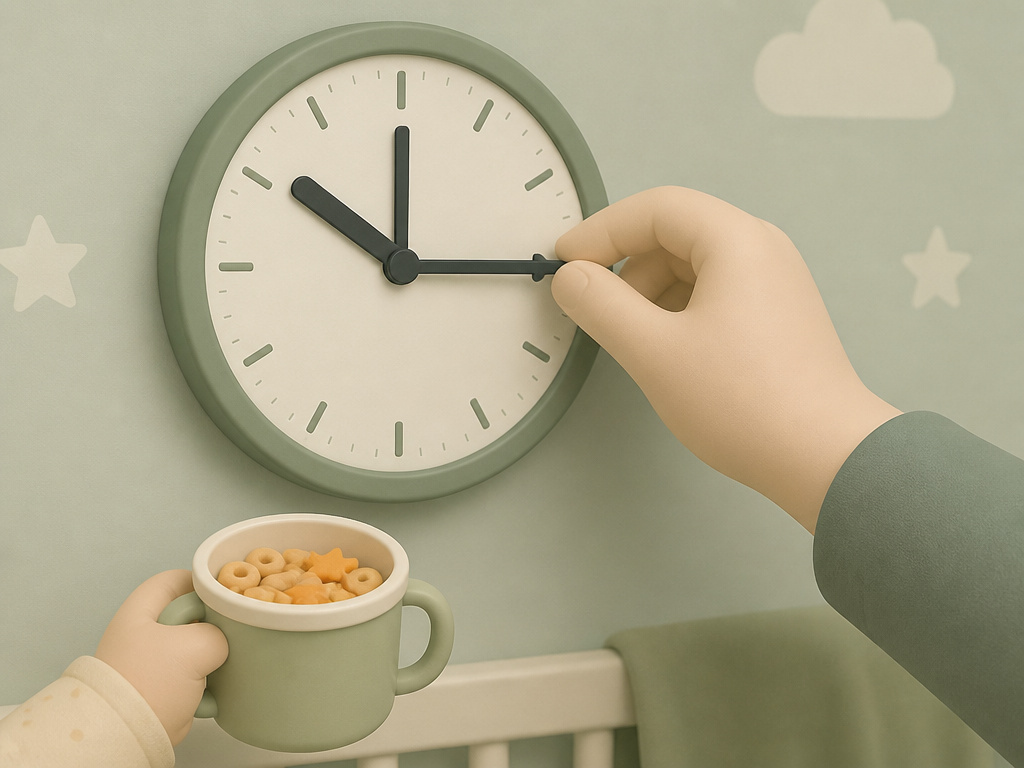
Cold turkey rarely works for kids under 18 months. Their little bodies can’t adapt that fast. A gradual shift over 3-4 weeks prevents the overtiredness that ruins nights and makes the whole process miserable.
Step 1: Push the morning nap later. Start by moving the first nap 15 minutes later every 3 days. Aim for a start time of 12:00 PM to 12:30 PM. Offer a snack and some quiet play to bridge the gap. Skip this, and they’ll be too tired to nap well, leading to a short nap and an impossible afternoon.
Step 2: Cap the nap initially. Once the nap starts at your target time, let it go as long as they want, but be prepared to wake them by 3:00 PM for the first week to protect bedtime. Letting it run until 4 PM will push bedtime past 9 PM, and you’ll lose all consistency.
Step 3: Offer a “micronap” or very early bedtime. On days the single nap is short (under 90 minutes), you have two choices: a 15-20 minute car or stroller nap at 4 PM, or a bedtime as early as 6:00 PM. The micronap is a bridge; the early bedtime is a reset. Trying to keep them awake from a 1 PM nap end until a 7:30 PM bedtime on a short nap is a recipe for a meltdown of epic proportions.
Step 4: Stabilize for a week. Once they are taking a solid 1.5-2.5 hour nap starting between 12 and 1 PM, hold the schedule steady for a full week. This cements the new rhythm.
During this transition, blackout curtains and a consistent pre-nap routine (like a story and a song) are non-negotiable. They provide the external cues their developing circadian rhythm needs to latch onto the new timing. This is also the time to ensure their sleep environment supports long, restful sleep, with a comfortable toddler mattress and appropriate toddler blankets.
The One-Nap Schedule in the Real World
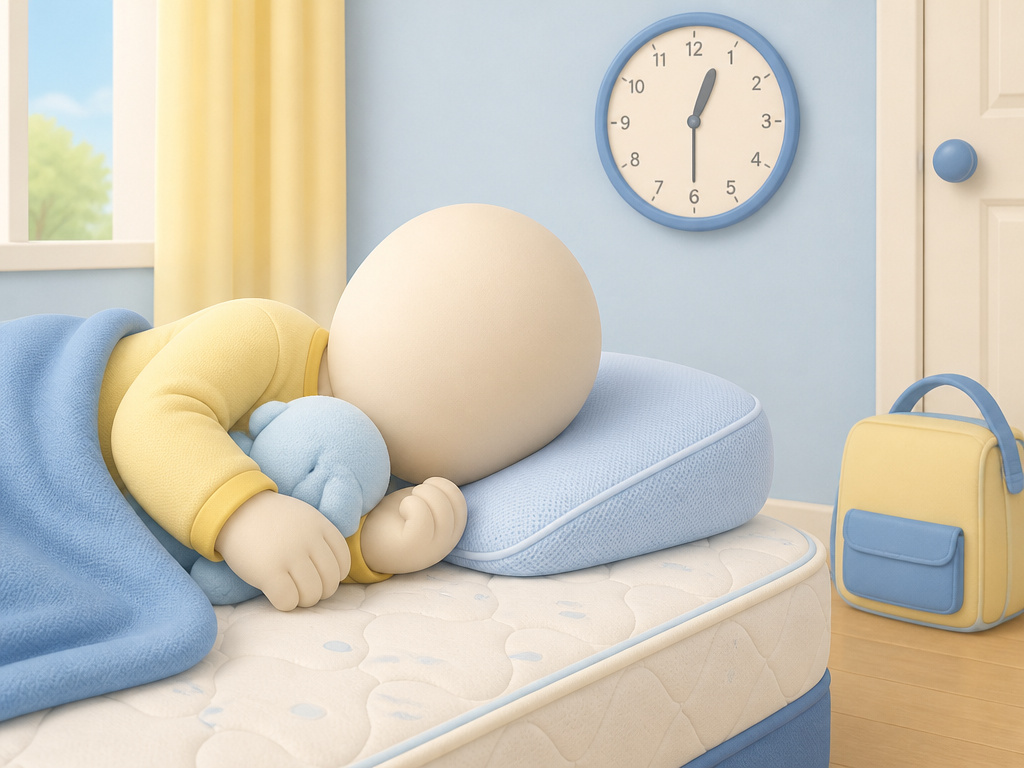
The ideal one-nap day has a rhythm: wake around 7 AM, nap from 12:30 PM to 2:30 PM, bedtime at 7:30 PM. That’s the theory. Reality is messier.
Some kids are lower sleep needs. They might nap only 75 minutes and do fine with a 7 PM to 7 AM night. Others are higher sleep needs. They’ll demand a 2.5-hour nap and still need 11.5 hours at night. The Galland 2012 normal sleep patterns review shows the normal range for total sleep at this age is wide. Your child owns their spot on that curve.
Daycare complicates everything. Many centers enforce a one-nap schedule for toddlers over 12 months regardless of individual readiness. If that’s your situation, you’ll need to compensate with an earlier bedtime, sometimes as early as 6:00 PM, on weekdays. Use weekends to offer a two-nap schedule if they seem desperately overtired, or protect a very early nap to help them catch up.
The right sleep gear can make a noticeable difference in nap quality during this adjustment. A supportive children’s mattress and a properly sized pillow for toddlers (if they’re over 18 months and you’ve introduced one) can help them settle into a deeper, more restorative sleep, making that single nap count for more.
Troubleshooting a Bumpy Transition
What if you followed the steps and it’s still a disaster? The problem usually fits into one of three buckets.
Problem 1: The nap is too short (under an hour).
- Likely Cause: The nap timing is wrong, or they’re overtired/undertired going into it.
- Fix: Move the nap time earlier by 30 minutes for 3 days. If that doesn’t work, move it later by 30 minutes. Ensure the pre-nap wind-down is calm and screen-free.
Problem 2: Night wakings have returned.
- Likely Cause: They are overtired from too long of a wake window before bedtime.
- Fix: Calculate the wake window after the nap ends. For a newly transitioned toddler, keep it to 4-4.5 hours maximum. If the nap ends at 2:30 PM, aim for a 6:30 PM bedtime.
Problem 3: They are waking before 6 AM.
- Likely Cause: This is the classic sign of overtiredness. Their sleep pressure is so high it disrupts the early morning sleep cycle.
- Fix: This is your clearest signal to offer a two-nap schedule the next day, or move the single nap earlier. An earlier nap reduces the pre-nap wake window, lowering the overtired debt.
If problems persist beyond 3 weeks, consider that they may have transitioned prematurely. Revert to a two-nap schedule for a month and try again. There’s no prize for doing it faster. The goal is consolidated, restorative sleep, not a particular schedule by a particular date.
Frequently Asked Questions
Is 10 months too early for one nap?
For most babies, yes. The NIH open-access nap meta-analysis shows less than 2.5% of children stop napping before age 2. However, a small subset of sleep-trained babies with low sleep needs may naturally transition around 10 months. Look for the readiness signs lasting weeks, not days. Pushing it at 10 months usually leads to chronic overtiredness.
What if my 2-year-old still takes two naps?
That’s within the normal range, especially if they are high-sleep-needs or have an early morning wake-up. The data shows 85-90% of 2-year-olds still nap. The key is the impact on night sleep. If they take two long naps and still sleep 11 hours at night without issue, they simply need more total sleep. The transition will come.
Can dropping to one nap cause sleep regression?
The transition period itself is often labeled a “regression.” It’s a temporary disruption as their brain and body adapt to a new sleep rhythm. This period, marked by short naps or night wakings, typically lasts 2-4 weeks. Stick with a consistent approach, it’s a progression disguised as a regression.
How long should the one nap be?
Aim for 1.5 to 2.5 hours. This is the sweet spot that allows for full sleep cycles and restorative rest without infringing on nighttime sleep. The Marinho et al. Study of 12-36 month olds found an average nap duration of over 2 hours. Much longer than 3 hours will almost certainly push bedtime too late.
Does this affect the transition to a toddler bed?
It can. A more stable, one-nap schedule often brings more predictability to the day, which is an ideal time to consider a transition to a toddler bed. Major sleep changes are best tackled one at a time, so solidify the nap schedule for a month before introducing a new bed.
Before You Go
The move from two naps to one is a milestone, not a test. The core range is 12-18 months, anchored by the biological reality of a slowing sleep drive. Use the 94% statistic as your north star, this is a process that completes over years, not weeks.
Watch for the pattern: long morning naps, skipped afternoons, and an expanding wake window. Transition gradually, protect bedtime fiercely, and don’t confuse a bad week with readiness. Your child’s sleep is as unique as they are. The data gives you the map, but their cues tell you the pace.
Focus on creating a restful environment that supports this new, longer stretch of daytime wakefulness. A comfortable space with a safe toddler bed and cozy baby blankets can make the adjustment smoother for everyone. When in doubt, opt for more sleep. An earlier bedtime is almost always the right answer.
