
Learn How to Keep Your Duvet in Place and Stop It Moving
This post contains affiliate links. As an Amazon Associate we earn from qualifying purchases.
To keep a duvet in place, you need a physical anchor at each corner and a correctly matched size. Use the built-in fabric ties on your cover and insert first. If those are missing, add duvet clips, snaps, or gripper straps. The single biggest cause of shifting is a size mismatch, a queen insert from one brand can be 88 inches long, while another’s queen cover is 90 inches. That two-inch gap is where the nightly slide begins.
That gap isn’t just annoying. It’s the mechanical reason your neatly made bed turns into a lumpy mess by morning. A duvet insert that’s even slightly smaller than its cover has room to travel, especially if the only points of contact are at the extreme corners. The anchor holds the corner, but the fabric between billows and bunches.
What follows: the one measurement you must take before buying anything, the three anchoring methods that actually work (and the one experts say to skip), and the step-by-step roll that makes the whole job take five minutes instead of fifteen.
Key Takeaways
- Measure your insert and cover before you try any fix. A two-inch size difference is the most common root cause of shifting, and no clip can compensate for it.
- Never sew the insert to the cover. This destroys the main advantage of a duvet, easy, separate washing, and professional organizers stress against it.
- The burrito roll method is the fastest way to insert and align a duvet, especially when you’re working alone or with a wiggly kid’s insert.
- If your bedding lacks corner ties, duvet clips are the simplest solution. Look for sets with eight clips (four corners, four mid-sides) for the most secure hold.
- Fluff and shake the duvet daily. This redistributes the fill and prevents it from compacting in one spot, which pulls the cover out of alignment.
The One Non-Negotiable First Step
You can buy every clip and strap on the market, but if your duvet insert is swimming inside its cover, you will lose. The problem isn’t a lack of anchors. It’s a geometry problem.
A queen-size Primaloft duvet insert from Serena & Lily measures 88 by 98 inches. A queen-size down alternative duvet from Peacock Alley measures 90 by 90 inches. Both are sold as “queen.” If you pair the 88-inch insert with a 90-inch cover, you have a two-inch void on the width where the insert can and will slide.
That’s not a manufacturing defect. It’s a lack of industry-wide enforcement. The standard queen duvet size is generally 88 by 90-94 inches, but brands deviate for design or loft reasons. Your first job is to lay both pieces flat and measure their length and width. Write the numbers down.
If the insert is more than an inch smaller than the cover in either dimension, your primary solution is a better-sized insert, not a better clip. An insert that’s too large will permanently bunch the cover’s layers and strain the seams. The goal is a near-exact match.
How to Anchor a Duvet: 3 Methods That Work
Once the sizes align, you need a mechanical connection at the corners. This stops the insert from rotating or drifting inside the sack. The method you use depends entirely on what your bedding already has.
1. Use the Built-In Ties (If You Have Them)
Most quality duvet covers have small fabric loops sewn into each interior corner. The corresponding insert should have fabric tags or loops in the same spots. This is the designed, permanent solution.
Step 1: Turn the duvet cover inside out and lay it flat on the bed. The opening should be at the foot.
Step 2: Lay the insert flat on top, aligning all four corners as precisely as you can.
Step 3: Reach inside the cover, find each corner, and tie the insert’s tag to the cover’s loop. Use a double knot. Skip the tie, and the insert will pivot around a single anchored point, twisting the entire assembly within a week.
Common mistake: Making a loose, single knot. The insert’s weight and nightly movement will undo it. A double knot survives the wash cycle.
If your insert has eight ties (four corners plus one in the middle of each side), use them all. The mid-side ties prevent the long edges from sagging forward, which is the second most common shift after corner rotation.
2. Add Duvet Clips or Straps (For Missing Ties)
A huge number of affordable duvet covers and inserts ship without any ties. This is where aftermarket fasteners earn their keep. You have two reliable types.
| Fastener Type | Best For | How It Attaches |
|---|---|---|
| Duvet Clips | Covers & inserts with fabric edges | Metal or plastic clamps that pinch the layers together |
| Gripper Straps | Slippery materials (sateen, polyester) | Elastic straps with clips that wrap around the entire corner |
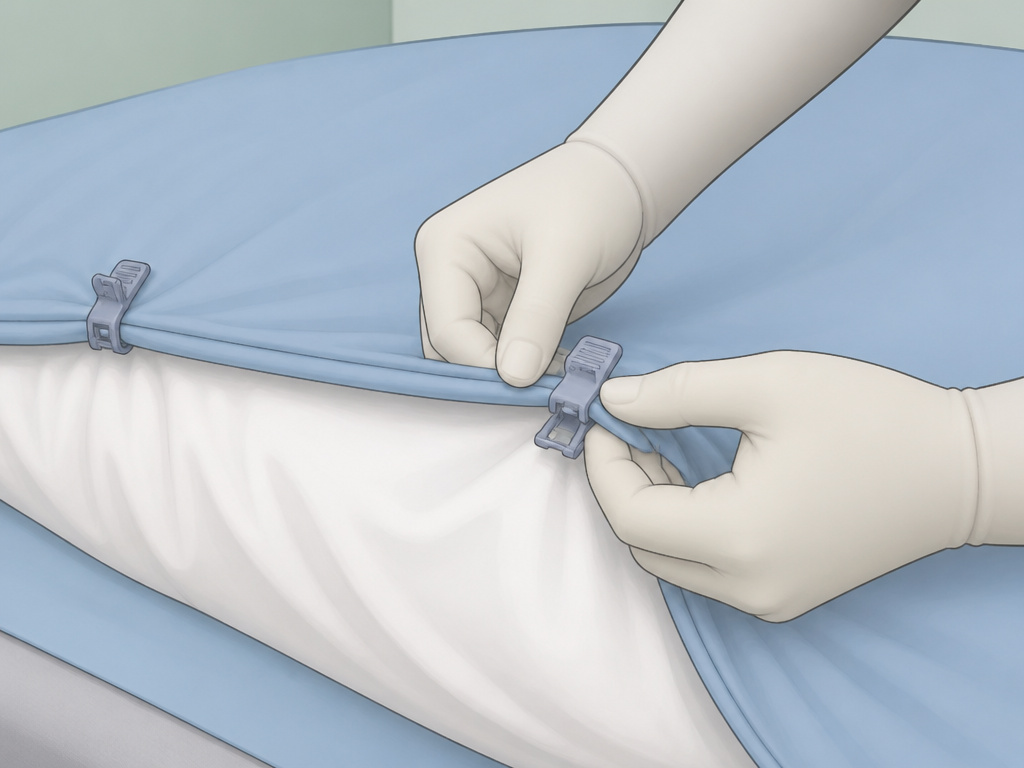
Duvet clips are the universal default. A standard set includes eight clips: four for the corners and four for the mid-sides. You pinch the duvet cover and insert fabric together at the designated spot and close the clip’s jaw. The hold is strong, but the pressure point can wear on delicate fabrics over hundreds of cycles.
Gripper straps work like a mini harness. You wrap the elastic strap around the entire corner of the insert, then clip the strap’s ends to the corresponding corner of the cover. The hold is distributed, which is gentler, but the strap can sometimes be felt through the cover as a slight lump.
Your pick: Start with a basic set of duvet clips. They’re inexpensive, work on almost everything, and solve the problem immediately. The CosyHouse duvet clips are a standard design that doesn’t rust in the wash.
3. Sew On Snaps or Velcro (The Permanent Fix)
This is a weekend project, not a quick fix. It’s for the person who has found their perfect duvet covers and insert and never plans to separate them except for washing.
Sewing a snap or Velcro dot to each corresponding corner creates a perfect, flat connection. It’s more secure than a tie and less bulky than a clip. The downside is permanence, you’ve designated that insert for that cover.
Where this goes sideways: Sewing the insert directly to the cover. Lauren Saab of Saab Studios stresses against this. It makes washing and airing out the bedding much harder and defeats one of the biggest advantages of a duvet. Sew on fasteners, not the fabrics themselves.
The Burrito Roll Method (Step-by-Step)
Anchoring the corners is useless if the insert is a tangled ball inside the cover. The burrito roll (or sushi roll) method aligns everything before you ever tie or clip a corner. It’s the professional organizer’s trick for a reason.
- Lay the insert flat on your bed. Smooth out any lumps.
- Turn your duvet cover inside out. Lay it directly on top of the insert, aligning all four corners perfectly. The cover’s opening must be at the foot of the bed.
- Secure the top corners. Reach inside and tie or clip the two top corners together through the fabric.
- Roll from the head down. Starting at the top of the bed, tightly roll the duvet and cover together toward the foot, like a giant sleeping bag or burrito.
- Invert the cover. When you reach the foot, grab the open end of the cover and pull it over the entire roll, turning it right-side-out.
- Unroll and secure. Unroll the bundle back up the bed. The insert will now be perfectly aligned inside the cover. Secure the remaining two bottom corners.
Skip the roll, and you’ll spend ten minutes fighting with corners, losing the alignment, and probably having to start over. The roll does the alignment for you mechanically.
Why Material and Daily Habit Matter
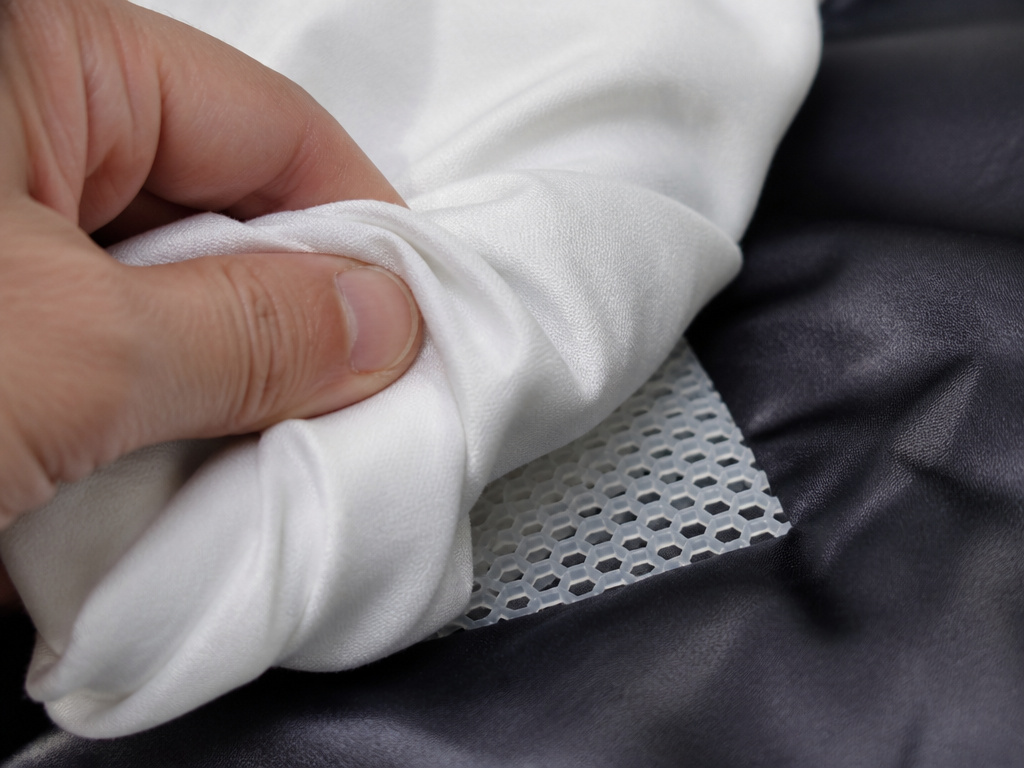
The fabric of your duvet cover isn’t just about comfort. It’s a friction coefficient. A crisp, grippy cotton or linen cover has more surface texture and will resist sliding against the insert. A slippery sateen or polyester blend has less natural friction, making it more reliant on those corner anchors.
That’s why the daily fluff matters. When fill compresses in one area, like where your child sleeps, it creates a tension differential. The cover is pulled toward the compacted spot. A vigorous shake when making the bed redistributes the fill and resets that tension. It’s maintenance, not just tidiness.
This is also the logic behind non-slip shelf liner. If you have a particularly slippery set, cutting small squares of grippy liner and placing them between the insert and cover at the corners can add just enough friction to help the clips do their job. It’s a hack, not a solution, but it works.
What to Do When the Duvet Still Shifts
You’ve measured, anchored, and rolled. If the duvet is still migrating, the problem is usually one of three things.
First, check the mid-side anchors. If you only secured the four corners, the long sides can still billow forward. This drags the entire insert down. Add clips at the midpoint of each side.
Second, the insert might be underfilled. A cheap, thin duvet doesn’t have enough loft to tension the cover fabric. It slides around inside a sack that’s too big for it, even if the measurements match. The fix is a plumper, higher-quality insert.
Third, consider the user. A restless sleeper or a child who burrows creates more internal friction and movement than anchors can always defeat. In this case, a well-secured weighted blankets on top can help pin the duvet in place, or you might opt for a simpler toddler blankets system that’s easier to remake each morning.
Frequently Asked Questions
Can I safety pin my duvet in place?
You can, but you shouldn’t. Safety pins can pop open under tension, and the metal can rust or stain fabrics in the wash. They also create weak, concentrated stress points that can tear the fabric. A dedicated duvet clip is safer and more durable.
How often should I re-tighten the duvet clips?
Check them every time you wash the duvet cover, which for most kids bedding should be every one to two weeks. The clamping mechanism can loosen slightly with movement and washing. It takes ten seconds to pinch each clip closed again.
Do I need a different method for a kid’s duvet?
The principles are identical, but the execution favors simplicity. Kids’ duvet covers are often washed more frequently, so avoid permanent sewing. Duvet clips are the fastest for weekly changes. Also, involve your child in the burrito roll, it turns a chore into a game and helps them learn how their bed works.
My duvet cover has a zipper. Does that help keep it in place?
Zipper only seals the opening. It does nothing to anchor the corners or prevent internal shifting. You still need ties or clips. A zipper is just a more secure closure than buttons or snaps for the opening itself.
Will a heavier insert stay in place better?
Not necessarily. Weight can help, but if the insert is smooth (like a synthetic alternative down), it can still slide inside a smooth cover. The key is the surface friction and corner anchors, not just mass. A well-anchored lightweight down insert will stay put better than a heavy, unanchored one.
The Bottom Line
Keeping a duvet in place is a simple physics problem. Eliminate the empty space by matching sizes exactly. Then, create fixed points at the corners with ties, clips, or snaps. The burrito roll method makes the initial alignment foolproof. Forget sewing things together and skip the safety pins. Invest in a set of duvet clips and use them. Make the daily shake part of your routine. That’s the whole game. A neat bed in the morning starts with these five minutes of correct setup the week before.
