
How Often to Wash Duvet Insert | The 20,000 Dust Mite Rule
This post contains affiliate links. As an Amazon Associate we earn from qualifying purchases.
Wash a duvet insert every three to six months. The exact schedule depends on whether you use a protective cover, if your child has allergies or pets, and the type of filling. A University of Worcester study found an unwashed duvet can harbor up to 20,000 live dust mites in just six months, making regular cleaning a health priority, not just a chore.
That mite count is the physical consequence of skipping washes. It’s not a vague warning about dirt. It’s a documented population of allergens living in the layers of fabric and filling your child sleeps under for ten hours a night. The insert’s job is to trap body heat. It also traps skin cells, sweat, and moisture — the perfect food and environment for mites and mold.
What follows is the breakdown of that three-to-six month rule: why it’s the floor, not the ceiling, for most families. We’ll cover the signs you’re washing too little (or too much), the one dryer mistake that causes mold in 48 hours, and how to read a care label to avoid voiding a warranty. You’ll also get the manufacturer-contradiction on vacuum storage that ruins a $300 down duvet in one season.
Key Takeaways
- A primary-source study found 20,000 live dust mites can live in an unwashed duvet after six months. Using a duvet cover cuts this risk significantly.
- Non-washable duvets exist. If the tag lacks a tub symbol, do not machine wash it. The Verband Der Schweizer Bettwarenfabriken states these require professional cleaning every 3–5 years.
- Incomplete drying causes mold inside the filling within two days. Tumble drying on low heat with dryer balls can take 3–5 hours for a king-size insert. Check for damp spots in the center by hand.
- Industry and appliance makers directly contradict each other on storage. Never vacuum-pack down or feather duvets (per Norvegr and VSB), despite Samsung’s guidance, as it destroys the loft permanently.
- Replace pillows every 3 years and duvets every 5 years (per VSB). Professional restoration services, like Norvegr’s, can extend a down duvet’s life for decades.
The University of Worcester’s 20,000 Dust Mite Finding
That six-month number isn’t arbitrary. It’s grounded in a specific study that changes the “should wash” into a “must wash.”
A University of Worcester study found a six-month unwashed duvet can contain up to 20,000 live dust mites, along with dead mites, skin cells, and fungus.
The researchers called it a “dirty duvet plague.” The participants in that worst-case scenario weren’t using duvet covers, which turns the insert into a primary filter for everything in the bed. For a child with allergies, asthma, or eczema, that population of mites is a direct trigger. It explains why a pediatrician might recommend more frequent washing as a non-medical intervention.
Your kids bedding strategy needs a barrier. A quality children’s duvet cover washed every one to two weeks acts as a sacrificial layer. It catches the bulk of the mess, allowing you to stretch the insert wash to every six months. No cover? The insert needs a wash every three months, minimum. Add a pet that sleeps on the bed, or a child who gets night sweats, and you’re looking at the three-month schedule even with a cover.
How to Read the Care Label (It’s Not a Suggestion)
The label sewn into the seam is a contract. Ignoring it can shrink the fabric, clump the filling beyond repair, and void any warranty. You’re looking for three symbols: the washing tub, the drying square, and the bleach triangle.
| Symbol | What It Means | What Happens If You Ignore It |
|---|---|---|
| Washing Tub (30°C/40°C/60°C) | Machine washable at specified temperature. A hand in the tub means hand-wash only. | Wrong temperature can melt synthetic fills or set stains. Machine washing a hand-wash-only silk duvet destroys its structure. |
| Square with Circle (Tumble Dry) | Safe for tumble drying. Dots inside indicate heat level (one for low, two for medium). | High heat on a low-heat dry setting can scorch fabric and cause synthetic fills to harden into lumps. |
| Triangle (Bleach) | Bleach is permitted. A triangle with an X means no bleach. | Bleach on colored shells fades them instantly. On down, it breaks down the natural oils that give it loft. |
Where this goes sideways: Assuming a “dry clean only” tag is a suggestion. Dry cleaning chemicals, like perchloroethylene, strip the natural oils from down clusters. The Casper care guide states this causes the down to break down faster, losing its insulation permanently. You get a flat, cold duvet within a year.
Some materials are not built for home washing. The White Company explicitly states its silk duvets are not suitable for domestic machines. The Verband Der Schweizer Bettwarenfabriken (VSB) is blunt: “You should never wash duvets and pillows that are not expressly designated as washable.” For those, professional cleaning every 3 to 5 years is the only safe option.
The Step-by-Step Wash & Dry
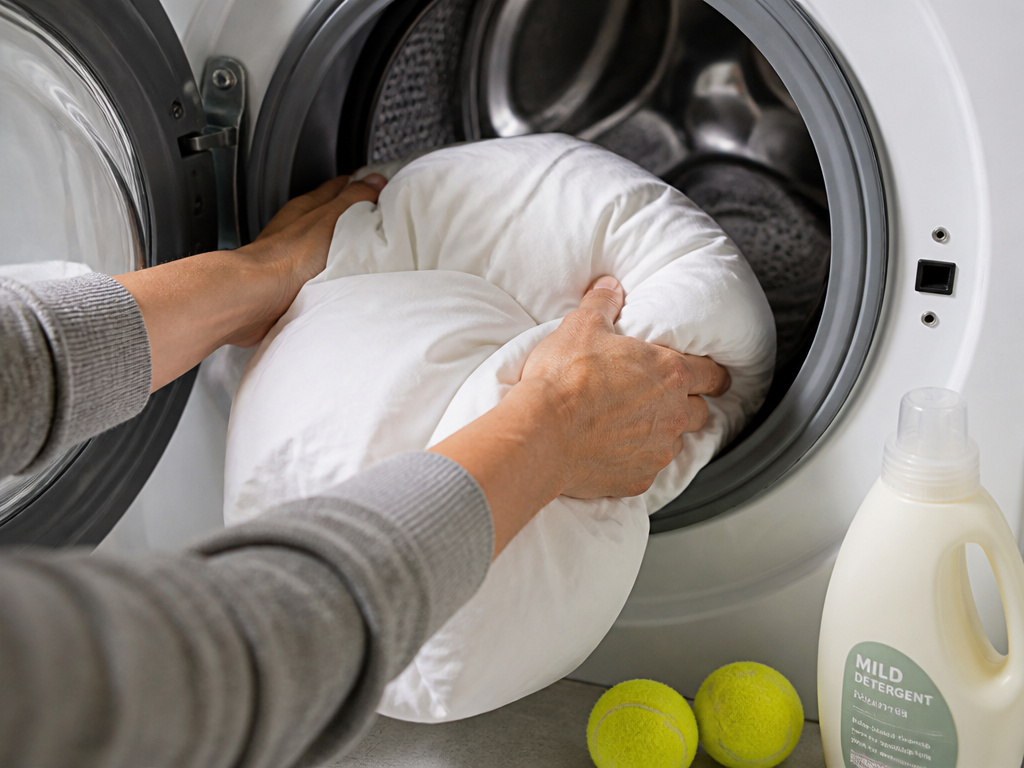 You need a large-capacity, front-loading washer. A top-loader with an agitator can tear the internal baffles. The Norvegr care guide advises professional cleaning simply because home machines are often too small. The duvet needs room to float and rinse completely.
Before you start: Unplug the washer and check the drain pump filter for debris. A clogged filter can leave soapy water in the drum, coating your duvet in residue. Also, ensure you have 3-5 hours free for drying. Stopping halfway creates a mold incubator.
- Remove the cover and inspect. Zip off the duvet cover and shake the insert vigorously outdoors to redistribute filling and loosen dust. Look for stains; pre-treat with a dab of the same mild detergent you’ll use in the wash.
- Load the machine alone. This is non-negotiable. Adding even a single crib sheet throws off the balance and traps the duvet in a wet, soapy clump. Use a mild, liquid detergent. Powder detergents often leave a chalky residue inside down clusters.
- Set to a gentle, warm water cycle. Cold water won’t kill dust mites or bacteria effectively. Warm water (40°C/104°F) is the sweet spot for cleaning and hygiene for most washable fills. Follow the Sleep Foundation duvet washing guide for cycle specifics.
- Run an extra rinse cycle. Residual detergent is the number one cause of a stiff, waxy-feeling duvet. It also irritates sensitive skin. After the main cycle ends, run a rinse-only cycle to flush every last bit of soap out.
The part nobody mentions: The wet dog smell after washing is normal for down and feather fills. It’s the smell of wet keratin, like a damp bird. It will vanish completely after thorough drying. Panicking and adding fragrance sprays traps moisture and causes mildew.
Drying is the real test. Incomplete drying leads to mold in the core, which you might not smell until it’s rotted.
| Drying Method | Procedure | Time Estimate & Checkpoint |
|---|---|---|
| Tumble Dry (Low Heat) | Use dryer balls or clean tennis balls. Stop every 60-90 minutes to manually break up clumps and redistribute filling. | 3-5 hours for a king. Check by hand: the center must be warm and completely dry, not cool or damp. |
| Air Dry | Lay flat on a clean, breathable surface indoors or over multiple clotheslines. Flip every 4-6 hours. | 24-48 hours, depending on humidity. The core is the last part to dry; press your hand into the center to test. |
The Casper method is reliable: tumble dry low with dryer balls until completely dry. The wenaCel sensitive comfort Duvet ExtraLight is labeled dryer-proof, confirming this is the manufacturer’s intended finish. If you air dry, ensure the space is well-ventilated. A damp basement guarantees mildew.
Storing Your Duvet Without Ruining It
 This is where official advice splits. Samsung’s appliance care page suggests vacuum storage bags for long-term bedding storage. Every duvet manufacturer and the Swiss bedding association says the opposite.
Norvegr and the VSB explicitly state: duvets and pillows should never be vacuum-packed, as this will destroy the down’s structure. They are natural products that need to breathe.
Vacuum compression crushes the delicate filaments of down and feathers. When you release the vacuum, the filling lacks the energy to spring back. Your duvet stays flat. For synthetic fills, compression can permanently crush the hollow fibers, reducing loft. The safe method is to store the duvet in the breathable cotton bag it came in, or a pillowcase, in a cool, dry closet. Air it out for a few hours once a season.
This storage logic applies to your other bedding layers, too. Clean, dry mattress protectors should be stored flat, not folded tightly for months, to preserve their waterproof membrane.
When to Replace vs. Clean
Cleaning has limits. The VSB gives clear timelines: pillows should be replaced after 3 years at the latest, duvets after 5 years. The feathers lose their support strength; the down clusters break down.
But a high-quality down duvet is an investment. Companies like Norvegr offer a restoration service. They open the duvet, professionally clean the down with UV sanitization, replace the shell, and add fresh down to top it up. For a premium duvet, this service every decade can be more economical than replacement and aligns with a sustainable kids bedding approach.
How do you know it’s time? * It stays flat after a full fluffing and dry cycle. * Lumps cannot be broken apart by hand or with dryer balls. * A persistent odor remains after a proper wash and dry, indicating embedded mold or bacteria. * Allergy symptoms correlate directly with bed time, even with clean sheets for cribs and covers.
For a child’s rapidly changing needs, a five-year replacement cycle for the insert often aligns with a bedroom refresh anyway. It’s a good checkpoint to reevaluate tog rating for warmth as they grow.
Frequently Asked Questions
Can I wash a non-washable duvet if I’m careful?
No. The “non-washable” label refers to the construction, not just the fabric. The internal baffles or stitching may be designed for dry cleaning solvents, not water agitation. Submerging it can cause the filling to shift irreparably or the layers to separate. The VSB’s advice is absolute: never wash duvets not designated as washable.
How do I know if my duvet is completely dry?
The outer layers will feel dry first. You must check the core. Stop the dryer, reach into the very center of the duvet, and grab a handful of filling. It should feel warm and fluffy, not cool, damp, or clumpy. If there’s any doubt, run another 60-minute low-heat cycle with dryer balls.
My duvet came out lumpy. Did I ruin it?
Probably not. Lumpiness is usually caused by insufficient movement during drying or overloading the washer. While still damp, try manually pulling the lumps apart and redistributing the filling. Then, dry it again on low heat with three or four dryer balls. For future washes, ensure the machine is large enough and use dryer balls from the start.
Is it okay to wash a down duvet?
Yes, if the care label says so. Modern down duvets from brands like Casper and Norvegr are designed to be washed. The critical rule is to use a mild detergent and ensure 100% dryness. Avoid fabric softener and bleach, as they strip down’s natural oils. Feather bits poking through the shell after washing are normal, per Casper’s guide.
Can I dry clean my duvet instead?
You should avoid it unless the tag explicitly says “dry clean only.” The chemicals used in traditional dry cleaning are harsh on natural fills and can degrade the shell fabric over time. For washable duvets, home washing with proper drying is the safer, more effective method to preserve loft and cleanliness.
Before You Go
The schedule boils down to this: every six months with a cover, every three months without. That’s the baseline to keep the mite population in check. The care label is your law book — follow its symbols on temperature and drying to avoid a lumpy, ruined insert.
Your two non-negotiable tools are a large, front-loading washer and patience for a 3-5 hour dry cycle. The difference between a fluffy, clean duvet and a moldy one is often just one extra dryer cycle you didn’t want to run.
For children, where allergies and sensitive skin are common, this maintenance is part of the bedding ecosystem that includes regular crib sheet changes and a reliable waterproof mattress protector. Wash the cover often, respect the insert’s limits, and replace it when it stops fluffing back up. That’s how you maintain a clean, healthy sleep space for years.
