
Pillows for Infants: Can They Sleep on One? Official Warnings
This post contains affiliate links. As an Amazon Associate we earn from qualifying purchases.
No, an infant cannot sleep on a pillow. The American Academy of Pediatrics, the Consumer Product Safety Commission, and health agencies worldwide state pillows, quilts, comforters, and any soft bedding are unsafe for sleep before 12 months of age. These items pose a direct suffocation risk and are linked to a fivefold increase in the risk of Sudden Infant Death Syndrome (SIDS).
The “why” concerns physics, not just rules. A baby under four months lacks the neck strength and motor control to lift or turn their head if their face presses into a soft surface.Airway obstruction from soft objects is the most common mechanism of accidental infant suffocation. This risk doesn’t gradually fade; it remains significant until the child is a year old.
What follows is a breakdown of the regulatory and medical evidence: the specific federal standards that define banned infant pillows, the peer-reviewed data on bed-sharing risks, and the clear timeline for when the transition to a pillow is actually safe. We’ll also separate the truth from marketing around products like nursing pillows and infant loungers.
Key Takeaways
- Hard Ban Under 12 Months: Pillows, loose blankets, and soft bedding are not safe for infant sleep. This is a non-negotiable medical and regulatory stance.
- Suffocation is the Primary Risk: The danger isn’t SIDS in the abstract; it’s direct airway obstruction. A baby’s face can sink into a pillow’s surface, blocking nose and mouth within seconds.
- Nursing Pillows Are Not Sleep Pillows: Products marketed for breastfeeding support are federally regulated (16 CFR Part 1242) and must carry warnings against use for sleep. Using them in a crib or bassinet is illegal and hazardous.
- Bed-Sharing Amplifies the Danger: Adding soft bedding to an adult bed increases the risk of sleep-related death 2 to 5 times over baseline bed-sharing risk.
- The Safe Sleep Surface is Bare: A firm, flat mattress with a fitted sheet is the only certified safe sleep environment for an infant.
The Official Answer: No, Never, and Here’s Why
The guidance is absolute. You will not find a reputable medical or governmental body that sanctions pillow use for infants during sleep. The American Academy of Pediatrics policy is explicit: keep soft objects like pillows, pillow-like toys, quilts, and loose bedding away from the infant’s sleep area. This isn’t a cautious suggestion; it’s the conclusion of a 2022 evidence review that ties soft bedding to a quantifiable, dramatic increase in risk.
Where this goes sideways: Assuming a “baby pillow” is safer. Products marketed as infant pillows or cushions that have a flexible fabric covering are often banned hazardous substances under U.S. Law (16 CFR § 1500.18). Their softness is the very property that makes them illegal for infant use.
The CPSC safe sleep guidelines echo this, warning that many young babies cannot lift their heads to pull away from soft objects that pose a suffocation risk. This includes pillows, blankets, and sleep positioners. The rule is simple: if it’s soft and plush, it doesn’t belong in the crib, bassinet, or play yard for the first year.
The Physical Danger: How a Pillow Can Block a Baby’s Airway
Understanding the “why” makes the rule stick. It’s a matter of capability versus environment. A newborn, and even a baby of several months, has limited head control. Their motor reflexes are undeveloped. When placed on a soft surface, their head sinks in.
This creates two immediate hazards: 1. Airway Obstruction: The baby’s nose and mouth can press directly into the pillow’s fabric, forming a seal. Without the strength to lift or turn, they re-breathe their own exhaled carbon dioxide. 2. Overheating: The same plush material that blocks air also traps body heat. Overheating is an independent risk factor for SIDS.
The AAP safe sleep evidence base notes that a large percentage of infants who die of SIDS are found with their head covered by bedding. The mechanism is a predictable physical event.
Regulations vs. Marketing: Nursing Pillows, Loungers, and “Baby” Pillows
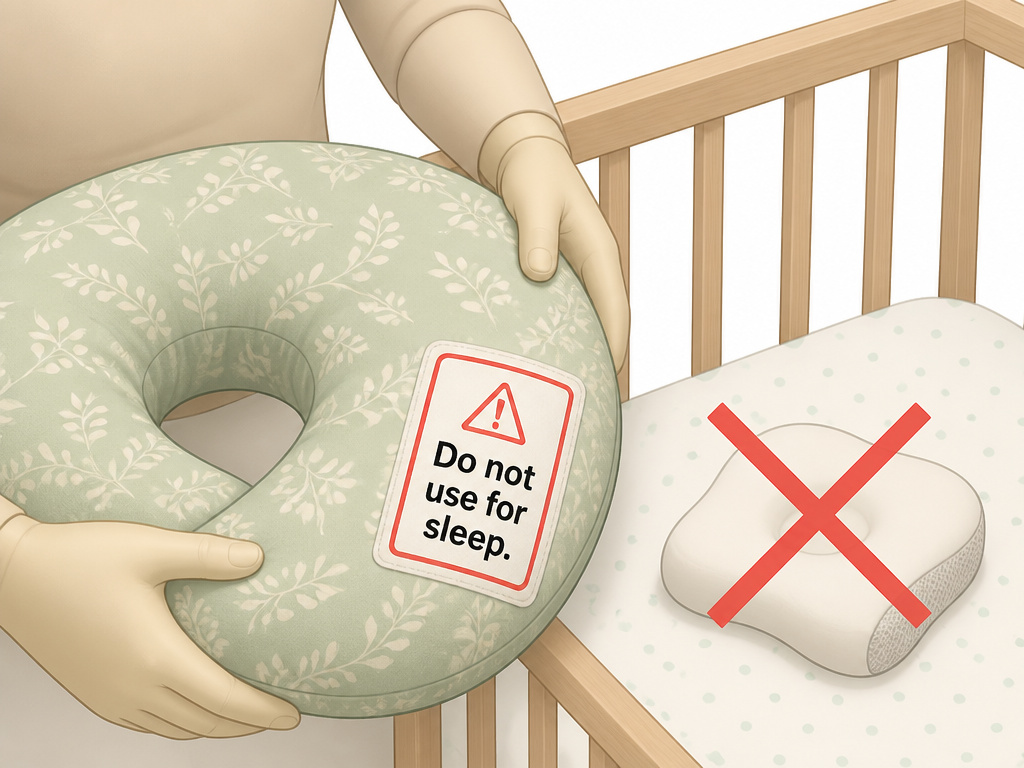
This is where parents get confused by product categories. A nursing pillow is designed for a specific, supervised purpose: supporting a baby during feeding while a caregiver is awake and engaged. An infant pillow is marketed for sleep. The law treats them differently, but the safety lines are clear.
Nursing Pillows: As of April 23, 2025, all nursing pillows manufactured in or imported to the U.S. Must meet the new federal nursing pillow safety standard (16 CFR Part 1242). This standard mandates specific firmness tests—requiring more than 10 Newtons of force to depress the surface—and explicit warning labels: “Do not use for sleep” and “Do not use in sleep products like cribs, bassinets, or play yards.”
Infant Support Cushions/Loungers: This broader category (regulated under 16 CFR Part 1243) includes infant loungers and positioners. These products are not safe for sleep. They are implicated in infant deaths and are subject to their own strict performance and labeling requirements to prevent suffocation within the product’s confines.
| Product Type | Intended Use | Can It Be Used for Sleep? | Key Regulation |
|---|---|---|---|
| Infant Pillow | Marketed for sleep support | No. Often banned. | 16 CFR § 1500.18(a)(16) |
| Nursing Pillow | Supported feeding while caregiver is awake | No. Illegal if used in crib. | 16 CFR Part 1242 (2025) |
| Infant Lounger | Supervised reclining/lounging | Never. | 16 CFR Part 1243 (2025) |
| Toddler Pillow | Sleep for children ~2+ years | Yes, when age-appropriate. | General product safety |
Common mistake: Using a nursing pillow as a lounger in a crib or on an adult bed. This violates the product’s warnings and creates the exact suffocation hazard the regulations are designed to prevent. The pillow can shift, the baby can roll, and the raised sides can trap them face-down.
When Can My Child Use a Pillow? The Age and Milestone Guide
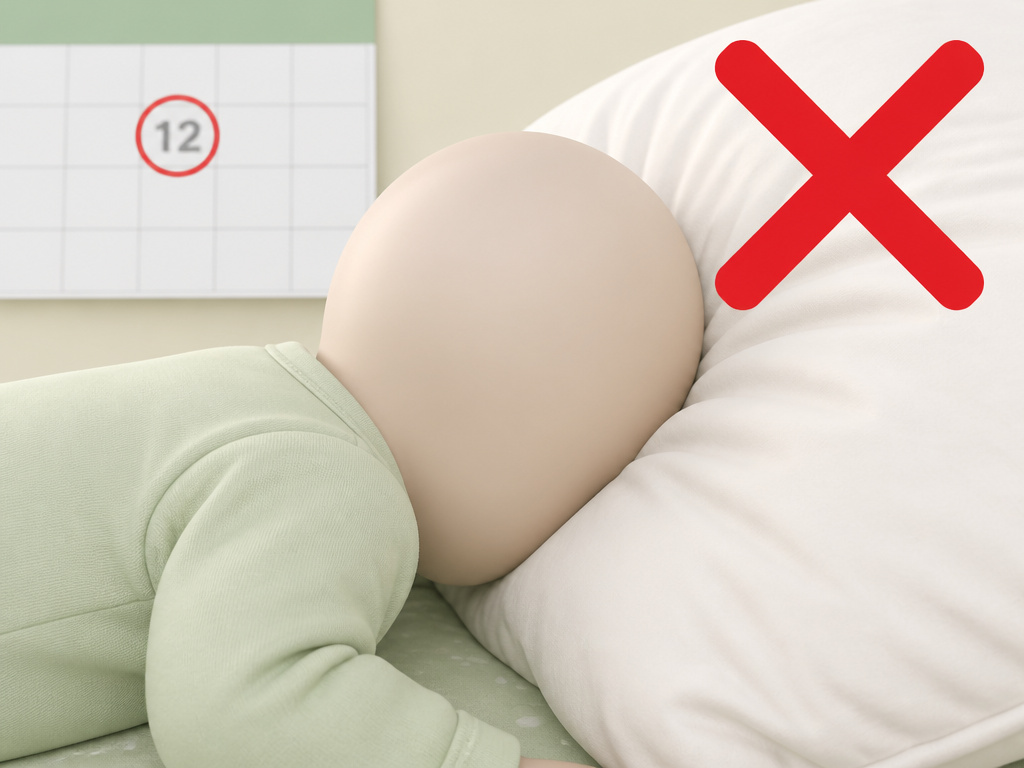
The 12-month mark is the universal baseline from health authorities like the AAP and the UK’s NHS. This isn’t arbitrary. By this age, most children have the motor skills to roll consistently, push up, and move their head deliberately if their breathing is compromised. They are also transitioning out of the highest-risk window for SIDS.
However, age alone isn’t the only factor. Readiness also depends on your child’s specific development and their sleep environment. Here’s a practical framework:
- Under 12 Months: No Pillow. This is non-negotiable. Focus on safe pillows for newborns only if recommended by a doctor for a specific medical condition like reflux, and even then, under strict guidance.
- 12-24 Months: Proceed with Caution. If you choose to introduce a pillow after the first birthday, it must be very firm, flat, and small. A standard adult pillow is too large and soft. Look for a certified toddler pillows designed specifically for this age group.
- 2 Years and Older: Generally Safe. Most children are ready for a child’s pillow by this age. Ensure it supports the natural alignment of their head and neck without sinking.
I won’t recommend a pillow at 12 months on the dot. Watch your child. If they’re still sleeping curled in a ball or move constantly, a pillow is just an obstacle. Wait until they naturally start resting their head on a stuffed animal or a folded blanket—that’s their signal.
Creating a Safe Sleep Environment: What to Use Instead
The goal is a bare, flat, firm surface. Here’s what that looks like in practice, and what products actually belong there.
The Safe Sleep Checklist:
- Mattress: Firm, flat, and designed specifically for your crib or bassinet. It should fit snugly with no gaps.
- Covering: A fitted sheet only. No flat sheets, quilts, mattress toppers, or waterproof pads that aren’t thin and tightly fitted.
- Sleepwear: Use a wearable blanket or sleep sack for warmth. These are designed to stay put and cannot cover a baby’s face.
- Position: Always place your baby on their back for every sleep.
What About Products for Flat Head?
Positional plagiocephaly (flat head syndrome) is common. While special flat head pillows are marketed, their use during unsupervised sleep is not considered safe by the AAP. The recommended strategy is supervised “tummy time” while awake and alternating the direction your baby’s head faces when on their back. Always consult your pediatrician before using any corrective infant pillows.
The Bed-Sharing Equation: Why Pillows Make a Dangerous Situation Worse
Many parents fall asleep with their infant during feeding. The AAP does not recommend bed-sharing under any circumstances due to the increased risk. However, they acknowledge it happens and provide a risk hierarchy: falling asleep with an infant in an adult bed is less hazardous than on a sofa or armchair.
Adding a pillow to this scenario escalates the danger significantly. The peer-reviewed safe sleep research quantifies it: using soft bedding accessories like pillows or blankets while bed-sharing increases the risk of sleep-related death 2 to 5 times over the baseline risk of bed-sharing alone.
If you find yourself dozing off:
- Remove all pillows and blankets from near the baby.
- Move the baby to a clear, flat space on the bed if you cannot get up.
- Return them to their own crib and infant product safety-approved sleep space as soon as you wake.
Frequently Asked Questions
What if the pillow is specifically marketed for babies?
It doesn’t matter. Marketing terms like “breathable” or “anti-suffocation” are not regulated safety standards. In the U.S., many infant pillows are banned hazardous substances if they are soft and fabric-covered. Always follow the official AAP safe sleep recommendations, not product packaging.
Are there any medical exceptions?
In rare cases, a pediatrician may recommend an inclined sleep surface for a baby with severe gastroesophageal reflux disease (GERD) or certain airway conditions. This is a specific medical prescription involving a medically-approved device, not a retail pillow. Never modify your baby’s sleep environment without direct, documented instruction from your doctor.
What’s the difference between a nursing pillow and a sleep pillow?
Nursing pillow is a feeding aid. A sleep pillow is for sleeping. The federal pillow hazard information is clear: pillows are not for infants. The new nursing pillow rule (16 CFR Part 1242) exists precisely because these products were being misused for sleep, with tragic results. Their mandatory warnings are your clearest guide: **do not use for sleep.
When can I introduce a blanket?
The same 12-month guideline applies. Loose blankets are a suffocation and entanglement risk. Use a wearable sleep sack until your child is old enough to reliably pull blankets on and off themselves, usually well into toddlerhood. For older children, choose a lightweight, small blanket and ensure the sleep space remains uncluttered.
My baby rolls onto their stomach. Do they need a pillow then?
No. Rolling is a developmental milestone that shows increasing strength. It does not mean they are safe from the suffocation risk posed by a soft surface. Continue to place them on their back in a bare crib. If they roll over on their own, that’s fine, but the sleep surface must remain firm and clear.
The Bottom Line
The data leaves no room for interpretation. An infant cannot sleep on a pillow. The risk of suffocation is direct, measurable, and backed by every major health and safety authority in the world. The safe path is clear and simple: a firm, flat, bare mattress for the first full year.
Your job isn’t to judge the risk. Your job is to eliminate it. Skip the infant pillows and baby lounger pillows for sleep. Save the pillows for toddlers and children’s pillows for their second birthday and beyond. That firm, empty crib is the safest place on earth for your baby to sleep.
