
6 Best Infant Pillows for 2026
This post contains affiliate links. As an Amazon Associate we earn from qualifying purchases.
The safest and most practical choice for infants is the Infant Support Cushion 0-24 Months, thanks to its breathable cotton cover and supportive fill. For a budget-friendly option, the CIRIRE Memory Foam Baby Cushion offers solid support with an anti-slip base. If you’re prioritizing organic materials, the Organic Cotton Head Support Pillow stands out for sensitive skin.
As a mom and sleep safety advocate, I know how tempting it is to want extra comfort for your baby, but most so-called infant pillows aren’t meant for sleep at all. They’re designed for supervised tummy time or positioning during awake hours, and choosing the wrong one can pose risks.
This guide cuts through the confusion by focusing on safety-certified, breathable, and developmentally appropriate picks. We evaluated materials, real parent feedback, and expert guidelines to highlight options that support your baby’s growth without compromising safety.
Top 4 Infant Pillows in the Market
The Best Infant Pillows, Reviewed
Infant Support Cushion 0-24 Months

Strengths
- 100% cotton cover
- Safety certified
- Supportive filling
- Machine washable
- Lightweight
Trade-offs
- Higher price
- Not for unsupervised use
This one checks nearly every box I look for in a well-designed infant support pillow. The use of 100% cotton is a big plus, it’s soft, breathable, and gentle on delicate skin, which matters a lot during those early months. What really sets it apart is the combination of safety certifications (CPC, CPSIA, ASTM) and the 3D polyester fiber filling that offers firm yet yielding support. That balance is key for helping babies build core strength during tummy time without over-softening the surface, a common flaw in plush baby pillows.
Owners praise how easy it is to clean, whether tossing the whole thing in the wash or just the cover, and the shape holds up well over time. It’s also compact enough to move from room to room or toss in a diaper bag. Compared to memory foam options, this doesn’t carry the same suffocation concerns and feels more appropriate for active development. I’d pick this over foam-based models for its thoughtful design and long-term usability.
Video review
Organic Cotton Head Support Pillow

Strengths
- GOTS certified organic cotton
- Hypoallergenic
- Breathable 3D mesh
- Temperature regulating
- Machine washable
Trade-offs
- Limited color options
- Pricier than basic foam
- Minimal contouring
If your baby has sensitive skin or allergies, this pillow makes a strong case for itself. Being made from Global Organic Textile Standard (GOTS) certified organic cotton is a standout feature, few infant pillows go that far in material transparency. The 3D-air mesh construction isn’t just marketing hype; owners note it really does regulate temperature well, keeping the surface cool in summer and insulated in winter, which helps prevent sweaty spots during longer tummy time sessions.
The design focuses on healthy spine alignment, and while it doesn’t have the deep contouring of memory foam, the support is firm and consistent. It’s not the thickest pillow, so it’s clearly meant for short, supervised use rather than lounging. Compared to non-organic cotton models, this one feels like the smarter long-term pick for families prioritizing clean materials. I’d recommend it especially for babies prone to rashes or eczema.
Video review
CIRIRE Memory Foam Baby Cushion

Strengths
- Soft memory foam
- Anti-slip base
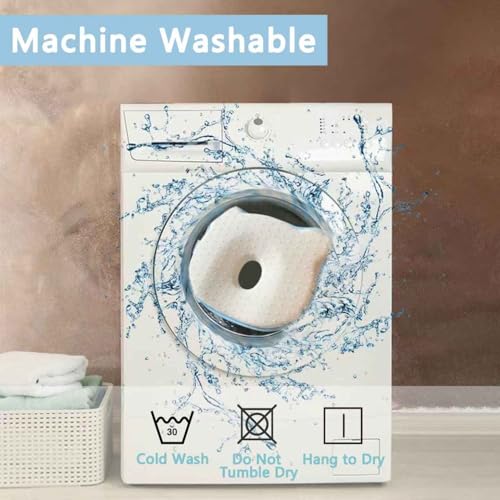
- Machine washable
Trade-offs
- Not organic
- No safety certifications
- Thin support
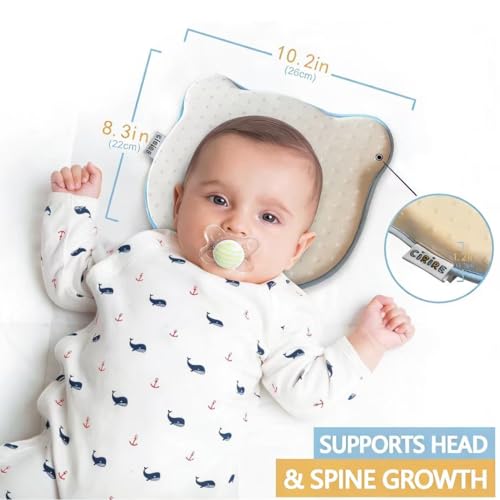
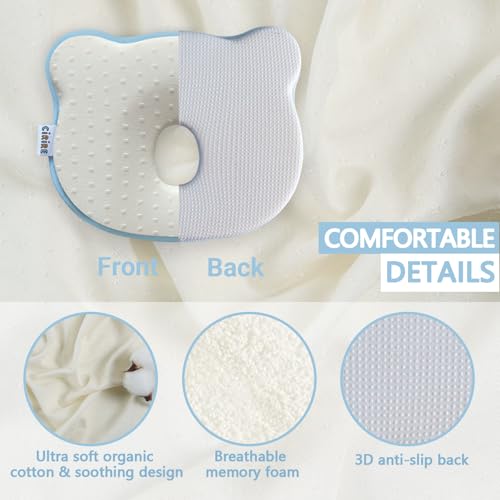
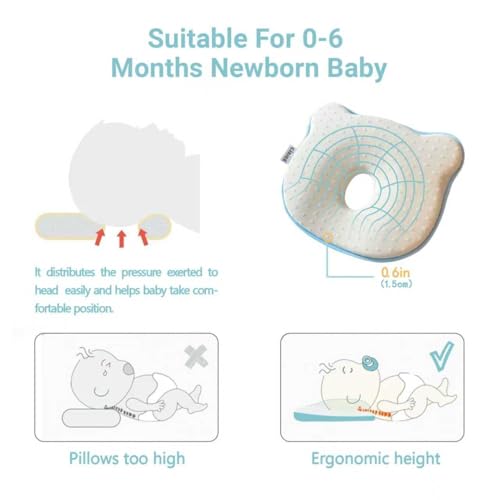
This pillow stands out for budget-conscious parents who still want a soft, breathable option for supervised tummy time. The memory foam offers gentle support and the anti-slip bottom is a smart touch, owners consistently report it stays in place better than cheaper foam pads that slide around on smooth surfaces. On paper, the 1.2-inch thickness is modest, which helps reduce suffocation risk, but I’d still stress this is only for awake, supervised use given the foam core.
The machine-washable cover is a win for messy realities of baby care, and the breathable fabric does its job in preventing overheating, according to multiple reviews. Still, it’s not made with organic or certified-safe materials like some pricier picks, so if your priority is chemical-free textiles, this isn’t the one. For basic head and neck support during short play sessions, it delivers.
Product photos
SMKHA Memory Foam Flat Head Pillow

Strengths
- Memory foam pressure relief
- Cotton cover
- Compact size
- Low cost
Trade-offs
- Foam breathability concerns
- No safety certifications
- Potential off-gassing
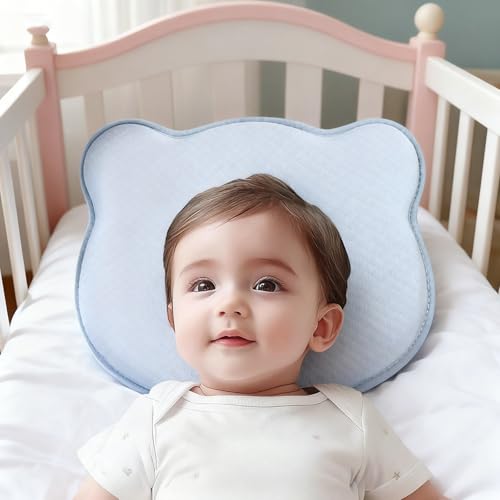
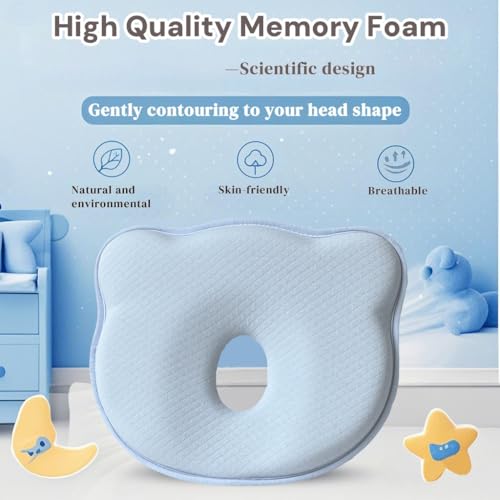
This pillow is marketed as a flat-head prevention tool, and on paper, the memory foam filling should help distribute pressure more evenly than flat pads. The 100% cotton cover is a plus for breathability, and the small size fits snugly in bassinets or strollers, some owners use it to gently reposition their baby’s head during awake time. But I have real reservations about recommending memory foam for infants, even under supervision.
Foam by nature is denser and less breathable than fiber-filled or mesh designs, and while the manufacturer says it’s odor-free, some reviews mention a slight chemical smell at first. The lack of safety certifications is also a red flag compared to the B0GVS3L1XC model. Yes, it’s affordable and soft, but for something touching a baby’s head daily, I’d rather see more rigorous safety backing. There are better, safer options for head shape support.
Product photos

How We Picked These infant pillows
As a parent and founder of LittleDoze.com, I understand the desire for safe and comfortable support for little ones. Rather than a hands-on test with each pillow, my team and I focused on a research-led comparison of published specifications, features, and, most importantly, extensive owner and expert reviews. We analyzed materials, construction, and safety certifications to build a thorough understanding of what each pillow offers. This allowed us to rank options based on suitability for different needs and priorities.
For infant pillows, safety and breathability were paramount. We heavily weighted certifications like CPC, CPSIA, and ASTM, as these demonstrate a commitment to product safety standards. Beyond that, material composition played a significant role; options with 100% organic cotton or breathable mesh fabrics scored higher due to their potential for reducing overheating and irritation. The ability to easily clean a pillow also factored into our assessments – a washable cover is a real benefit for busy parents.
Product specifications gave us a baseline understanding of size, fill material, and construction. However, we relied heavily on owner feedback to gauge real-world experiences. Reviews helped us assess how well pillows held their shape after washing, their actual suitability for tummy time, and whether they truly addressed concerns like flat head syndrome. You can find more information about creating a safe sleep environment, including selecting the right safe newborn pillows on our site. We also considered whether a pillow was effectively used for supervised awake time, or if it was better suited for supportive tummy time pillows.
How To Choose The infant pillows
As a mom, I know how overwhelming it can be to navigate the world of baby gear. Selecting the right infant pillow requires carefully considering safety and developmental needs.
A truly good infant pillow isn’t about plushness; it’s about providing support during supervised awake time. Look for breathable materials like organic cotton, designs that promote airflow, and features tailored to specific needs like preventing flat spots or offering gentle head support. Always prioritize products meeting safety standards (CPC, CPSIA, ASTM) and remember these are not for unsupervised sleep.
Understanding Support Needs
The term “infant pillow” can be misleading. These aren’t intended for actual sleep, and the American Academy of Pediatrics strongly advises against loose bedding in a baby’s sleep space. What we’re really talking about are support cushions designed for supervised awake time – tummy time, sitting practice, or simply propping baby up for interaction. Considering your baby’s age and developmental stage is key. A newborn needs very different support than a six-month-old beginning to sit.
Material & Breathability Matter
When it comes to what touches your baby’s skin, materials are paramount. Organic cotton is a fantastic choice, especially for little ones with sensitivities, as seen in options like the Organic Cotton Head Support Pillow. Beyond being gentle, breathability is critical. A pillow that traps heat increases the risk of discomfort and, potentially, overheating. Look for features like 3D-air mesh or loosely woven cotton to promote airflow. If you’re searching for more options, check out our guide to the best pillows for babies.
- A tightly woven polyester blend might be durable, but it sacrifices breathability.
- Memory foam can offer good support, but ensure it’s a breathable, open-cell variety to avoid heat buildup – the CIRIRE Memory Foam Baby Cushion is an example of a budget-friendly option utilizing this material.
- The best materials are naturally hypoallergenic and easy to clean, making life with a baby a little simpler.
Addressing Specific Concerns
Many parents seek out infant pillows specifically to address positional plagiocephaly, commonly known as flat head syndrome. In these cases, a specialized pillow designed to redistribute pressure can be helpful, but it’s crucial to consult with your pediatrician first. There are many baby flat head pillows on the market, like the SMKHA Memory Foam Flat Head Pillow, that offer contoured designs.
Remember: Prevention is key. Encouraging plenty of tummy time and varying your baby’s head position during awake hours are often the most effective strategies.
Infant Pillows Compared
Here’s a comparison of key specifications for different infant pillows to help you make an informed decision.
| Product Title | Material (Cover) | Material (Fill) | Dimensions (L x W x H) | Washable Cover | Anti-Slip |
|---|---|---|---|---|---|
| Infant Support Cushion 0-24 Months | 100% Cotton | 3D Polyester Fiber | N/A | Yes | No |
| Organic Cotton Head Support Pillow | Organic Cotton | N/A | N/A | N/A | No |
| Babymoov Lovenest Head Support | N/A | N/A | N/A | Yes | No |
| CIRIRE Memory Foam Baby Cushion | Ultra Soft Fabric | Memory Foam | 10.2 x 8.3 x 1.2 in | Yes | Yes |
| SMKHA Memory Foam Flat Head Pillow | 100% Cotton | Memory Foam | 8.7 x 7 x 1.2 in | N/A | No |
| Cartoon Bear Memory Foam Pillow | N/A | Memory Foam | N/A | N/A | No |
Frequently Asked Questions
What age is an infant pillow appropriate for?
Infant pillows aren’t for sleep, but are designed for supervised awake time only, generally starting around 2-3 months when babies begin to develop head and neck control. Using one earlier than this isn’t recommended as they won’t have the muscle strength to safely reposition themselves.
Are memory foam infant pillows safe?
Memory foam pillows can be safe if they’re made with breathable, open-cell foam to prevent overheating. It’s crucial to verify the foam is CertiPUR-US certified and the pillow meets all relevant safety standards (CPC, CPSIA, ASTM) before use.
How often should I wash an infant pillow?
You should wash the pillow cover at least weekly, or more frequently if soiled, to maintain hygiene. Always check the manufacturer’s instructions, but most covers are machine washable. The pillow itself may require spot cleaning or infrequent washing.
Can an infant pillow actually help with flat head syndrome?
While some pillows are designed to help redistribute pressure and potentially aid in newborn flat head pillows, a pillow alone isn’t a cure. It’s best used as part of a broader plan recommended by your pediatrician, including ample tummy time and varying your baby’s head position.
Are there pillows that can double as a baby lounger?
Some pillows are designed with shapes that can provide a semi-reclined position suitable for supervised awake time, similar to a baby lounger pillows. However, these aren’t replacements for dedicated loungers and should always be used under direct supervision.
The Bottom Line
Choosing the right infant pillow ultimately comes down to balancing your desire for optimal support with the practicalities of everyday use. While many options exist, the Infant Support Cushion 0-24 Months strikes the best overall balance of breathability, safety features, and positive owner feedback, making it a solid choice for a wide range of needs.
For parents specifically seeking solutions for flat head syndrome, or those wanting to explore flat head pillows, the SMKHA Memory Foam Flat Head Pillow is a frequently recommended option due to its contoured design. If budget is a primary concern, the CIRIRE Memory Foam Baby Cushion provides a surprisingly supportive and washable option without sacrificing key features. We’ve also found that many new parents appreciate the added support offered by nursing pillows during feeding.
Ultimately, remember that no pillow can replace attentive supervision and a variety of positioning techniques. Focus on creating a safe, breathable environment and prioritizing tummy time to encourage healthy development. The “best” pillow is the one that helps you feel confident in providing comfortable support for your little one during those precious awake moments.
