
Should Newborns Be Swaddled to Sleep? Understanding the Risks
This post contains affiliate links. As an Amazon Associate we earn from qualifying purchases.
Newborns can sleep swaddled, but only under strict conditions: always on their back, with the swaddle snug at the chest but loose at the hips, and only until they show signs of rolling, typically between 3 to 4 months. Crucially, swaddling is not a SIDS-prevention strategy. Evidence suggests it may actually increase risk for infants not accustomed to it, and weighted swaddles are explicitly unsafe.
The key isn’t whether you can swaddle, but whether you should for your specific infant, and for how long. The official guidelines from the American Academy of Pediatrics (AAP) and the International Society for the Study and Prevention of Perinatal and Infant Death (ISPID) draw a clear line at rolling ability, and a 2022 systematic review adds a critical caveat about infant habituation.
What follows is a breakdown of the evidence, the non-negotiable safety rules, and the transition plan to move beyond swaddling before the danger window opens.
Key Takeaways
- Swaddling does not reduce the risk of Sudden Infant Death Syndrome (SIDS). The AAP states there is no evidence for this, and a 2022 review suggests it may increase risk for infants not routinely swaddled.
- The absolute stop signal is any sign of attempting to roll, which most commonly occurs at 3–4 months but can happen earlier. A swaddled infant who rolls onto their stomach cannot use their arms to reposition, creating a high risk of suffocation.
- Weighted swaddles, sleep sacks, or any objects placed on or in a swaddle are not safe and are not recommended by the AAP or the Consumer Product Safety Commission (CPSC).
- If you swaddle, the infant must always be placed on their back for sleep, and the swaddle must allow for free hip and knee movement to prevent hip dysplasia.
- A wearable blanket is the recommended, safer alternative once swaddling is no longer appropriate.
The Current Expert Consensus on Swaddling
Official guidance is precise. The American Academy of Pediatrics, in its 2022 updated recommendations for a safe infant sleeping environment, provides the framework most pediatricians follow. Their position is one of cautious permission, not endorsement.
Swaddling can be appropriate because it could increase the risk of suffocation if the swaddled infant rolls to the prone position. There is no evidence with regard to risk of SIDS related to the arms being swaddled in or out. Parents can decide on an individual basis whether to swaddle.
This means the choice is yours, but the responsibility to follow the safety parameters is non-negotiable. The International Society on Infant Death position offers even more direct context, noting that current research suggests it’s safest to swaddle from birth if at all, and not to start the practice at 3 months when SIDS risk peaks.
The goal of swaddling is comfort and the suppression of the startle reflex, not protection. This is a critical distinction that reframes the entire practice. You are using a technique that manages infant behavior, not one that fortifies their sleep environment against SIDS. The real protection comes from the ABCs of safe sleep: Alone, on their Back, in a bare Crib.
The Two Non-Negotiable Rules
Every safe swaddle practice hinges on two rules. Break one, and the risk profile changes completely.
- Back is Best, Always. A swaddled infant placed on their side or stomach is in immediate danger. The Public Health Agency of Canada states plainly: “If swaddling is used, the infant should always be placed on their back.”
- Hips and Knees Must Move Freely. A tight swaddle that binds the legs straight together can stress the hip joints. The AAP specifies the swaddle should be “snug around the chest but allow for ample room at the hips and knees to avoid exacerbation of hip dysplasia.” The legs should be able to bend up and out naturally.
These rules are your baseline. The decision to stop, however, is driven by development, not the calendar.
The Stop Sign: Rolling and the 3-4 Month Window
Swaddling has an expiration date, and your infant will tell you when it’s arrived. The universal trigger to stop is any sign of attempting to roll from back to front.
Where this goes sideways: Continuing to swaddle after an infant can roll. The swaddled infant who rolls prone is trapped, unable to use their arms to lift or turn their head, leading to a high risk of suffocation within minutes.
The AAP and the American Academy of Family Physicians both note that signs of attempting to roll “most commonly occur at 3 to 4 months of age but can occur earlier.” This is not a suggestion. It is a deadline. Some infants show rolling readiness at 8 weeks; others at 5 months. You must watch for the clues: rocking onto their side during diaper changes, twisting their torso during tummy time, or getting a shoulder off the mattress during sleep.
The transition away from swaddling should begin at the first hint of this movement, not the first successful roll. This is why many parents choose to switch to a arms-free sleep sack or wearable blanket by 8-10 weeks as a proactive measure. A good swaddle blanket designed for hip health can be used safely up to that point, but the moment you see that side-rock, it’s time to move on.
| Developmental Stage | Swaddling Status | Primary Risk if Ignored |
|---|---|---|
| Newborn to 8 weeks | Generally acceptable if done correctly | Overheating, improper hip positioning |
| 8 weeks to first roll attempt | High-alert period; consider transitioning | Missed early rolling cues |
| First sign of roll attempt (any age) | STOP IMMEDIATELY | Suffocation from entrapped prone position |
| Successful roller | Absolutely unsafe | Same as above; risk is extreme |
The Risks: What the Research Actually Shows
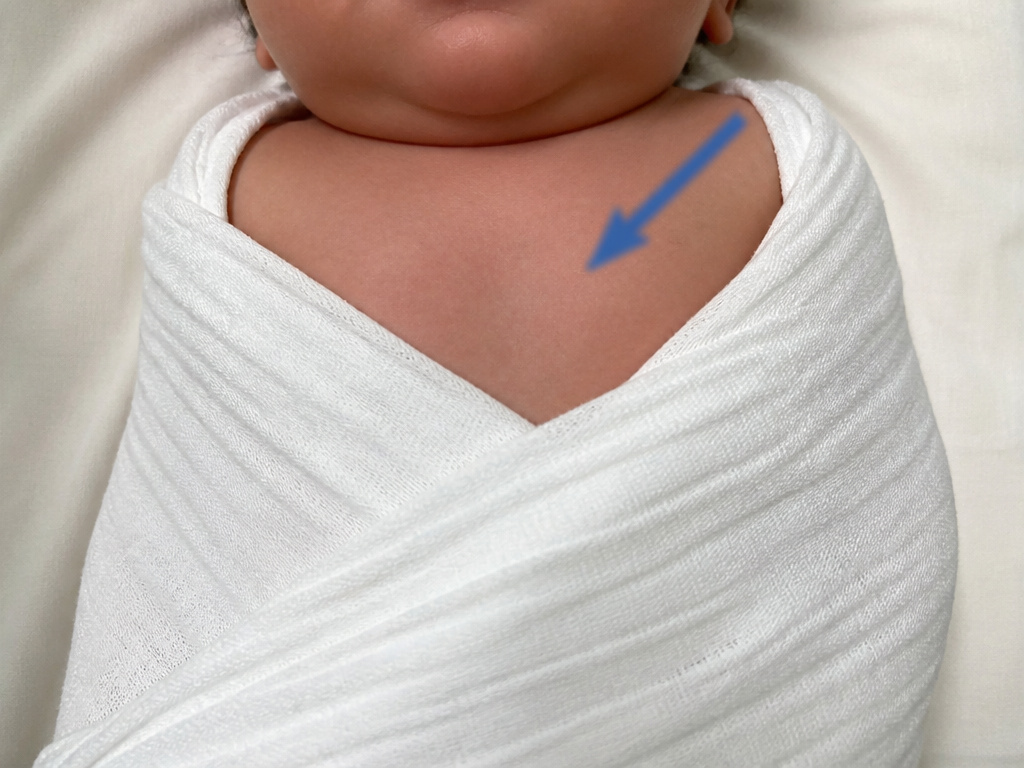
Beyond the mechanical danger of rolling, peer-reviewed research introduces a more subtle, physiological risk. A 2022 systematic review published in Frontiers in Pediatrics analyzed the effect of swaddling on infant sleep and arousal. Its conclusion challenges a common assumption.
This review supports the possibility that, by producing conditions unfavorable to arousability, swaddling may increase SIDS risk in infants that are naïve to the experience.
The study found that swaddling “significantly reduces the frequency of infant sleep state changes” and promotes longer periods of deep, quiet sleep. While that sounds beneficial to a sleep-deprived parent, an infant’s ability to arouse from sleep is a critical protective mechanism against SIDS. The research indicated these significant effects on arousal were only detected in infants who were not routinely swaddled.
The implication is stark: starting to swaddle an older infant who isn’t used to it, perhaps at the 3-month peak fussiness period, might inadvertently lower their natural arousal defenses at the worst possible time. This is a key piece of non-commodity insight missing from most basic guides. The systematic review on swaddling and infant sleep provides the specific mechanism that explains the “why” behind the expert caution.
The Weighted Swaddle Warning
One “innovation” you can categorically skip is the weighted swaddle or sleep sack. Multiple authoritative bodies have issued clear statements.
- The AAP: “Weighted swaddle clothing or weighted objects within swaddles are not safe and therefore not recommended.”
- The Michigan Department of Health: “There are no studies showing that it is safe to put any weight on a baby’s chest.”
- The Consumer Product Safety Commission safe sleep guidelines explicitly list weighted blankets and swaddles as products not to use.
The promise of better sleep does not outweigh the unknown risk of impaired breathing or movement. When choosing swaddle blankets for newborns, stick with lightweight, breathable fabrics like muslin or cotton. A stretchy swaddle can provide a secure fit without excess bulk.
How to Swaddle Safely (If You Choose To)
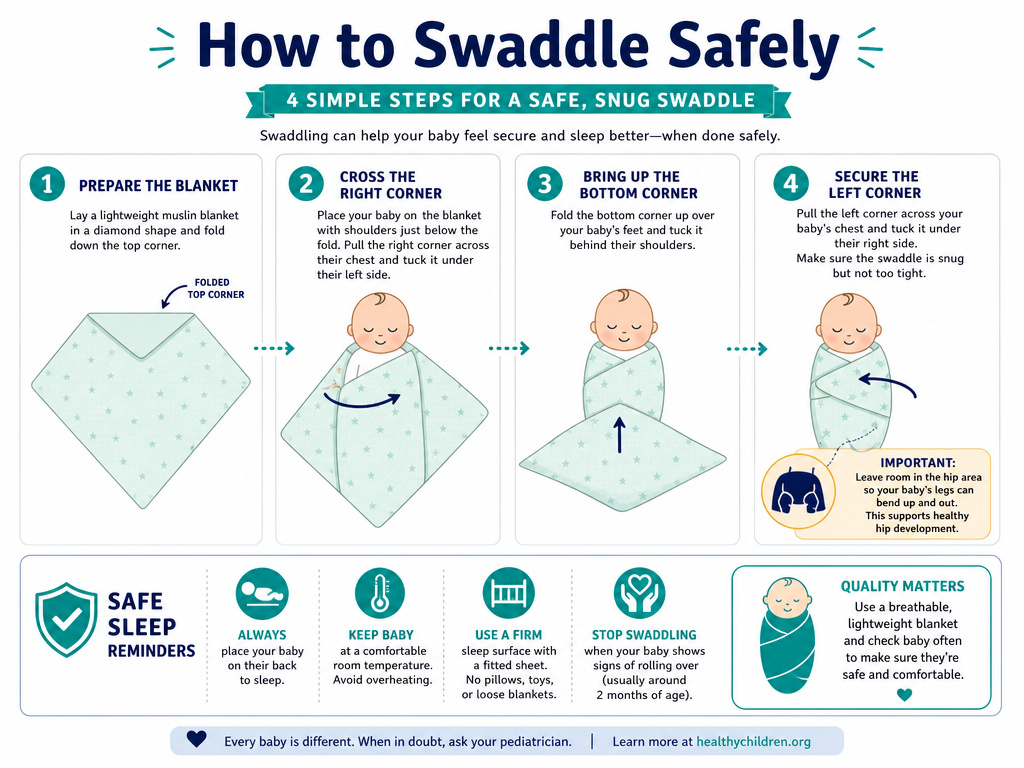
If you decide to swaddle from the early newborn days, this is the safe method. It prioritizes hip health and secure placement.
You’ll need: A large, square, breathable swaddle blanket (muslin is ideal). A firm, flat sleep surface with only a fitted sheet.
- Lay the blanket in a diamond. Fold the top corner down about 6 inches. Place your infant on their back with their neck at the folded edge.
- Secure the right arm. Hold your infant’s right arm straight at their side. Pull the right corner of the blanket across their body, tucking it snugly under their left side and back. This pins the right arm.
- Secure the left arm. Bring the bottom corner up over their feet and toward their left shoulder. Tuck any excess fabric behind their left shoulder.
- Complete the wrap. Take the left corner and pull it across their body, wrapping it around their back. The final tuck should be secure enough that the blanket doesn’t come loose, but you should still be able to fit two or three fingers between the blanket and your infant’s chest. Ensure the legs are not bound together; the fabric around the hips should be loose enough for the legs to frog naturally.
The entire process should take less than 30 seconds. If your infant breaks free repeatedly, they may be signaling they’re done with swaddling, or you may need a different style, like a swaddle blanket with wings or a velcro closure designed for hip-healthy positioning.
Safer Alternatives to Traditional Swaddling
When it’s time to move on, whether by choice or necessity, you have safer, approved options. These provide comfort and warmth without the risks associated with loose blankets or restrictive wrapping.
Wearable Blankets (Sleep Sacks): This is the gold-standard successor. A wearable blanket is a sleeveless garment with a zipper or snaps that your infant wears. It keeps them warm while leaving their arms completely free to move, roll, and self-soothe. It cannot cover their face. The Consumer Product Safety Commission safe sleep guidelines endorse products intended for sleep that meet federal standards, and well-made sleep sacks fall into this category.
Arms-Out Swaddling: Some swaddle products allow you to wrap the torso snugly while leaving the arms out. This can be a good intermediate step for an infant who still craves the torso pressure but needs arm mobility for rolling readiness.
Appropriate Bedding: Once out of the swaddle, dress your infant in a fitted onesie or sleep suit appropriate for the room temperature. The rule of thumb is to dress them in one more layer than you would wear comfortably. For the crib itself, “bare is best”, a firm mattress with a tight-fitting sheet, and nothing else. No pillows, quilts, stuffed animals, or bumper pads. For general warmth, a well-secured baby blanket is not safe for sleep; the wearable blanket is the dedicated tool for that job.
Choosing the right swaddle materials from the start, like breathable cotton, makes the transition to lighter sleep sacks easier, as the infant is already accustomed to the fabric’s feel.
Frequently Asked Questions
Does swaddling prevent SIDS?
No. The American Academy of Pediatrics states there is no evidence that swaddling reduces the risk of SIDS. Some research indicates it might increase risk for infants not habituated to it by decreasing arousability. The proven SIDS-reduction strategies are back sleeping, a firm bare mattress, room-sharing without bed-sharing, and avoiding smoke exposure.
When is it absolutely unsafe to swaddle a newborn?
It is absolutely unsafe when: 1) The infant shows any signs of attempting to roll. 2) The infant is placed to sleep on their side or stomach. 3) A weighted swaddle or any extra object is used. 4) The swaddle is too tight around the hips or chest. 5) The infant has a fever or is in a warm environment, risking overheating.
What is hip-healthy swaddling?
Hip-healthy swaddling means wrapping the blanket snugly around the arms and chest while leaving ample room around the hips and legs. The legs should be able to bend up and out at the knees naturally. Swaddling with the legs forced straight and pressed together can increase the risk of hip dysplasia.
Are sleep sacks safer than swaddles?
Yes, for infants who are rolling or showing signs of rolling, a sleeveless wearable blanket or sleep sack is safer than a traditional swaddle. It provides warmth without restricting arm movement, allowing the infant to move freely, reposition, and use their arms if they roll. A baby blanket in the crib is not a safe alternative; the sleep sack is the designed solution.
Before You Go
Swaddling is a tool with a very short and specific window of safe use. The evidence is clear: it is for comfort, not protection, and it carries defined risks that escalate with your infant’s development. The most important thing you can do is anchor your decision in the official updated safe infant sleep recommendations and let your infant’s milestones, not the clock, dictate the timeline.
Stop at the first hint of a roll, never use weighted products, and always prioritize a bare, back-sleeping environment. When in doubt, transition to a wearable blanket. It’s the safer, simpler path that supports your growing infant’s need for both security and the freedom to move.
