
How to Get Newborn to Sleep More at Night: A Parent’s Guide
This post contains affiliate links. As an Amazon Associate we earn from qualifying purchases.
To get your newborn to sleep more at night, focus on three things you control: a safe, boring sleep environment; watching for sleep cues to prevent overtiredness; and a simple, consistent pre-sleep routine. Newborns are wired to wake for food, so “more sleep” means longer stretches between feeds, not uninterrupted nights. The American Academy of Sleep Medicine reports a 94% success rate for behavioral interventions on night wakings in young children, but these methods work with a baby’s biology, not against it.
That 94% figure is evidence that small, consistent adjustments to how you handle sleep times add up. The goal is not to force a six-hour block from a four-week-old.It’s to help their immature circadian rhythm find its footing, so the longest sleep period naturally lands at night instead of midday.
What follows is the framework: safety first, then timing, then routine. We’ll break down the official safe sleep rules, show you how to spot the 60-minute window when your baby is ready to sleep but not yet frantic, and walk through the quiet, dark ritual that teaches night from day. You’ll also get the specifics on gear that supports sleep without creating a new dependency.
Key Takeaways
- Safe sleep is non-negotiable. A firm, flat mattress in a bare crib, bassinet, or bedside sleeper is the foundation. Room-sharing for at least six months cuts SIDS risk by up to 50%.
- Watch the clock, not the clock. Most newborns can only stay happily awake for 45-90 minutes. Putting them down at the first sign of tiredness (yawning, staring) prevents the cortisol rush that fights sleep.
- Darkness and dullness teach nighttime. Use low lights and minimal interaction for all nighttime feeds and changes. Save play and conversation for daylight hours.
- Swaddles and sleep sacks are tools, not solutions. A well-fitted swaddle blanket or wearable blanket can curb the startle reflex, but they work best within a consistent routine.
- Your baby’s sleep will change every few weeks. Growth spurts, illness, and developmental leaps disrupt sleep. A solid routine makes it easier to find your way back after the disruption.
The Core Strategy: Environment, Timing, and Routine
Longer nighttime sleep rests on a three-legged stool. Knock one leg out, and the whole thing wobbles. You need a safe place for sleep, you need to put the baby there at the right time, and you need a predictable wind-down sequence. Most advice fails because it focuses on just one leg.
The CDC safe sleep guidelines are your blueprint for the environment leg. They exist because the stakes are literal life and death. Every other sleep tip is secondary.
Where this goes sideways: Using any sleep product that inclines more than 10 degrees. This includes many “nappers” and loungers marketed for sleep. The CPSC banned them because the angle can cause a baby’s head to slump forward, blocking their airway. The rule is firm, flat, and empty.
Your second job is timing. A newborn’s sleep drive operates on a short cycle. The sweet spot for sleep is narrow.
| Awake Window | Signs of Sleepiness | What Happens If You Miss It |
|---|---|---|
| 45-75 minutes | Yawning, looking away, decreased activity | Baby becomes overtired. Cortisol and adrenaline flood their system, making it harder to fall asleep and stay asleep. |
| 75-90 minutes | Fussing, rubbing eyes, ear pulling | The “fussy” stage. Getting to sleep now requires more rocking, shushing, and may involve crying. |
| 90+ minutes | Crying, arched back, frantic movements | Full-blown meltdown. Baby is now fighting sleep despite being exhausted, and the resulting nap will often be short and restless. |
The third leg is routine. It doesn’t need to be complex. It needs to be consistent and boring at night.
Step-by-Step: Teaching Night vs. Day
Your newborn doesn’t know the difference. You have to show them. This isn’t about keeping them awake all day. That backfires every time. An overtired baby sleeps worse, not better. The method is about contrast.
Step 1: Maximize light and interaction during the day. Open curtains. Go outside. Talk and play during awake periods. Do naps in a lit room with normal household noise. This helps set their internal clock.
Step 2: Minimize everything at night. For night feeds and changes, use a dim nightlight. Keep your voice quiet and calm. Stick to business: feed, burp, change if needed, swaddle, back to bed. No eye contact, no playtime, no extended rocking. This teaches that night is for sleeping.
Step 3: Put baby down drowsy but awake. This is the hardest step for most parents. The goal is to let the baby practice falling asleep in their sleep space, not on you. Start by trying it for the first nap of the day. If it fails, help them the rest of the way. The attempt alone reinforces the association.
Common mistake: Rushing in at every grunt. Newborns are noisy sleepers. They grunt, squeak, and even cry out in their sleep. Wait a minute or two before intervening. Often, they will settle back down on their own. Picking them up at the first sound teaches them to wake fully for attention.
The American Academy of Pediatrics recommendations emphasize room-sharing without bed-sharing for at least the first six months. Having a bedside bassinet lets you follow this rule easily. You can respond quickly without fully waking up, and baby still has their own safe, flat surface.
The Safe Sleep Environment: What “Empty Crib” Really Means
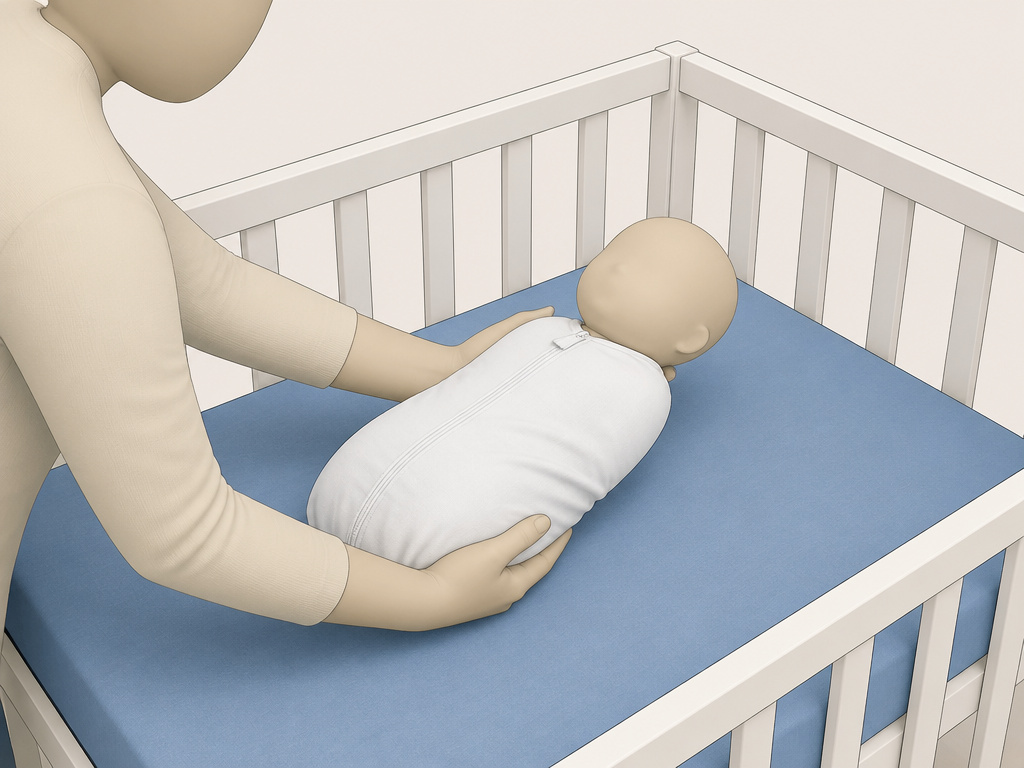 A safe sleep space is boring by design. There is nothing for the baby to interact with except sleep. This is about eliminating every known physical risk.
Your checklist is short and absolute: * A firm, flat mattress in a safety-approved crib, bassinet, or play yard. If you can press down and feel the firm base immediately, it passes. No memory foam toppers. * A fitted sheet only. No loose sheets, blankets, quilts, or pillows. No crib bumpers. * No soft objects. Stuffed animals, loveys, and loose bedding stay out until the child is at least one year old. * Dress for the temperature. Use a sleep sack or wearable blanket instead of a loose blanket. This keeps them warm without the risk of covering their face. * Always on the back. For every sleep, until they can roll over both ways independently. Then, you can let them find their own position, but always start them on their back.
The right crib mattress is a critical, often overlooked piece. It must be firm and must fit the crib snugly—no gaps wider than two fingers between the mattress and the crib frame. A gap is an entrapment hazard.
Tools That Help (and Ones That Don’t)
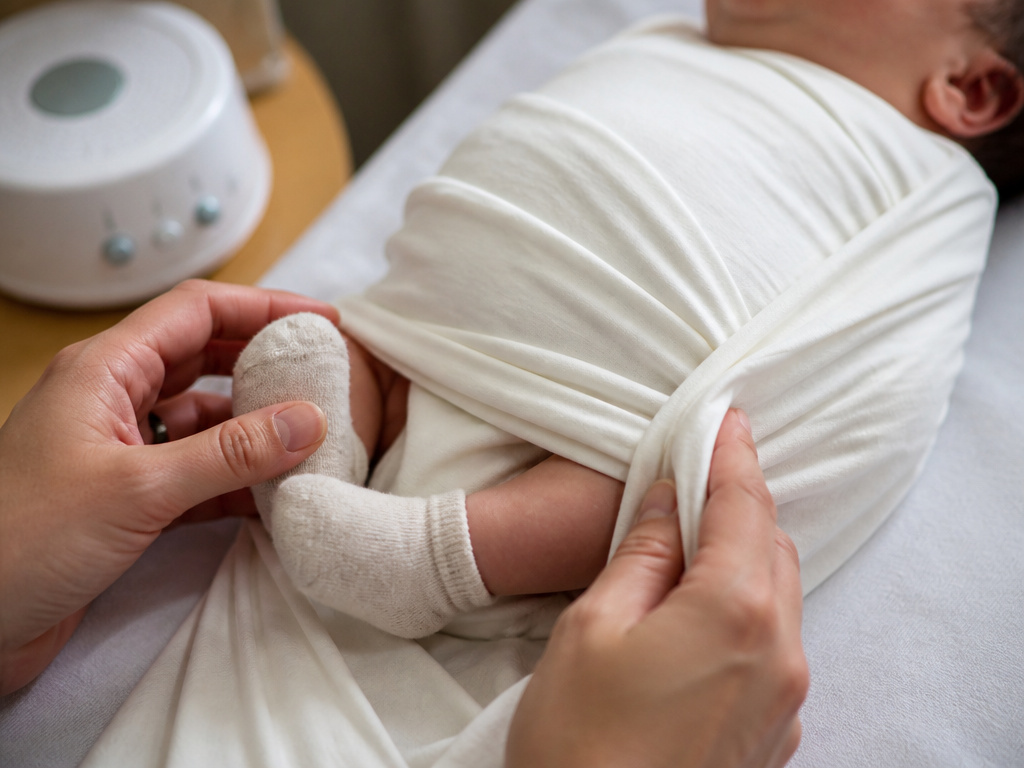 Some products support the routine. None replace it. Think of them as part of the sleep environment leg of the stool.
Swaddles: A tight baby swaddle can mimic the womb and inhibit the Moro (startle) reflex, which often wakes newborns. The key is tight around the arms, loose around the hips. Stop swaddling when the baby shows signs of rolling, usually around 2-3 months. Transition directly to a wearable blanket.
White Noise: Steady, dull sound can mask household noises that might cause a baby to startle awake. Keep it at a low volume (about 50 decibels, or the sound of a quiet shower) and place it across the room, not in the crib.
Pacifiers: Offering a pacifier at nap and bedtime is linked to a reduced SIDS risk. If it falls out after the baby is asleep, you don’t need to reinsert it.
| Helpful Tool | How It Supports Sleep | When to Stop or Change |
|---|---|---|
| Firm Swaddle | Limits startle reflex | At first signs of rolling |
| Sleep Sack | Provides warmth safely | Until toddler transitions to a blanket |
| Low-Volume White Noise | Masks disruptive sounds | Can be used indefinitely |
| Pacifier | Soothes sucking reflex, may reduce SIDS risk | Wean after 6-12 months if desired |
Worth knowing before you start: Do not use weighted swaddles or sleep sacks. There is no safety standard for these for infants, and the extra weight can make it harder for a baby to breathe or to rouse themselves if they need to. Stick to traditional, unweighted products.
The rest of your bedding should be simple: a few fitted sheets and perhaps a waterproof mattress protector. That’s it. Elaborate crib sets with quilts and pillows are for photos, not for actual sleep.
Navigating the Inevitable Setbacks
Your baby will not sleep the same way two weeks in a row. Expect and accept this. The four biggest disruptors are growth spurts, developmental leaps, illness, and teething.
During a growth spurt (common around 3 weeks, 6 weeks, and 3 months), your baby will feed more frequently, day and night. This is biological need, not a broken routine. Feed on demand. The increased sleep will return in a few days once their calorie needs are met.
A developmental leap, like discovering their hands or learning to roll, can make sleep restless. They might wake more often practicing their new skill. Keep the routine consistent. The phase will pass.
When your baby is sick, all rules are off. Comfort them. Hold them. Do what you need to do. You cannot spoil a sick infant. Once they are well, gently return to your usual patterns over a couple of days.
I learned this the hard way with my first during the 4-month sleep regression. I kept trying to force the old schedule. It just made everyone miserable. When I finally accepted that his sleep patterns had matured and needed a new approach—slightly longer awake windows, a more predictable nap schedule—we all started sleeping again. The regression wasn’t a problem. It was a signal.
The AASM practice parameters PDF calls these “perpetuating factors.” Your response to a wake-up can accidentally teach the baby to keep waking. If you always feed back to sleep, they learn to need food to connect sleep cycles. The goal during a setback is to meet the immediate need (comfort, food) while gently guiding back to the independent sleep skill you’ve been building.
Frequently Asked Questions
How long should a newborn sleep at night?
Newborn’s “night” is broken into chunks. It’s normal for a baby under 3 months to sleep in stretches of 2-4 hours at night, waking to feed. Total nighttime sleep might be 8-9 hours, but it’s not consecutive. By 3-6 months, some babies may sleep a 5-8 hour stretch.
Is it okay to wake a sleeping newborn?
During the first two weeks, or if advised by your pediatrician for weight gain, you may need to wake to feed every 2-3 hours. After that, and once baby is gaining well, it’s generally fine to let them sleep for longer stretches at night. Never wake a sleeping baby just to keep them on a daytime schedule.
Why does my newborn fight the swaddle?
Some babies simply prefer their arms free. Try a one-arm-out or arms-up swaddle style. Alternatively, switch directly to a wearable blanket. The fight isn’t worth it if it amps them up before sleep.
Can I use a blanket if the room is cold?
No. Loose blankets are a suffocation risk. If the room is cool, dress the baby in a footed sleeper and use a appropriately TOG-rated sleep sack. This provides warmth without the danger of covering their face.
Before You Go
Longer newborn sleep at night comes from consistency, not magic. Build the three-legged stool: a safe, boring place to sleep, careful timing to avoid overtiredness, and a simple routine that teaches night from day. Use tools like swaddles and white noise to support that foundation, not as the foundation itself. Remember the 94% success rate from the sleep experts—small, persistent adjustments work. Your baby’s sleep will change, but a solid approach gives you a map to find your way back each time. Start with safety, watch your baby, and keep the nights quiet and dark.
