
Solve a Toddler Who Won’t Nap in Bed with This Safety Check
This post contains affiliate links. As an Amazon Associate we earn from qualifying purchases.
A toddler who won’t nap in their new bed is usually reacting to a physical gap in security, not a behavioral strike. The fix is matching three things: the official guardrail height (at least five inches above the mattress), a snug mattress fit with no dangerous gaps, and a reset of their sleep association away from the crib. Skip the guardrail check, and the nap refusal lasts weeks.
That five-inch guardrail rule is federal law, part of the ASTM F1821-26 standard that every toddler bed sold in the U.S. Must meet.Your child is feeling the difference between a crib’s solid walls and a bed where they can see over the edge and feel a draft. The refusal is a safety instinct.
What follows is the mechanic’s view of toddler bed naps. We’ll walk through the two safety specs that cause most refusal, the real data on when kids drop naps, and the exact three-day protocol that rebuilds sleep confidence without a fight.
Key Takeaways
- The upper edge of the guardrail must be at least five inches above the mattress surface. A lower rail makes a toddler feel exposed and unsafe.
- The mattress support system must create a gap of at least 5.1 inches below the sleeping surface to prevent entrapment. A mattress that’s too thick closes this gap and violates the standard.
- A 2022 meta-analysis found nap cessation is wildly variable: at age 3, rates ranged from 4.8% to 65%. Your 2-year-old might genuinely be ready to drop their nap.
- For resistant nappers, declare a “non-nap day” with mandatory quiet time in bed. The opposition often triggers sleep within 30 minutes.
- Never force the issue. A power struggle over sleep entrenches refusal and can delay the transition by months.
The Hidden Safety Gap That Feels Like a Nap Strike
You moved them to a bed for a 2-year-old for more freedom. Now they won’t sleep. Before you diagnose a stubborn phase, run a tape measure.
A guardrail’s upper edge must be at least five inches above the toddler bed’s mattress. This is not a design choice. It’s a mandatory requirement from the Consumer Product Safety Commission to prevent falls.
That measurement is the line between a safe enclosure and an open platform. A rail that sits only two or three inches above the mattress doesn’t block a toddler’s line of sight when they sit up. They see the whole room, feel the edge, and their primitive brain registers a fall risk. The nap protest starts here.
The second measurement is underneath. The standard requires the mattress support system to sit at least 5.1 inches above the sleeping surface when the thickest allowed mattress is in place. Why? To prevent a child from rolling into the gap between the mattress and the footboard or side rail and becoming entrapped.
Check both numbers. Use a rigid ruler, not a soft tape. If the guardrail is under five inches, you need a different bed or an approved add-on safety rail. If the mattress is too thick and sits flush with the top of the side panels, you need a thinner, standard crib mattress. The right toddler mattress is usually 4 to 6 inches thick.
Where this goes sideways: Assuming all toddler beds are equally safe. Models that convert from a crib sometimes have lower side rails to match the crib’s aesthetic. That design fails the five-inch rule in bed mode, and the resulting fear manifests as nap refusal for days.
This is the mechanical root cause most behavioral advice misses. You can’t reason a toddler out of a biological fear response. You fix the environment.
Is It the Bed, or Are They Done Napping?
Sometimes the answer is both. The variability is staggering.
A 2022 systematic review in Sleep Medicine Reviews analyzed napping patterns across 12,000 children. The data shows there’s no universal switch. While fewer than 2.5% of children stop napping before age 2, the range explodes after that. At 36 months (3 years old), the percentage of kids who had ceased napping ranged from 4.8% to 65% across different studies. By 48 months (4 years), it was 26.5% to 78.2%.
| Age | Typical Nap Duration | Cessation Range | What It Means for You |
|---|---|---|---|
| 18–24 months | 2–3 hours | < 2.5% | Nap refusal here is almost always environmental or behavioral. |
| 2–3 years | 1.5–2 hours | 4.8% – 65% | Your child could be an early napper-dropper. Look at total 24-hour sleep. |
| 3–4 years | 1–1.5 hours | 26.5% – 78.2% | The nap is phasing out. A quiet-time ritual replaces the sleep expectation. |
| 4–5 years | 0–1 hour | Majority | The nap is gone. Focus on a solid, early bedtime. |
The study’s lead author noted the “high heterogeneity of measurement” between reports. In plain English: some parents call 30 minutes of quiet reading a “nap,” others don’t. Your toddler’s bed for a 2-year-old might be perfect, but their biology is moving on.
So how do you know? Track total sleep in a 24-hour period for a week. The American Academy of Pediatrics recommends 11–14 hours for children 1–2 years old and 10–13 hours for those 3–5. If your child hits that target with night sleep alone, the nap is optional. If they’re short and melting down by 5 PM, they still need the nap, the problem is the transition.
The 3-Day Reset Protocol (Without the Power Struggle)
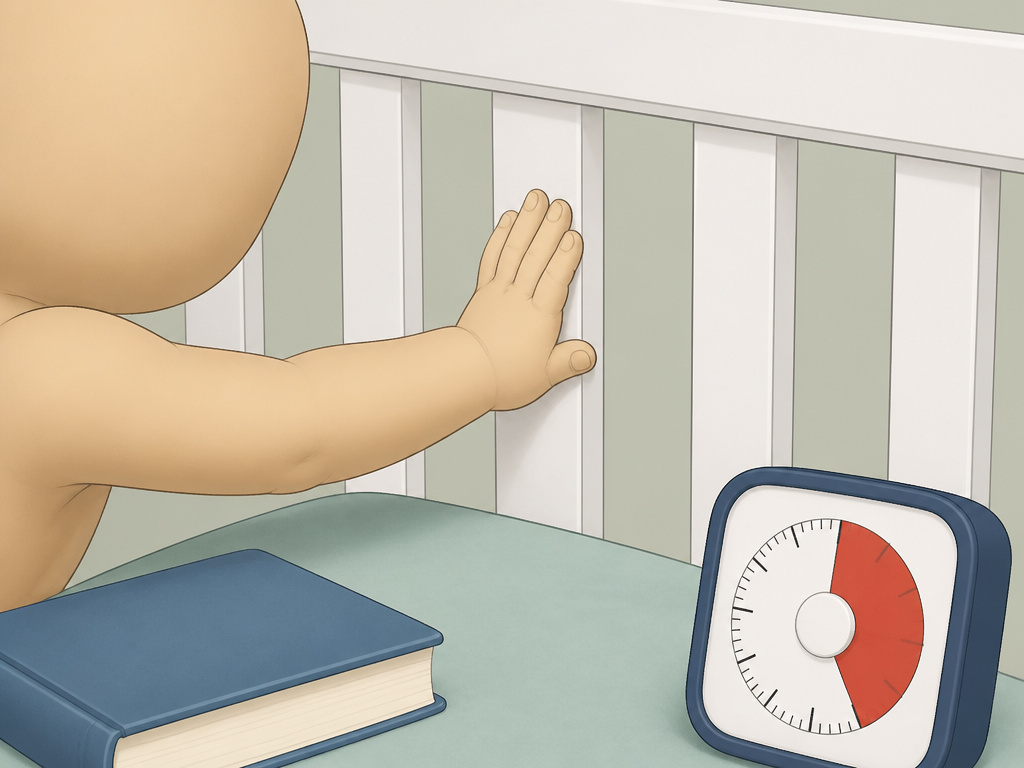
Forcing sleep is like forcing a sneeze. It doesn’t work. The goal is to make the bed feel safe and boring, not like a battleground. This protocol assumes you’ve already verified the safety specs above.
Day 1: The Non-Nap Day.
After lunch, use exact words. “Today is a special day. You don’t have to nap. But your body needs quiet rest. You will stay in your bed with your book for 30 minutes. Here’s the rule: whatever you do, do not go to sleep.” Set a visual timer. Leave the room. The paradoxical instruction, don’t sleep, often triggers the oppositional toddler’s need to do the forbidden. Many are asleep in 20 minutes. If not, you’ve enforced quiet time without a fight.
Day 2: Anchor the Routine.
Repeat the same script. Keep the timer, the book, the exact phrasing. Consistency is the scaffold for security. This is when you might notice them testing the guardrail, pushing against it. That’s good. They’re verifying its strength, building trust in the new environment.
Day 3: Integrate a Sleep Cue.
Add one immutable element that signals “nap” in their old crib. This is a specific toddler blanket they only use for sleep, a white noise machine, or blackout curtains. The cue tells their brain, “This place, too, is for sleeping.”
What if they get out of bed? Calmly, silently, return them. No conversation, no eye contact. Do this as many times as it takes. The message is that the rule is non-negotiable, but you are not angry. The safety of the bed rails means you don’t have to worry about a fall if they do get out.
Easy to miss: The mattress itself. A toddler used to a firm crib mattress might sink into a softer one. That unfamiliar sensation wakes them up. The standard requires a firm, flat surface for a reason. If you’re using the old crib mattress, make sure it’s still supportive and fits the new frame with gaps no larger than two fingers wide.
When to Consider a Different Bed Frame
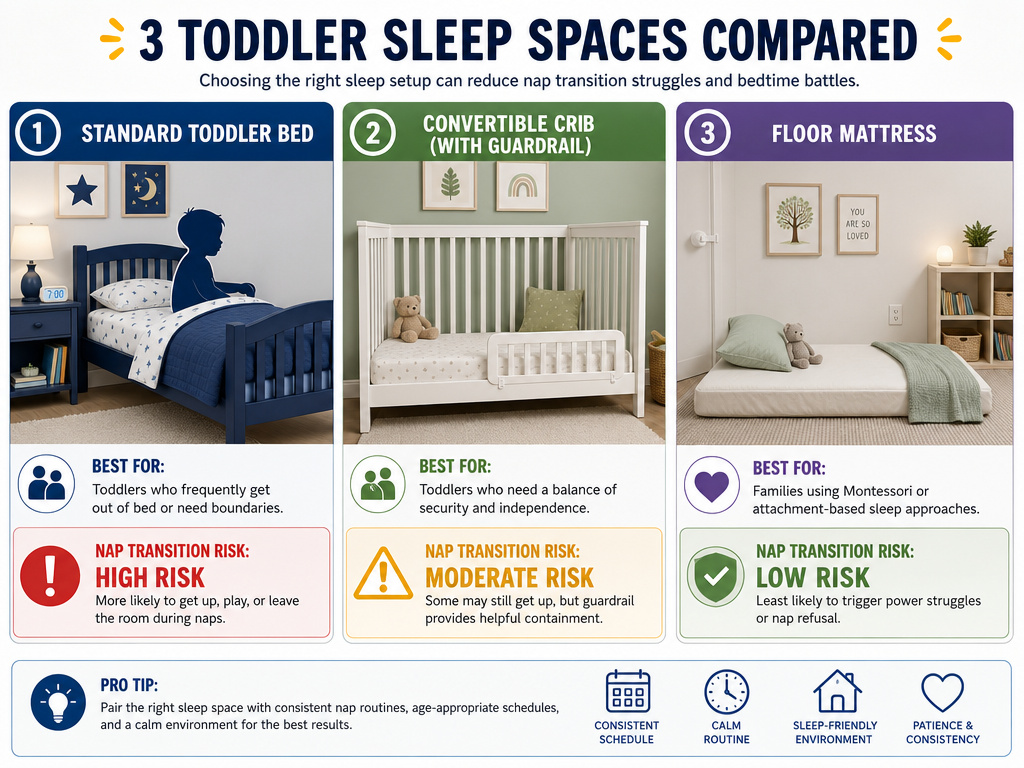
Sometimes the standard toddler bed isn’t the right tool. The transition from a crib’s enclosure to a small open frame is too stark. You have two evidence-backed alternatives.
The first is a convertible crib. You remove one side rail and attach the toddler bed guardrail. The footprint, mattress, and three walls remain identical. This minimizes environmental change. The federal rules acknowledge this: convertible cribs follow slightly different warning label requirements because the child is already familiar with the structure.
The second is a floor bed. A low-profile mattress directly on the floor eliminates the fear of falling entirely. There’s no guardrail to feel inadequate. The room itself becomes the crib, often with a soft rug and a baby-gated door. This Montessori-aligned approach works for climbers who felt trapped by a crib. The CPSC standards still apply, the mattress must be a firm, full-size crib mattress, and the room must be fully childproofed.
| Bed Type | Best For | Nap Transition Risk | Key Safety Check |
|---|---|---|---|
| Standard Toddler Bed | Gradual transition, room-sharing | Moderate | Guardrail height ≥5″, mattress gap ≥5.1″ |
| Convertible Crib | Children sensitive to change | Low | Proper installation of toddler rail, secure hardware |
| Toddler Floor Bed | Escape artists, independent toddlers | High (room safety) | Full room childproofing, firm mattress on floor |
The choice is about which geometry makes your specific child feel secure enough to close their eyes. The official federal safety guidance for toddler beds covers all these configurations.
The Role of Bedding and Comfort Objects
Safety regulations govern the bed’s bones. The soft goods govern its spirit. After a major change, comfort objects are non-negotiable.
Start with the toddler bedding. Use a fitted sheet that grips the mattress tightly, no loose fabric that can bunch up. The standard includes tests for “snug-fitting sheets” to prevent entanglement. A top sheet or heavy comforter is a suffocation risk for children under 3; use a wearable sleep sack or a light, breathable blanket tucked securely under the mattress.
Introduce a toddler pillow only if they’re over 18 months and showing clear signs of wanting one (resting head on a stuffed animal). The pillow should be small, firm, and flat. Its primary job is to make the new bed feel “big kid,” not to provide neck support.
Finally, migrate one loved object from the crib. This is the anchor. The smell and feel of a specific stuffed animal or safe toddler blanket tells their nervous system, “You are safe. This is your sleep space.” Wash it a day before the transition so it smells like home, not like laundry.
The part nobody mentions: The noise difference. A crib is often in a parent’s room or has solid sides that muffle sound. A toddler bed in their own room amplifies house noises. A consistent white noise machine covers these new auditory gaps and rebuilds the sound bubble they’re used to.
When Nap Refusal Signals a Bigger Sleep Regression
Sometimes the bed is a catalyst, not the cause. The 2-year sleep regression is a real neurodevelopmental leap where toddlers test boundaries, master language, and fight sleep to avoid missing out.
How do you tell the difference? A bed-related refusal is specific to the new sleep location. They’ll sleep in the car, the stroller, or your arms. A full regression affects all sleep, including nights, and is accompanied by intense separation anxiety at bedtime, frequent night waking, and earlier morning risings.
For a true regression, the protocol shifts. You double down on the bedtime routine, offer more connection during the day, and hold the boundary calmly at night. The mandatory toddler bed standard ensures the hardware is safe while you weather the behavioral storm. You might need to sit in a chair by the new bed for a few nights, gradually moving it closer to the door, to rebuild confidence.
The data from the CPSC’s incident reports is sobering here. In their review of 41 toddler bed incidents, 78% involved falls out of bed. The hardware, broken guardrails, detached side rails, was a direct factor. Your job is to ensure the physical environment is faultless, so you can focus on the psychological transition.
Frequently Asked Questions
My toddler naps fine at daycare but won’t nap at home in their bed. Why?
Daycare is boring compared to home. The peer pressure to lie down is high, and the environment is designed for group sleep. At home, you’re more fun, and the new bed is still unfamiliar. This split behavior is classic. The solution is to make home nap time more boring and predictable than daycare. Follow the same pre-nap routine (story, song, blinds down) every single day, even weekends.
How long should the nap strike last before I worry?
Give the 3-day reset protocol a full try. If after a week of consistent, calm enforcement there is zero progress, and total 24-hour sleep is below 10 hours for a 3-year-old, consult your pediatrician. Underlying issues like sleep apnea or iron deficiency can surface during transitions. But for most, the strike resolves in 3–7 days once the safety and routine gaps are closed.
Are bed rails safe for toddlers?
Approved, properly installed toddler bed rails that meet ASTM F1821 are safe. The danger comes from older, portable “adult” bed rails that can create a deadly gap between the rail and the mattress. A true toddler bed rail is either integrated into the bed frame or attaches with a locking mechanism that leaves no gap wider than two fingers. Never add a non-certified rail to a bed.
Should I just go back to the crib?
Not immediately. Reverting to the crib teaches that protest works. First, exhaust the checks: guardrail height, mattress fit, routine, and comfort objects. If, after two weeks, sleep is disastrous and everyone is exhausted, a temporary reset in the crib for a month is okay. Then, re-attempt the transition with a different approach, like a floor bed or convertible crib setup.
What does the research say about napping and night sleep?
The peer-reviewed nap behavior research is clear: after age 2, napping reduces nighttime sleep duration. It’s a redistribution, not an addition. A long nap often means a later bedtime or early waking. If your goal is an earlier family evening, shortening or dropping the nap might be the path. The trade-off is a potentially cranky late afternoon.
Before You Go
A toddler who won’t nap in their new bed is giving you data. They’re reporting on guardrail height, mattress stability, and the loss of their sleep cave.
Measure the five-inch gap. Check the mattress thickness. Then build a boring, predictable ritual around the new space. The complete toddler bedding, the right pillow, the exact same words every day, this is the scaffolding.
The federal rules make the bed safe. Your consistency makes it feel like home. When those two things align, the nap usually follows.
