
Can Babies Wear Fleece to Bed? Key Safety Standards & Advice
This post contains affiliate links. As an Amazon Associate we earn from qualifying purchases.
Babies can wear fleece pajamas to bed only under specific, legally defined conditions. The decision isn’t just about warmth—it’s governed by federal flammability standards (16 CFR Parts 1615 & 1616). Pajamas sized above 9 months must be either flame-resistant or meet exact “tight-fitting” dimension rules. Fleece itself isn’t banned, but its common loose, cozy fit often fails the tight-fitting test, making it illegal to sell as sleepwear for older infants and toddlers. For babies under 9 months, different “infant garment” length rules apply.
That gap between infant and children’s sleepwear is where most parental confusion lives. One standard uses months, the other uses fit, and the line between them is a set of measurements printed in the Code of Federal Regulations.
What follows: the two rules that classify sleepwear, the real overheating risk tied to polyester, and how to pick a safe set. By the end, you’ll read a pajama tag and know instantly if it passes the test.
Key Takeaways
- Federal law splits sleepwear into two categories: “Infant garments” (size 9 months or smaller) have length-based exemptions. “Children’s sleepwear” (size 9M+ to 14) must be flame-resistant or tight-fitting.
- “Tight-fitting” is a numeric standard, not a guess. Garments must meet maximum measurements for chest, waist, seat, arm, and leg at each size. Most fleece pajamas are too loose to qualify.
- Overheating is a separate, physical risk. Polyester fleece traps heat and moisture. In a room above 68°F, it can raise a baby’s core temperature faster than cotton or wool.
- The 2013 Target recall is the case study. The recalled Circo and Xhilaration pajamas were cotton and cotton/fleece blends that failed because they were not tight-fitting, proving the rule is actively enforced.
- Your checklist: check the size label, feel the fit, then check the fabric. Prioritize snug cotton, cotton blends, or certified wool for regulated sizes. For under 9 months, focus on length and breathability.
The Two Federal Rules That Decide Everything
The U.S. Consumer Product Safety Commission (CPSC) doesn’t regulate pajamas based on fabric alone. The rules turn on the garment’s size and fit. This creates two legal pathways, and your baby’s age determines which one applies.
Technical Snippet: Under 16 CFR Part 1615, a “tight-fitting garment” is defined by maximum allowable dimensions for chest, waist, seat, upper arm, thigh, wrist, and ankle for each size. For example, a size 9-12 month garment cannot exceed a 19-inch chest circumference. An “infant garment” is sized 9 months or smaller, must not exceed 25.75 inches in length (for a one-piece), and must bear a label stating the intended age in months.
The Infant Garment Exemption (Size 9 Months or Smaller)
Garments labeled for babies 9 months or younger are exempt from the stringent flammability testing if they meet three conditions. First, they must be sized 9 months or smaller. Second, they have length limits: a one-piece can’t be longer than 25.75 inches; a two-piece can’t have any piece longer than 15.75 inches. Third, the garment must have a permanent label stating the size in months, like “0-3 mos.”
This exemption exists because very young infants have limited mobility and are less likely to encounter open flames. The focus shifts to general textile flammability and other safety standards. So, a fleece sleep sack or footie pajama for a newborn can be legally sold as sleepwear if it’s correctly labeled and within the length limits. Your primary concern then becomes breathability, not legality.
The Children’s Sleepwear Standard (Size 9M+ to 14)
Once a garment is sized above 9 months, it falls under the children’s sleepwear standards. Here, the rule is absolute: sleepwear must be either flame-resistant or tight-fitting. Most fleece fails the flame-resistant test unless specifically treated, which is rare. That leaves the tight-fitting path.
Tight-fitting is not a suggestion. It’s a set of maximum measurements for seven body locations. A size 2T pajama top has a different maximum chest measurement than a size 4T. If the garment exceeds any of those measurements for its size, it does not qualify as tight-fitting and must be flame-resistant to be sold as sleepwear.
| Size (Example) | Max Chest/Waist/Seat | Max Upper Arm | Max Thigh |
|---|---|---|---|
| 9-12 Months | 19.0 inches | 5.6 inches | 10.5 inches |
| 2T | 21.3 inches | 6.3 inches | 12.2 inches |
| 4T | 23.6 inches | 7.1 inches | 13.8 inches |
The takeaway? That cozy, baggy fleece pajama set you see at a big-box store for a toddler is likely not legal sleepwear. It’s probably being sold as “loungewear” or “playwear” to skirt the regulation—a loophole the CPSC warns about. For true sleepwear, the fit must be snug.
The Overheating Equation: Fabric vs. Room
Even if a fleece garment is legally compliant, its material poses a separate, physical risk. Overheating is a recognized factor in SIDS risk, and polyester fleece is engineered to trap heat.
Where this goes sideways: Dressing a baby in fleece in a room that’s 72°F or warmer. Their immature sweat glands can’t dump heat efficiently, and the non-breathable fabric creates a humid microclimate next to the skin. Core temperature can rise within 20 minutes, leading to restlessness, flushed skin, and damp hair at the nape of the neck.
Polyester is a plastic. It doesn’t absorb moisture; it repels it. When your baby sweats or drools, that moisture sits on the skin or gets trapped between the fabric layers. This can lead to prickly heat rash or exacerbate eczema. Natural fibers like cotton and wool absorb and wick moisture away from the body, which is why they’re the default for sustainable bedding and sensitive skin.
The safe-room guideline is concrete. If you choose fleece, the room temperature should be below 68°F (20°C). Use a reliable thermometer, not a guess. For most climate-controlled homes, this means fleece is a poor choice for overnight wear. A better solution is a snug cotton base layer paired with a sleep sack of appropriate tog rating for the season.
How to Choose Safe Sleepwear: A 3-Step Filter
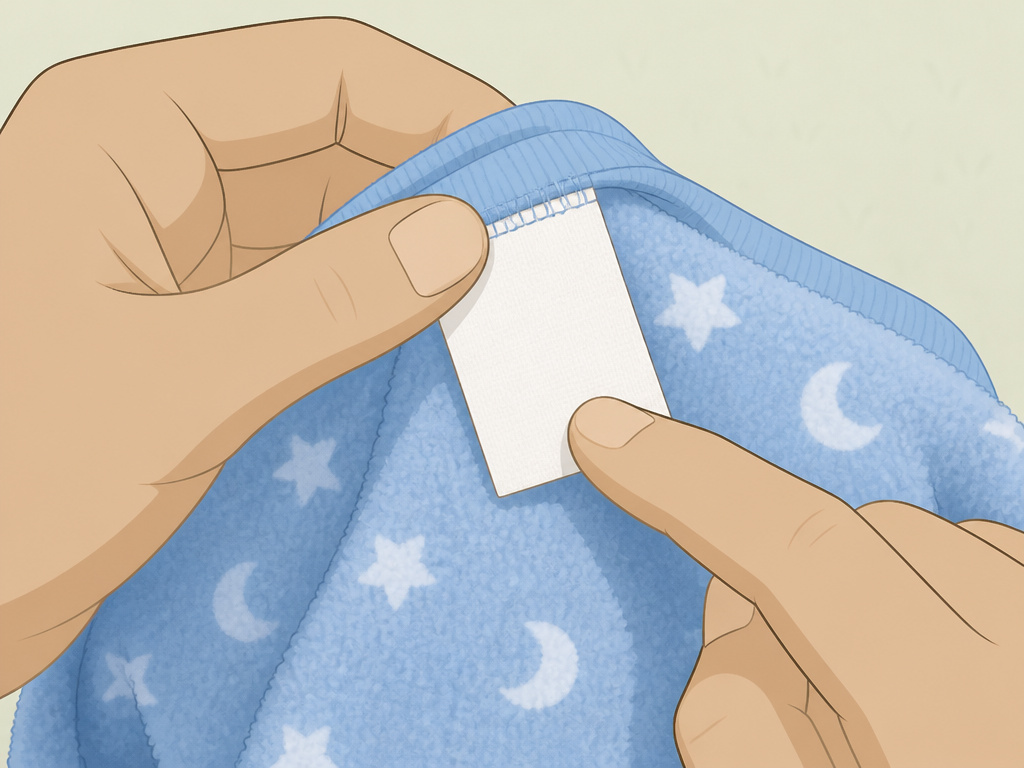
Navigating the rules feels complex, but you can break it down with a simple filter. Start with the label, assess the fit, then evaluate the fabric.
Step 1: Decode the Label
The tag holds the first clues. Look for: – Size in Months: “9M” or smaller indicates it may be an exempt infant garment. Check the length. – Flame-Resistant Warnings: If it says “Not flame resistant,” it must also say “Wear snug-fitting.” If it lacks both phrases, it’s not legal sleepwear for a child over 9 months. – Fit Instructions: Legitimate tight-fitting sleepwear often has explicit instructions: “For child’s safety, garment should fit snugly.”
If the tag says “loungewear” or “not intended for sleep,” the manufacturer is telling you it doesn’t meet the sleepwear standard. Believe them.
Step 2: Perform the Fit Test
For babies over 9 months, snugness is a safety feature. Here’s how to check: 1. Chest and Waist: The fabric should be close to the body with no loose billowing. You should be able to pinch only a small amount of fabric. 2. Sleeves and Legs: They should be comfortably fitted, not tight, but without excess material. Cuffs should sit at the wrist and ankle. 3. The Two-Finger Rule (for necks): This old rule is outdated and dangerous for sleepwear. A snug neck is safer to prevent the garment from riding up over the face. Focus on the chest and limb fit instead.
A proper fit not only complies with the law but also reduces the risk of fabric catching or dangling near a heat source.
Step 3: Select the Right Fabric
With fit confirmed, fabric choice manages comfort and overheating risk. – Best (Regulated Sizes): Snug-fitting cotton or cotton blends. They’re breathable, absorbent, and naturally compliant if they fit tightly. – Best (Under 9 Months): Organic cotton, bamboo viscose, or merino wool. These are breathable, temperature-regulating, and gentle. Look for GOTS or OEKO-TEX Standard 100 certifications. – Use with Caution: Polyester fleece or Sherpa. Only use in cold rooms (<68°F) and ensure a supremely snug fit if for a child over 9 months. Consider it more for a pre-bedtime snuggle than all-night wear. – Avoid for Sleep: Loose, fluffy bathrobe-style robes or any oversized, non-fitted fleece item. These are extreme fire hazards and are illegal to market for sleep.
For peace of mind against nighttime leaks, a well-fitted cotton pajama paired with a waterproof mattress protector is a safer, more breathable system than a heavy fleece sleeper.
Frequently Asked Questions
Are fleece sleep sacks safe for babies?
Yes, but with critical caveats. Sleep sacks are considered bedding, not sleepwear, so the tight-fitting flammability rules don’t apply. However, the overheating risk remains. Use a fleece sleep sack only in a cool room (below 68°F) and over a light, breathable base layer like a cotton onesie. Always choose a well-fitting sack with armholes that aren’t too large to prevent the baby from slipping down inside.
What happened in the Target pajama recall?
In 2013, Target recalled Circo and Xhilaration brand children’s cotton and cotton/fleece pajama sets. They were labeled “Wear snug-fitting, not flame resistant,” but they did not meet the specific dimensional requirements for a tight-fitting garment. This violation of the federal standard posed a burn hazard. No injuries were reported, but the recall underscores that the CPSC enforces the numeric rules, not just the label language.
Can a pediatrician’s advice override the flammability rules?
No. A pediatrician’s guidance on warmth or materials doesn’t nullify federal product safety law. If a doctor recommends a specific type of pajama for a medical reason, it should still be evaluated against the safety standards. The goal is to find a solution that meets both medical needs and safety regulations, such as a tightly-fitted, flame-resistant garment or an exempt infant garment.
How do I know if my baby is too hot in their pajamas?
Check them an hour after bedtime. Feel the back of their neck or their chest—it should be warm, not hot or sweaty. Their skin should not be flushed. If they are damp, remove a layer. A good mattress cover can handle sweat; a baby’s circulatory system shouldn’t have to.
Are “two-piece” pajamas safer than “one-piece” footies?
Not inherently. Safety is determined by fit and fabric compliance, not the number of pieces. A snug-fitting two-piece set that meets the tight-fitting standards is as safe as a snug one-piece. For young infants, the two-piece length limit (15.75 inches per piece) is the key factor for exemption.
Before You Go
The question isn’t just “can they,” but “under what specific conditions.” Fleece pajamas sit at the intersection of a federal flammability rulebook and the basic physics of heat retention. For babies under nine months, length and label dictate legality. For everyone older, the fit must be numerically snug—a standard most fleece fails.
Your move is straightforward. Match the pajama to the child’s age and size category first. Then, prioritize breathable, natural fabrics for overnight wear. Reserve cozy fleece for supervised cuddles in a cool living room, not for the crib. Safety isn’t about fear; it’s about knowing which rules are written in law and which are written in the properties of polyester.
