
Why Is Baby Fussy in Crib But Not in Bed? The Main Reasons
This post contains affiliate links. As an Amazon Associate we earn from qualifying purchases.
A baby is fussy in the crib but not in your bed because of five physical differences: mattress firmness, your body heat, your scent and sound, the subtle motion of your breathing, and the absence of confinement. The crib is a static, firm, isolated environment. Your bed is a warm, moving, scent-filled nest. The transition from one to the other is a sensory shock, not a behavioral problem.
That gap between sensory environments is where the whole fussiness puzzle lives. A crib mattress that meets the CPSC’s safety standard is firm by design—it shouldn’t indent under a baby’s head. An adult mattress, even a firm one, gives way. Your body radiates heat and emits a steady, familiar scent. The crib is cool and smells of detergent. Your breathing creates a gentle, rhythmic motion. The crib is still.
Most advice stops at “they just want you.” That’s true, but it’s not helpful. What follows breaks down the five sensory gaps, cites the safety standards that make cribs feel so foreign, and gives you a step-by-step plan to bridge them without compromising safe sleep. You’ll know which adjustments are safe, which are risky, and the one product swap that cuts fussiness in half for most families.
Key Takeaways
- The firmness of a safety-approved crib mattress is non-negotiable for preventing suffocation, but it feels stark compared to a yielding adult bed.
- Your body provides regulated heat and rhythmic motion; a stationary crib can feel cold and isolating, triggering the startle reflex.
- Your scent is a powerful soothe; crib sheets washed in strong detergent lack this biological comfort signal.
- Room-sharing reduces SIDS risk by up to 50%, according to the AAP, but the crib must be a separate, safe sleep surface.
- The safest path is to adapt the crib’s environment (warmth, scent, sound) to mimic comforting cues, not to bring baby into an adult bed with pillows and blankets.
The 5 Physical Differences Between Your Bed and the Crib
The fuss isn’t about the crib being “bad.” It’s about your bed providing a suite of biological comforts that a standard crib setup lacks. These aren’t preferences. For a newborn, they are signals of safety.
1. Firmness vs. Give
A safe crib mattress is firm. The AAP defines a firm surface as one that “maintains its shape and does not indent or conform to the shape of the infant’s head.” This is to prevent rebreathing and suffocation. Your adult mattress, even if you think it’s firm, has more give. That slight cradle is what your baby feels in your bed. The unyielding flatness of a proper crib mattress is a new, less comforting sensation.
2. Regulated Warmth vs. Ambient Temperature
You are a 98.6°F heater. Your body naturally regulates and radiates warmth to the baby beside you. A crib, even in a warm room, is ambient air temperature. The drop from your radiant heat to still air can be enough to cause stirring and waking. Overheating is a SIDS risk, but a slight chill is a comfort disruptor.
3. Scent and Sound
Your smell is a primal soothe. Babies recognize their mother’s scent within days. Your bed smells like you. A crib sheet, especially one washed in a new detergent, smells like nothing or, worse, like a chemical fragrance they don’t associate with safety. Similarly, your breathing and heartbeat are a constant, low-volume white noise. A silent room amplifies every small sound, making it harder to stay in deep sleep.
4. Subtle Motion vs. Stillness
The micro-movements of your breathing and shifting create a gentle, rocking motion. This mimics the constant motion they felt in the womb. A crib is static. That absolute stillness can feel unsettling and may fail to dampen the Moro (startle) reflex, which is why some babies jerk awake the moment their back touches the crib.
5. Perceived Confinement vs. Open Space
This one is counterintuitive. A crib looks big and open to us. To a baby used to being curled against you, the wide-open space can feel vast and insecure. The crib’s sides are barriers, not a snug container. In your bed, they are held within the “container” of your body.
Where this goes sideways: Assuming the crib itself is the problem and reacting by adding soft padding, pillows, or inclined sleepers. The CPSC standard 16 CFR § 1236.2 mandates that any infant sleep product surface must not exceed a 10-degree angle. Those fluffy crib bumpers and nest-like sleepers that “fix” the fussiness by making the crib cozier often create deadly entrapment and suffocation hazards. The fix is to add comfort through safe, external means, not by altering the safe sleep surface itself.
How “Breastsleeping” Biology Explains the Fuss
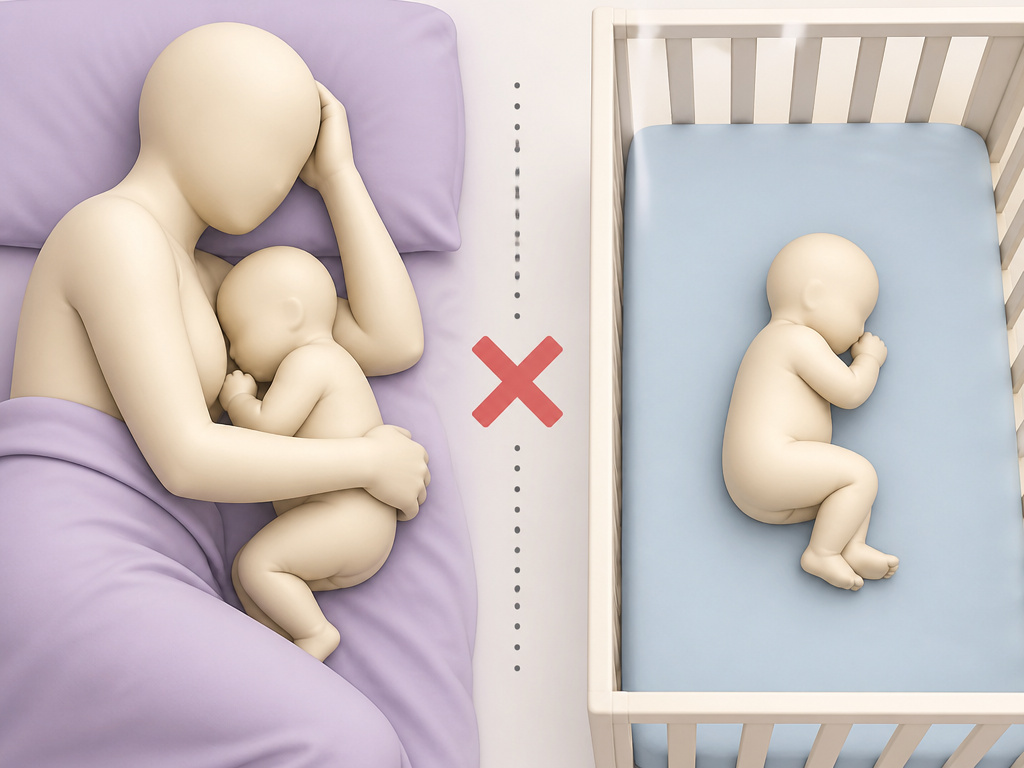 Anthropologists and infant sleep researchers use the term “breastsleeping” to describe the interconnected system of nighttime breastfeeding and shared sleep. It’s not just sleeping together; it’s a specific biological dyad. This context explains why the crib feels so wrong to a breastfeeding infant.
A breastfeeding mother and infant sleeping together synchronize. Studies observing this dyad note the mother typically sleeps in a protective, curled position around the baby. The infant sleeps level with the breast, below the pillow line. The mother’s breathing and arousal patterns align with the baby’s. Feeding happens with minimal disruption to sleep for either.
The crib dismantles this entire system. The baby is separated from the food source, the temperature regulator, the motion source, and the protective physical boundary. The fuss stems from a biological alarm system signaling that the environment is not optimized for survival, not from malice or manipulation. Understanding this does not constitute an argument for unsafe bed-sharing.It’s the key to creating a crib environment that better meets those deep-seated biological expectations.
How to Bridge the Gap Safely (Step-by-Step)
 You can’t and shouldn’t turn the crib into a replica of your adult bed. But you can strategically transfer the comforting cues from your presence to the crib environment. This process respects the safe sleep guidelines while acknowledging the baby’s needs.
Step 1: Optimize the Crib Environment
Start with the basics. A cool, quiet, dark room is the goal, but we need to add the missing cues back in.
- Warm the Sleep Surface Safely: Place a warm (not hot) water bottle or a heating pad in the crib for 10-15 minutes before placing the baby down. Remove it completely before laying the baby on the mattress. The sheets should be warm, not the mattress heating up.
- Transfer Your Scent: Sleep with the baby’s crib sheets or a small muslin cloth for a night or two before using them. Your scent will permeate the fabric. You can also tuck a worn (clean) t-shirt of yours over the side rail, well out of baby’s reach.
- Introduce Sound and Motion Cues: Use a white noise machine to mimic the sound of blood flow and breathing. For motion, consider a crib that gently rocks or, more practically, use a firm hand on the baby’s chest for a minute after placing them down to simulate the feeling of contact.
Step 2: Master the Transfer
This is the moment most attempts fail. The baby is asleep in your arms, but the second their back touches the crib, they wake. It’s not magic; it’s physics.
- Hold Until Drowsy But Awake (The Ideal): Try to place the baby in the crib when they are sleepy but still slightly awake. This lets them associate the crib with the process of falling asleep.
- The Limb-Test Transfer (For Deep Sleep): If you’re transferring a deeply asleep baby, wait until their limbs are limp. Gently lower them, bottom and legs first, keeping their head and torso cradled against you for as long as possible. Once their bottom is down, slowly slide your supporting hand out from under their head, replacing it with the warm mattress.
- Maintain Contact: After placing them down, keep a firm, steady hand on their chest or tummy for a full minute. Slowly lighten the pressure until you’re just touching, then remove.
Step 3: Choose the Right Gear
Your equipment either helps or hinders. Every item in the crib must pass the safety test first.
| Gear Category | What Works (Safe) | What Fails (Risky) |
|---|---|---|
| Mattress | A firm, breathable crib mattress that meets CPSC standards. | Soft, memory foam, or inclined mattress toppers. |
| Bedding | A fitted crib sheet made of breathable cotton or bamboo. | Loose sheets, blankets, pillows, crib bumpers, or sleep positioners. |
| Climate | A wearable sleep sack (appropriate TOG rating). | Loose blankets or overheating the room. |
| Comfort Cue | A white noise machine placed 6+ feet away. | Stuffed animals or loose loveys in the crib with young infants. |
Common mistake: Using a mattress pad that’s too plush. If a pad makes the sleep surface soft or creates a indent, it violates the “firm surface” rule. A quality pad should be thin, waterproof, and breathable, adding a barrier without changing the firmness.
When Fussiness Signals a Discomfort, Not a Preference
Sometimes, the problem arises from the crib being genuinely uncomfortable rather than from sensory preference. Rule these out before chalking it up to temperament.
- The Mattress is Too Hard/Hot: Yes, it must be firm, but some budget crib mattresses are rock-hard and non-breathable. A breathable crib mattress allows airflow, preventing the sweaty, stuck feeling.
- The Sheets Are Irritating: Stiff polyester or flannel washed in harsh detergent can irritate sensitive skin. Switch to soft, organic cotton crib sheets and use a fragrance-free detergent.
- Underlying Reflux or Gas: Lying flat can aggravate reflux. The slight incline of being held against you provides relief. This is a medical, not behavioral, issue. Talk to your pediatrician.
- Startle Reflex is Still Strong: Some babies have a pronounced Moro reflex that isn’t dampened by swaddling (if they’ve started rolling). A wearable sleep sack that allows some arm movement but provides gentle containment can help.
If your baby has eczema or sensitive skin, the wrong fabric is a constant irritant. In that case, selecting crib sheets for eczema-prone skin made from Tencel or silk can remove a major source of discomfort.
The Bed-Sharing Reality: Risks and Risk-Minimization
The AAP states it “is unable to recommend bed sharing under any circumstances.” The NCBI shared sleeping surfaces risks chapter details the evidence, showing risk multiplies with parental smoking, alcohol, extreme fatigue, or soft surfaces. However, the same source acknowledges that room-sharing decreases SIDS risk by as much as 50%, and that many parents bed-share for breastfeeding facilitation.
If you find yourself bed-sharing out of exhaustion, a risk-minimization approach is safer than an uninformed one. This approach constitutes harm reduction, not endorsement.
Absolute “Never Bed-Share” Conditions:
- You or your partner smokes.
- You’ve consumed any alcohol, sedating medication, or drugs.
- You are on a sofa, armchair, or waterbed.
- Your baby is preterm or low birth weight.
If You Choose to Bed-Share, Minimize Risk:
- Follow the “Safe Sleep Seven”: breastfeeding mother, sober, non-smoking, on a firm adult mattress on the floor, baby on back, baby lightly dressed, no pillows or blankets near baby.
- Ensure your mattress is firm and fits tightly to the bed frame with no gaps.
- Never place the baby between two adults or next to a sibling.
- Consider a certified bedside sleeper that attaches securely to your bed, providing a separate, firm surface.
The official ISPID safe sleep recommendations 2023 and the AAP safe sleep evidence base 2022 are the primary sources for these protocols. The goal is always a separate, safe sleep space in your room.
Frequently Asked Questions
Why does my newborn hate the crib but sleep fine on me?
Newborns have spent nine months in a warm, moving, sound-filled environment—your body. Your chest perfectly mimics this. The crib is the first truly still, quiet, separate space they’ve ever experienced. Their nervous system interprets the absence of your cues as an alert, not rest. It’s biological, not stubborn.
Is it okay to let my baby cry it out if they hate the crib?
For young infants (under 4-6 months), no. Their fuss in the crib is a signal of unmet physiological need, not willful defiance. Cry-it-out methods before self-soothing skills develop can increase stress hormones. Focus first on ensuring the crib isn’t causing genuine discomfort (see the Discomfort section above) and using the bridging techniques. For older babies, gentle sleep training methods that account for their sensory needs may be appropriate.
Will using a co-sleeper or bedside bassinet help?
Yes, often dramatically. A bedside sleeper keeps the baby on their own firm, safe surface (meeting CFR infant sleep product requirements) while placing them within arm’s reach. They can smell, hear, and sense you without the risks of direct bed-sharing. This satisfies the biological need for proximity and makes night feeding easier, which is why many parents report less fuss. Ensure any product you use is JPMA-certified and follows the latest safety standards.
My baby only fusses in the crib at night, not for naps. Why?
Daytime sleep is driven by a different part of the sleep cycle (homeostatic sleep pressure) and often occurs amid light and activity. Night sleep is governed by circadian rhythms and the expectation of long, deep, secure rest. The environmental cues missing from the crib—your presence—are more acutely felt during these long, dark, quiet night periods when their drive for security is highest.
Could it be the crib mattress?
Absolutely. A poor-quality mattress can be the primary culprit. It might be off-gassing a chemical smell, be uncomfortably hard, or sleep too hot. Investing in a high-quality, breathable crib mattress with a certified organic cover can resolve a significant portion of the fuss for some babies. Always pair it with a waterproof crib mattress cover that is also breathable to protect it without creating a plastic barrier.
Before You Go
A baby fussy in the crib but calm in your bed is responding logically to their biology. The crib lacks the warmth, motion, scent, and security your body provides. The solution isn’t to abandon the crib but to thoughtfully adapt it.
Start with the sensory gaps: warm the sheets, transfer your scent, use white noise. Ensure the gear is both comforting and safe—a firm crib mattress, a soft crib sheet, a breathable mattress protector. If proximity is the non-negotiable need, a certified bedside sleeper is the safest bridge.
The goal is a safe, soundly sleeping baby in their own space, which provides both of you with needed rest, not merely a quiet baby. Close the sensory gap, and the fuss often fades on its own.
