
The Safe Way to Wake Up Your Newborn Baby from Deep Sleep
This post contains affiliate links. As an Amazon Associate we earn from qualifying purchases.
To wake a newborn baby from deep sleep, use a gentle, escalating progression: start with removing a layer like a swaddle or sleep sack, then move to a diaper change, and finally use skin-to-skin contact or a lukewarm washcloth on the feet. The goal is effective feeding for weight gain, not just opening their eyes. You must wake a newborn every 2-3 hours if breastfeeding or 3-4 hours if bottle-feeding until they regain their birth weight, which typically takes the first couple of weeks.
This progression exists because a newborn’s sleep drive is powerful. Their tiny stomachs need frequent refills, and a baby in deep sleep may latch without truly eating, a “sleepy feed” that doesn’t support growth. The methods you choose directly impact whether the baby transitions to an alert, nutritive feeding or spirals into overtired fussiness.
What follows is the safe, tiered approach endorsed by pediatricians, the critical difference between sleepy and active feeding, and the specific medical signs that mean you should stop trying to wake them and call a doctor immediately.
Key Takeaways
- Follow a gentle escalation: remove swaddles or wearable blankets, then change the diaper, then use skin-to-skin, never start with loud noise or bright light.
- The clock is your guide: wake to feed every 2–3 hours for breastfed babies and 3–4 hours for bottle-fed babies until birth weight is regained.
- Distinguish a “sleepy feed” (fluttering sucks, no swallowing) from an “active feed” (rhythmic sucks and audible swallows), only the latter counts.
- Jaundice and prematurity are the two biggest reasons a baby might be excessively hard to wake, requiring closer pediatric monitoring.
- If your newborn is limp, unresponsive, or difficult to rouse with gentle efforts, seek immediate medical help, this overrides all feeding schedules.
Why You Need to Wake a Newborn at All
Newborns are designed to sleep deeply. For the first two months, sleep comes in short bursts of 30 minutes to three hours at a time, scattered around the clock. This pattern exists because their stomachs are tiny. A breastfed baby’s stomach empties in about two hours; a bottle-fed baby’s in about three to four.
The American Academy of Pediatrics began recommending back-sleeping in 1992, which dramatically reduced SIDS rates. A side effect is that babies often sleep more soundly on their backs. Combine that with a newborn’s natural sleepiness, and you have a baby who might sleep through hunger cues. Letting them sleep too long between feeds in the early weeks can slow weight gain and, in some cases, worsen conditions like jaundice.
The rule is simple: until your baby shows good weight gain, usually within the first couple of weeks, you set the schedule. After that, you can follow their lead for longer nighttime stretches. This Nemours Foundation newborn sleep guide reinforces that newborns who sleep for longer stretches should be awakened to eat.
Common mistake: Trying to keep a baby awake during the day so they’ll sleep longer at night. An overtired newborn actually sleeps worse, with more fragmented night wakings. Daytime sleep supports nighttime sleep.
The Step-by-Step Gentle Wake-Up Progression
This isn’t about startling your baby awake. It’s about gently nudging them up through lighter stages of sleep until they’re alert enough to eat well. Always start with the least invasive step and only move to the next if the previous one fails.
Step 1: Remove Sleep Layers.
Begin by quietly loosening or removing the swaddle or sleep sack. The slight change in temperature and the sensation of being unwrapped is often enough to stir them. If you use a wearable blanket, unzip it. If they’re in a muslin swaddle, gently unwind it. This step respects their sleep while introducing a mild physical change.
Step 2: Change the Diaper.
If they’re still sleeping deeply, move to a diaper change. The cool wipe and the movement of their legs is a stronger sensory signal. Do this on a firm, safe surface, not on a soft adult bed or a plush nursing pillow. Keep the lights dim and avoid playful chatter.
Step 3: Use Skin-to-Skin Contact.
Place your baby, dressed only in a diaper, against your bare chest. Cover their back with a light blanket. Your heartbeat, smell, and warmth are powerful stimulants. This is also the best position to attempt a first feeding if they begin to stir.
Step 4: Apply a Lukewarm Cloth.
If skin-to-skin doesn’t work, take a washcloth run under lukewarm (not cold) water and gently wipe their feet, hands, or forehead. The novel sensation can trigger arousal. Avoid the face if they have an umbilical cord stump still attached.
Step 5: Attempt a Feeding.
Once they are stirring, offer the breast or bottle immediately. Support their chin and check for a deep latch. If they flutter-suck and fall back asleep, break the latch, burp them gently, and try again. This cycle may repeat a few times.
| Step | Action | Why It Works | If It Fails |
|---|---|---|---|
| 1 | Remove swaddle/sleep sack | Mild temperature & touch shift disrupts deep sleep | Move to Step 2 |
| 2 | Change diaper | Cool sensation & limb movement provides stronger input | Move to Step 3 |
| 3 | Skin-to-skin contact | Core warmth & parental heartbeat stimulate arousal | Move to Step 4 |
| 4 | Lukewarm cloth on feet | Novel, localized sensation triggers nervous system | Move to Step 5 |
| 5 | Attempt feeding | Sucking reflex can itself promote wakefulness | Seek medical advice if consistently unsuccessful |
The entire process should be calm and patient. Rushing or using loud noises will likely result in a crying, overstimulated baby who is too upset to feed effectively.
Sleepy Feeding vs. Active Feeding: The Difference That Matters
Opening their eyes is not the goal. Transferring milk is. Many parents believe they’ve successfully woken their baby when the baby is actually “sleep feeding.”
A sleepy feed looks like this: The baby latches, takes a few fluttery sucks, and then stops swallowing. Their eyes may be closed or barely open. They might hold the nipple in their mouth but not suck. This transfers little to no milk.
An active feed is defined by rhythmic, deep sucks followed by a pause and an audible swallow (you might hear a soft “kuh” sound). Their jaw moves deliberately, and they sustain this pattern for minutes at a time.
Where this goes sideways: Settling for a sleepy feed. The baby will fall back asleep “full” but wake up hungry again in 45 minutes, trapped in a cycle of poor intake and frequent waking that hampers weight gain.
To encourage active feeding during your wake-up session: – Stimulate during the feed: Gently stroke their cheek, foot, or back. Tickle their lower lip to re-trigger the rooting reflex. – Use breast compression: If breastfeeding, squeeze your breast when their sucking slows to encourage another swallow. – Switch sides or pause to burp: The movement can re-engage them. – Check the bottle nipple flow: A slow-flow nipple might be too much work for a sleepy baby, while a fast flow could cause choking. You may need to try a different pace.
When Sleepiness Is a Medical Red Flag
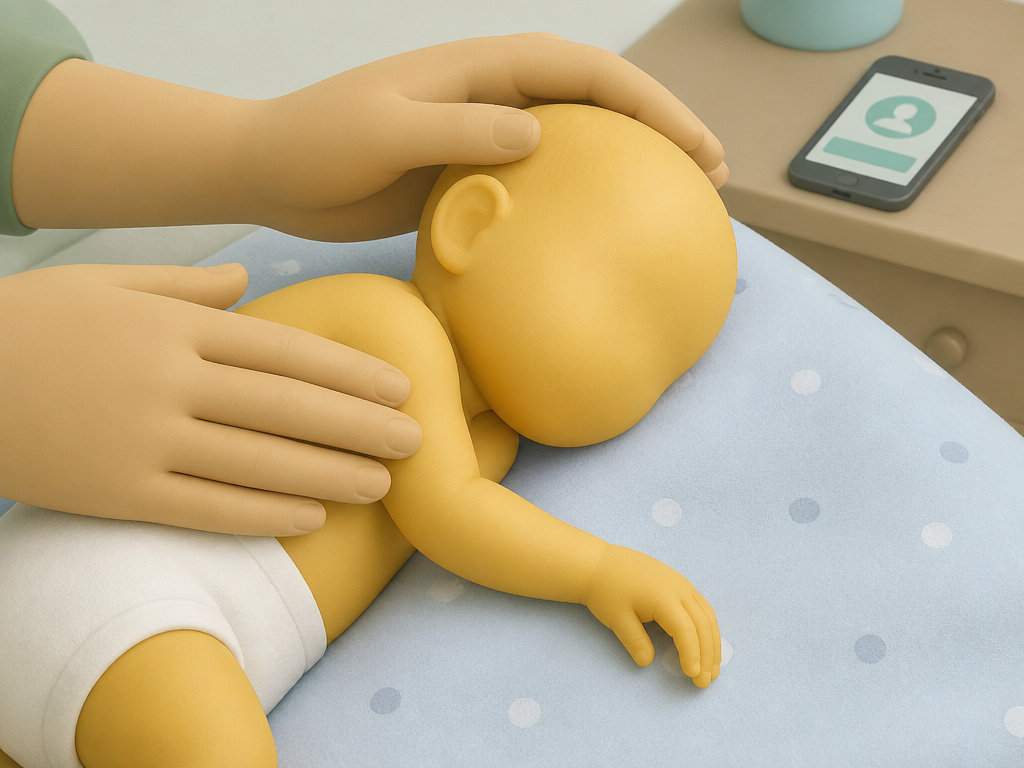 Gentle waking techniques assume you have a healthy, term newborn. Sometimes, extreme sleepiness is a symptom, not a phase. This is when you stop following a schedule and start calling your pediatrician.
The two most common medical culprits are jaundice and prematurity. Jaundice causes a buildup of bilirubin, which has a sedative effect. A jaundiced baby becomes increasingly lethargic, feeds poorly, and then the poor feeding worsens the jaundice. It’s a dangerous loop. The 2022 AAP hyperbilirubinemia guideline explicitly links lethargy with the need for medical evaluation.
A baby born even a few weeks early (late-preterm, 34-37 weeks) can look robust but have a neurologically immature “drive” to wake and feed. They tire quickly at the breast or bottle and fall asleep before taking a full meal. These babies often need scheduled waking for longer than term babies.
Immediate medical help is needed if your newborn: – Is limp or floppy when picked up. – Is extremely difficult to arouse and doesn’t wake with gentle handling. – Has fewer than 4-6 wet diapers in 24 hours after day five. – Has a weak cry or is non-responsive to your voice or touch. – Shows signs of dehydration (sunken soft spot, dry mouth).
This isn’t scare talk. It is the predictable outcome of several documented neonatal conditions. When in doubt, a call to your pediatrician is never wrong.
Creating a Sleep-Supportive Environment
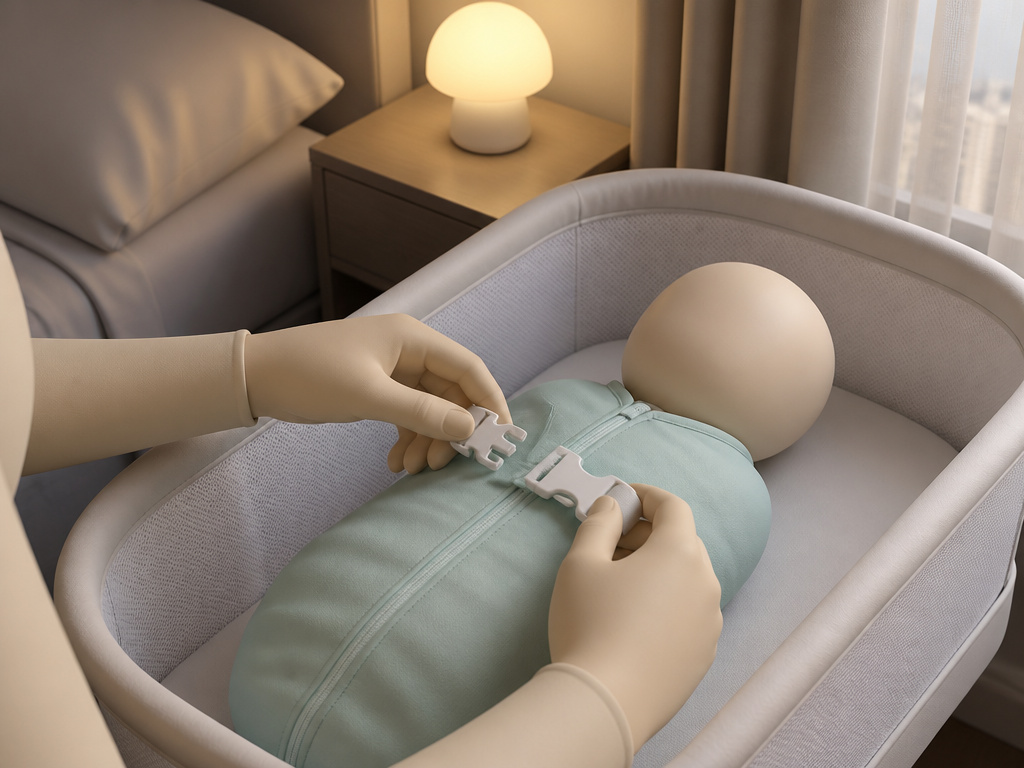 Your goal isn’t just to wake the baby for feeds, but to help them organize their sleep-wake cycles over time. A peer-reviewed study on sleep-wake cycles in the NICU showed that simple interventions like managing light and noise significantly improved newborns’ sleep patterns.
You can apply this at home: – Differentiate day and night: During daytime feeds and wake windows, have normal light and sound. For nighttime feeds and changes, use only a dim nightlight and keep talking to a minimum. – Use a consistent sleep space: A firm, flat crib, bedside bassinet, or bedside sleeper is safest. Avoid letting them sleep regularly in swings, car seats, or loungers. – Swaddle wisely: A snug swaddle blanket can promote longer sleep for newborns who aren’t rolling. The moment they show signs of trying to roll, switch to a wearable blankets with arms out. – Watch for overheating: Over-bundling is a SIDS risk factor. If the room is comfortable for you, it’s comfortable for the baby. A simple blanket for baby is for draping over you during skin-to-skin, not for loose bedding in the crib.
These practices don’t just make waking easier, they help your baby learn that night is for sleeping, and day is for being awake, which is the foundation of sleeping through the night later on.
Frequently Asked Questions
How long should I wake my newborn to feed?
You should wake your newborn every 2-3 hours if breastfeeding, or 3-4 hours if formula feeding, 24 hours a day, until they have regained their birth weight and your pediatrician gives the all-clear. This usually takes 10-14 days. After that, you can let them sleep for one longer stretch at night if they initiate it.
What if my newborn won’t wake up to eat?
If your gentle progression (unswaddling, diaper change, skin-to-skin) consistently fails to rouse your baby enough for an active feed, contact your pediatrician the same day. This is especially urgent if the baby is under two weeks old, was premature, or is showing any signs of jaundice (yellow skin/eyes).
Is it okay to use a cold wipe to wake a baby?
Cool wipe during a diaper change is acceptable, but avoid shocking them with a very cold cloth. A lukewarm washcloth is a gentler, more effective option. The goal is arousal, not distress, as a crying baby will have a harder time settling to feed.
Can I let my newborn sleep 4 hours at night?
Not in the first two weeks. Before they regain their birth weight, going longer than 4 hours without a feed can compromise weight gain and hydration. Once your pediatrician confirms they are gaining well, a 4-5 hour stretch is typically fine, but always get your doctor’s approval first.
Why is my newborn so sleepy all of a sudden?
Sudden increase in sleepiness can be normal as babies go through growth spurts, but it can also be the first sign of illness (like a cold) or a worsening condition like jaundice. Monitor closely for feeding effectiveness and wet diapers. When the change is sudden and pronounced, a call to the doctor is the safest move.
The Bottom Line
Waking a newborn is a short-term necessity with a clear purpose: fuel their growth. Use the gentle, step-up method, never jump straight to drastic measures. Your focus must be on the quality of the feed, not just opening their eyes. Trust the clock for the first couple of weeks, and trust your instincts if the sleepiness feels extreme. Pair your feeding routine with a clear day-night environment using safe sleep products like a firm bassinet and appropriate swaddles. This phase passes quickly, and soon enough, you’ll be wondering how to get them to sleep longer, not how to wake them up.
