
Is Tummy Sleeping OK for Newborns? The Vital Safety Answer
This post contains affiliate links. As an Amazon Associate we earn from qualifying purchases.
No, it is not okay for newborns to sleep on their tummy. The American Academy of Pediatrics states the supine position, on the back, is the only safe sleep position for every sleep until a child is 1 year old. Stomach sleeping increases the risk of Sudden Infant Death Syndrome (SIDS) by a factor documented in the AAP’s 2022 policy, and side sleeping carries an exceptionally high risk if the baby rolls to their stomach.
That “back is best” rule comes from decades of data, not guesswork. A public health push for back sleeping in the 1990s cut SIDS deaths by up to 83 percent. The recommendation is absolute because the risk isn’t.
What follows breaks down the mechanics behind the ban, the one exception that proves the rule, and the exact sleep environment that supports safe back sleeping. You’ll also get a clear timeline for when stomach sleeping stops being a danger and starts being a milestone.
Key Takeaways
- The AAP mandates back sleeping for every sleep until age 1, with side sleeping explicitly advised against.
- The peak risk period for SIDS is between 1 and 4 months of age, making strict adherence in the newborn period critical.
- A baby who can roll both ways independently (back to belly and belly to back) can be left in whatever position they find.
- The sleep surface is non-negotiable: a firm, flat, CPSC-approved crib mattress with only a fitted sheet.
- Swaddling does not reduce SIDS risk and must be stopped once a baby shows signs of rolling.
Why Can’t Newborns Sleep on Their Stomach?
The short answer is Sudden Infant Death Syndrome. The long answer involves airway mechanics, body temperature, and a baby’s limited ability to rescue themselves.
Placing an infant in the prone (stomach) or lateral (side) position significantly increases the risk of SIDS. The supine (back) position on a firm, flat, noninclined surface carries the lowest risk and does not increase the risk of choking, even for infants with reflux.
Stomach sleeping creates three overlapping hazards. First, it can lead to rebreathing. A newborn’s face pressed against a soft mattress or bedding can trap exhaled carbon dioxide. They then breathe this air back in, which can lead to hypoxia, inadequate oxygen.
Second, it raises the risk of overheating. A baby’s warm breath collects around their head more easily in the prone position. Studies cited by the AAP link elevated body temperature to a higher SIDS risk.
Third, it limits arousal. Some research suggests back sleeping allows for lighter sleep and easier waking, which may be protective. A baby in distress on their stomach may not have the neck strength or motor skills to turn their head or reposition.
The side position is just as dangerous. The AAP’s 2022 technical report notes the risk of SIDS is “exceptionally high” for infants placed on their side who are later found on their stomach. It’s an unstable position that easily leads to the prone position.
The Choking Myth and Reflux Reality
A common fear pushes parents toward stomach sleeping: choking. The logic seems sound, if a baby spits up, won’t they choke on their back?
The medical consensus says the opposite is true. The AAP states clearly that the back position does not increase aspiration risk. Anatomy is the reason. A baby’s airway is designed so that the esophagus (food tube) sits below the trachea (windpipe). On their back, spit-up pools in the esophagus and is re-swallowed. On their stomach, spit-up can pool at the opening of the trachea.
For infants with diagnosed gastroesophageal reflux disease (GERD), the recommendation remains the same. The AAP advises against positional therapy like head elevation for sleeping infants, noting it’s ineffective and can cause sliding into a dangerous position.
The 4-Step Safe Sleep Setup for Newborns
Safety isn’t just about position. It’s about the entire sleep environment. Get these four elements wrong, and even a baby on their back faces increased risk.
1. The Right Surface: Firm, Flat, and Approved.
Your baby’s mattress must be firm. Press on it, it should snap back quickly without conforming to the shape of your hand. It must be flat, with no incline, pillows, or padding. It must also be safety-approved, meeting all current CPSC safety standards. This means a new or recently manufactured crib, bassinet, or play yard.
Common mistake: Using a hand-me-down crib with missing hardware. The AAP warns that many infant deaths have occurred in cribs that were broken or had missing parts. If the instructions are gone, so should be the crib.
A firm crib mattress is the cornerstone. Steer clear of soft, memory-foam toppers or plush pads. The surface should be as unyielding as a tabletop under a fitted sheet.
2. The Bare Crib.
Nothing else goes in the sleep area. This means: – No pillows, blankets, or quilts. – No stuffed animals or loveys. – No crib bumpers (mesh or padded). – No sleep positioners or wedges.
Dress your baby in a one-piece sleeper or a wearable sleep sack for warmth. A loose blanket can cover a baby’s face in minutes.
3. The Right Location: Your Room, Not Your Bed.
Room-sharing, placing your baby’s crib or bedside bassinet within arm’s reach, is recommended for at least the first six months. It makes feeding easier and lets you monitor them.
Adult beds, couches, and armchairs are extremely dangerous for shared sleep. Soft mattresses, gaps, and pillows create suffocation and entrapment risks. If you fall asleep while feeding, place the baby in their own space as soon as you wake.
4. The Consistent Routine.
Every caregiver, for every sleep, naps and nighttime, must follow the same rules. Grandparents, babysitters, and daycare providers need the same briefing: back to sleep, in a bare crib.
When Can Babies Safely Sleep on Their Stomach?
The rule changes not on a birthday, but with a developmental milestone: independent rolling.
The official transition point is when a baby can roll from back to belly and from belly to back. This usually happens around 6 months, but some babies manage it earlier. The ability to roll both ways demonstrates the neck and core strength needed to reposition their head if breathing becomes difficult.
Here’s the critical procedure: 1. You always place them on their back at the start of sleep. 2. If they roll onto their stomach on their own during sleep, you do not need to flip them back. 3. This applies only if they can roll both ways. If they can only roll back-to-belly, gently return them to their back.
This is why supervised tummy time while awake is so important. It builds the muscle strength needed for this milestone safely. Using a tummy time pillow for support during play can help, but these products are never for unsupervised sleep.
| Scenario | Is It Safe? | Action to Take |
|---|---|---|
| Newborn placed on stomach to sleep | No | Immediately reposition onto the back. |
| 4-month-old placed on side to sleep | No | Reposition onto the back; side is an unsafe starting position. |
| 5-month-old rolls belly-to-back independently, found on stomach | Yes | No action needed. Place on back at next sleep time. |
| 5-month-old rolls back-to-belly only, found on stomach | No | Gently return to back; continue until they master rolling both ways. |
Navigating Grandparent Advice and “We Did It Differently”
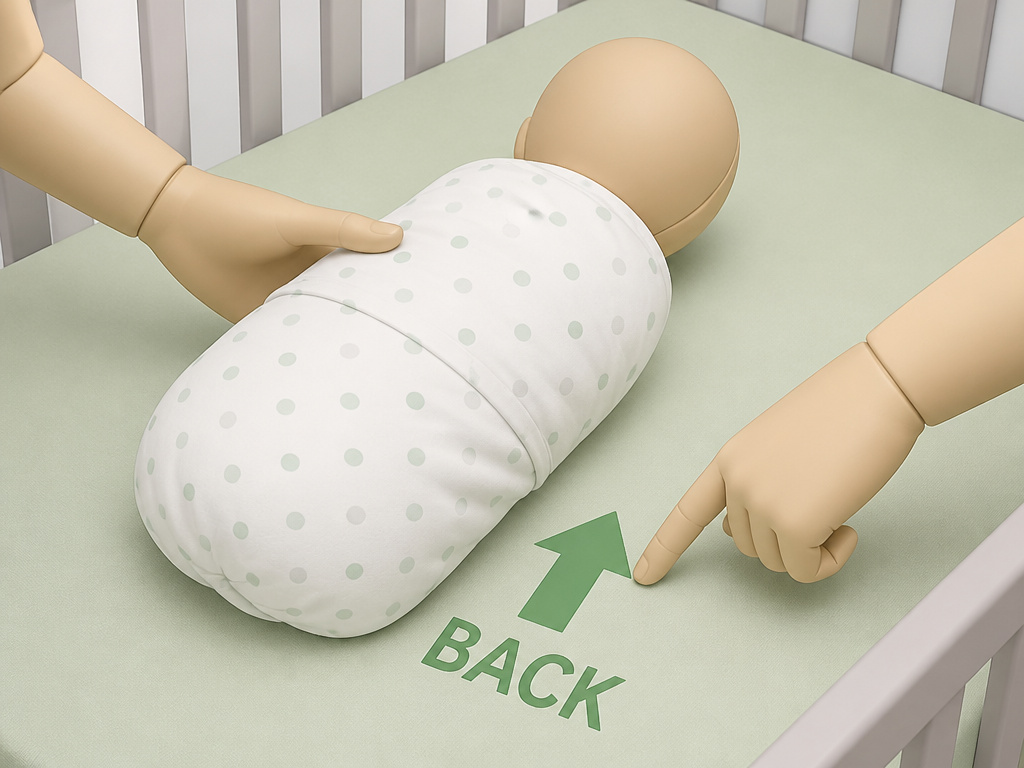 You will hear this: “You slept on your stomach, and you were fine.” It’s true. Previous generations were advised to put babies prone for sleep.
That advice was based on the best evidence available at the time. The “Back to Sleep” campaign (now “Safe to Sleep”) launched in the 1990s after overwhelming data linked back sleeping to drastically lower SIDS rates. The numbers are stark: SIDS deaths plummeted by up to 83% after the campaign.
The response isn’t about judgment. It’s about updated science. You can acknowledge their experience while holding the line: “The research changed, and we’re so lucky to know more now to keep this baby safe.”
What If My Newborn Hates Back Sleeping?
 Many do. The startle reflex (Moro reflex) is more easily triggered on the back, causing them to jerk awake. Some simply prefer the snug feeling of being prone.
You have safe tools to help, but they require watchfulness.
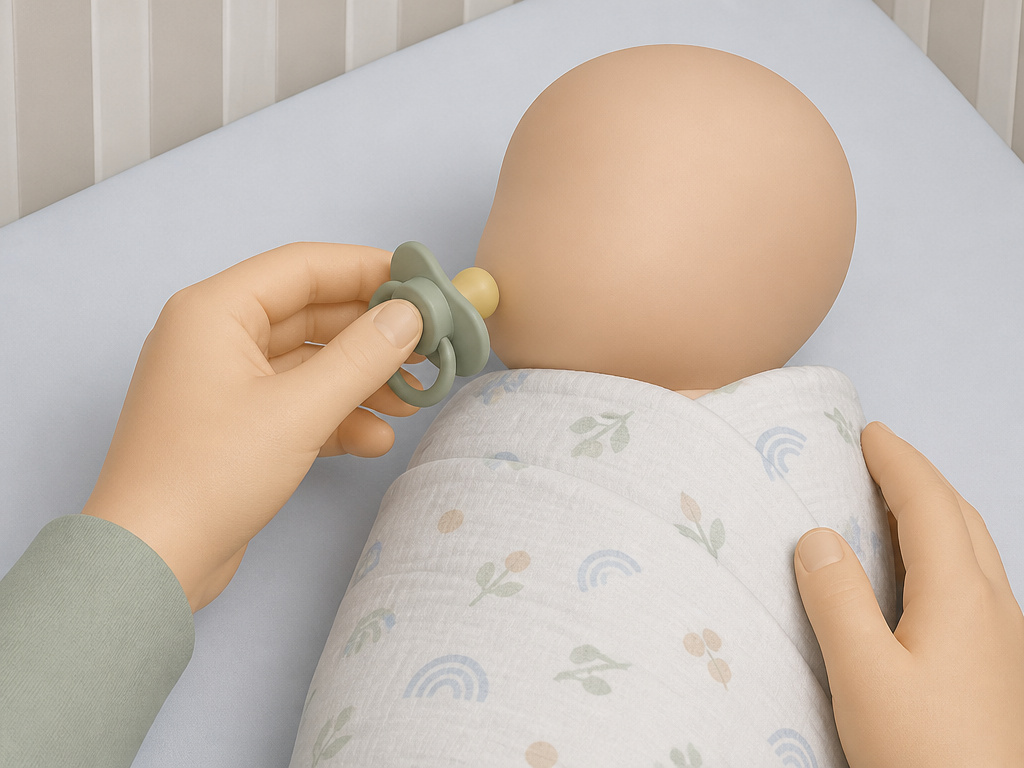
Swaddling can mimic the cozy containment of the womb and dampen the startle reflex. Use a thin, muslin swaddle blanket or a swaddle sack. The rule is absolute: stop swaddling at the first sign of rolling. A swaddled baby who rolls onto their stomach cannot use their arms to push up or turn their head.
White noise from a machine or a fan can mask startling household sounds.
A pacifier at sleep time is associated with a reduced SIDS risk. Offer it when placing the baby down, but don’t force it if they refuse.
If fussiness persists, talk to your pediatrician. They can rule out underlying issues like reflux and offer support. Never resort to an inclined sleeper, nest, or dock-a-tot, these products are not safe for unsupervised infant sleep.
Special Considerations: Preemies and Flat Head
Two common concerns require slight adjustments, not rule-breaking.
Preterm infants have an even higher SIDS risk. The AAP recommends they be placed on their backs for sleep as soon as they are medically stable, usually by 32 weeks’ gestational age. The hospital NICU should model this practice long before discharge.
Flat head syndrome (positional plagiocephaly) can develop from constant back lying. The solution is not less back sleeping, but more tummy time while awake and supervised. Vary the direction your baby faces in the crib and hold them upright often. In most cases, flatness improves with time and activity. For pronounced cases, your pediatrician may discuss physical therapy or, rarely, a specialized baby pillow designed for use under direct supervision.
Frequently Asked Questions
What if my newborn rolls onto their stomach during sleep?
If your newborn rolls over on their own, it’s time to stop swaddling immediately. For a young infant under 4-6 months who hasn’t mastered rolling both ways, you should gently return them to their back. This is rare in true newborns; more often, it’s a wiggle into a side position. Ensure the sleep surface is flat and firm to minimize the chance of rolling.
Is side sleeping safer than stomach sleeping for a newborn?
No. The American Academy of Pediatrics explicitly states “side sleeping is not safe and is not advised.” It’s an unstable position that easily leads to the high-risk stomach position. The back is the only safe starting position.
Can I use a wedge or positioner to keep my baby on their back?
No. The Consumer Product Safety Commission and AAP warn against any aftermarket products that go into the crib to maintain a baby’s position. These pose suffocation risks and are not necessary if you use a firm, flat mattress. The best “positioner” is consistently placing your baby on their back.
My baby sleeps longer on their stomach. Can I let them for just a nap?
No. Every sleep counts. The AAP notes that babies accustomed to back sleeping who are placed on their stomachs for even a single sleep are at a very high risk for SIDS. Consistency is a safety mechanism.
When is it 100% safe for a baby to sleep on their stomach?
When they are 1 year old. The AAP’s recommendation for back sleeping covers the entire first year. However, for babies who can roll both ways well before that, the risk drops significantly and they can be left in the position they find comfortable after being placed on their back to sleep.
Before You Go
The rule is simple because it has to be: back to sleep, every time, on a firm surface, in a bare crib. The stakes, an 83% reduction in SIDS risk, are worth any short-term fussiness. Your job isn’t to make them love it; it’s to keep them safe while they get used to it.
Anchor your routine in that consistency. Use supervised tummy time to build the strength that will one day let them sleep safely in any position they choose. Until then, their safety is literally in your hands every time you lay them down.
