
How to Put a Comforter in a Duvet Cover Easily and Quickly
This post contains affiliate links. As an Amazon Associate we earn from qualifying purchases.
To put a comforter in a duvet cover, turn the cover inside out, align it on top of the insert, secure the corners with ties or clips, and then use the burrito roll method. Roll both layers tightly from the head to the foot of the bed, invert the cover’s opening over the roll, and unroll. The whole process takes about three minutes and prevents the internal twisting that makes the traditional shake method so frustrating.
The key isn’t strength or speed. It’s geometry. Rolling the layers together locks their relative position, so when you unroll, the comforter is already exactly where it needs to be inside the cover. No wrestling, no lost corners, no air-filled shaking that leaves you out of breath.
What follows: the physical why behind the burrito method, a tool you need if your cover lacks ties, what to do when your sizes are off by an inch, and the one storage mistake that flattens a down insert for good.
Key Takeaways
- The burrito method works because rolling applies even tension, preventing the comforter from twisting independently inside the cover.
- If your duvet cover lacks built-in corner ties, duvet clips are non-negotiable for preventing nightly bunching.
- A comforter more than two inches smaller than its cover will slide and droop; one more than two inches larger will create permanent internal lumps.
- Never store a down or down-alternative duvet compressed in a vacuum bag, the fill loses its loft and may not fully recover.
- For kids’ bedding, prioritize duvet covers with a full-length zipper over button closures; they’re faster for changes and prevent small fingers from picking at buttons.
Why the Shake Method Fails (And the Roll Method Works)
You stand on the bed, holding the corners of a inside-out duvet cover that’s swallowing a comforter. You shake. The comforter slumps to one side, a corner disappears, and you’re left holding an empty fabric tube with a weighted lump at the bottom. This happens because two loose layers of fabric move at different speeds. The heavier comforter lags, then tumbles, while the lighter cover billows around it.
The burrito roll method applies even, mechanical pressure. By rolling the two aligned layers together, you fuse them into a single cylinder. This eliminates independent movement, the comforter cannot twist or slide because it is physically pinned between layers of its own cover. Unrolling simply transfers that aligned state onto the bed.
The difference is between trying to push a rope and rolling up a carpet. One fights you at every step; the other follows a predictable mechanical path.
The 3-Minute Burrito Method (Step-by-Step)
This is the method recommended by brands like Casper and Saatva. It looks like a party trick but works on a simple principle: alignment first, then mechanical rolling.
- Lay and Turn. Place your comforter flat on the bed. Turn your duvet cover completely inside out. Lay it directly on top of the comforter, matching all four corners and edges. The cover’s opening must be at the foot of the bed.
- Secure the Corners. Reach inside the cover at each top corner. Find the comforter’s corner and the cover’s inner tie. Knot them together tightly. If there are middle ties, use them. Skipping this step lets the comforter drift after a few nights, creating a cold, empty corner.
- Roll Tight. Starting at the head of the bed, the end opposite the opening, grab both layers and begin rolling them tightly together toward the foot. Keep the edges aligned as you roll. You should end up with a tight fabric burrito, with only the inside-out opening visible.
- Invert and Close. Grab the open end of the duvet cover. Pull it over the entire burrito roll, turning the cover right-side out in the process. Fasten the cover’s buttons, zipper, or ties at the foot.
- Unroll and Finish. Gently unroll the burrito back toward the head of the bed. The comforter will now be perfectly encased. Give the whole duvet a gentle shake and pat to distribute the fill evenly.
The entire sequence takes less time than remaking a bed the old way. The tight roll is what guarantees success, a loose roll lets layers shift.
What to Do When Your Duvet Cover Has No Ties
Many affordable or decorative duvet covers, especially in kids’ patterns, omit the inner corner ties. Without them, even the burrito method is a temporary fix; the comforter will shift within a week. The solution isn’t a different method, it’s adding anchors.
Where this goes sideways: Assuming a cover without ties will “stay put.” Gravity and nightly movement will pull the insert down and to one side every time, leading to constant readjustment.
You need duvet clips. These are small, plastic-free clips that pinch the comforter to the cover’s corner seam from the inside. They’re invisible once the bed is made.
| Clip Type | Best For | Installation Note |
|---|---|---|
| Silicone-Tab Clips | Lightweight down-alternative inserts | Pinch a 1-inch fold of the comforter and the cover’s inner corner seam. |
| Alligator-Clamp Clips | Heavy down comforters, wool duvets | Bite through thicker fabric without slipping; check for smooth edges to avoid snags. |
| Sew-On Tie Kits | Permanent solution, heirloom bedding | Requires sewing four small fabric ties to the comforter corners to match the cover’s loops. |
For a child’s bed, silicone-tab clips are the safest and simplest. They hold firmly through wash cycles and present no choking hazard. Attach them during step two of the burrito method, before you start rolling.
The Size Mismatch Problem: King vs. Queen Comforters
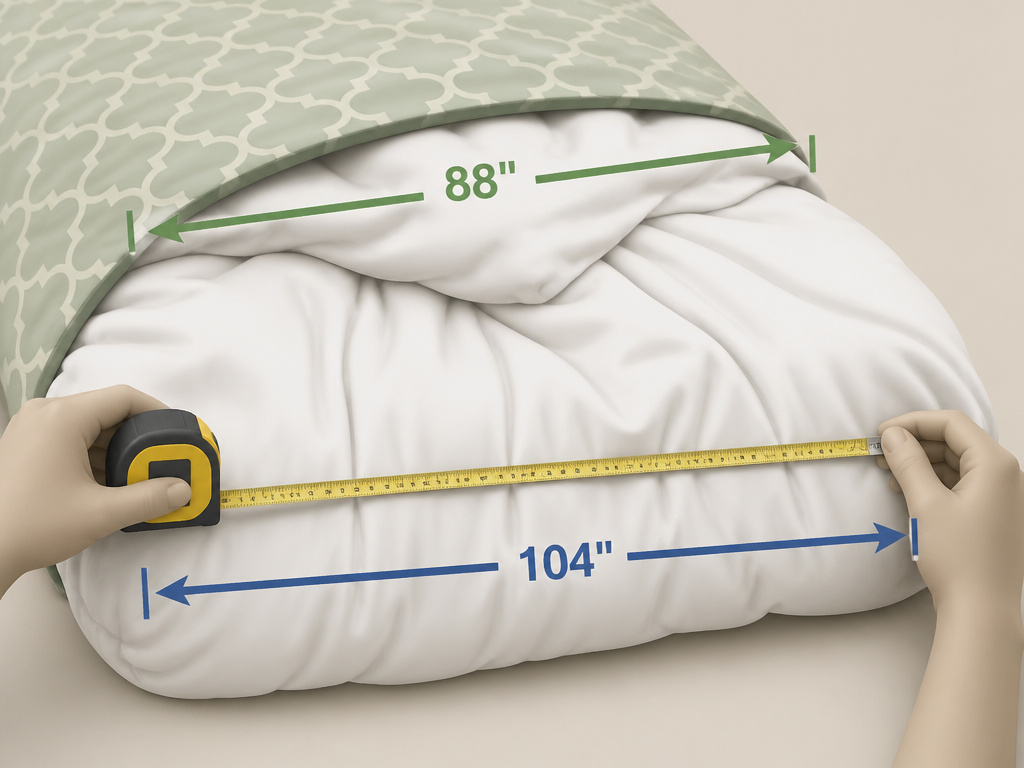 A duvet cover is not a one-size-fits-all item. Standard dimensions exist for a reason, and ignoring them creates headaches.
- King Duvet: 104 inches x 90-94 inches
- Queen Duvet: 88 inches x 90-94 inches
- Twin Duvet: 64 inches x 68-88 inches
If your comforter is too small for its cover, the fabric will puddle and slide around it, looking deflated. If the comforter is too large, you’ll force it in, creating permanent internal bunching that blocks heat distribution and feels lumpy.
The fix: Measure both. The comforter should be within 1-2 inches of the cover’s listed dimensions. If you have a queen comforter and a king cover, you’re better off buying a properly sized duvet insert or a matching queen duvet cover. For a kid moving from a toddler bed, a twin comforter in a twin cover is the right foundation for their big-kid bedding set.
Duvet vs. Comforter: What You’re Actually Working With
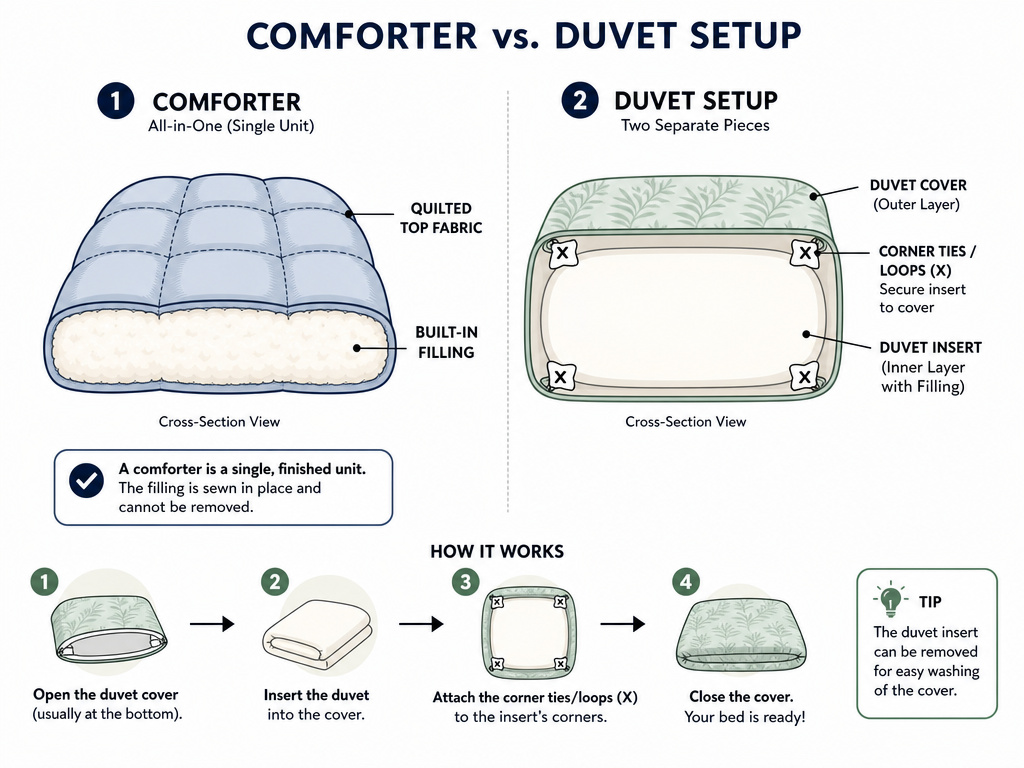 The terms are used interchangeably, but the mechanics differ. Knowing which you have changes your approach.
A comforter is a single, finished blanket. It’s quilted or stitched to keep its synthetic, down, or down-alternative fill in place. You can use it alone. A duvet (or duvet insert) is designed specifically to go inside a cover. It often has loops at the corners for tying and may have a simpler construction, as the cover provides the durability and style.
Why does this matter? A comforter is thicker and often heavier, making the burrito roll tighter and more important. A duvet insert is usually lighter and may shift more easily, making corner ties or clips absolutely critical. When choosing bedding for children, a duvet system offers more flexibility, you can change the cover seasonally without buying a whole new comforter.
Troubleshooting Common Duvet Issues
Even with the right method, problems pop up. Here’s how to fix them without starting over.
The comforter is bunched in one corner.
Cause: The corner ties came undone or were never secured. One corner is free, and gravity has pulled the insert down. Fix: Unzip the cover, reach in, and re-secure that corner. For a permanent fix, add duvet clips.
The duvet looks flat and lumpy.
Cause: The fill inside the comforter has shifted or clumped, often from improper washing or storage. Fix: Give the duvet a vigorous shake and slap to redistribute the fill. For down, tumble dry on low with tennis balls to re-loft. For long-term storage, use a breathable cotton bag, never a plastic bin or vacuum seal bag.
The cover twists around the insert.
Cause: The layers were not aligned before rolling, or the roll was too loose. Fix: This is the burrito method’s failure mode. Unroll completely, realign the corners so the comforter is flat and centered under the cover, and re-roll tightly.
Storing Your Duvet and Cover
How you store bedding between seasons determines its lifespan. The enemy is moisture, compression, and pests.
- Always wash and dry completely before storing. Any residual dampness leads to mildew.
- Use a breathable storage bag, like cotton or canvas. Plastic bins trap moisture and can yellow fabrics.
- Store in a cool, dry place. An attic or damp basement is the worst choice.
- Never store heavy items on top. This compresses the fill, especially in down and wool comforters.
For a child’s seasonal weighted blanket or a spare toddler blanket, the same rules apply. Clean, dry, and store flat or loosely rolled.
Frequently Asked Questions
Can you put a regular comforter in a duvet cover?
Yes, absolutely. A regular comforter works perfectly as a duvet insert. The key is securing it, use duvet clips if the comforter lacks corner loops. This is a great way to refresh an old comforter or protect a favorite one, just like you might protect a special baby blanket.
How do you keep a comforter from sliding inside a duvet cover?
You must physically attach them at the corners. Use the built-in ties if your cover has them. If not, duvet clips are the essential, low-cost solution. Without attachment, sliding is inevitable after a few nights of sleep.
What if my duvet cover is bigger than my comforter?
If the difference is more than two inches, the cover will look baggy and the comforter will pool at the bottom. Your options are to buy a correctly sized comforter, buy a correctly sized cover, or live with constant adjustment. For a growing child, it’s better to size up the bedding correctly from the start.
Is the burrito method easier with two people?
It’s designed for one person. The entire process happens flat on the bed, eliminating the need for a second pair of hands to hold corners aloft. If you’re struggling with a very heavy king-size down comforter, a second person can help hold the roll tight, but it’s not required.
How often should you wash a duvet cover?
Wash it as often as you wash your sheets, every one to two weeks. This is the primary benefit: you’re washing a simple cover instead of a bulky comforter. It’s much easier than laundering a large comforter or a delicate weighted blanket.
Before You Go
Stop fighting with your bedding. The burrito method isn’t a hack; it’s the correct mechanical procedure for aligning two layers of fabric. The three-minute investment saves the ten minutes of frustration you’d spend shaking and cursing.
Remember the sequence: inside out, align, secure, roll, invert, unroll. Buy duvet clips the moment you realize your cover has no ties. And always match your sizes, a queen comforter belongs in a queen cover. With those rules, making the bed becomes a simple, predictable task, leaving you more time to enjoy the cozy result.
